Profile view of a bearded man wearing a dark green baseball cap and a dark gray T-shirt against a plain light background.

Why your upstairs stays hot in Missouri summers

Step 1 of 3: Equipment

Why is it always hotter upstairs in the summer?

You keep upstairs closed off on the hottest days because it never cools down like the rest of the house. The thermostat downstairs reads 72 and it still feels ten degrees warmer where the bedrooms are. With a Missouri summer pushing heat and humidity into the house for months, that gap upstairs makes the whole house harder to live in, especially once everyone's trying to sleep.

Heat rises, and your system wasn't sized to fight it evenly

Hot air rises and collects on the second floor, while your return air duct is usually downstairs, so the thermostat reads a comfortable temperature long before the upstairs rooms catch up. The sun also hits the roof directly all day, and that heat moves down into the rooms right below it. If your system has one thermostat for the whole house, it shuts off once the downstairs is satisfied, even though upstairs is still working to catch up. In a Missouri summer, with heat and humidity pressing on the house for months at a stretch, that gap can mean upstairs never fully cools, especially in the afternoon and evening when the sun has been loading the roof the longest.

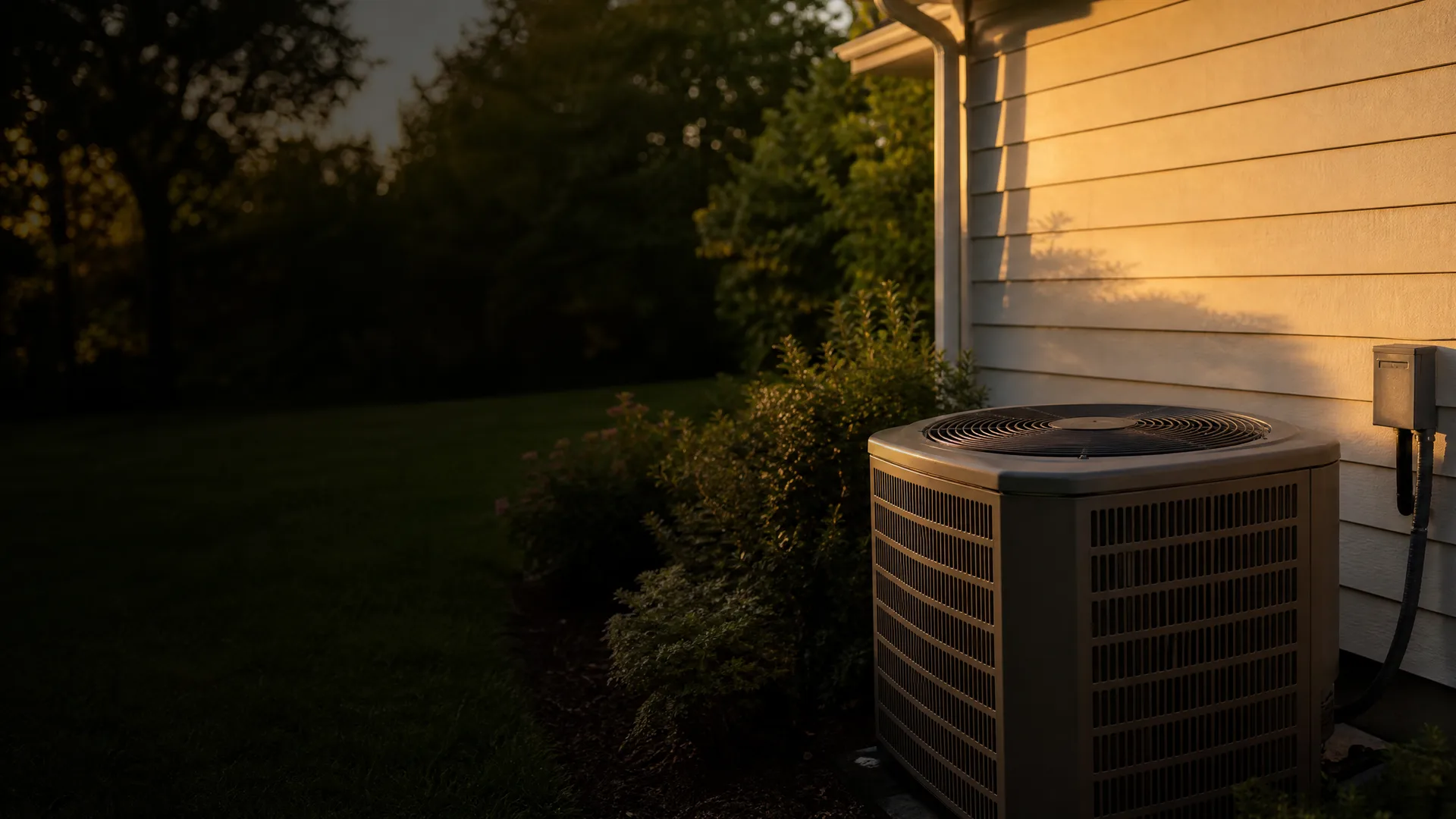
An outdoor air conditioner condenser unit beside a light-colored lap-sided house with an electrical disconnect box on the wall, surrounded by shrubs and lawn in low evening light.

You're out back around seven, grass still warm under your feet, and the light's gone that low gold color. The kids are upstairs, where it's been sticky since noon. You walk past the condenser and stop. It's quiet. Too quiet. The fan on top isn't turning, and the unit's just sitting there ticking as it cools. Inside, the air handler is still pushing air through the vents, so it's easy to miss from the living room. Upstairs, though, it's already past uncomfortable. You crouch down, feel for any movement in the fan blades, and there's nothing. Just the cicadas starting up and that one room overhead getting hotter by the minute.

Is your upstairs AC actually keeping up, or just running

You've probably noticed the vents upstairs blow air, just not cold air, not like the ones downstairs. The system runs long stretches without the thermostat ever seeming to catch up. Bedroom doors stay open all day trying to even things out, and the upstairs still feels thick by afternoon. Maybe you've heard the unit outside cycling on and off more than it used to, or noticed the air coming from the vents feels warm to the hand. Left alone through a Missouri summer, a system working this hard can wear down parts that would otherwise last, and the rooms you're trying to cool stay the least comfortable part of the house.

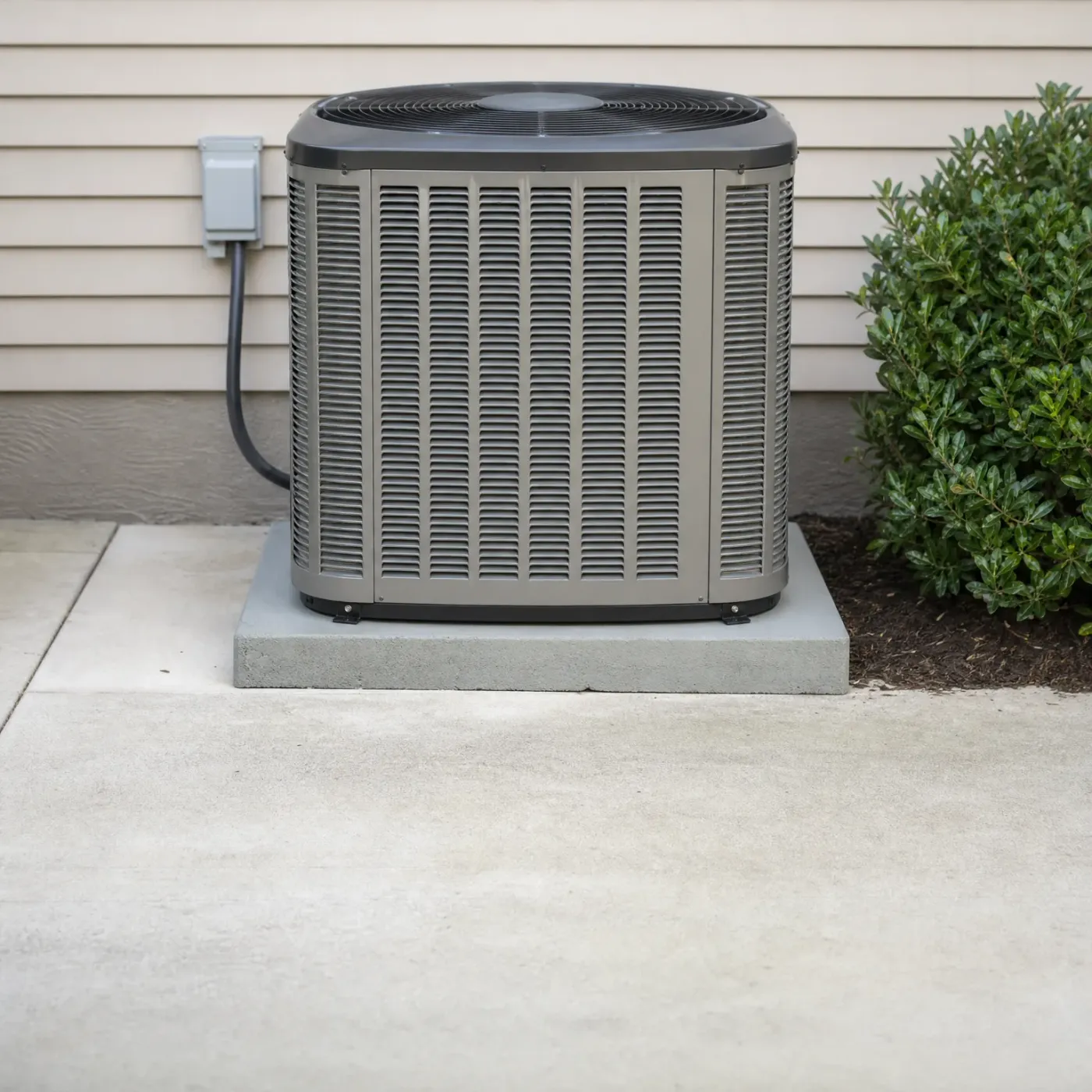
An outdoor air conditioning condenser unit on a concrete pad beside a house with horizontal lap siding, with an electrical disconnect box and conduit on the wall and a green shrub to the right.

Running the way it should

A unit like this cycles on, pushes cold air through the upstairs vents, and cycles off once the thermostat is satisfied. The fan turns freely, the coil stays clear, and the condenser has room to breathe. Upstairs cools down along with the rest of the house.

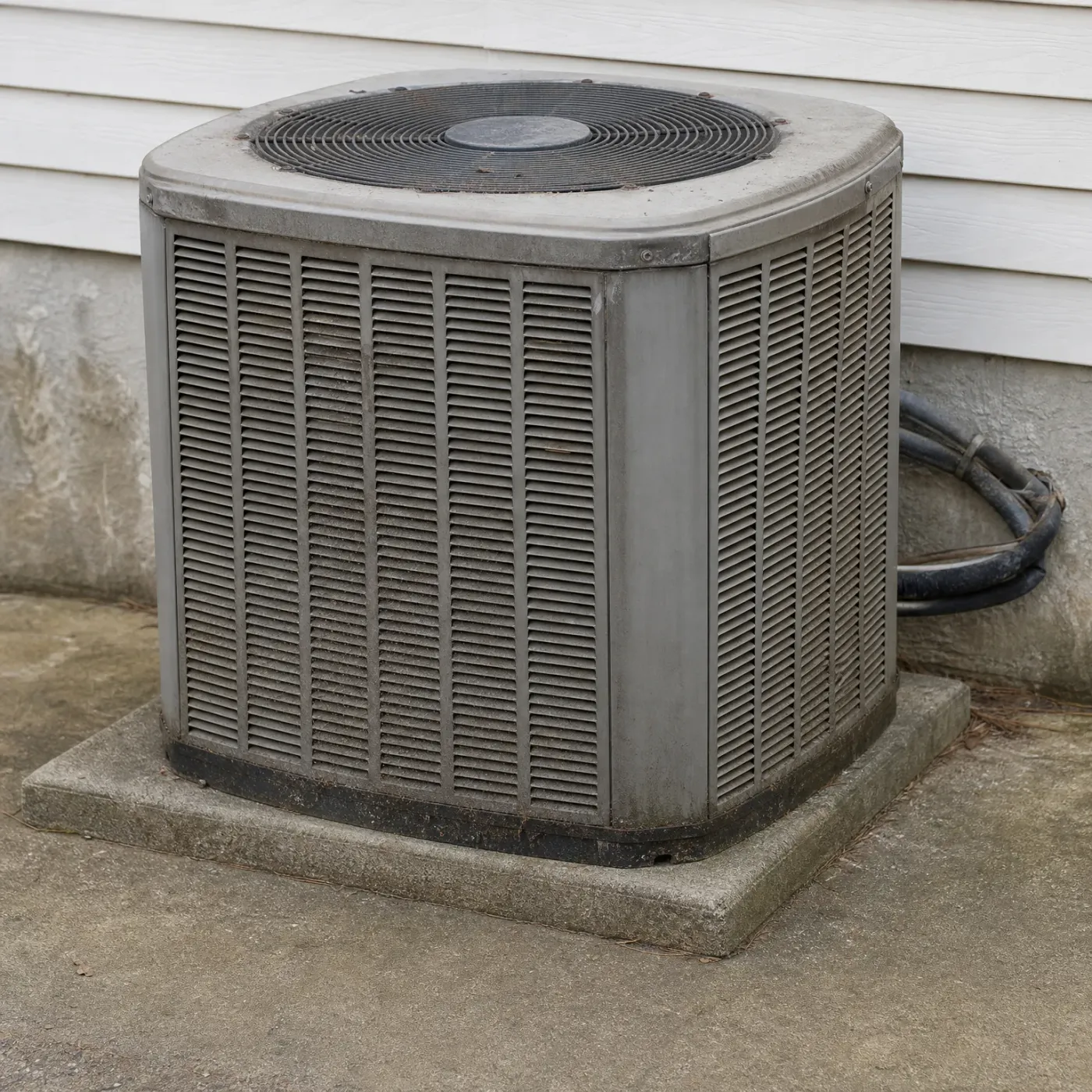
An outdoor air conditioner condenser unit on a concrete pad beside a house with horizontal siding and a lower concrete foundation wall, with coiled refrigerant lines at right.

Working harder than it should

Dirt built up on the louvered panels and the fan grille blocks the airflow a condenser depends on to release heat. The refrigerant lines at the back carry less cooling than they should. The system runs longer to reach the same temperature, and upstairs still lags behind.

A man in a dark blue shirt stands in an open front doorway of a stucco and wood-clad house, facing a blond woman seen from behind in the foreground on a stone walkway.

One blower, two floors, and heat that rises

Most houses here run a single system for both floors, with one return pulling air back in, usually downstairs. Heat rises on its own, so the upstairs is already working against warm air collecting under the roof while the one return keeps sampling cooler air from below. The thermostat downstairs can read 72 and be telling the truth, even while the upstairs bedrooms sit closer to 82. The system isn't wrong. It's just answering for a part of the house that isn't the hottest part.

A duct run that's too long, a damper that's closed or stuck, or a return that's undersized for the second floor will all show up the same way: weak airflow upstairs no matter how hard the condenser works outside. A contractor who checks the ductwork and the dampers, not just the refrigerant level, can tell you whether the upstairs is getting its fair share of what the system produces. If your house has zoning or a separate duct run for the second floor, that's worth mentioning when you talk to someone about it. Getting matched with the right person means that part of the diagnosis happens for you.

Interior corner with a beige sofa holding a dark green and a light cushion and a textured throw, a potted small-leaved tree beside a white-framed window, and a dark shallow bowl on a wooden coffee table in the foreground.
An older woman with gray hair in a bun and glasses, wearing a beige knit sweater, smiles while looking to the side in a warmly lit kitchen, with a loaf of bread on the counter in the foreground and a snowy scene outside the window.
A woman and a child wrapped together in a knitted gray blanket on a couch, with the child's head resting on her shoulder and a lit table lamp and houseplant in the background.

An air conditioner pro near you

After this form, you can stop searching for an air conditioner pro.

You only hire the pro if you want to.

Missouri humidity doesn't just slow an air conditioner down, it changes what the system has to do. The unit has to pull moisture out of the air before that air feels cool, and the upstairs air carries more of it than the air downstairs.

A system sized for the downstairs load will run long and still lose that fight upstairs. It keeps running, the humidity stays, and the thermostat can read 72 while the air up there still feels heavy and warm.

A woman with long wavy brown hair in a grey ribbed sweater sits on a couch indoors, looking toward a window, with a potted palm-like plant and fireplace behind her.
A woman with long brown hair wearing a green V-neck top and beige cardigan sits on a light sofa, looking off to the side, with a dining table, lamp and framed picture in the background.
A woman with long dark hair in a cream knit sweater sits on a beige sofa indoors, looking toward a bright window with a houseplant and framed picture in the background.
A woman with long dark hair in a green knit sweater sits on a couch indoors, smiling and looking toward a window with a blurred room behind her.

Why the whole house shares one answer

  • A single thermostat downstairs tells the whole system when to stop, even though the upstairs room it's set in isn't upstairs.
  • Attic ductwork run through a hot attic loses cold air before it ever reaches the upstairs vents.
  • The return duct pulling air back to the unit usually sits downstairs, so the air going back in is already cooler than what's collecting upstairs.
  • A single blower pushes the same amount of air to both floors, whether or not the upstairs needs more of it.
  • Supply ducts feeding the second floor are often longer than the ones feeding the first, and the air cools as it travels.
  • A system with the right charge and airflow still can't send more cold air upstairs than the ductwork is built to carry.

A central air system only knows what its thermostat tells it, and that thermostat is almost always downstairs. Once that room hits 72, the unit shuts off, whether or not the upstairs bedrooms ever got close to cold. The air it did send up had to travel further to get there. Ductwork running through an attic sits in space that can get far hotter than the rooms it's feeding, and cold air passing through loses some of itself along the way. By the time it reaches a vent at the far end of the run, it isn't the same air that left the coil.

The return side works against the upstairs too. Most homes here pull air back into the system from a return low in the house, so the unit is reading and cooling air that was never the hot air stacked up under the roof. It's balancing against the wrong number.

None of this means the equipment is broken. A blower set up to serve two floors moves one volume of air, split between them by the duct sizes and runs already in place. If the upstairs run is longer, thinner, or feeding more rooms than it was designed for, that part of the house gets less, even when the system outside is working exactly as it should. Charge and airflow being correct doesn't change what the ductwork was built to carry.

Power costs 13.30 cents per kilowatt-hour statewide

At 13.30 cents a kilowatt-hour, running the upstairs unit harder than it should have to work costs more every month than it would if the airflow problem got fixed. A struggling system doesn't just leave rooms warm, it keeps drawing power trying to catch up.

EIA-861 2025 statewide residential average

Upstairs stays hot because heat rises into it, the ductwork feeding it often runs through the hottest part of the house, and the one thermostat deciding when the system shuts off sits downstairs where it's already cooler. Any one of those working against a system that's also low on airflow or refrigerant turns into rooms that never quite catch up, no matter how long the unit runs. None of that gets fixed by waiting out another August. A contractor who knows how these two-story systems are set up here can look at the ductwork, the return, and the unit itself, and find which of these is doing the most damage in your house. Send the form and that search is off your plate. You won't be the one calling around or explaining the problem twice. Someone who handles this in Missouri homes gets your information and reaches out, and from there it's their job to figure out, not yours.

Sunlight falls across a beige upholstered sofa with a textured woven cushion and a chunky knit throw, beside a dark wood cabinet holding a ceramic vase with green leafy branches, near a white-framed window.
A sunlit corner of a room with a wooden side table holding a ceramic vase of green foliage and a wooden bowl, beside a light upholstered sofa with a knit throw and rust-colored pillow, with window shadows cast on a beige wall.
A sunlit room corner with beige walls, a white-framed window with sheer cream curtain, wood floor with a light rug, and a woven basket holding a knit blanket.
A beige ceramic vase holding a leafy green branch sits on a wooden cabinet in a corner, with sunlight through a sheer curtain casting leaf shadows on the wall.
A grey upholstered sofa with a rust-orange velvet cushion and a textured throw sits beside a window with linen curtains, next to a wooden side table holding a pale ceramic vase of olive branches.

A local pro for your air conditioner repair

One request and the search for a pro is handled.

Match me with a pro

Asking costs nothing, and the choice to hire stays yours.