



Why your AC smells like burning in Missouri

Step 1 of 3: Equipment

Why does my AC smell like something is burning?

A burning smell from the air conditioner gets attention fast, especially when it's the middle of a sticky Missouri summer and the house is counting on that system to keep running. You want to know if this is something to shut off right now or just an odd smell that will pass. It usually means a part inside the unit is overheating.

A motor or electrical part is overheating inside the unit

That burning smell usually comes from the blower motor, the fan motor, or the wiring and connections around them getting hotter than they should. A motor that's failing draws more current and heats up, and worn insulation on a wire can do the same thing. Dust burning off a part that just kicked on smells different, lighter, and fades fast. A steady burning or electrical smell that sticks around does not. Running the AC hard through a Missouri summer puts real strain on these parts, and a motor or connection already weak from age or wear is more likely to show it now than in a mild stretch of weather. Shutting the system off at the thermostat or breaker until it's looked at is the safer move.

A woman with dark hair in a bun wearing a cream knit sweater sits on a gray sofa in a bright living room, looking off to the side.
A woman wrapped in a knit blanket sits on a gray sofa in a living room, looking toward a bright window with houseplants and an armchair in the background.
A woman in a gray cowl-neck sweater sits on a light sofa with cushions, smiling and looking to the side, with a kitchen and window visible behind her.
A woman with dark hair in a bun, wearing a light linen shirt, sits on a sofa and looks to the side, with a window, houseplants and a kitchen with pendant lights blurred behind her.

Is this smell something you can wait out?

You might catch it right when the AC kicks on, a sharp electrical smell that fades after a minute, or it might hang in the air the whole time the system runs. Maybe you noticed the air coming out of the vents feels warmer than it should, or the unit outside is making a noise it didn't make last week. Some houses catch a burning dust smell the first hot day the AC gets real use after sitting idle. Others notice the breaker trips, or the system shuts off on its own. If the smell keeps coming back or gets stronger, it's worth taking seriously. Running a system with an electrical problem can damage the compressor or, in rare cases, start a fire.

A gray outdoor air conditioner condenser unit on a concrete pad beside a house with horizontal lap siding, with a wall-mounted disconnect box and conduit to its right and shrubs to the left.

Running clean

A condenser that smells like nothing is doing its job right. Air moves across the coil, the fan turns, the unit cycles off and on without a trace of odor in the house. That's the baseline worth knowing, so you catch it fast when something changes.
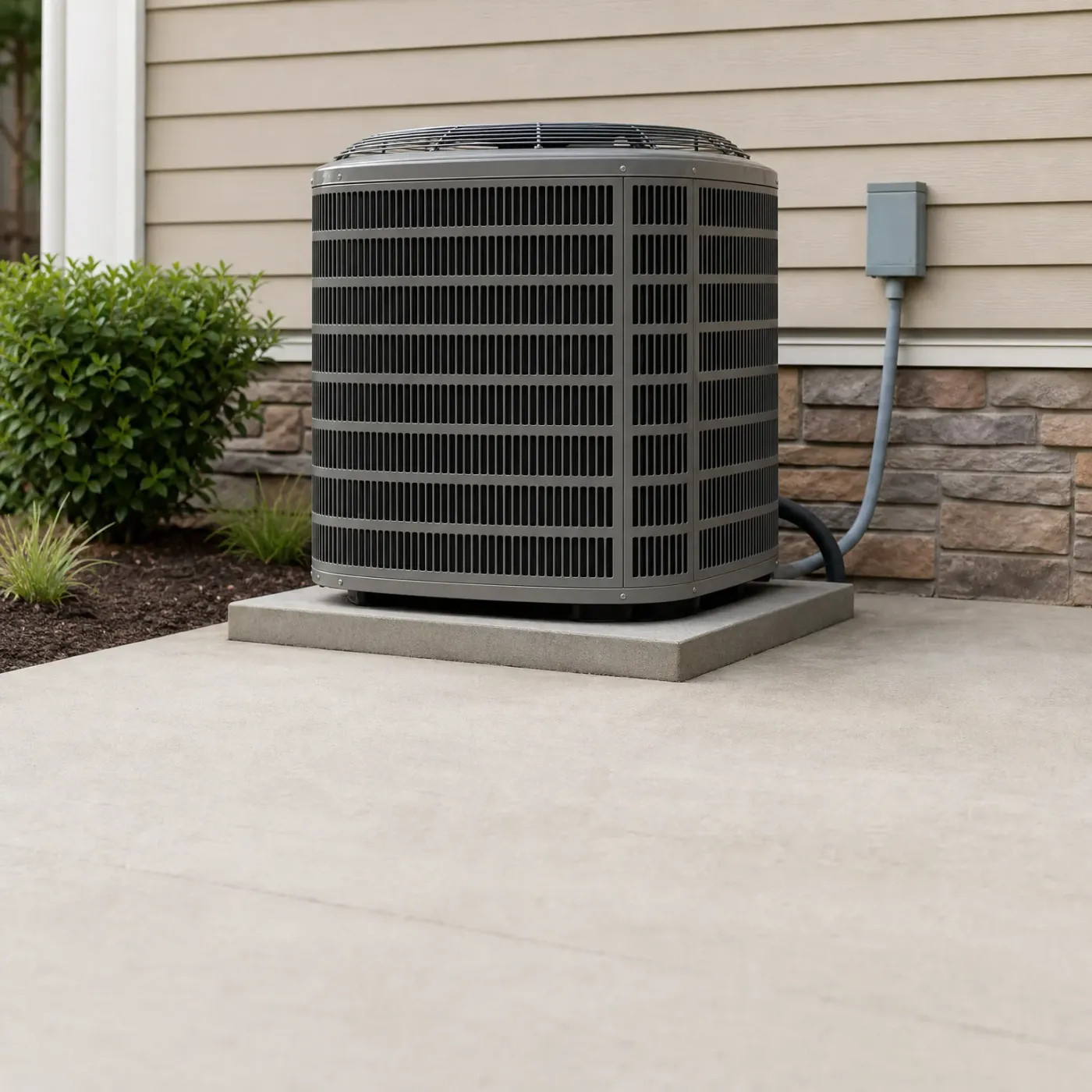
An outdoor air conditioning condenser unit on a concrete pad beside a house with horizontal lap siding, with a conduit and electrical disconnect box on the wall at right.

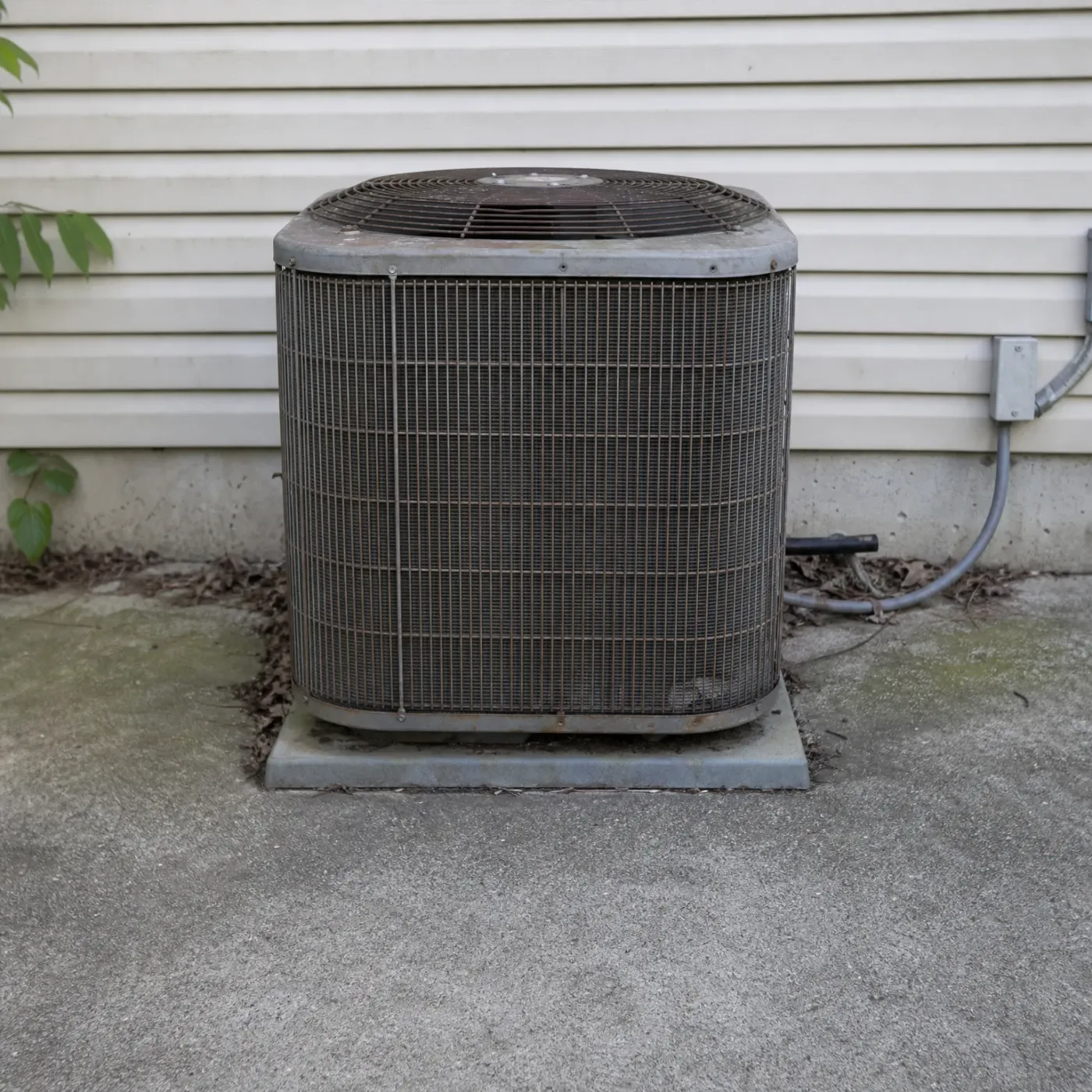
Burning smell outside

Dirt caked on the coil guard, an aging unit working harder than it should, wiring exposed at the disconnect box. Any of these can put a burning smell in the air, and the smell often shows up here before you ever notice it indoors.

Keep Running It or Shut It Off

Keep running it

  • A faint electrical smell that shows up once when the AC hasn't run in a while and then disappears within a few minutes is usually dust burning off the coil or motor housing.
  • If the smell doesn't come back on the next cycle, the system cleared whatever was sitting on it since the last time it ran.
  • The house stays cool the way it should, and nothing else changed, like a new noise or warm air at the vents.
  • You've had the filter changed recently and know it isn't blocked, which rules out one common cause of a strained, overheating system.

Shut it off

  • A burning smell that returns every time the AC cycles on means something is overheating each time it runs, not a one-time event.
  • A sharp, acrid or plastic smell points to wiring insulation or a motor winding breaking down, and that risk doesn't go away on its own.
  • Warm air from the vents along with the smell means the system is struggling to do its job while something inside it heats up.
  • Any smell paired with a tripped breaker or a burnt smell near the outdoor unit means current is going somewhere it shouldn't.
  • Running a system with an electrical smell through a hot Missouri afternoon puts more hours on whatever part is already failing.
  • A smell that gets stronger instead of fading is telling you the problem is getting worse while the unit keeps running.
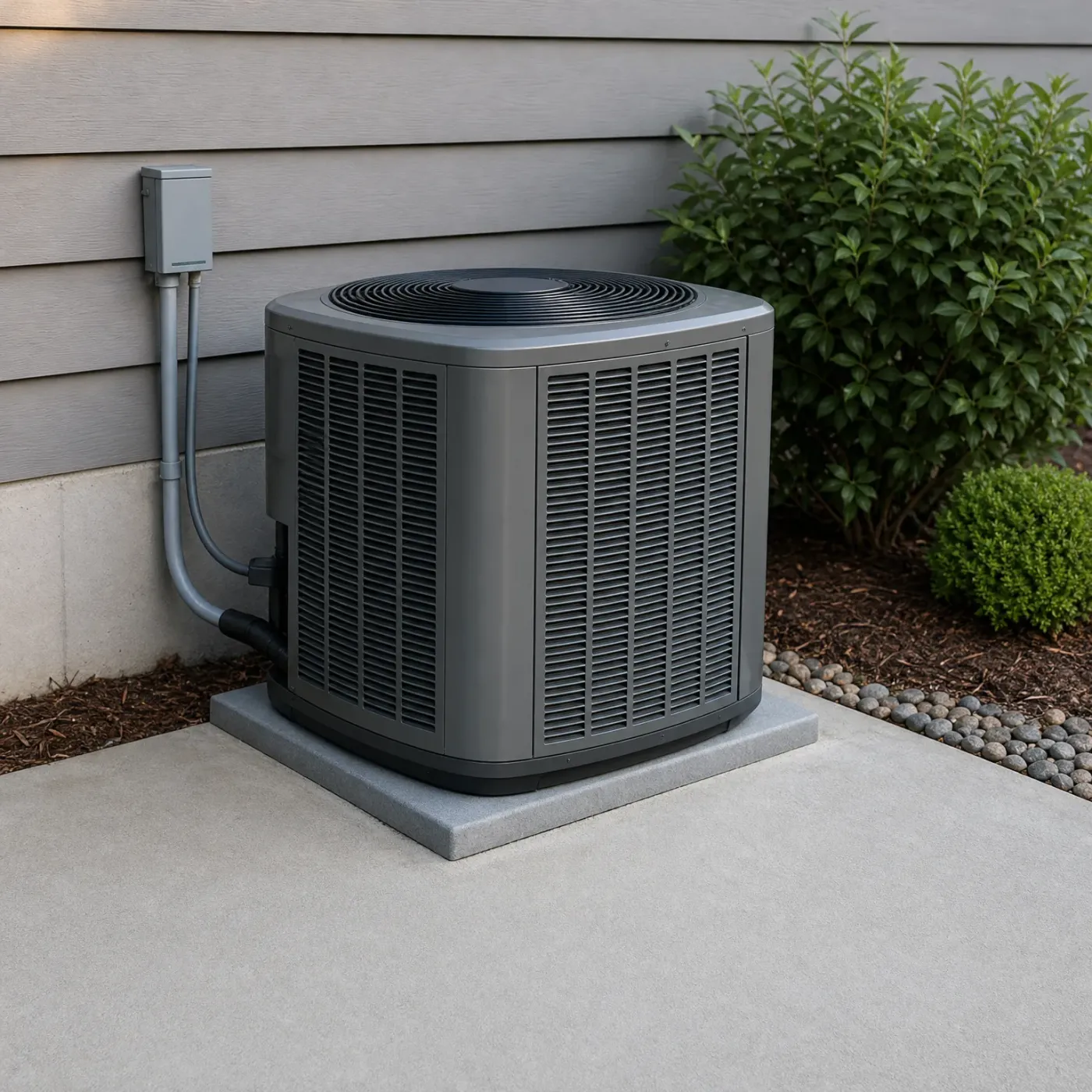
A gray outdoor air conditioning condenser unit on a concrete pad beside a house with horizontal siding and a stone veneer base, with a wall-mounted disconnect box and conduit, next to a shrub bed and a concrete patio.

Working the way it should

This condenser sits clean on its pad, vents clear, nothing stacked against the housing. Air moves through the louvers and out the top without resistance. A unit set up like this runs its cycle without that burning smell ever showing up.

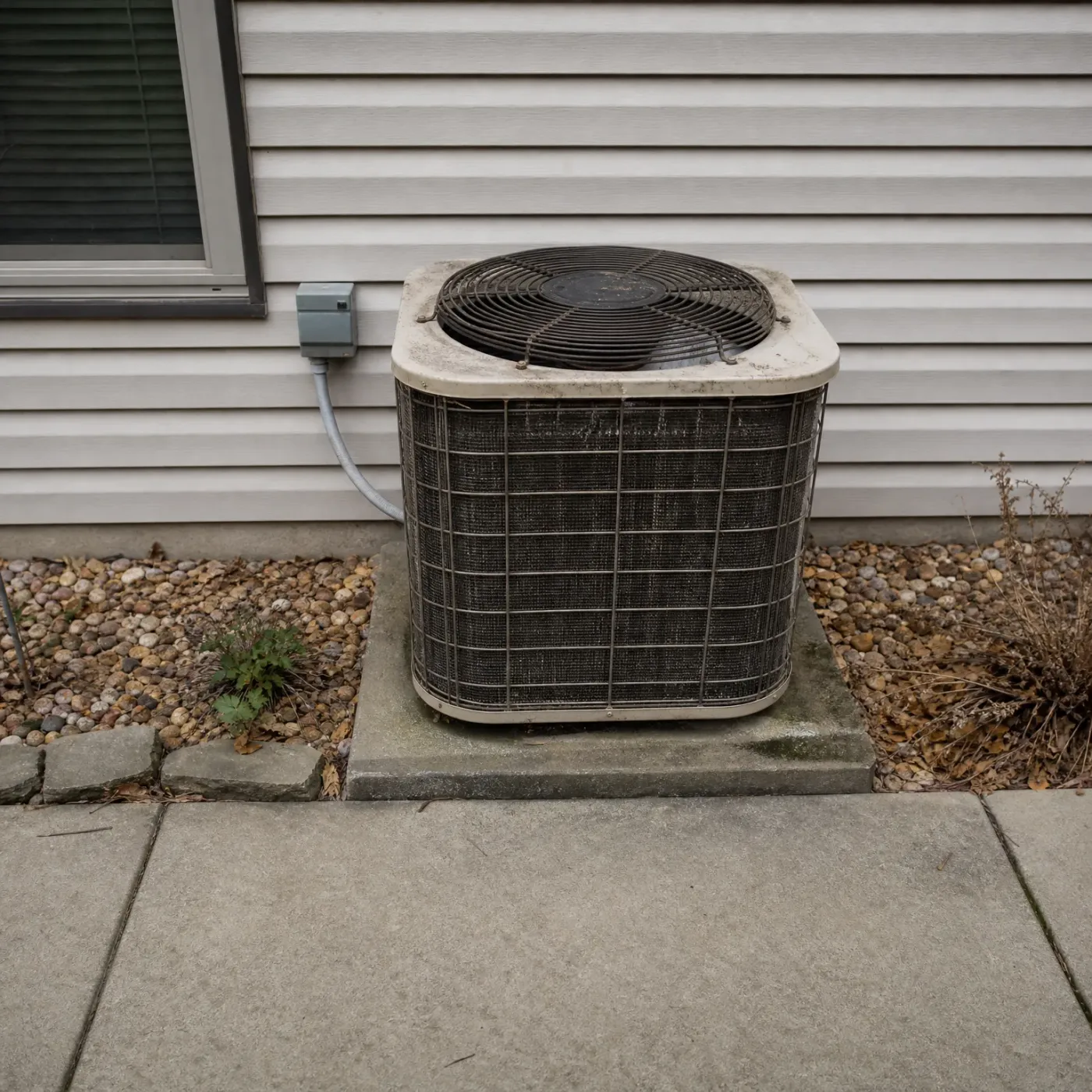
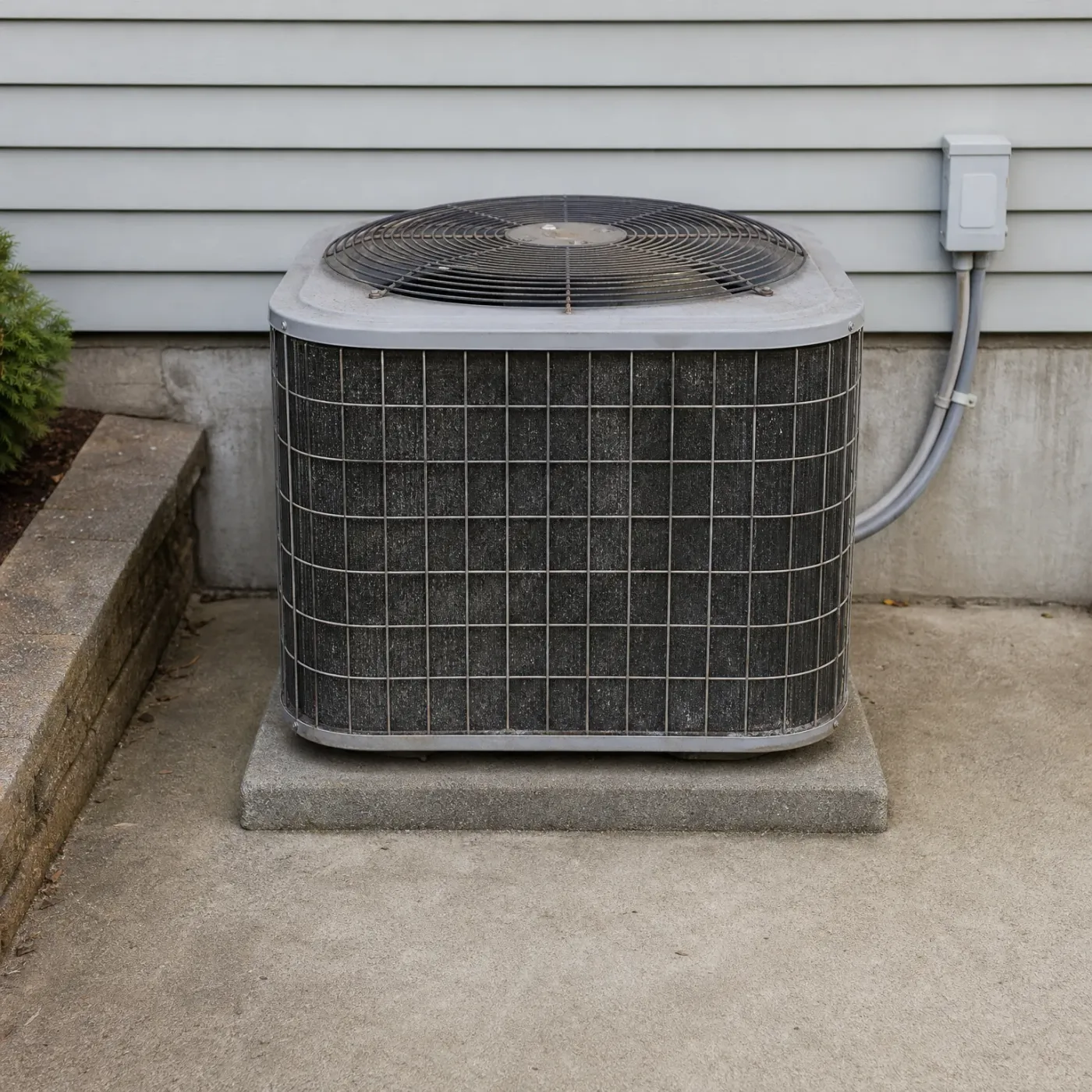
An outdoor air conditioner condenser unit on a concrete pad beside a house with light gray vinyl siding, with a gray electrical disconnect box and conduit on the wall, gravel beds and dried plants nearby, and a concrete sidewalk in the foreground.

Worn and crowded

This one's older, the housing weathered, gravel and dried weeds pressed up against the sides. Weeds and debris pulled in through the vents can scorch against a hot motor or coil. An older unit like this is also more likely to have a motor or wiring worn enough to burn on its own.

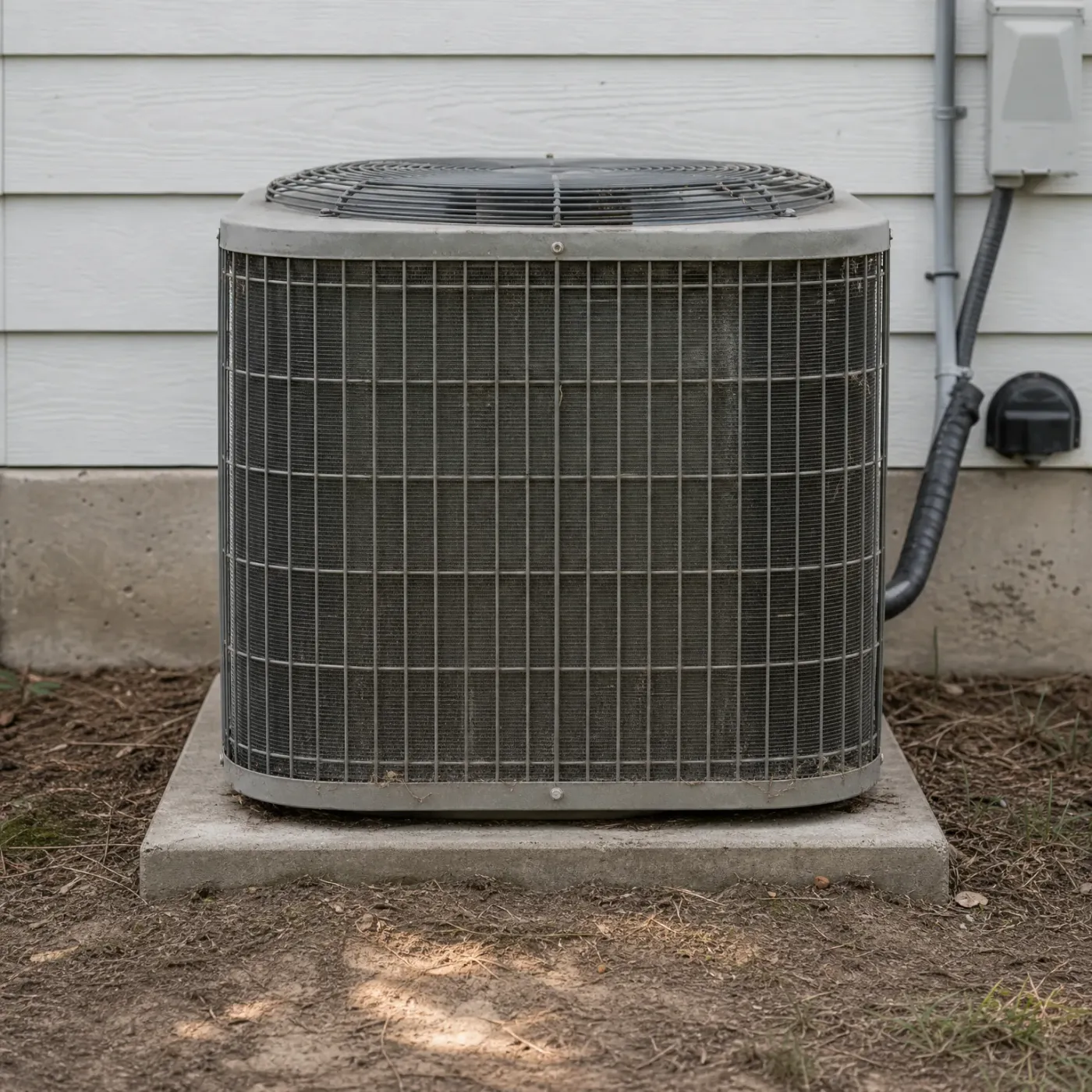
A weathered outdoor air conditioner condenser unit on a concrete pad beside a house with horizontal vinyl siding, with a conduit and disconnect box on the wall to the right.
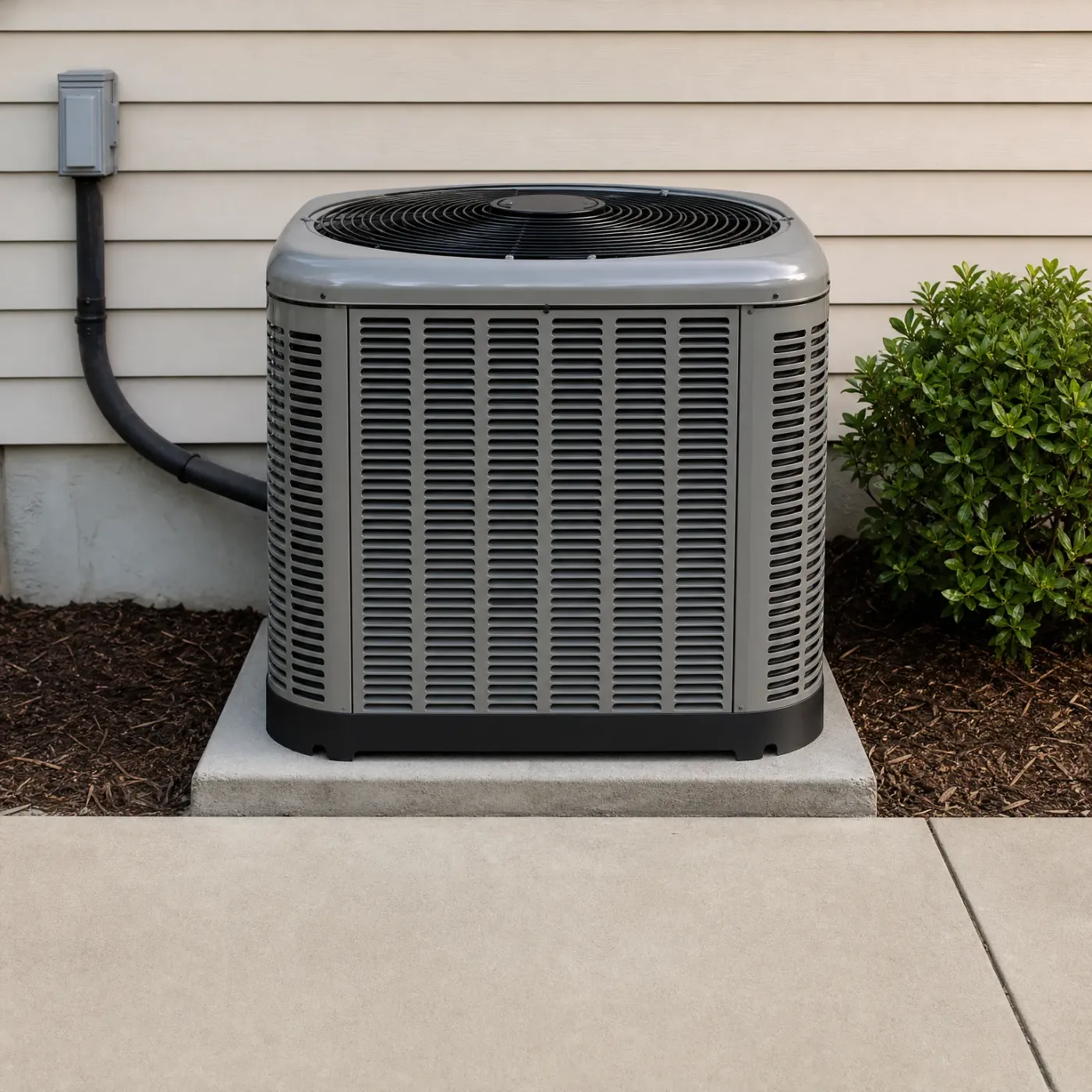
Before you get your air conditioner repair
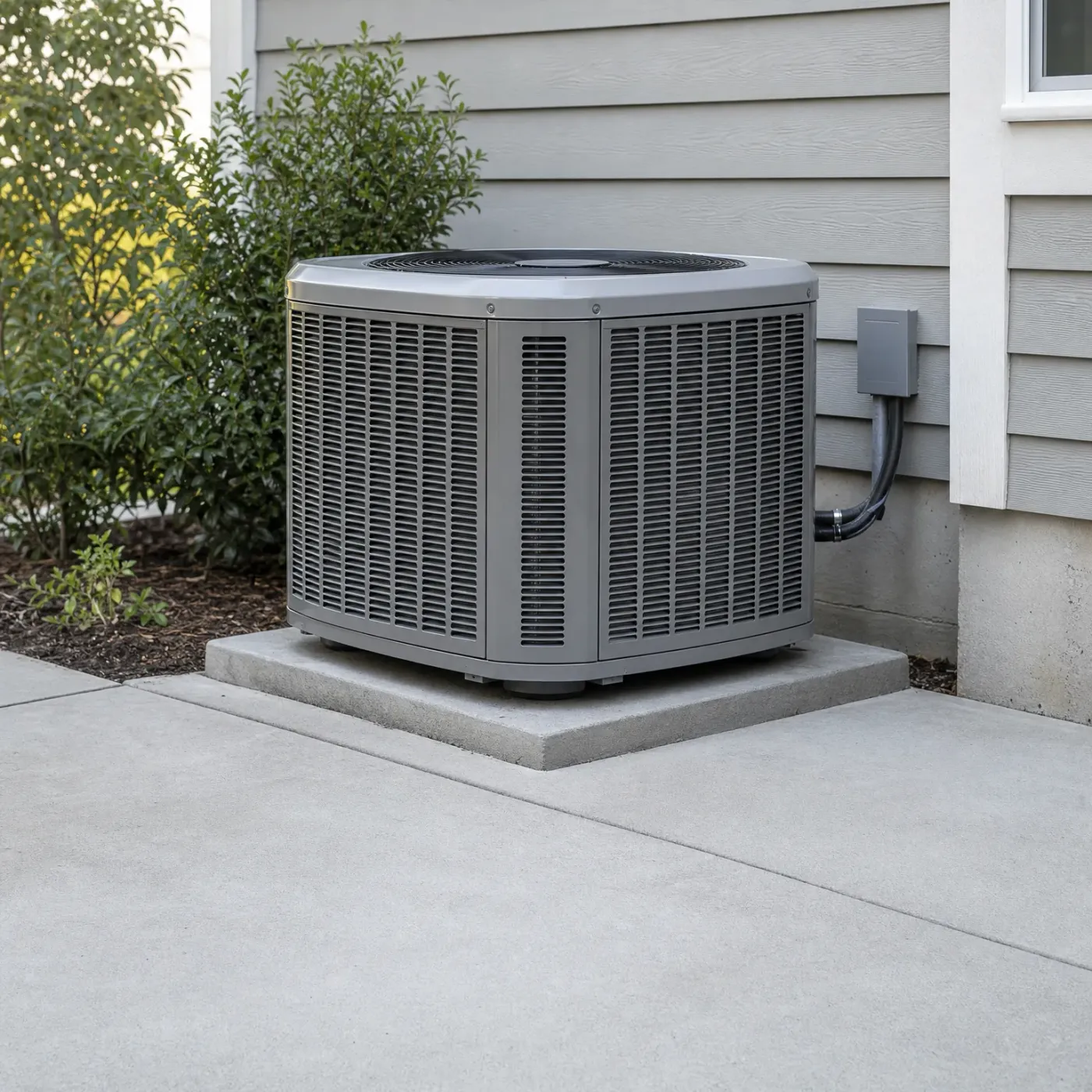
A gray outdoor air conditioning condenser unit on a concrete pad beside a house with horizontal lap siding, with a conduit and electrical disconnect box on the wall and a green shrub in mulch to the right.
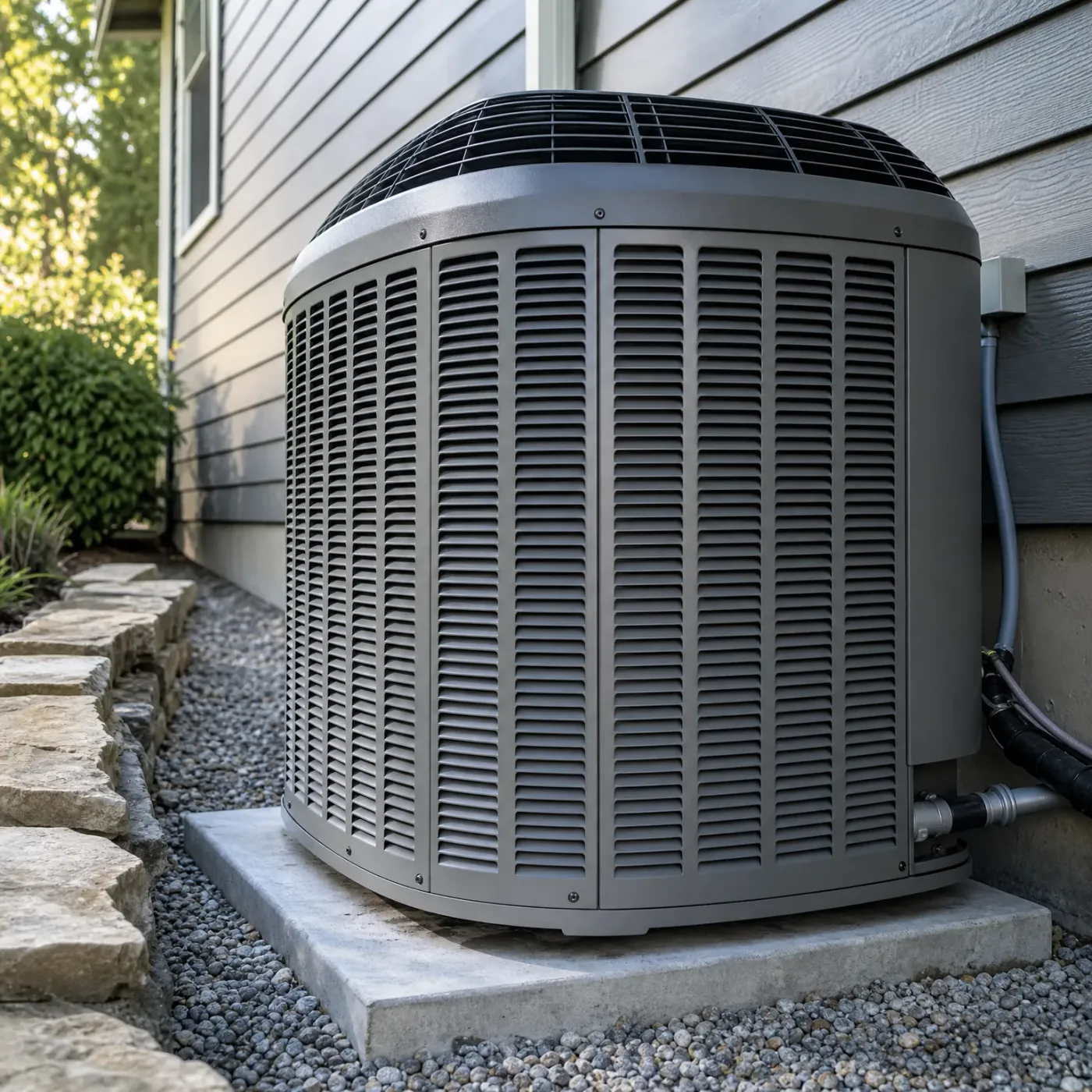
After you get your air conditioner repair
A gray outdoor air conditioning condenser unit with louvered sides and a black top grille sits on a concrete pad beside a house with horizontal lap siding, surrounded by gravel and a stone border.

The right pro for this job

Describe what your air conditioner is doing once, in one form.

A local pro who knows air conditioners gets your details and gets in touch.

Connect with a pro

Sending the form costs nothing.

A smiling older woman with gray hair in a cream knit sweater stands in a dimly lit kitchen beside a window showing snow outside, with a round loaf of bread on the counter in the foreground.
A woman and a child wrapped together in a thick knitted blanket on a sofa, both with eyes closed, with a lit table lamp and houseplant in the dim background.

The burning smell usually traces back to one of two places. Inside the air handler, the blower motor has bearings that wear down over years of running, and when they start to go, the motor works harder and heats up past where its insulation can handle it, which is what you're smelling. The other spot is the electrical connections at the condenser or the air handler, the wire nuts and lugs that carry power to the compressor and fan motor. Those connections loosen slightly over time from the metal heating and cooling with every cycle, and a loose connection creates resistance, and resistance makes heat. That heat chars the wire insulation and the plastic housing around it, and that's the acrid smell that doesn't fade. A tech checks the motor for play in the shaft and listens for grinding, then opens the electrical panel and looks for discoloration on the wires or the terminals themselves, since a scorched wire tells you exactly where the problem sits before anything gets tested with a meter.

Power costs 13.30 cents per kilowatt-hour statewide

At 13.30 cents per kilowatt-hour, running your AC in Missouri isn't what's driving your bill up when something smells like it's burning. A failing motor or bad wiring wastes electricity on top of the risk, so getting it checked stops both problems at once.

EIA-861 2025 statewide residential average

  1. A motor bearing wears down and starts dragging under load.

  2. Friction heats the motor past what its windings can take.

  3. Hot insulation gives off that sharp burning smell through the vents.

  4. Left alone, the motor can short out and stop running.

A woman stands in the open black front door of a white-sided house with a dark shingled roof while a man in a navy jacket approaches along the walkway, with lantern wall lights, a potted shrub, and flowering garden beds nearby.

What this means for your house

A burning smell moving through the vents doesn't stay in one room. It travels wherever the ductwork goes, so if you've got someone home all day in Missouri's heat, they're breathing that smell before you even get home to notice it yourself. Keep running the system and you risk the blower motor shorting out entirely, which means no cool air at all until it's fixed, on top of whatever else failed wiring might do nearby.

You don't have to figure out whether it's the blower motor, a loose wire, or something else by yourself. That's the part a licensed contractor sorts out once they're looking at your specific unit. Instead of searching through a list of HVAC companies, calling a few, explaining the smell and when it happens all over again to each one, then trying to compare what they quote you, you answer a few questions here and a contractor who covers your area gets in touch with you directly.

A dark ceramic mug on a round wooden table beside a light grey sofa with a woven cushion and knit throw, with a window, potted plant, floor lamp and wooden cabinet blurred in the background.
A two-story house with cream horizontal siding, a dark gabled roof, and a white front door, fronted by a lawn, shrubs, and a concrete walkway leading to a sidewalk and street, with large leafy trees on both sides.

Missouri summers don't just run hot, they run heavy. Dew points here average 66°F across June, July and August, which is the kind of air that sits on you the moment you step outside. Your AC has to wring that moisture out of the air it pulls in, on top of cooling it, and that's steady work for the blower motor hour after hour. A motor that's already got worn bearings runs hotter under that extra load, and heat is what turns dust and failing insulation into a burning smell. If the smell shows up more on the muggiest days, that's the load talking.

NASA POWER T2MDEW county cells weighted by homes

A gray outdoor air conditioner condenser unit on a concrete pad beside a house with horizontal lap siding, with a wall-mounted disconnect box and conduit at left and a green shrub and mulch bed at right.
A unit like this pulls air through a clean coil and sends it back out without any smell riding along with it.
An outdoor air conditioner condenser unit on a concrete pad beside a house with horizontal lap siding, with a conduit running to a gray electrical disconnect box on the wall.
Conduit and housing that look fine from here can still be hiding a motor winding that's already starting to scorch.

Where this leaves you

  • A burning smell is the AC telling you a motor or a wire is overheating, not something to wait out.
  • A smell that fades after a few minutes of startup is usually dust burning off and clears on its own.
  • A smell that stays through the whole cycle points to a motor or wiring problem that needs a look.
  • Left alone, a dragging motor can short out and stop your AC completely in the middle of summer.
  • Getting it checked settles which one you're dealing with instead of guessing while the house sits warm.
  • Finding someone licensed, explaining the smell twice, and sorting through quotes takes time you'd rather not spend on a hot day.

A burning smell has two explanations, and the length of it tells you which one you've got. Gone in a few minutes after the AC starts up, it's dust burning off a coil or motor housing that sat still too long. Still there an hour into the cycle, it's a motor bearing dragging, or wiring heating up past what it was built to handle. One clears on its own. The other doesn't, and it gets worse the longer the system keeps running, until the motor shorts out and the house has no cooling at all in the middle of a Missouri summer.

You don't have to figure out which one by ear. That's a judgment call that takes someone actually looking at the unit, checking the motor, checking the wiring, and telling you straight whether this is nothing or something. What you don't need is the part that usually comes with it: calling around to find someone licensed, explaining the smell over the phone to three different people, then sitting with quotes trying to guess who's worth the call. Getting matched with a contractor skips that part. You explain it once, to someone who's going to show up and look at the actual unit, while the rest of the house stays comfortable and you're not standing around wondering if today's the day it quits.

A living room corner with a beige upholstered sofa, cushion and knit throw, a potted green plant in a woven basket, a framed botanical print on a taupe wall, and a window with foliage outside.
Sunlit room corner with a paned window, sheer cream curtain, a leafy plant in a woven basket on a wood floor, and a textured jute rug.
Sunlit room corner with a white-framed window overlooking green foliage, a wicker basket holding a cream knit blanket on a wood floor, and a woven rug in the foreground.
A woven basket holding folded cream blankets sits in a corner on a wood floor beside a linen curtain and window, with window-frame shadows cast on the beige wall.
Sunlit room corner with a potted variegated plant in a woven basket on a wood floor, a linen curtain beside a multi-pane window showing green trees, a framed artwork at upper left, and a jute rug in the foreground.

Matched to your air conditioner job

Fill out one short form instead of calling around.

Find a pro near me

You're not committing to anything by asking.