Get AC Missouri

Why your AC outdoor fan isn't spinning in Missouri

Step 1 of 3: Equipment

A few things stop that fan, and most of them are simple. A tripped breaker or a blown capacitor will keep the motor from turning over at all. Sometimes the motor itself has seized or burned out after years of running hard through Missouri summers. Debris matters too: grass clippings, cottonwood fluff, a stray branch can jam the blades or block the airflow the unit needs. If the fan stays still while the rest of the system hums along, the compressor can keep running and overheat, which turns a cheap fix into a bigger repair fast. Check the breaker first. If that's not it, the problem is inside the unit, and that's worth catching before the next hot stretch asks more of it than it can give.

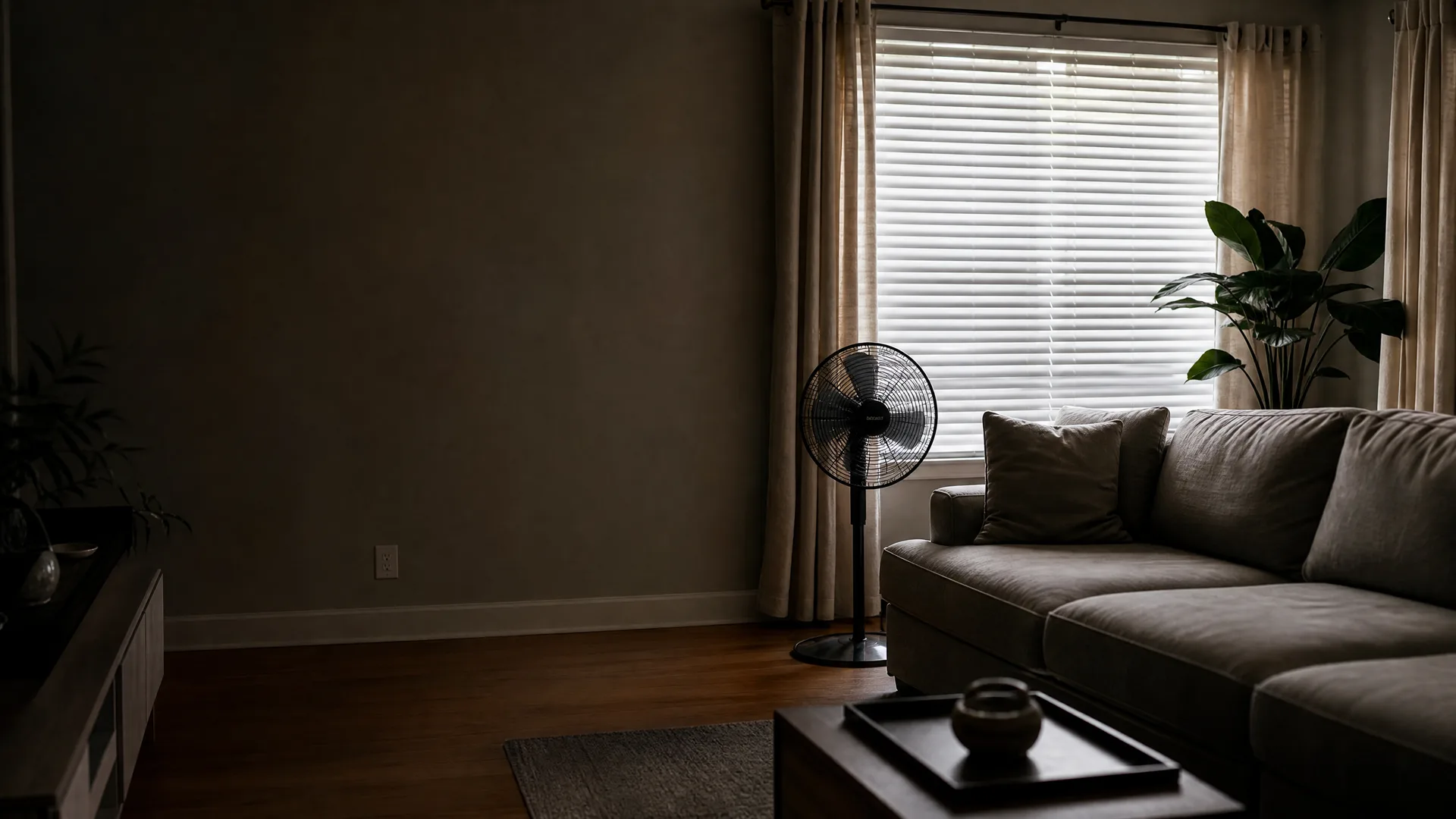
A dimly lit living room with a gray sectional sofa, a standing pedestal fan, a curtained window with blinds, a potted broad-leaved plant, a wooden coffee table with a tray and lidded jar, and a rug on dark wood flooring.

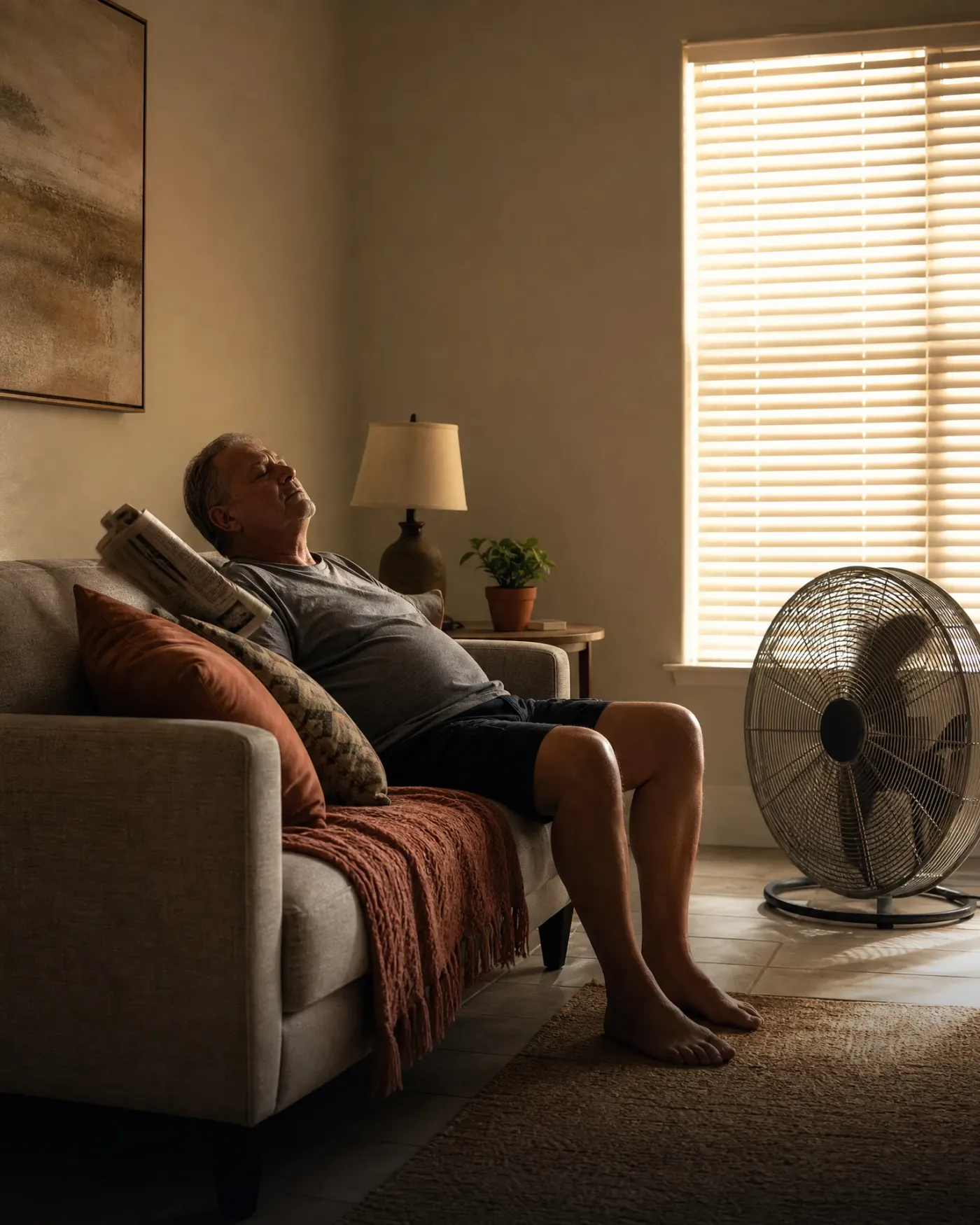
By two in the afternoon the sun is straight on the west windows, so the blinds stay shut. You've got the floor fan running next to the couch, aimed at where you're sitting, and it's doing most of the work right now. The thermostat says it's set to cool. It doesn't feel like it. Outside, the unit is just sitting there, not humming, not clicking, nothing. You noticed it on your way in from the driveway, how quiet it was next to the house. You go back out to check the breaker before you call anyone, because in July in Missouri you don't wait on this.
Why isn't my AC's outdoor fan spinning?

You've already shut the unit off and checked the breaker, so you're past the obvious stuff. The fan blade sits still even though you can hear the unit trying to run, or maybe it's dead silent. You want to know what's actually stopping it from turning before you decide whether this is something to watch or something to call about.

Most often a bad capacitor or a seized motor

The outdoor fan runs on its own motor, separate from the compressor, and that motor needs a jolt from a run capacitor to start turning. When the capacitor weakens, the motor hums but the blade doesn't move. Give the blade a push with a stick while the unit is off and the breaker is pulled. If it spins freely and the unit tries to start when power's back on, that points to the capacitor. If the blade is stiff or won't turn at all, the motor bearings have likely worn out or seized, which happens after enough summers of running hard in Missouri heat. Either part needs replacing. Running the compressor without the fan moving air across the coil will overheat it fast, so it's worth cutting power until it's looked at.

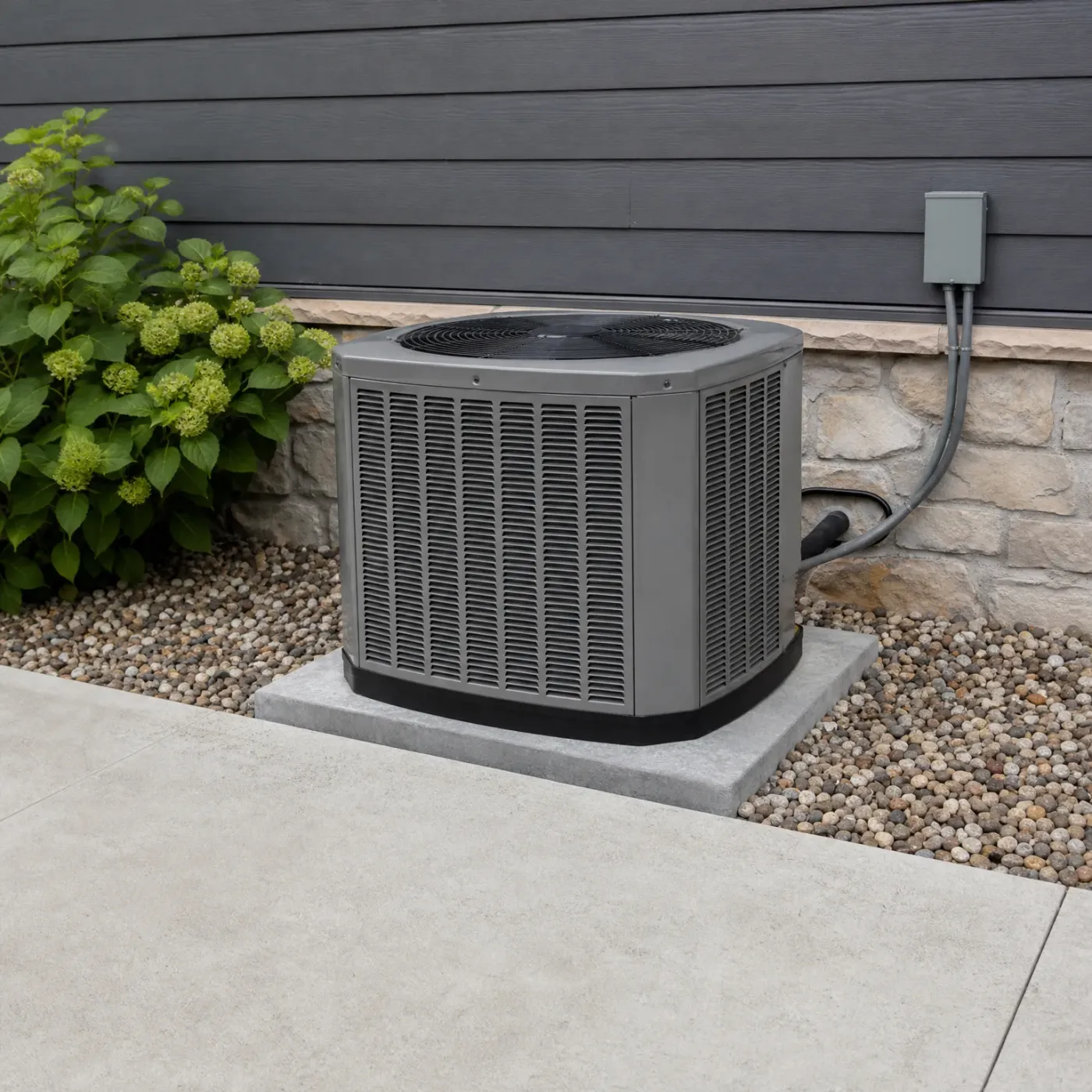
A gray outdoor air conditioner condenser unit on a concrete pad beside a house with dark horizontal siding and a stone base, surrounded by gravel, with a flowering shrub at left and a concrete walkway in front.

Fan spinning, unit running clean

The blades turn as soon as the compressor kicks on, moving air out the top steady and even. The fins are clear, the pad is level, and the disconnect box on the wall hasn't been touched. Nothing here is asking for attention yet.

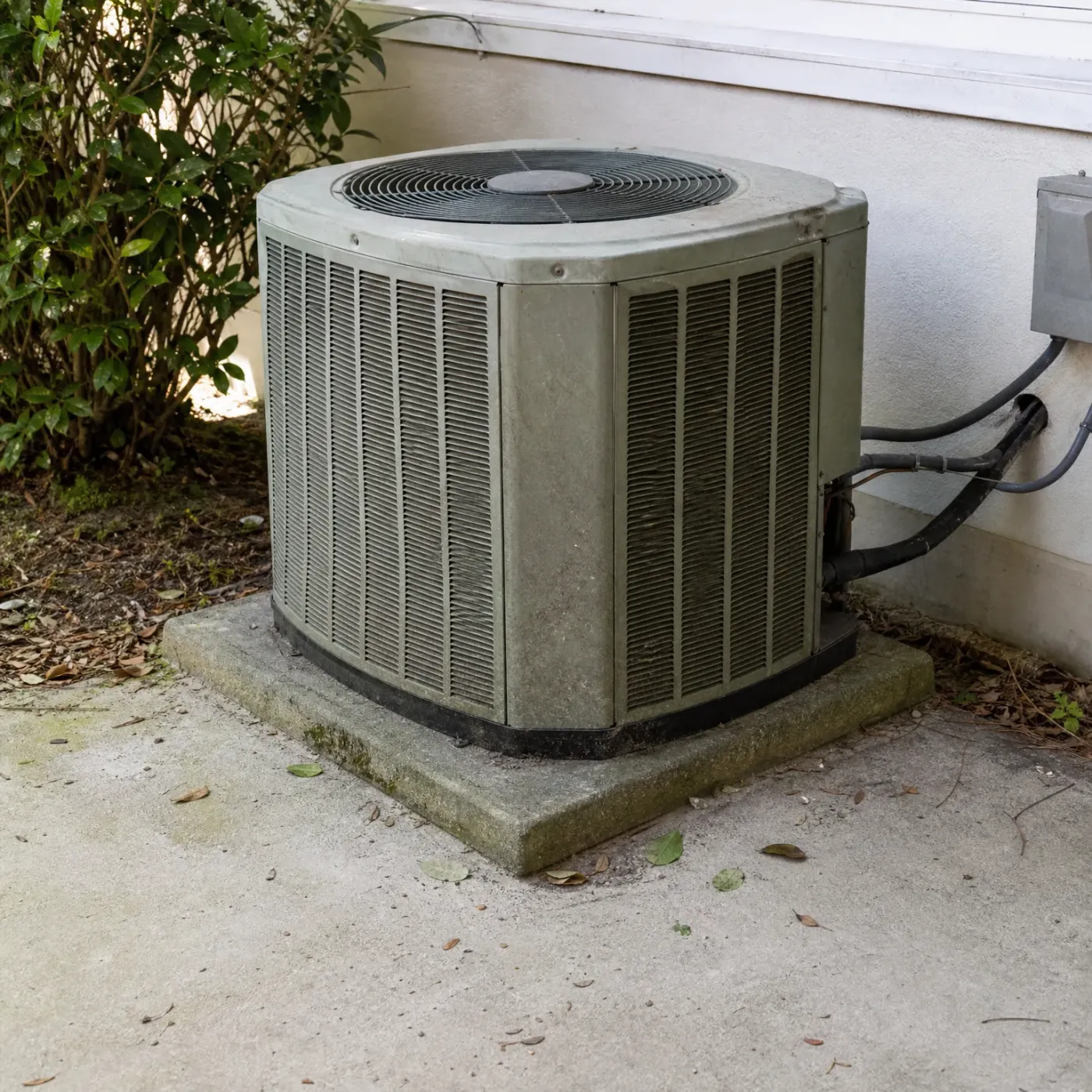
An outdoor air conditioner condenser unit sits on a concrete pad beside a stucco wall, with refrigerant lines and conduit running to the wall and a shrub to the left.

Fan stalled, grime built up on the casing

The fins are caked with dirt and the motor doesn't turn when the unit calls for cooling. That buildup makes the motor work harder for years, and a unit run hard through enough Missouri summers is the one more likely to seize or burn out.

A woman in a gray turtleneck sweater stands by a window looking outside at snowy ground, with a dimly lit living room containing a sofa, shelves, lamp and a lit candle behind her.
A woman in a cream cable-knit turtleneck sweater stands in a warmly lit living room with a fireplace and shelves behind her, looking out a window toward snow-covered trees and a railed deck.
A woman in a cream knit turtleneck sweater stands by a window looking out at snow, with a lit fireplace, sofa and lamp in the room behind her.
A woman in a gray knit sweater sits by a window looking out at falling snow, with a dimly lit living room containing a sectional sofa, pillows, a lamp and houseplants behind her.

What the capacitor actually does

The capacitor stores a charge and gives the fan motor the push it needs to start spinning, then keeps it running steady once it's going. A weak one might still get the compressor going but not the fan, which is why you can hear the unit running while the blade sits still. Capacitors wear down with heat, and a unit sitting outside through a Missouri summer runs hot for months at a stretch. It's a small part, usually the size of a soup can, mounted near the fan motor inside the outdoor unit. When it fails, it rarely gives warning. One day it works, the next it doesn't.

What a seized motor tells you

If you've ever tried turning the fan blade by hand with the power off and it won't budge, or it moves rough and gritty, the motor bearings have likely worn out. That's different from a capacitor problem. A bad capacitor leaves the motor free to spin if you nudge it. A seized motor won't turn no matter what. Motors wear out from age and from running long hours, and a system that's been cooling a Missouri house every summer for years has put real time on that motor. Once bearings go, the fix is replacing the motor, not the capacitor.

A bearded man in a plaid flannel shirt stands in a kitchen looking out a window toward snow-covered shrubs, with a steaming mug on the windowsill and potted plants on a shelf behind him.
A smiling man with dark curly hair in a navy t-shirt sits on a gray couch indoors, with a large-leafed plant and a window in the background.
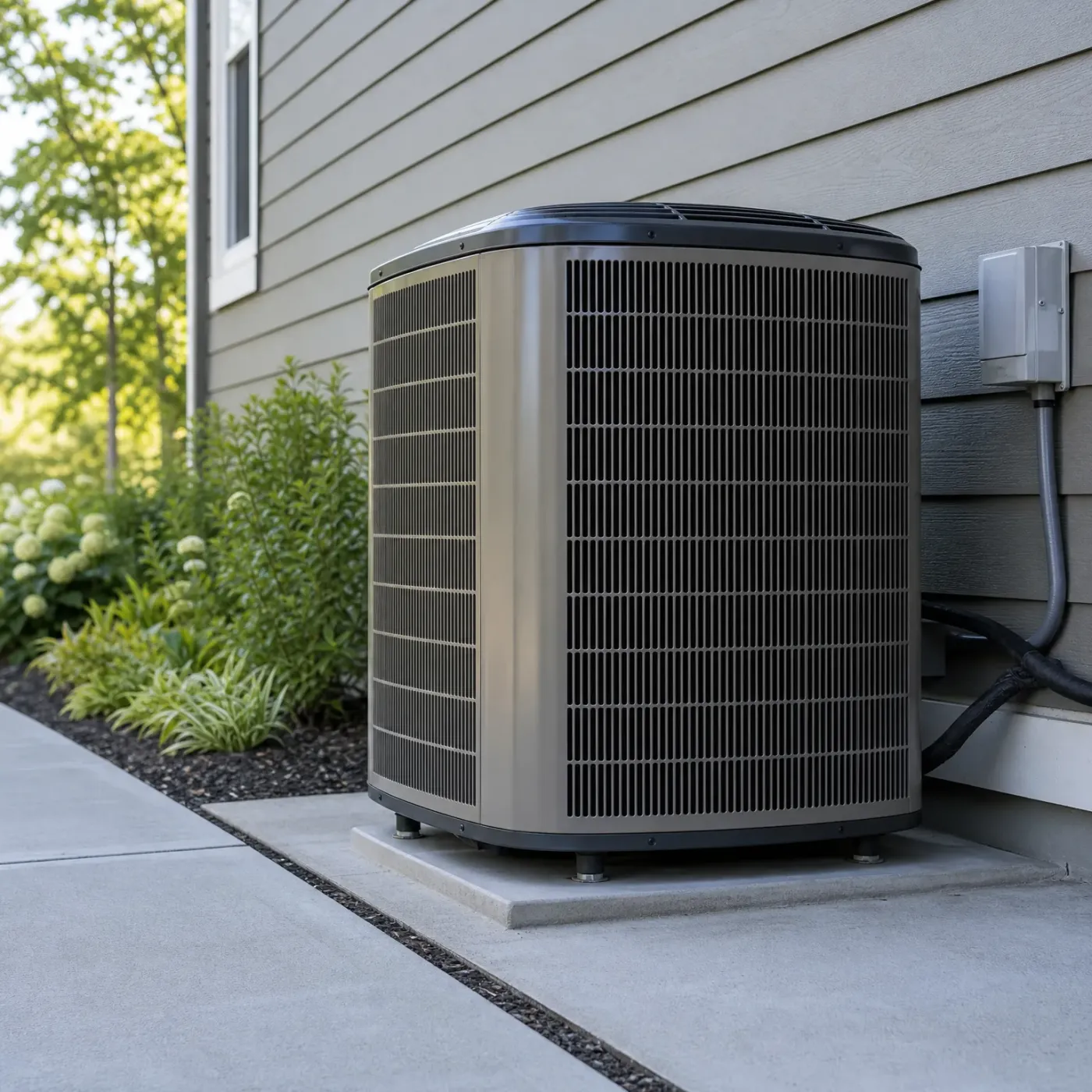
An outdoor air conditioning condenser unit on a concrete pad beside a house with horizontal lap siding, with a gray electrical disconnect box and conduit on the wall and green shrubs and trees to the left.

A local pro for your air conditioner repair

Your request stays with one local pro.

Describe your air conditioner job, and a local pro who handles it gets in touch.

Reach a local pro

You only hire the pro if you want to.

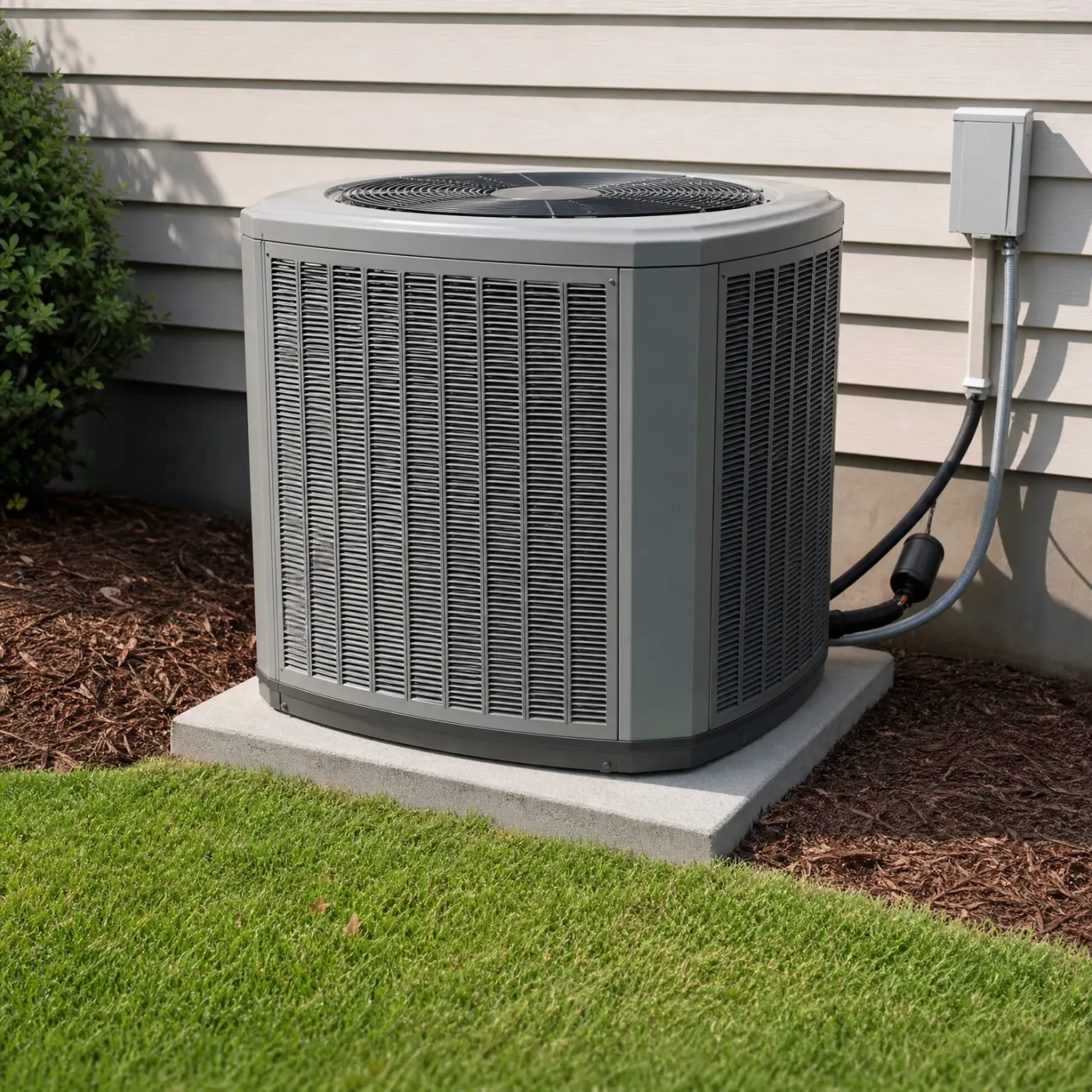
A gray outdoor air conditioner condenser unit on a concrete pad beside a house with horizontal lap siding, with a wall-mounted disconnect box and conduit, mulch bed, shrub, and lawn nearby.
The fan spins the moment the unit cycles on, pulling air straight up past the disconnect box and the lines on the wall.
An outdoor air conditioner condenser unit sits on a gray pad beside a light vinyl-sided wall, on a concrete slab next to a gravel bed.
Here the fan sits dead while the conduit and lines run up untouched, a sign the problem is electrical, not in the yard.

Your outdoor unit runs two motors off one contactor. When the thermostat calls for cooling, the contactor closes and sends power to the compressor and the fan motor together. The fan has its own capacitor, separate from the compressor's, and that capacitor gives the motor the push it needs to start turning. If the contactor's contacts are worn or pitted, the compressor can still hum along while the fan gets nothing, which is why you might hear the unit running but see the blade sitting still. Heat takes a toll too. Years of summer heat can stiffen the fan motor's bearings until the motor hums under power but can't turn the blade, and some units add a thermal overload switch that shuts the motor off if it runs too hot. A quick way to tell what's wrong: if the blade spins freely when you turn it by hand but won't start on its own, that points to the capacitor, not the motor.

How the fan actually gets power

  • The outdoor fan motor has its own run capacitor in most units, separate from the one that starts the compressor.
  • A contactor relay closes to send power to both the compressor and the fan motor at the same time when the thermostat calls for cooling.
  • If the contactor's contacts are pitted or stuck, the compressor can hum while the fan gets no power at all.
  • The fan motor bearings can bind up after years of spinning in the heat, so the motor hums but can't turn the blade.
  • Some units wire the fan motor through a thermal overload switch that cuts power if the motor runs too hot.
  • A fan motor that spins freely by hand but won't start on its own usually points to a bad capacitor, not the motor itself.
An outdoor air conditioning condenser unit on a concrete pad beside a house with horizontal lap siding, with a shrub and mulch bed to the left and conduit and a small electrical box on the wall to the right.
Before you get your air conditioner repair
A gray outdoor air conditioner condenser unit sits on a concrete pad beside a house with horizontal lap siding, with conduit and an electrical disconnect box on the wall, dark mulch and a shrub to the left, and a concrete walkway in the foreground.
After you get your air conditioner repair
A two-story house with gray and light gray siding, white-trimmed windows and a white front door, flanked by deciduous trees, with a partly browned lawn in front under a clear blue sky.

That outdoor fan has to push heat out of the coil and into outside air that's already carrying a lot of moisture. Across Missouri, the summer dew point averages 66°F through June, July and August, according to NOAA climate data. Air that humid holds onto heat, so the coil has to work harder to shed it even when the fan is spinning right. If the fan's stalled, that heat has nowhere to go at all, and the compressor behind it keeps drawing power while doing none of the cooling. You'll notice the unit running longer, the air coming out less cold, and the whole system straining in weather that's already working against it.

NASA POWER T2MDEW county cells weighted by homes

Call Now or Wait It Out

Call now

  • A stalled fan with the compressor running sends liquid refrigerant backing up into lines not built to hold it, and that can crack a compressor in a single afternoon.
  • The longer the fan sits still, the hotter the coil gets, and some units will trip out on high pressure before anything gets fixed.
  • A seized motor bearing gets worse every cycle it runs, so what's a motor swap today can turn into a compressor replacement in a week.
  • A contractor who works on these units every summer can usually tell from the symptoms alone whether it's the capacitor, the motor, or the contactor before touching anything.
  • Catching it now, while the compressor is still undamaged, keeps the repair to the one part that actually failed.

Wait and watch

  • If the whole unit is dead quiet, including the compressor, there's no heat building in the coil and no rush to act tonight.
  • A breaker that tripped once and holds after reset may have been a one-time overload, not a failing part.
  • Running the thermostat fan setting alone, without calling for cooling, won't load the compressor and tells you if the fan motor itself is getting power.
  • Watching for a burning smell, a hot panel, or repeated breaker trips over a day or two tells you whether this is building toward bigger damage.
  • If temperatures outside aren't pushing the system hard, a short delay before calling someone costs you comfort, not the compressor.
  1. Thermostat calls for cooling and sends power to the contactor coil.

  2. The contactor relay closes, feeding power to the compressor and fan motor together.

  3. The run capacitor gives the fan motor the jolt it needs to start turning.

  4. The fan motor spins the blade, pulling air up through the outdoor coil.

Power costs 13.30 cents per kilowatt-hour statewide

At 13.30 cents a kilowatt-hour, running your air conditioner costs real money even when it's working right. If that outdoor fan has stopped, the compressor can keep drawing power while doing no cooling at all, so you're paying for a unit that's straining instead of helping.

EIA-861 2025 statewide residential average

A gray outdoor air conditioning condenser unit on a concrete pad beside a house with horizontal lap siding and a stone veneer base, with a disconnect box and conduit on the wall, mulch bed and shrub to the right, and mowed grass in the foreground.

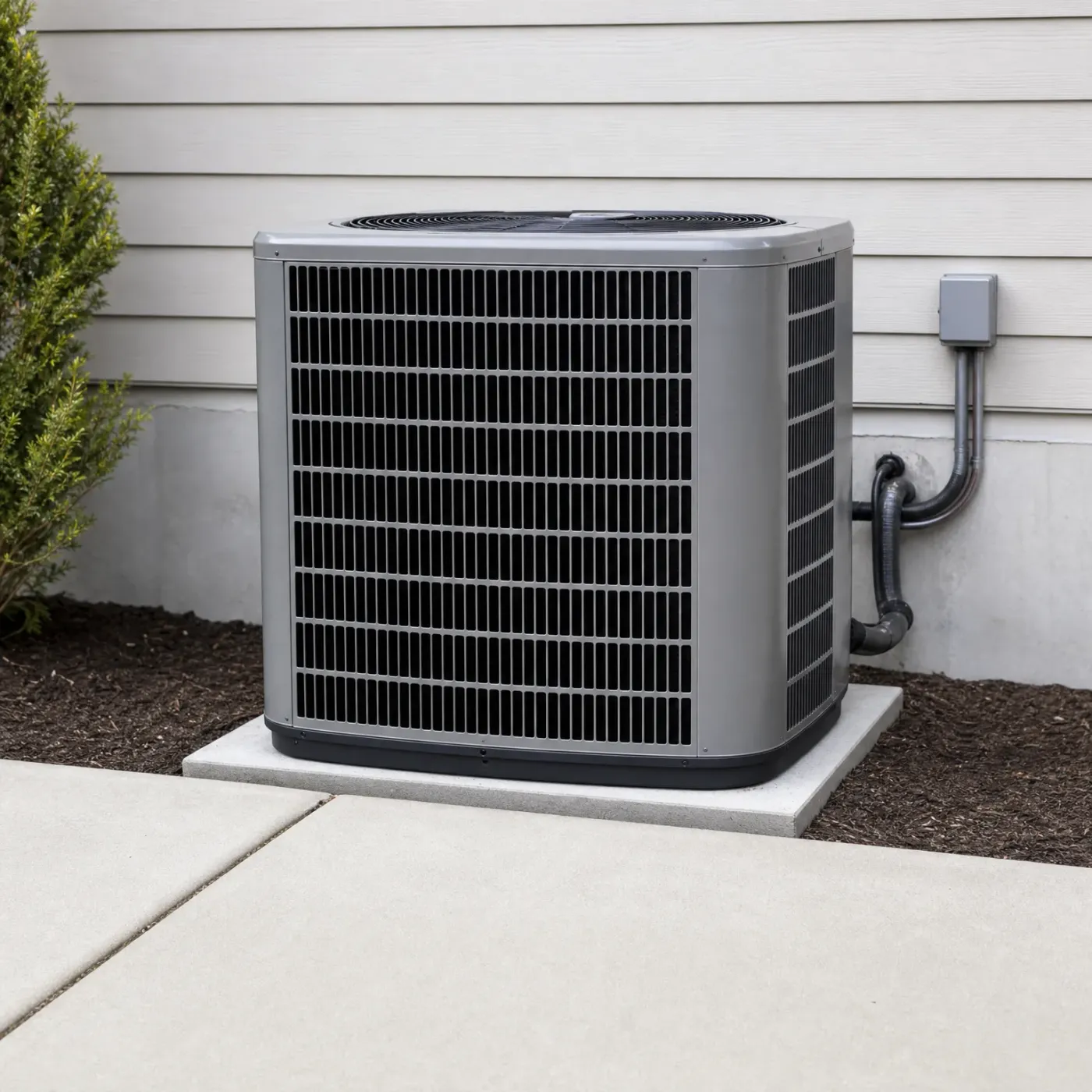
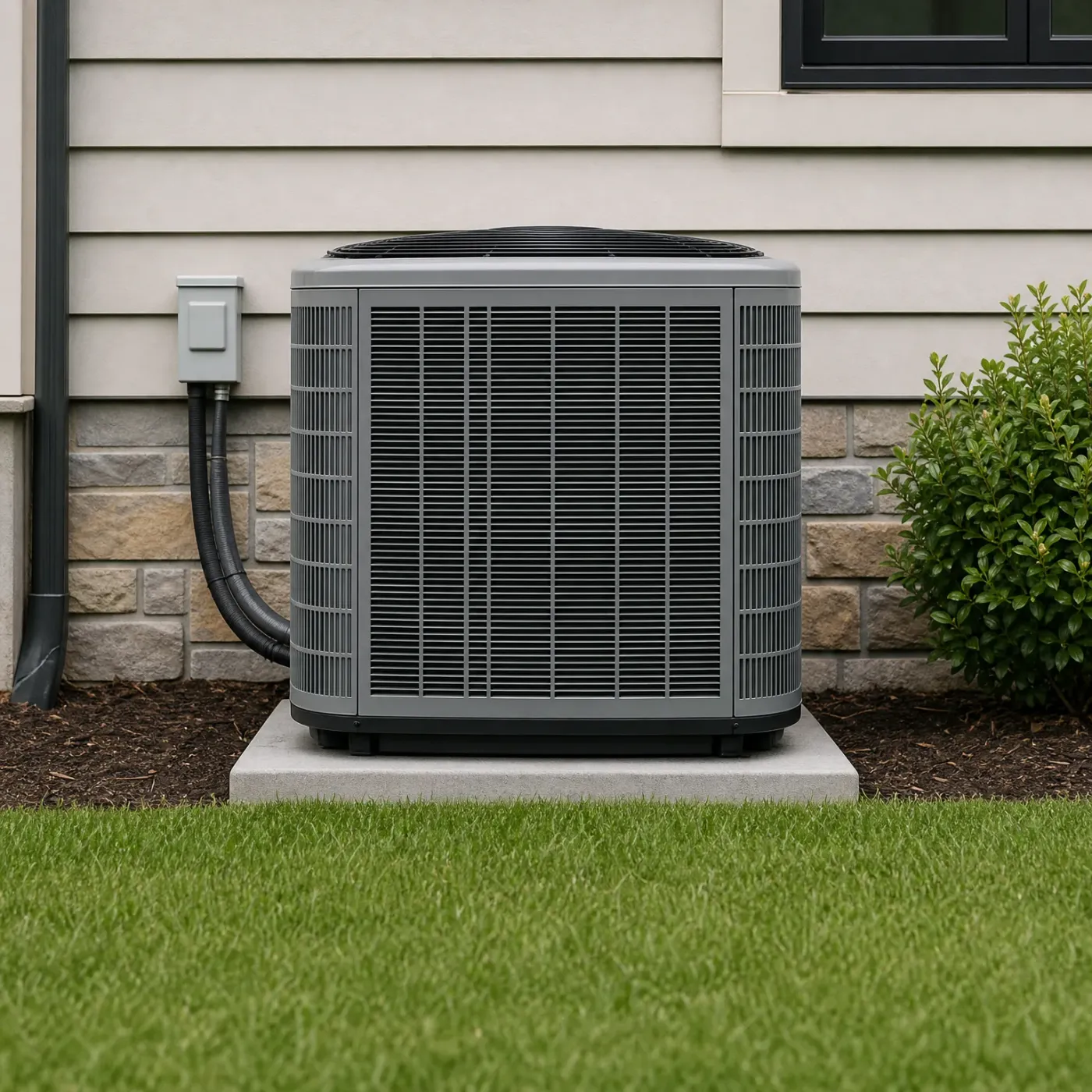
Clean cabinet, clear airflow

Air moves freely through the mesh on all sides, and the cabinet is free of dust. The disconnect box on the wall sits untouched, and the shrub nearby is clear of the grille. A unit that looks like this is pulling outside air through easily, which is half of what that fan depends on.

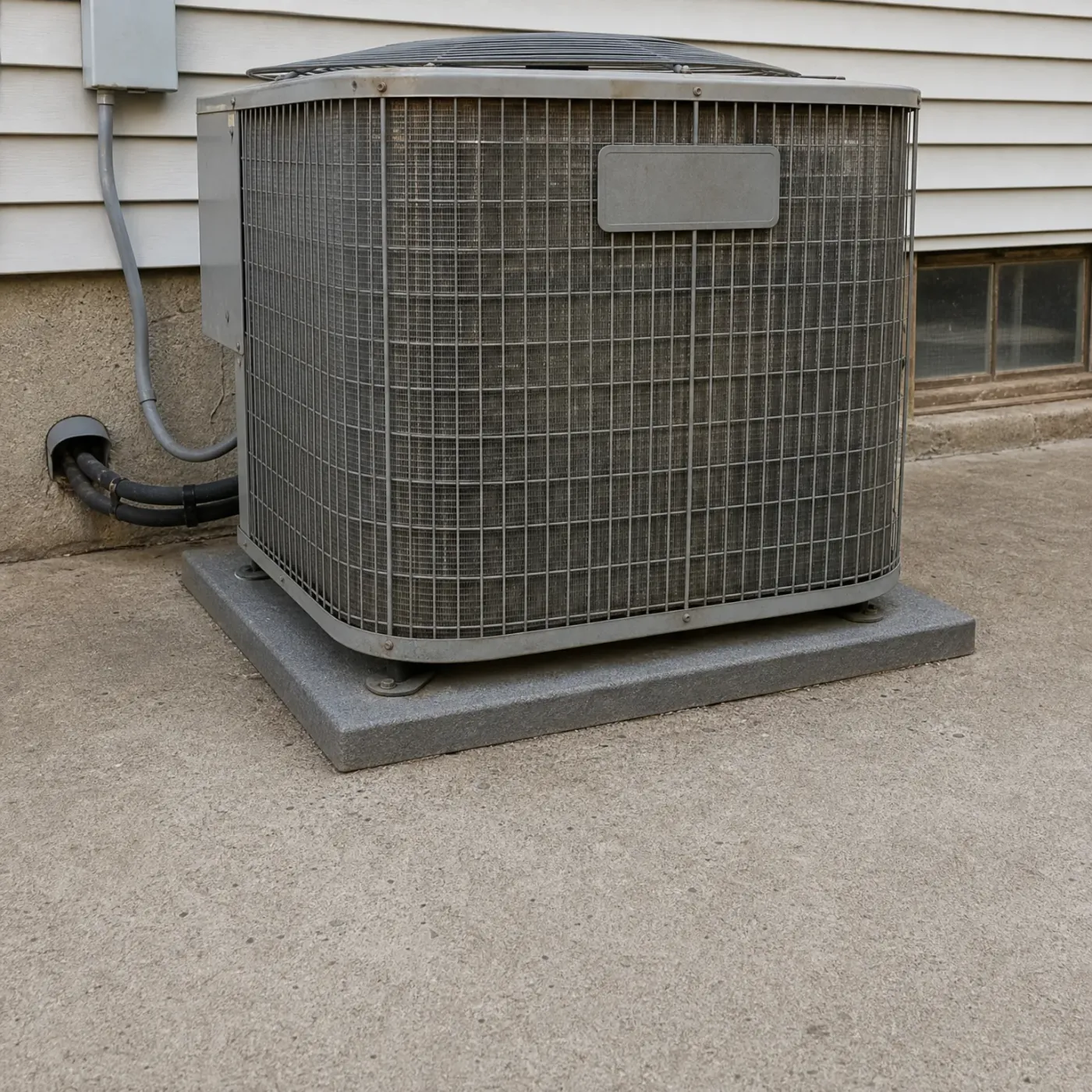
An outdoor air conditioner condenser unit on a gray composite pad beside a house with horizontal siding, a concrete foundation, a basement window, and a conduit and disconnect box on the wall.

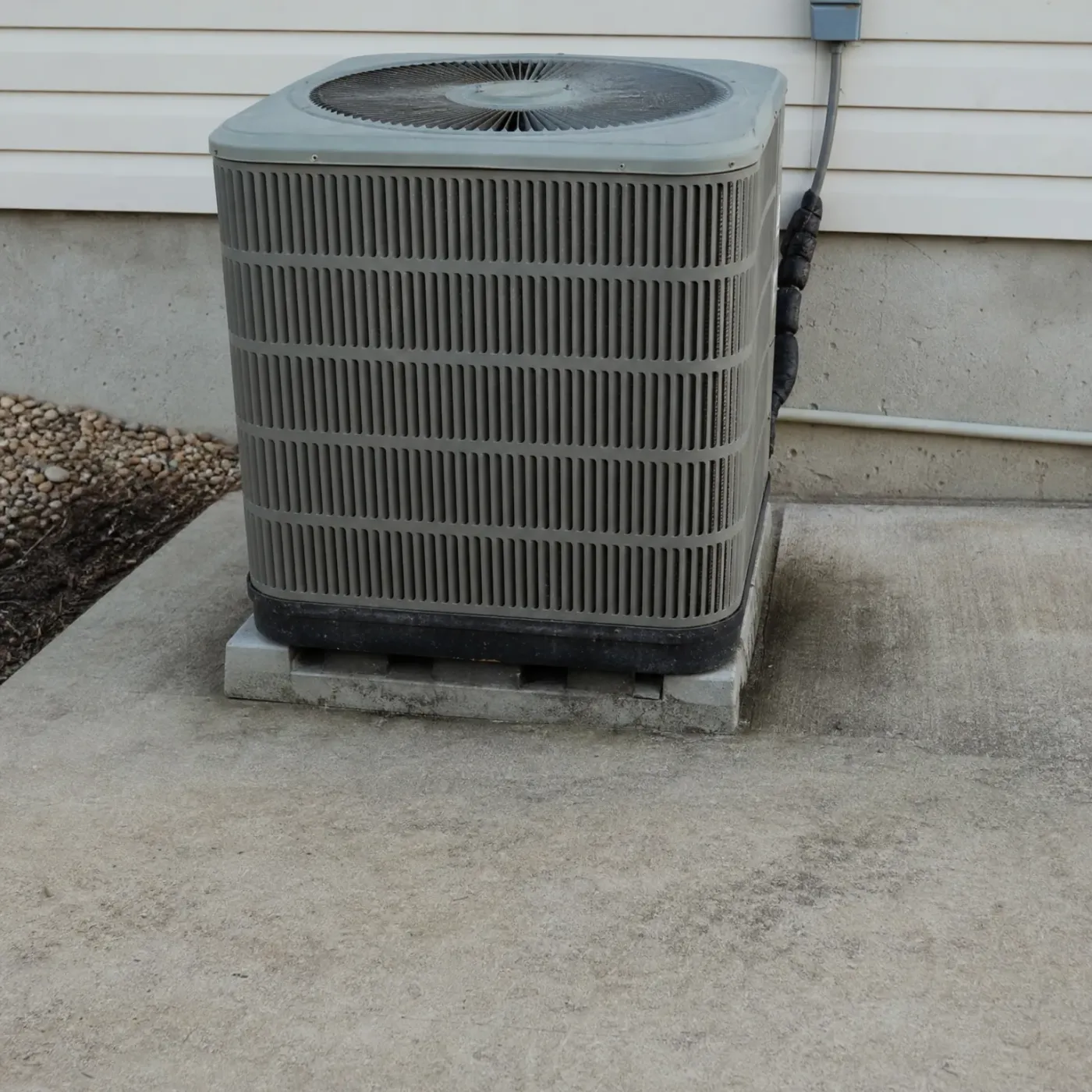
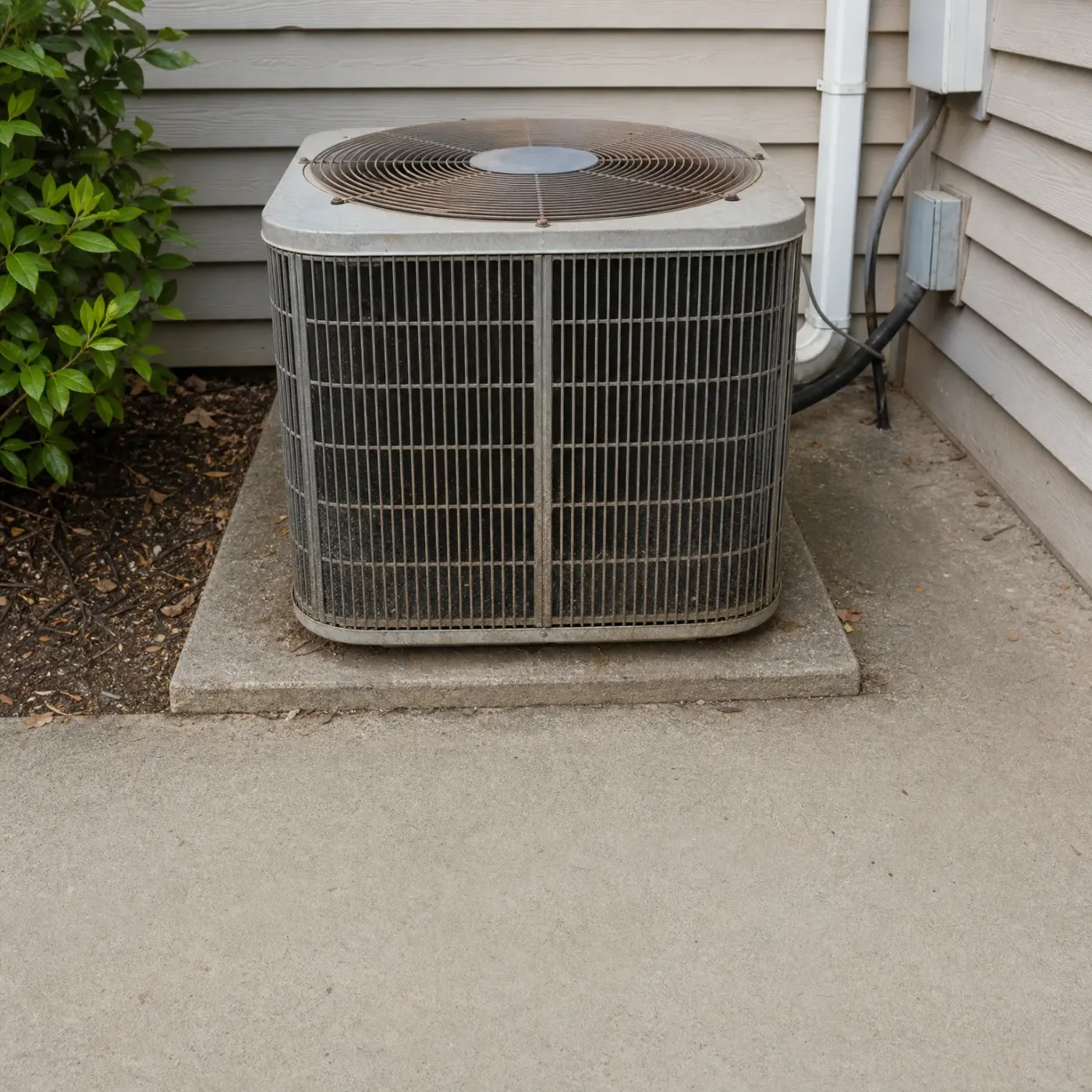
Dust-caked cabinet, blocked airflow

Dirt has built up across the wire mesh, thick enough to see from a few feet back. That buildup chokes the air the fan needs to pull through the coil, and a motor working against that resistance runs hotter and wears faster. The conduit behind it carries power fine. The problem is what's caked on front.

A woman in a cream sweater and jeans stands in the open doorway of a white stucco house, holding the dark door, while a man in a dark quilted jacket seen from behind walks toward the entry past potted plants.

A still fan has a cause, and it's fixable

A fan that won't turn isn't a mystery. It's a breaker, a capacitor, a seized motor, or something caught in the blade. Each of those has a fix, and none of them get better if the unit keeps running with the compressor on and the fan off.

What you need now isn't a diagnosis, it's someone standing at the unit with a meter. Matching you to a licensed contractor near you in Missouri means one person shows up who's pulled capacitors out of units like yours all summer and knows which part usually gives out first. You'll hear from that one contractor directly, not a handful of companies calling at once.

A gray upholstered sofa with a matching cushion sits beside a potted plant and a wooden table holding a small green plant in a stone pot, near a curtained window.
Close view of a dark standing-seam metal roof with a stone chimney and metal flue cap, overlooking a wide river, trees, and flat farmland under a partly cloudy sky.

Get the right pro for your air conditioner

Find a licensed air conditioner pro

Asking costs nothing, and the choice to hire stays yours.

A compressor that keeps running with a dead fan doesn't fix itself by waiting. Missouri heat makes that worse by the hour, not the day. Getting a local contractor looking at it now costs you nothing but the time to ask.