Answer a few questions instead of calling shop after shop.
Your AC runs most of the day once July hits and it still can't get the house below 78. Missouri humidity is the reason the air feels heavy even when the thermostat says it's working. A system that's low on refrigerant or has a weak capacitor can still blow air, just not enough cold air to keep up once it's 95 outside and just as sticky.
That gap between what the thermostat asks for and what the house actually feels shows up worse on the hottest days, because the system that was marginal in May runs out of room in August.
Figuring out which of those it is usually means getting a contractor out to look at it. On your own, that's searching around for who does AC repair near you, calling a few, trying to describe what the system is doing differently to each one, then waiting on quotes to come back so you can compare them against each other. Most of that work has nothing to do with fixing your AC. It's just finding someone who can.
This page connects you with one licensed Missouri contractor instead of a list of them. Someone who works on these systems all summer in this same heat and humidity, and has a good idea what's usually behind a unit that can't keep the house cool once it gets hot and sticky out. You explain the problem once, to the person who's actually going to look at it.
From there it's a straightforward path: tell them what the AC is doing, get a diagnosis, get it fixed. No comparing bids from different companies, no second-guessing which one to trust with your address.
Most of the time, an AC that can't keep up isn't dead, it's undersized for what a Missouri July is asking it to do. A system sized to drop the temperature ten or fifteen degrees works fine on a dry 85 degree day. On a sticky 95 degree afternoon, it has to pull the moisture out of the air before the air even starts to feel cooler, and that takes time and capacity most units don't have to spare. If yours is also low on refrigerant, or the coil is dirty, or the capacitor is weak, it loses even more of that capacity, and now it's running flat out just to hold steady instead of actually cooling the house down. That's why the thermostat can say it's working and the house still feels warm at eight at night. The fix starts with finding which of those it actually is.
Power costs 13.30 cents per kilowatt-hour statewide
At 13.30 cents per kilowatt-hour, running your AC flat out all afternoon doesn't wreck your bill the way it might elsewhere. That's good, because a struggling system has to run longer to get anywhere close to comfortable. The cost of letting it limp along is wasted hours, not a huge power bill.
EIA-861 2025 statewide residential average
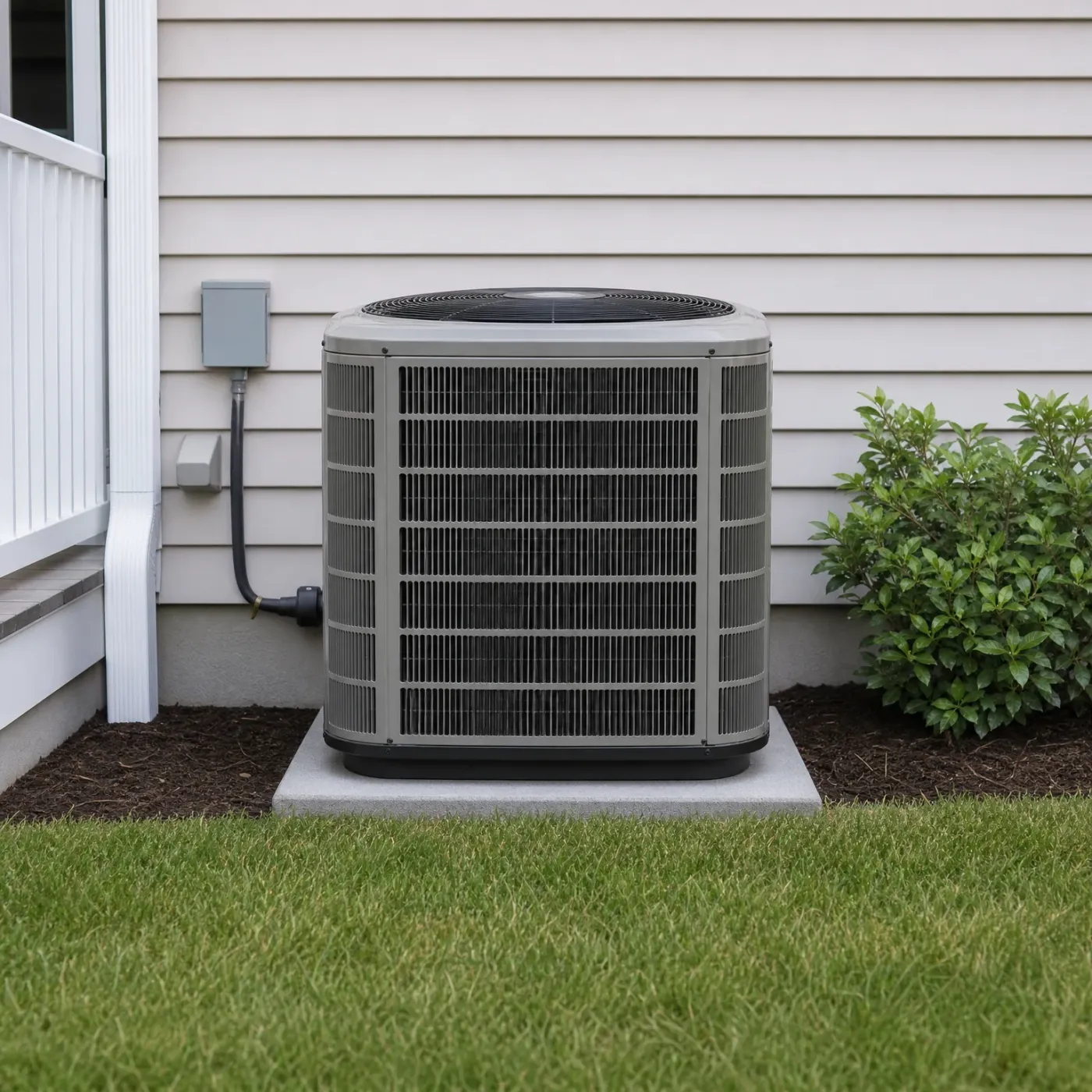
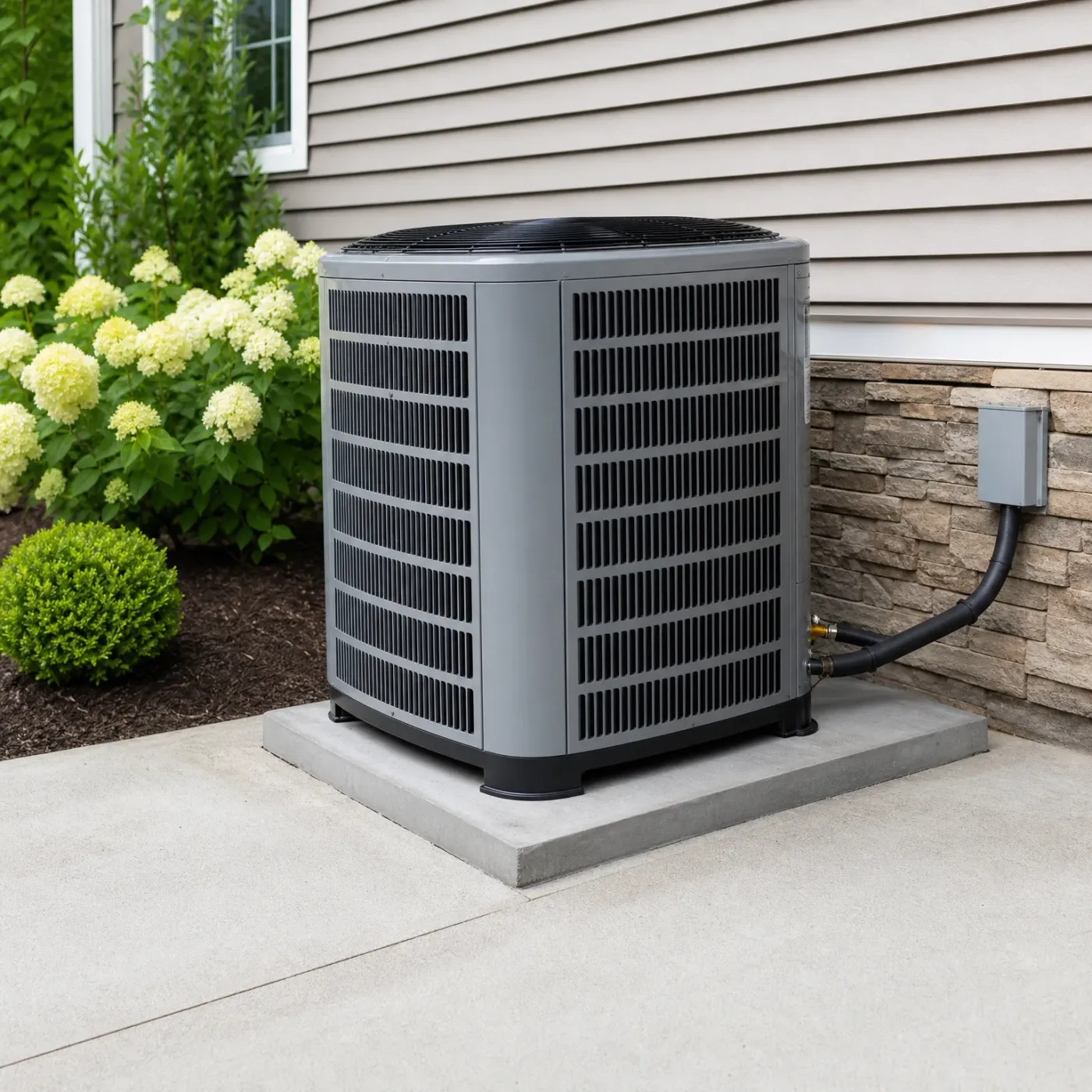
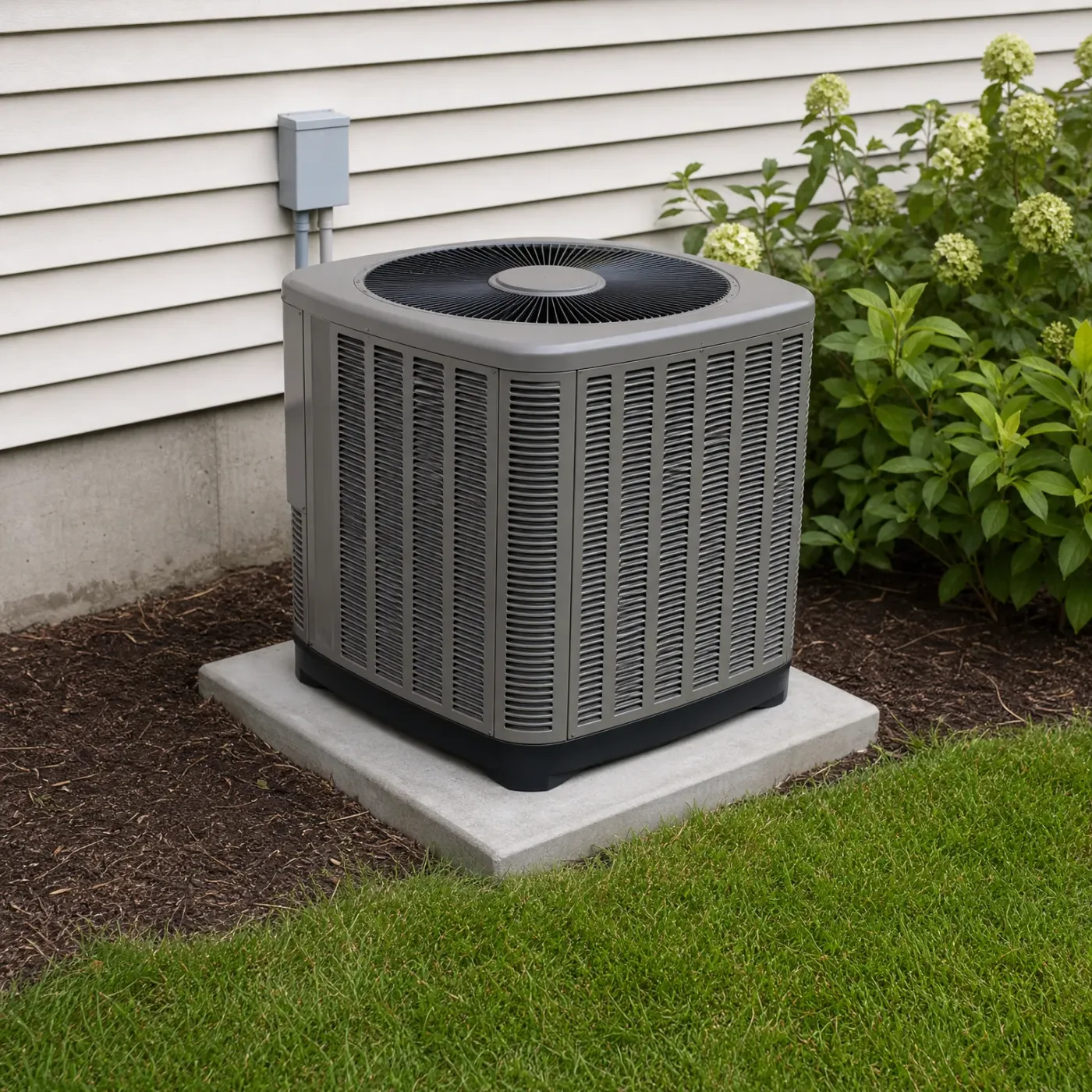
A clean condenser like this moves heat out of the house as fast as the heat builds up inside it.
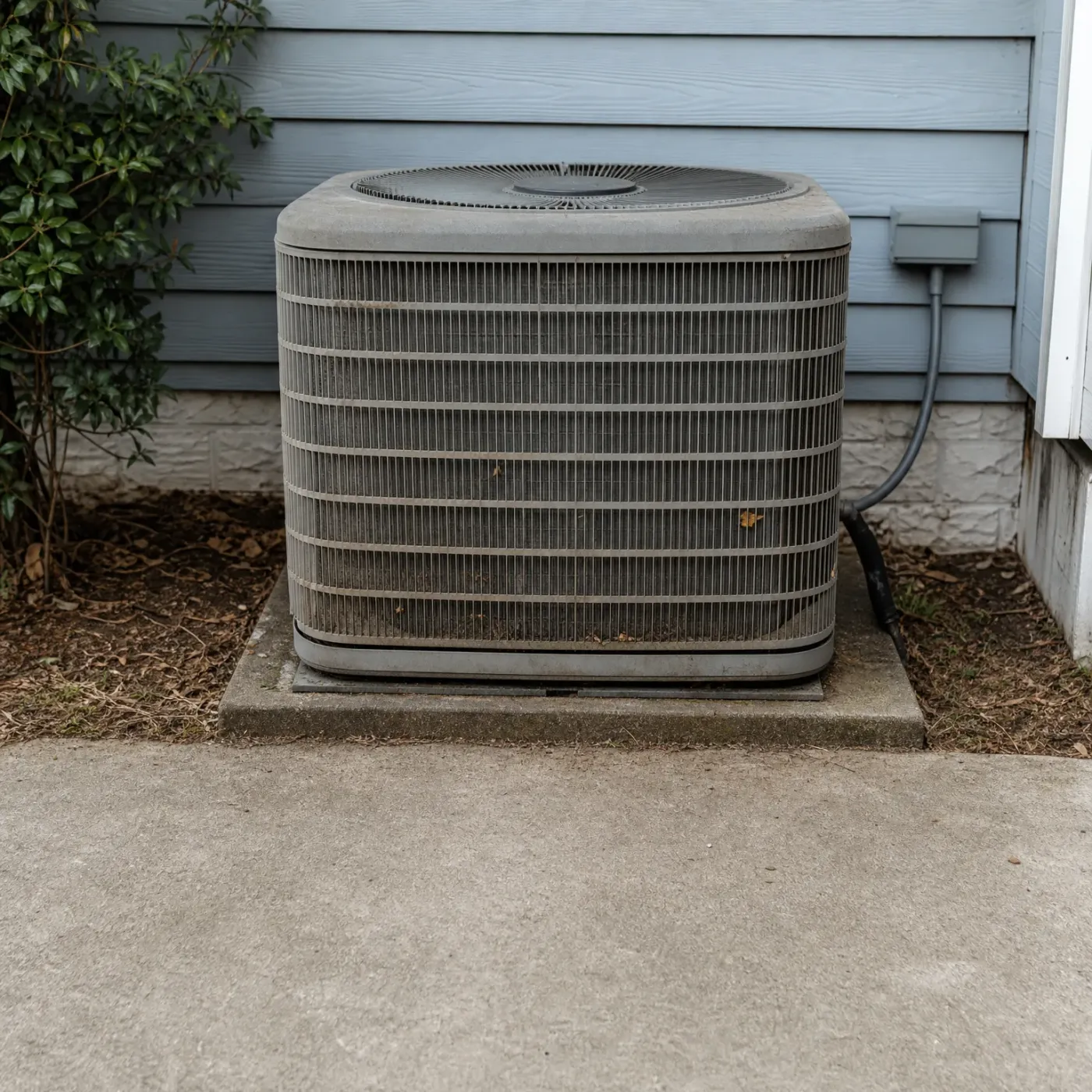
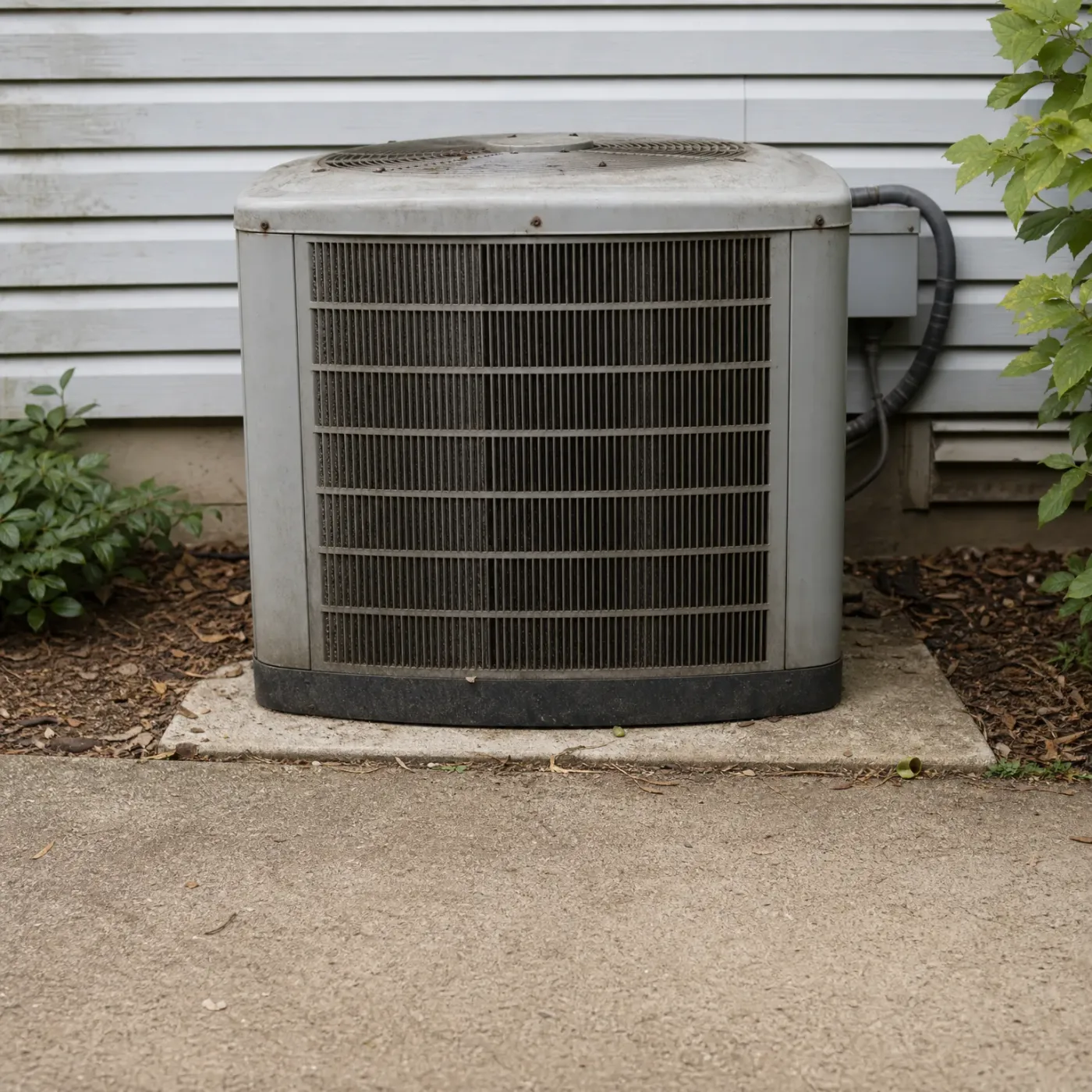
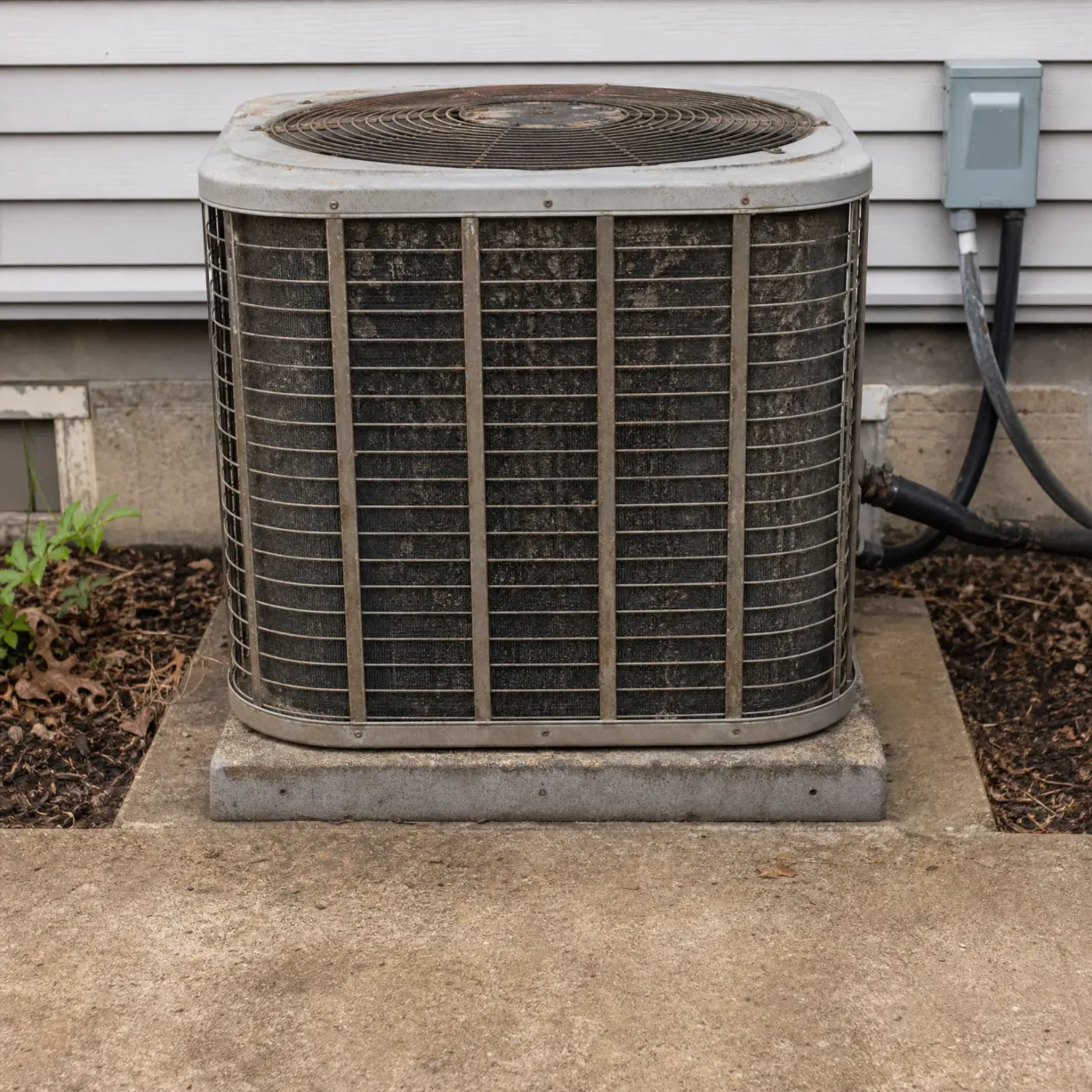
Coils packed with dust can't shed heat, so the unit runs longer and still loses ground on a hot afternoon.
Keeping Up or Falling Behind
Still Cooling, Just Slow
The house gets to 78 or 79 by evening, just later than you'd like, and the air moves fine at every vent.
Your electric bill went up this month but not by much, since power here runs about 13.30 cents a kilowatt-hour.
The outdoor unit cycles on and off instead of running nonstop, which means it's still catching up between rounds of heat.
Nothing is leaking, icing over, or making a new noise, it's just working harder on the 95 degree days than the 85 degree ones.
A filter change or a coil cleaning brings it back in line within a day or two.
Actually Losing Ground
The house holds at 82 or 83 no matter how long the system runs, even overnight when it's cooler outside.
The air coming out of the vents feels lukewarm instead of cold, which points to low refrigerant or a compressor that's struggling.
The outdoor unit runs constantly without shutting off, and the humidity inside stays heavy no matter the thermostat setting.
Ice shows up on the refrigerant line or the indoor coil, a sign the system can't absorb heat the way it's supposed to.
A contractor who works on Missouri systems every summer can tell within a visit whether it's a capacitor, a charge issue, or a unit that's undersized for your house.
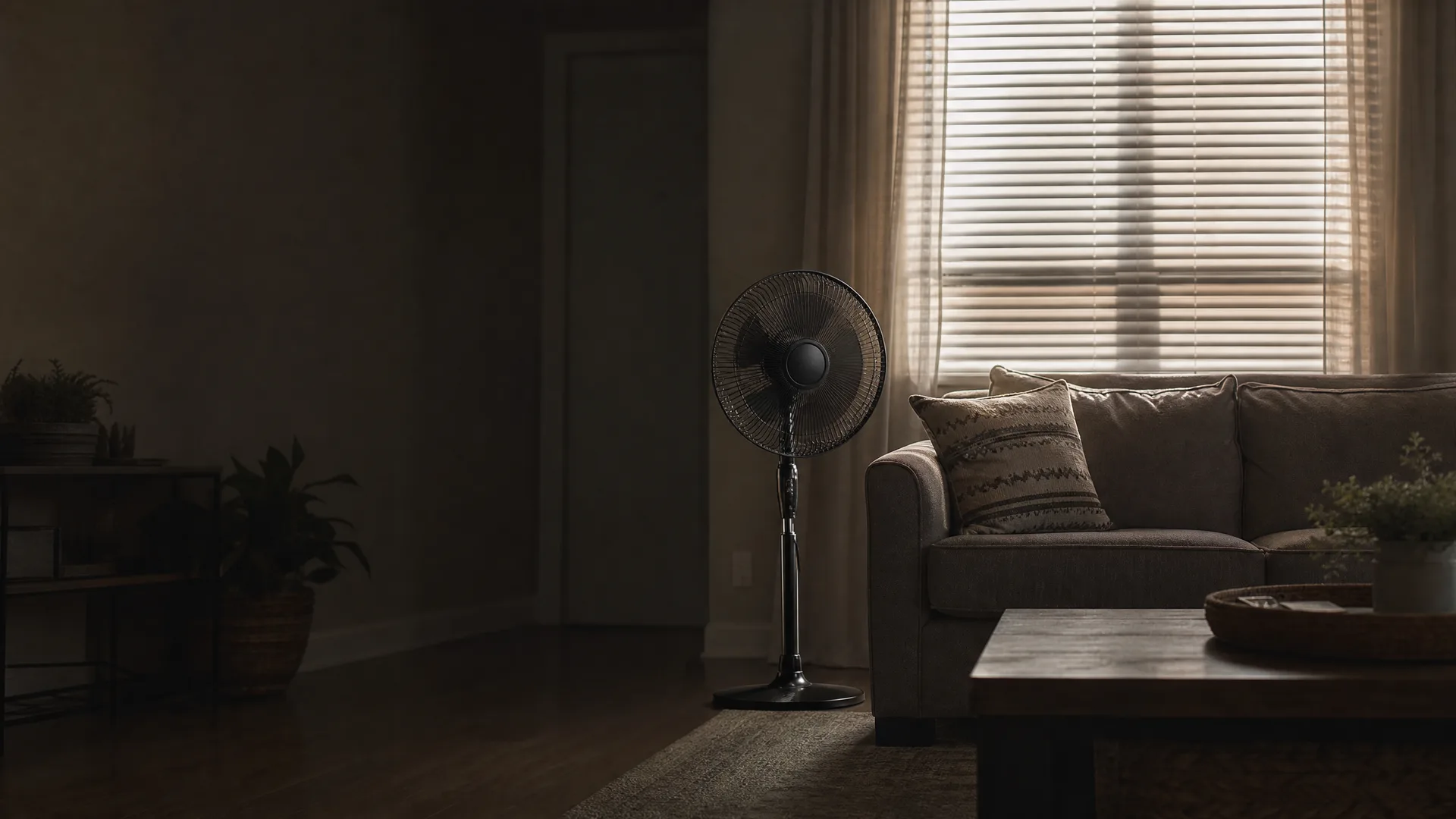
It's a little past two and the blinds are shut against the sun, but the living room still feels close. The floor fan next to the couch is going on high, pushing the same warm air around rather than cooling anything. You walk past the thermostat and it reads 79, same as it did an hour ago. Somewhere upstairs the kids are camped in front of another fan. You've already called your sister to ask who she uses for her AC, and she didn't know either, just a name she half remembered. You're tired of calling around and explaining the same thing three times. The unit outside is running. You can hear it through the window. It just isn't winning.
A system that's falling behind on a 95 degree day could need a refrigerant charge, a new capacitor, or a coil cleaning, and there's no way to know which from the thermostat. Figuring that out means someone getting hands on the unit. You could spend an afternoon calling around, telling each company the same thing about the thermostat reading and the warm air at the vents, then waiting on quotes to compare. Or you could put in what's going on once and have it go to a local contractor who works on Missouri AC systems all summer and has a good idea what's usually behind a unit that runs long and still can't close the gap on a hot afternoon. One contractor gets your request, not five, so you're not fielding calls all week while your house sits at 78 degrees. The sooner it's looked at, the sooner you know whether it's a quick fix or something bigger, instead of guessing through the rest of July.
Before you get your air conditioner repairAfter you get your air conditioner repair
Cooling your house is really two jobs. The refrigerant has to pull heat out of the indoor air, and it has to pull the moisture out too, since that's what makes a room feel cool instead of just slightly less hot. That moisture lands on the evaporator coil and runs off down the condensate line, and on a sticky day that step alone takes time and capacity the system doesn't have to spare. Everything downstream depends on air moving freely across that coil. Furniture against a return vent, or dust built up on the coil itself, cuts down how much air gets across it, so each cycle pulls out less heat and less moisture than it should. Refrigerant that's run low makes it worse, because the coil can ice over and shut off airflow until it thaws. Outside, the condenser fan has to push all that absorbed heat into the outdoor air, and once that air is already in the mid 90s, the transfer slows no matter how clean the unit is.
What Your AC Is Fighting
Your AC pulls heat out of the house through the refrigerant, but it has to wring moisture out of the air first before the house actually feels cooler.
That moisture collects on the indoor coil and drips down a condensate line, and on a muggy day the system spends real time and capacity on that step alone.
The compressor is sized to move a certain amount of heat per hour, and once the outdoor air hits the mid 90s with high humidity, it's working at the edge of that capacity.
A dirty evaporator coil or a return vent blocked by furniture cuts how much air moves across the coil, so less moisture and heat get pulled out per cycle.
Low refrigerant doesn't just mean less cooling, it means the coil can ice over, which blocks airflow entirely until it thaws.
The outdoor condenser fan has to push that absorbed heat into the outside air, and when the air outside is already hot, that transfer slows down no matter how clean the unit is.
Clean Coil, Clear Airflow
This condenser sits clean against the house, fins open and the cage clear of debris. Air pulls through it the way it was built to. On a sticky afternoon, that unit can still push heat out of the house as fast as the sun loads it back in.
Caked Coil, Losing Ground
This one's coil is packed with dirt and yard debris right up through the cage. Heat can't move out through fins like that, so the unit runs longer and the house still edges up past 78. A coil cleaning is often what gets a system like this back to pulling its weight.
Why does my AC run constantly but never actually cool the house?
You've checked the filter, the thermostat is set right, and the vents are open, but the unit just runs and runs without the house catching up. On a muggy Missouri afternoon that's worrying, because it feels like something is broken even though cold air is still coming out of the vents.
It's pulling heat out slower than the house is gaining it
An AC doesn't cool the air directly. It moves heat out of the house through the refrigerant, and that refrigerant has to be at the right pressure and the coils have to be clean for that transfer to keep up. If the charge is low or the outdoor coil is caked with dust, the system can still move some heat, just not as much per hour as a 95 degree day with high humidity is loading into the house. The compressor keeps running because the thermostat hasn't been satisfied, but it's losing ground the whole time. That's different from a unit that's dead. It's a unit working against a load it can't match, and a contractor can tell which part is behind it.
Summer air in Missouri holds a lot of water, averaging a dew point of 66°F across June, July and August. That's the number that decides how hard your AC has to work, more than the temperature on the thermostat. Before the unit can cool the air, it has to pull that moisture out of it, and at 66 degrees there's a lot to pull. That takes time and run hours the dry-heat states don't need. You'll notice it as a system that runs and runs, drops the house to 78 by evening, and still leaves the air feeling thick until it does. (Source: NOAA)
NASA POWER T2MDEW county cells weighted by homes
Your AC's struggle has a cause, and it can be found
A system that falls behind on a humid July afternoon is telling you something. It might be a weak capacitor, a low refrigerant charge, a coil that can't shed heat, or a unit that was undersized for what Missouri summers ask of it. The thermostat alone can't tell you which, but someone who works on these units all season, in this climate, can look at yours and know within minutes.
That's the part you don't have to do yourself. Instead of searching around for a contractor, calling a few, explaining the same problem on the phone three or four times, and sorting through quotes that are hard to compare, you talk to one licensed contractor local to Missouri who sees this exact problem every summer. They get hands on the unit, find what's actually wrong, and tell you what it takes to fix it.