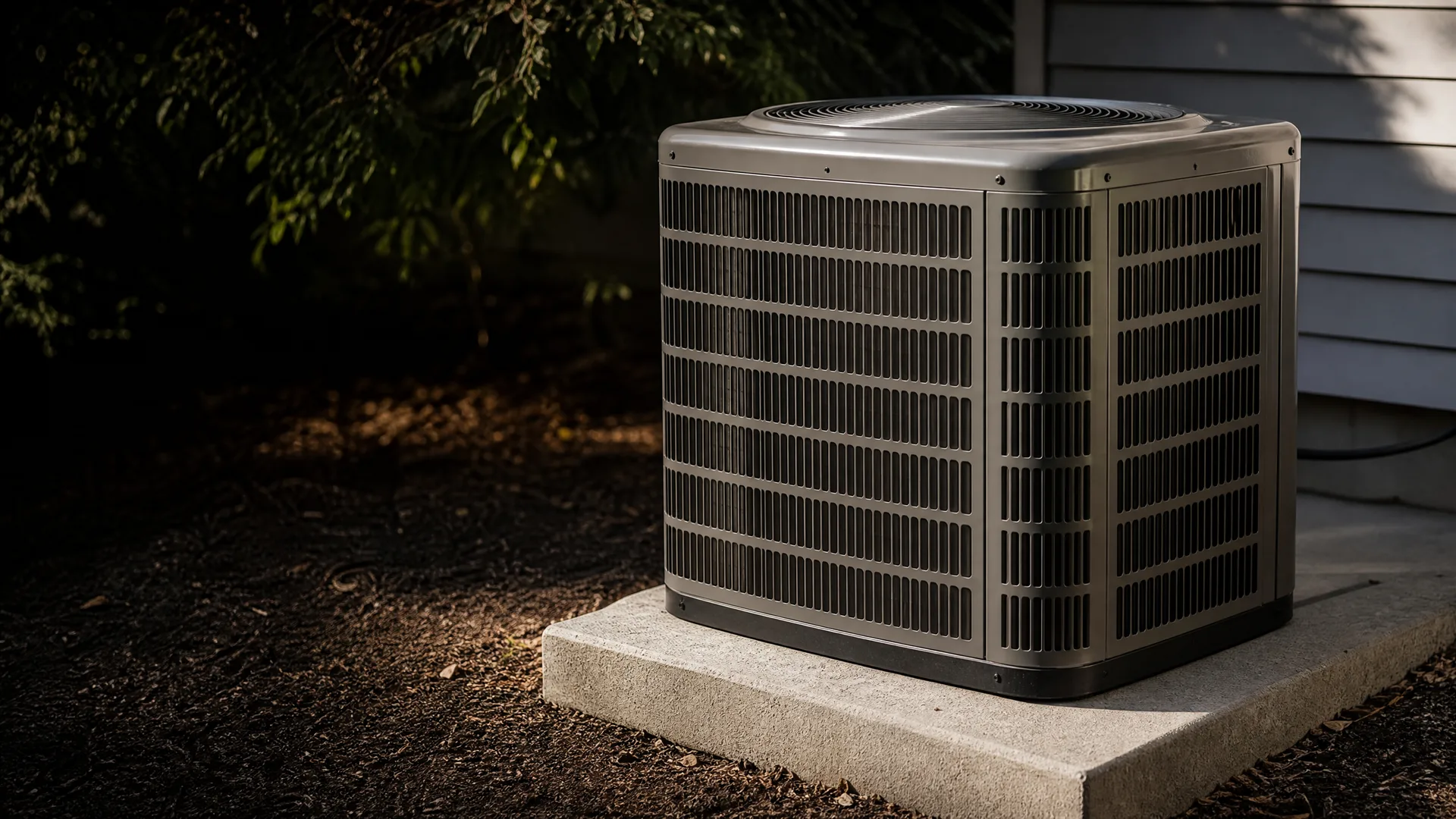
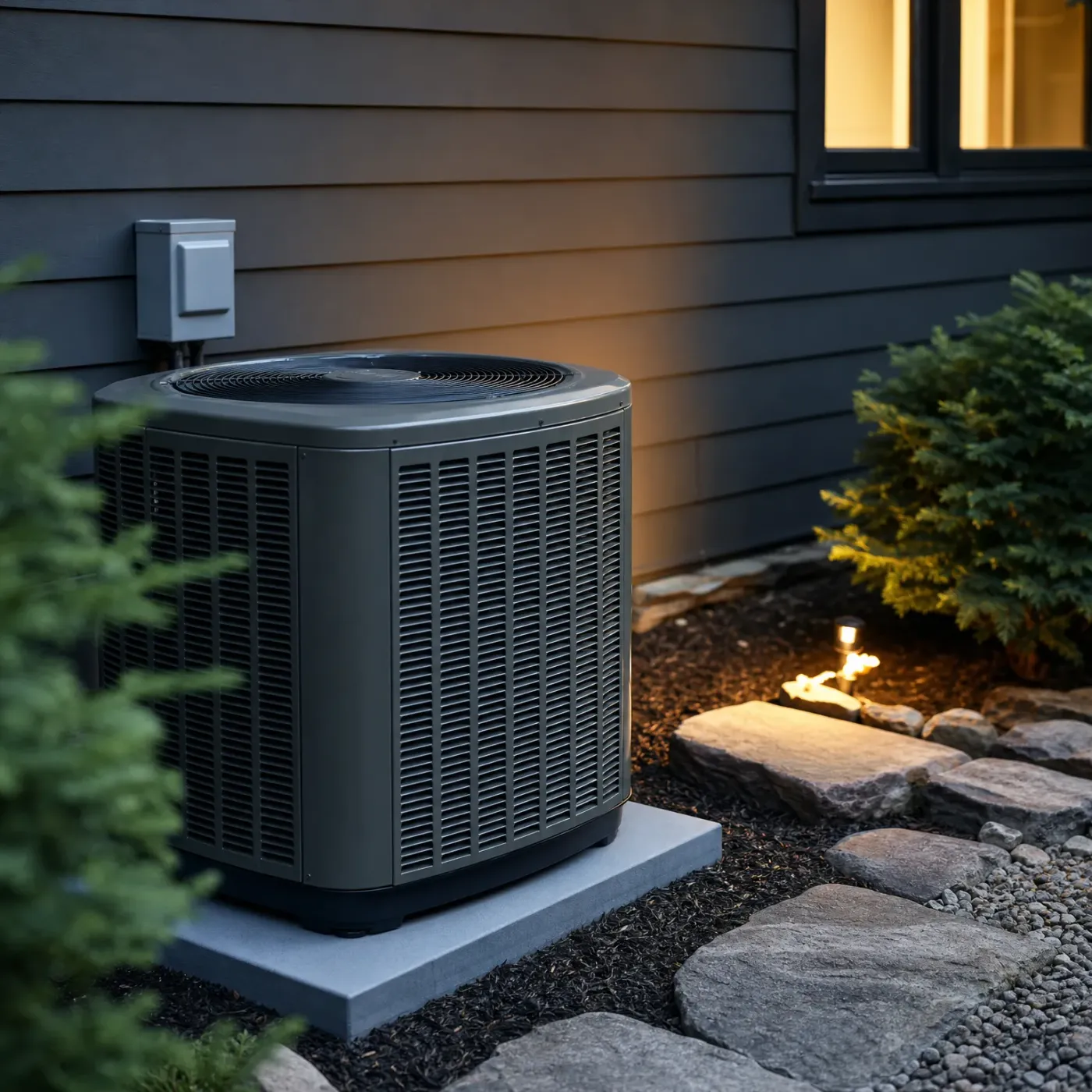
An outdoor air conditioner condenser unit on a concrete pad beside a dark horizontal-sided house, with a gray electrical disconnect box on the wall, shrubs, mulch, stone pavers and a lit landscape light nearby.

Done looking for an air conditioner pro

When to replace an AC unit in Liberty, MO

Your AC is older, or it's struggling to keep up through a Liberty summer, and you're trying to figure out if this is the year to replace it instead of calling for another repair. That depends on its age, what's gone wrong, and what it would take to fix. This page walks through how to tell. When you're ready to move on it, send the form and a local contractor who works on these systems every summer takes it from there.

Hand it off

Most central air conditioners last 12 to 15 years, and by the back half of that, repairs start costing more while cooling less. A Liberty summer runs long and sticky, and an aging unit shows it fastest: it short cycles, it can't hold the house at temperature on the hottest afternoons, or the compressor finally seizes. If yours is past 12 years and the repair bill is climbing toward what a new system costs, replacing it is usually the better move, because you'd be paying to keep an old, inefficient unit alive for one more season rather than cooling the house well for the next several. A unit under 10 years with a single failed part, like a capacitor or a contactor, is almost always worth fixing instead. The deciding question is simple: is this a repair that buys you years, or one that buys you a few more weeks before the next one.

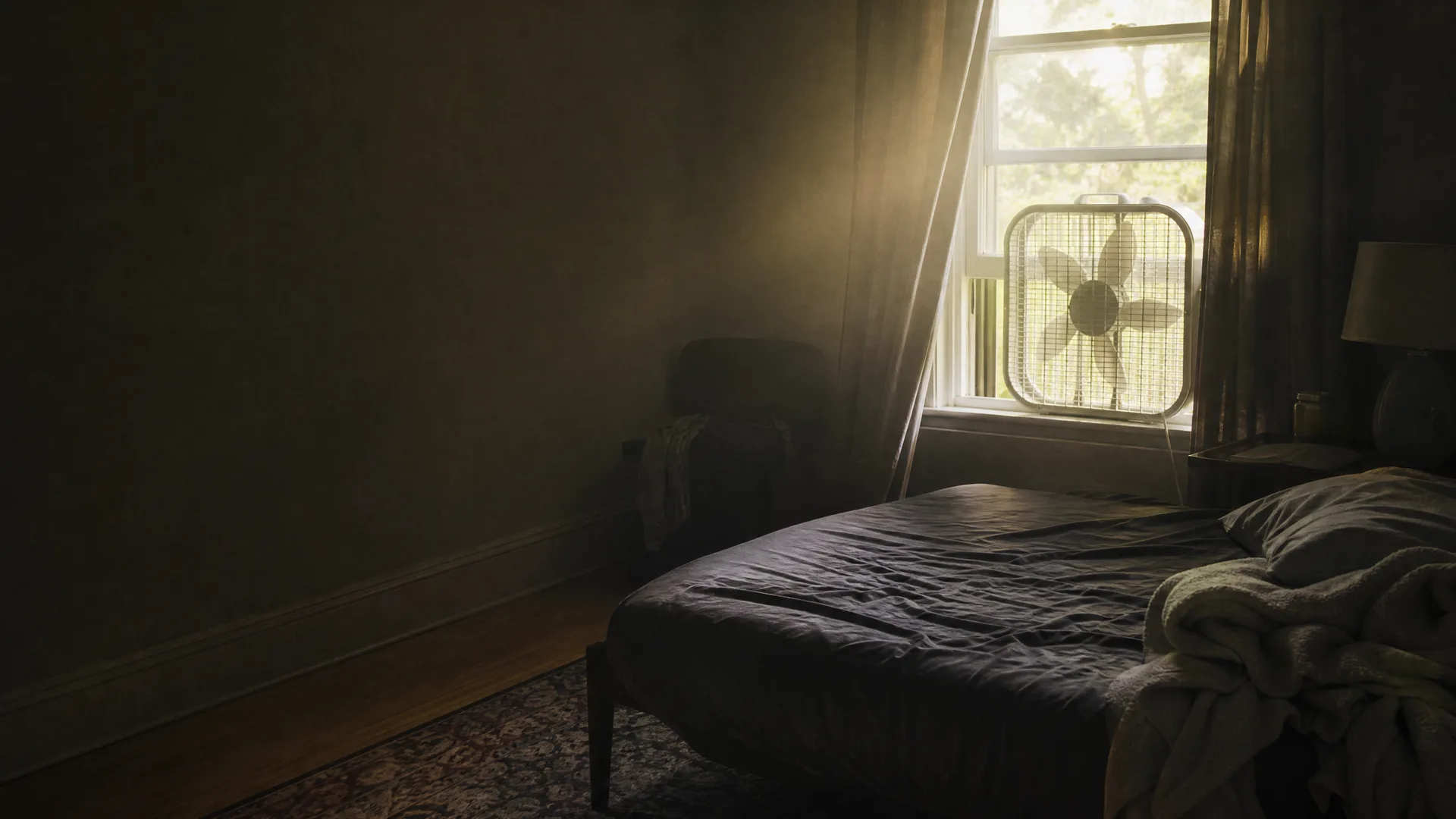
A dim bedroom with an unmade bed, a box fan set in a partly open window with curtains, a chair against the wall, and a patterned rug on a wood floor.

The box fan has been running since you got home, and it hasn't done much besides push the warm air around. It's past nine and still warm enough upstairs that the sheets feel wrong against your skin. Your son's door is open across the hall, his fan going too, and you can hear him turning over, trying to get comfortable. You checked the thermostat twice already. It says seventy-four, but it doesn't feel like seventy-four up here. Outside the window the street is quiet, porch lights on, everyone's AC humming the same low hum. Tomorrow's supposed to be worse. You lie there doing the math on how many summers you've got left in this unit.
Is your AC actually struggling, or just working hard?

A healthy system runs long on a hot afternoon and still gets the house to temperature by evening. If yours is running most of the day and the upstairs still sits a few degrees warmer than the thermostat says, that's not normal for a Liberty summer, that's a unit losing ground. Listen for it too: a compressor that clicks on and off in short bursts, or a low hum that wasn't there last year. Check the vents for weak airflow and the outdoor unit for ice on the lines, even on a hot day. None of this is just an inconvenience. A system fighting to keep up runs longer than it should, pulls more power doing it, and gives you less reason to trust it on the worst days of July and August.

  1. Refrigerant pulls heat from the air inside your house.

  2. The compressor outside raises its pressure and temperature.

  3. The outdoor coil releases that heat into the Liberty air.

  4. The blower pushes cooled air back through your ducts.

Why does my AC still struggle even after a tune-up?

A tune-up usually helps. A technician cleans the coil, checks the refrigerant charge, tightens electrical connections, and the system runs better for it. So when the house still doesn't cool right afterward, that tells you something a dirty coil or a loose wire wouldn't explain.

A tune-up fixes maintenance problems. It can't fix a worn-out compressor or a system that's undersized for your house.

A tune-up cleans and adjusts what's adjustable. It doesn't add capacity your system never had, and it doesn't reverse wear on a compressor that's been running for 13 or 14 summers. If the compressor is losing efficiency, cleaning the coil won't bring it back. If the unit was sized for a smaller house or a different layout before an addition went in, no amount of maintenance closes that gap. A technician who services a lot of Liberty homes can usually tell you which it is after a tune-up: whether the system is tired, or whether it was never quite right for the house it's cooling. That distinction matters more than anything found during the visit itself.

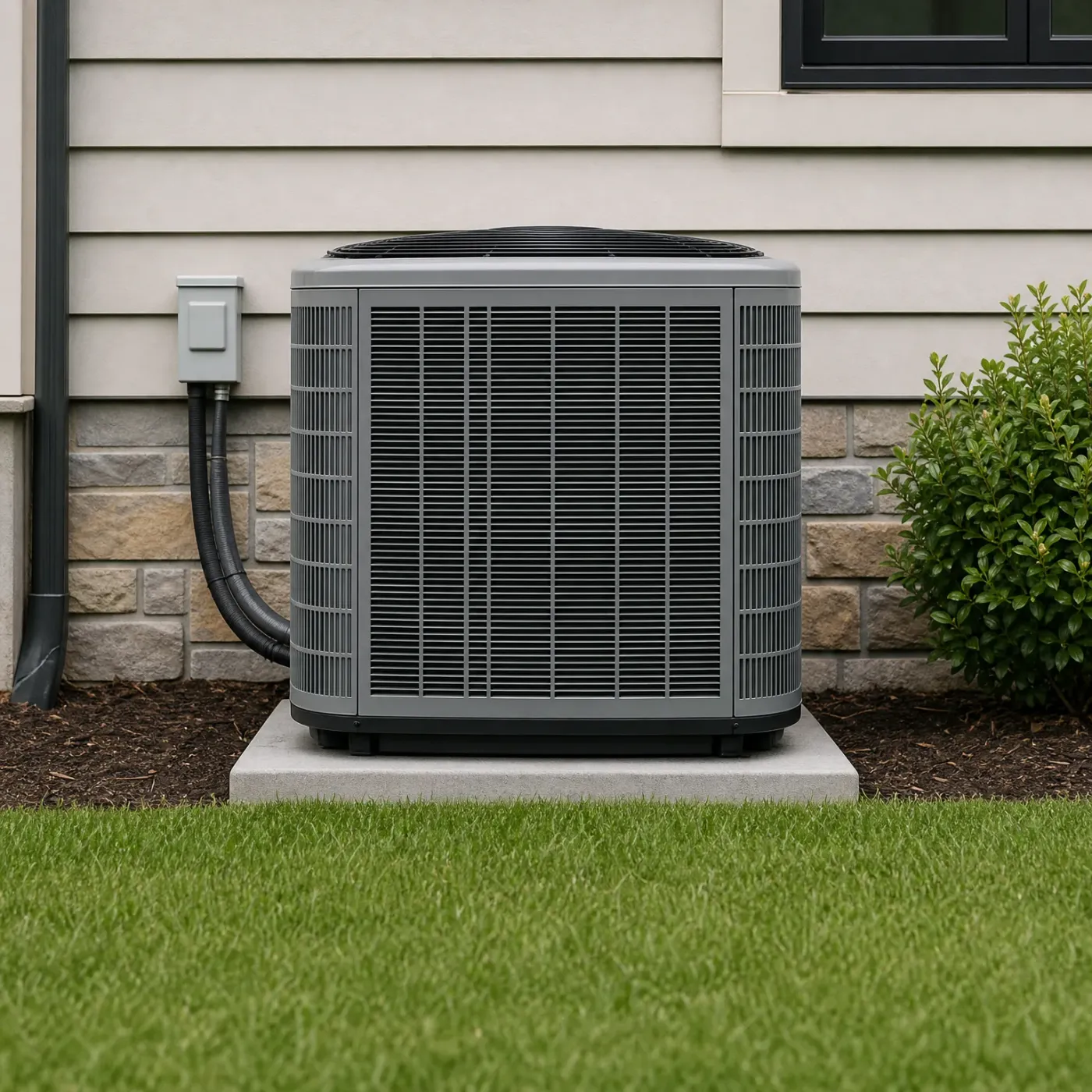
A gray outdoor air conditioning condenser unit on a concrete pad beside a house with horizontal lap siding and a stone veneer base, with a disconnect box and conduit on the wall, mulch bed and shrub to the right, and mowed grass in the foreground.

Working the way it should

A condenser like this cycles on, runs, and shuts off, and the house comes down to temperature. The cabinet stays clear, the disconnect box is intact, and nothing around it looks stressed. This is what a system with years left looks like from outside.

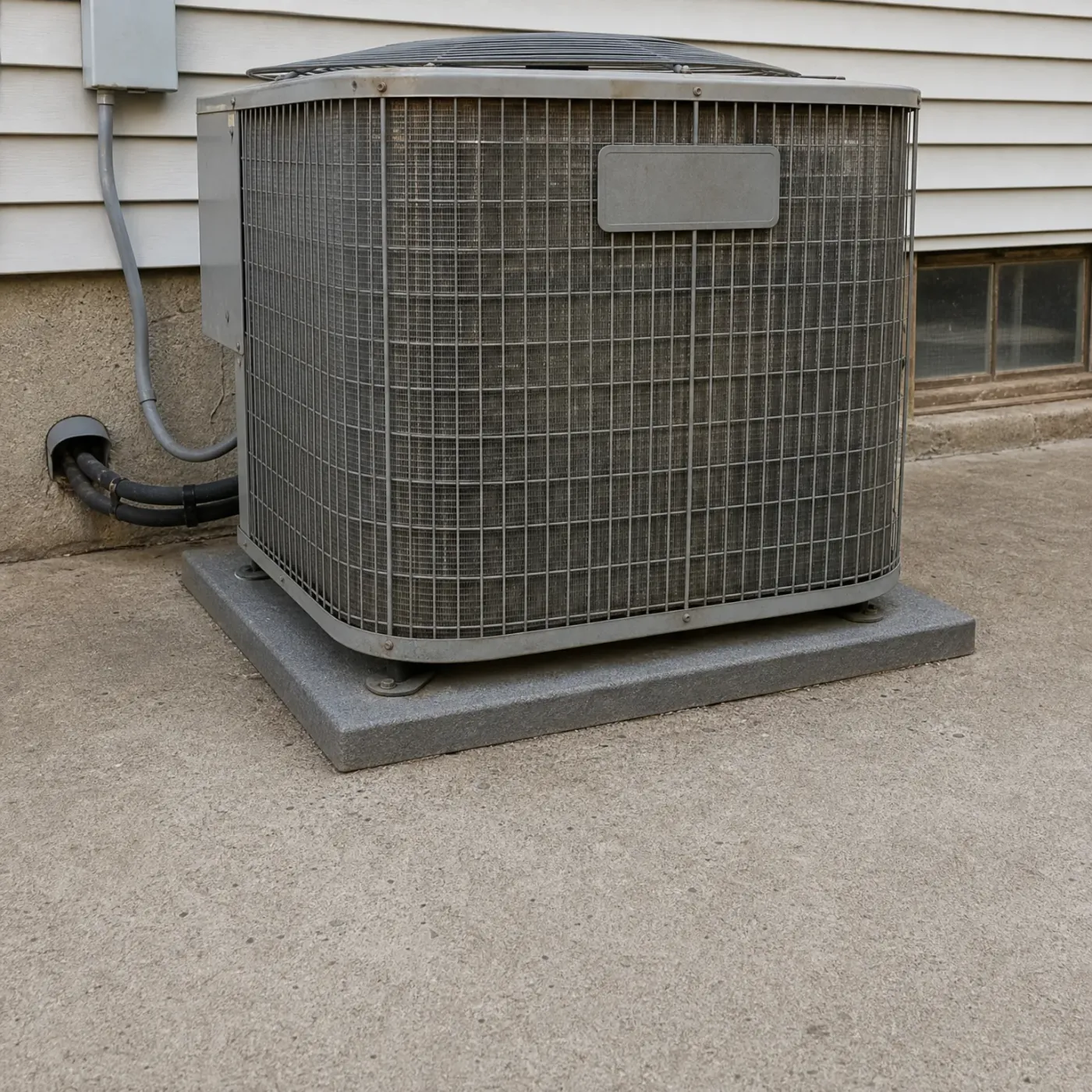
An outdoor air conditioner condenser unit on a gray composite pad beside a house with horizontal siding, a concrete foundation, a basement window, and a conduit and disconnect box on the wall.

Signs of a unit under strain

Dust and dirt packed into the mesh cabinet mean the coil underneath isn't shedding heat the way it needs to. A unit working this hard against its own buildup runs longer, cools less, and puts more hours on parts that are already older.

A man in a navy sweater reclines in a leather armchair with his eyes closed and a slight smile, beside a side table with a mug and folded newspaper, in a room with a bookshelf and a sunlit window.
A bearded man in a navy robe over a gray shirt reclines with closed eyes in a brown leather armchair, with a houseplant, folded newspaper on a wooden table, and a bookshelf behind him.
A bearded man in a navy sweater reclines with closed eyes in a leather armchair beside a table holding a folded newspaper and a green mug, with a dresser, potted plants, a lamp and framed artwork behind him.
A man in a dark green sweatshirt reclines with his eyes closed and a slight smile in a brown leather armchair, with a window, table lamp, mug and newspaper beside him.
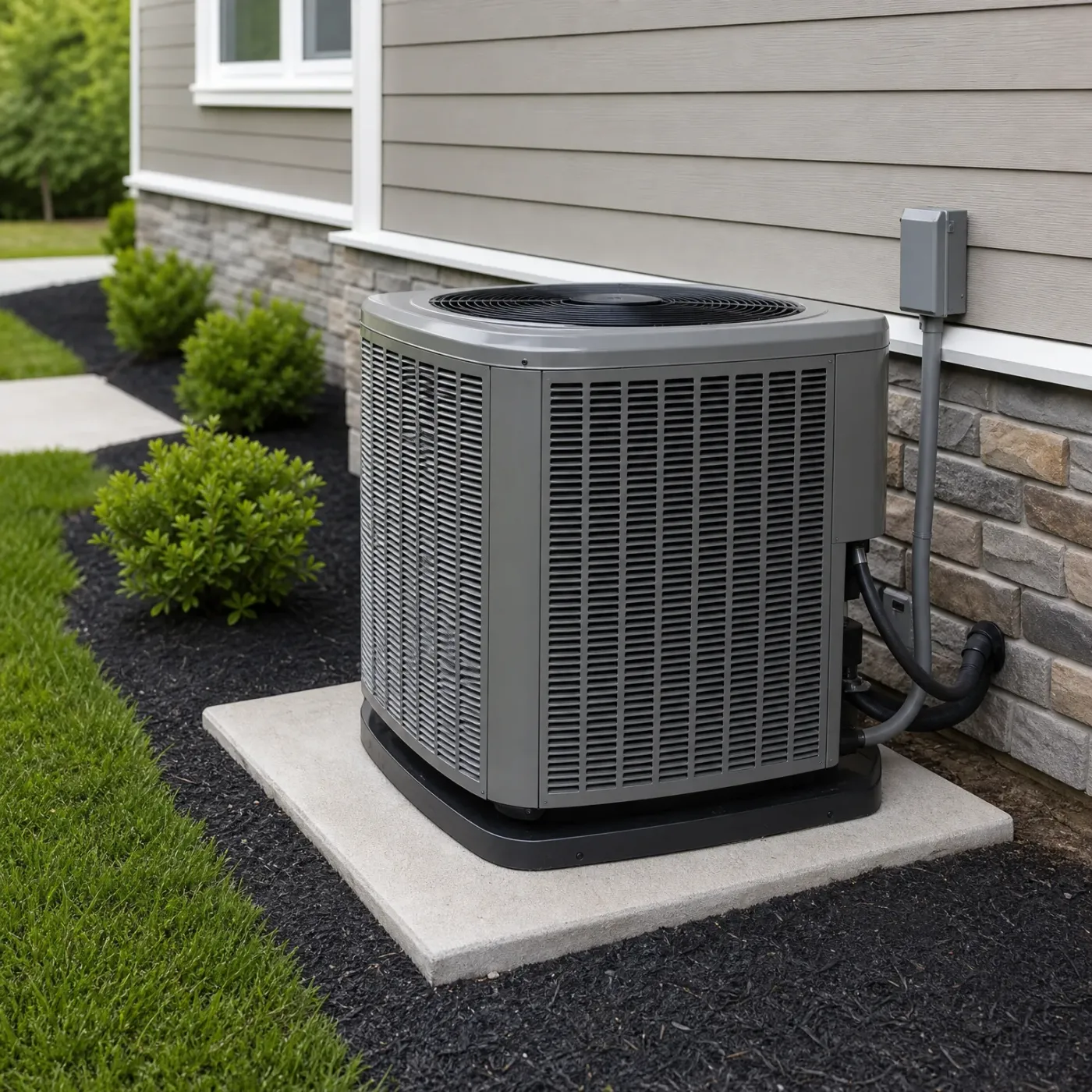
A gray outdoor air conditioner condenser unit on a concrete pad beside a house with horizontal siding and a stone veneer base, with a wall-mounted disconnect box, conduit and refrigerant lines, surrounded by black mulch, shrubs and lawn.

It's off your list after this

A licensed installer who works in Clay County gets your project.

Send the form and stop researching installers for the new air conditioner.

Get one local pro

It costs nothing to send, and you don't have to hire anyone.

Cooling runs May through September

Five months of the year, your AC in Liberty is the only thing standing between you and the heat. That's a long stretch to lean on a unit that's already struggling, and it means a breakdown in July won't wait a day before you feel it.

NOAA nClimDiv 1991-2020

What a SEER2 rating actually tells you

A new system's SEER2 number measures how much cooling it gets out of the power it uses, not how big it is or how fast it cools. An old unit running at its original rating is already losing ground to a Liberty summer, since the compressor and coil wear down and pull more power for the same result. Replacing it with a higher SEER2 unit means the same electric bill covers more cooling, which matters most in the months you're running it daily. It's a fuel efficiency number, nothing else.

What repair costs tend to do over time

A furnace or AC doesn't fail all at once. The capacitor goes first, then the contactor, then the compressor starts pulling harder than it should. Each repair fixes the one part that failed, not the wear sitting in the rest of the unit. Past a certain age, that pattern repeats closer together, and the money spent keeping the old system alive starts to rival what a new one would have cost outright. A contractor who's replaced units like yours before can tell you, from the repair in front of them, which side of that line you're on.

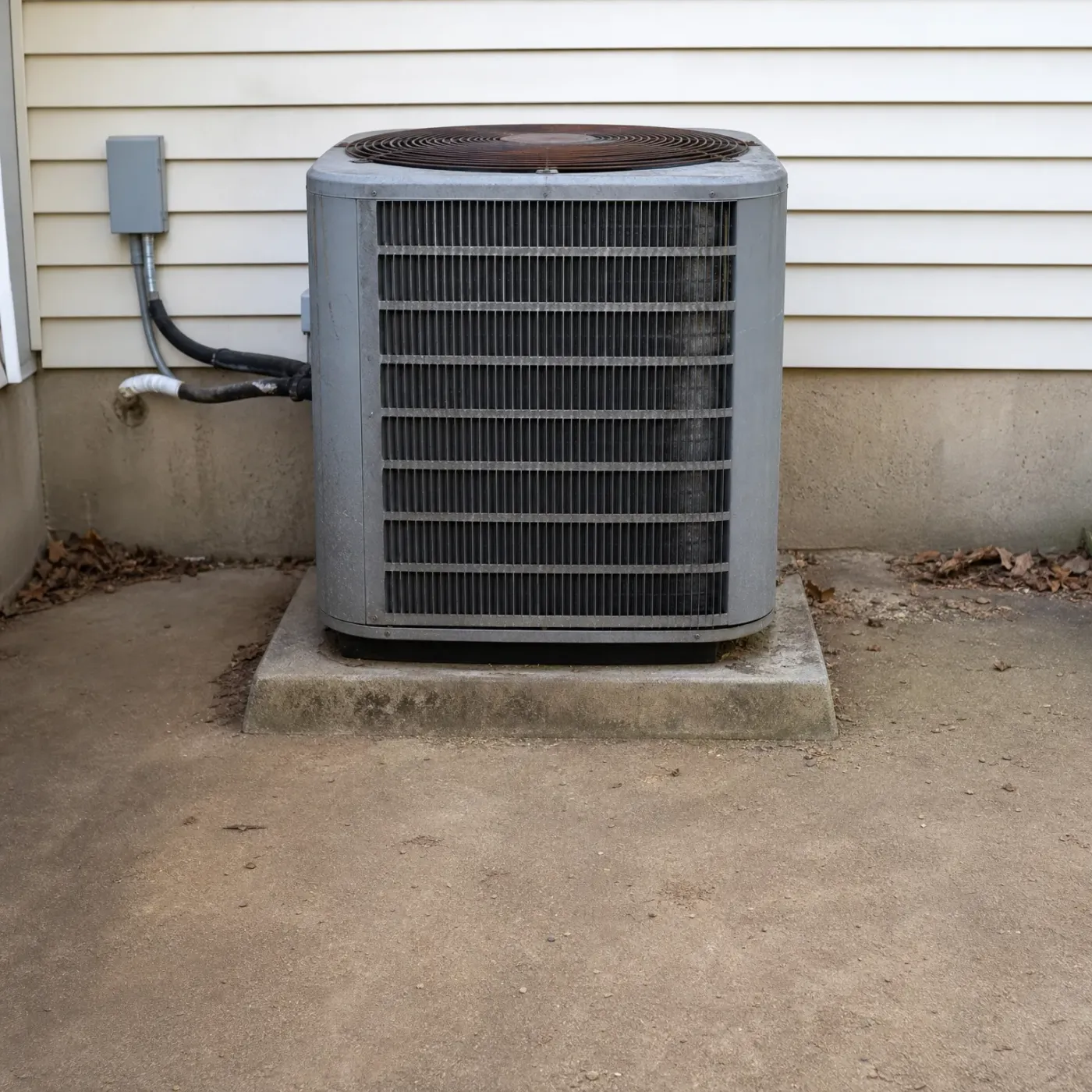
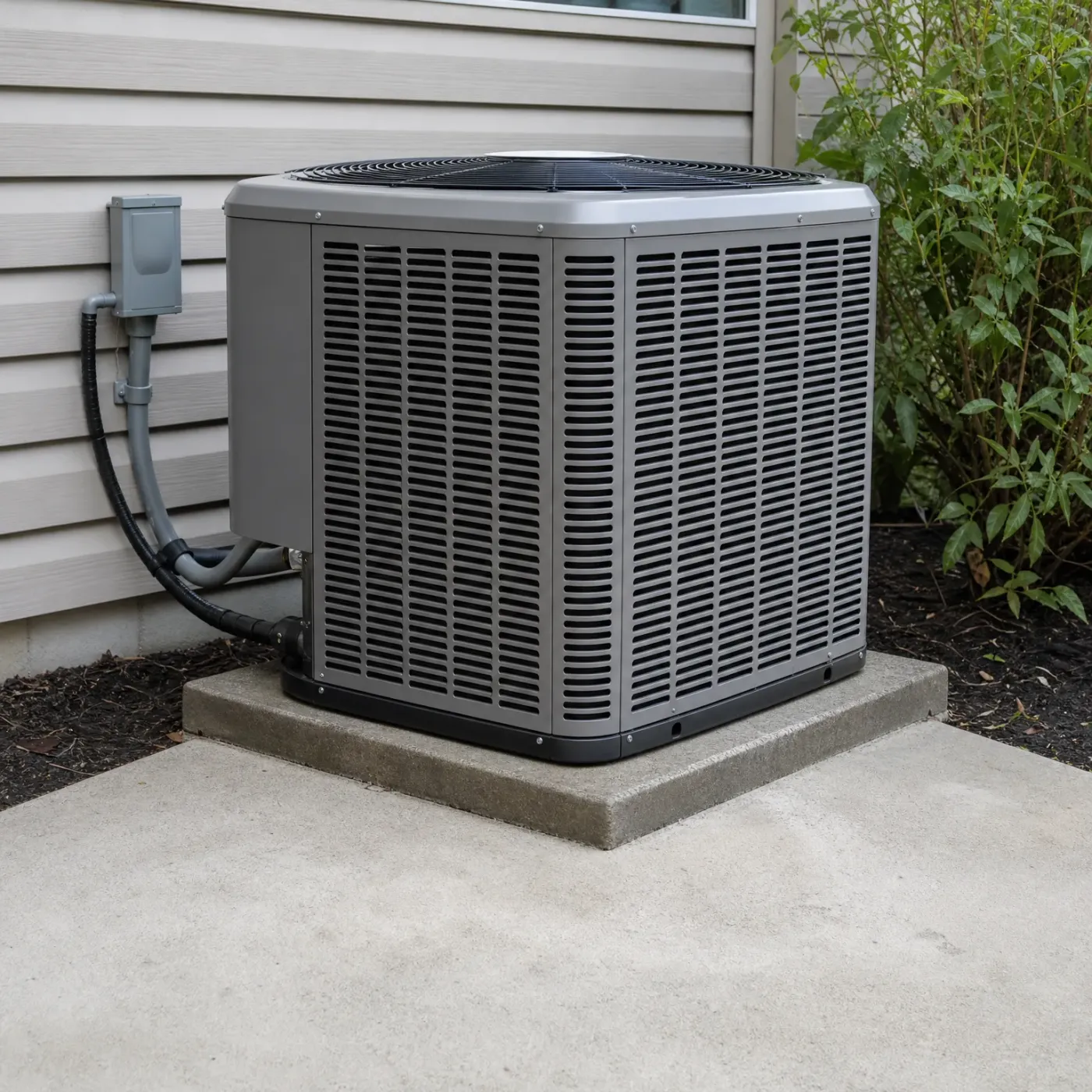
A gray outdoor air conditioner condenser unit on a concrete pad beside a house with beige horizontal siding, with an electrical disconnect box and insulated refrigerant lines on the wall and dry leaves on the ground.
Before you get your air conditioner installation
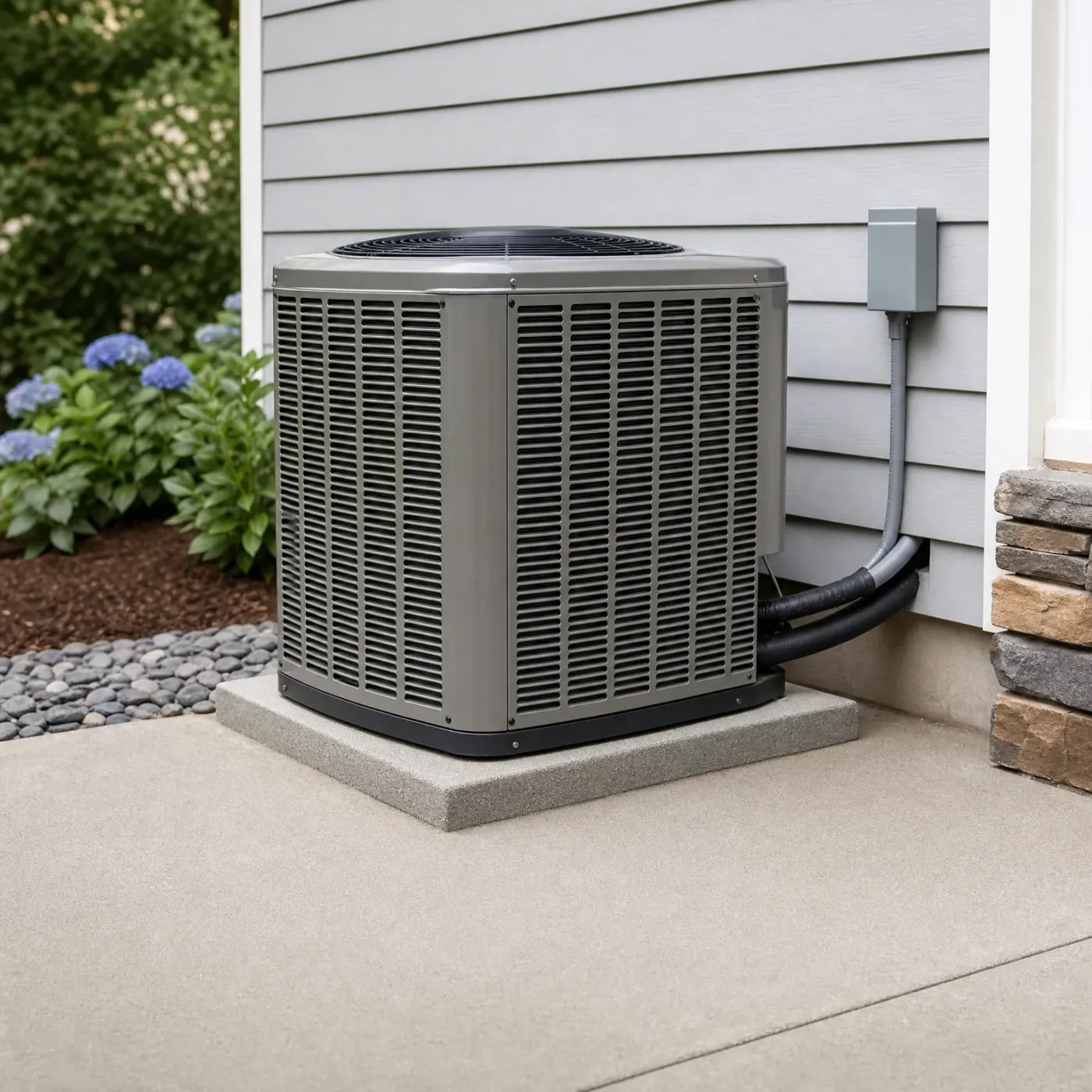
A gray outdoor air conditioning condenser unit on a concrete pad beside a house with horizontal gray siding, with a wall-mounted electrical disconnect box and insulated refrigerant lines, and blue hydrangeas in a mulched bed to the left.
After you get your air conditioner installation

Repair or Replace Your AC

Repair

  • A single repair, like a capacitor or a contactor, costs far less than a new system and can be the right call on a unit under ten years old.
  • If the compressor and coils are sound, fixing the failed part gets you through the rest of this Liberty summer without disrupting anything else in the system.
  • Repair makes sense when this is the first real problem the unit has had, not the latest in a string of service calls.
  • Some parts, like a capacitor or a run of refrigerant, are straightforward for a technician to replace without touching the rest of the system.
  • If the unit is still under its original warranty, a repair may cost you nothing beyond the labor to put the part in.

Replace

  • Once a unit is past 12 to 15 years old, a major failure like a dead compressor usually costs more to fix than the unit is worth.
  • A new system carries a current SEER2 rating, so it gets more cooling out of the same power than one installed a decade or more ago.
  • Replacing now means you choose the install date, instead of waiting for the old unit to fail on a 95-degree afternoon in July.
  • If you've already called for repairs more than once this year, the next failure is rarely the last one you'll pay for.
  • A new unit comes with its own warranty, so the parts most likely to fail are covered again from the start.
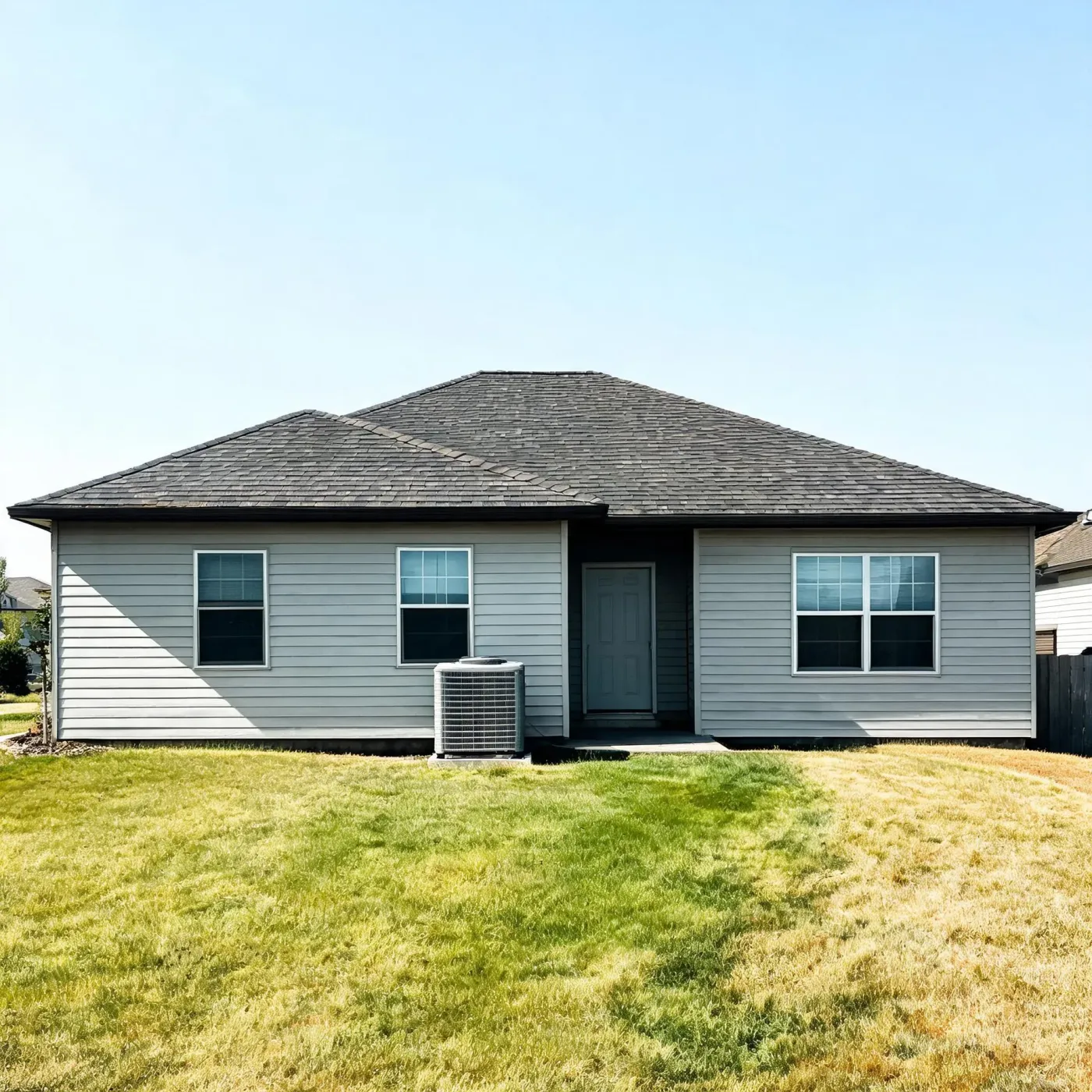
Rear view of a single-story gray vinyl-sided house with a dark shingled hip roof, three windows, a center door, an outdoor air conditioning unit, and a patchy green and brown lawn under a clear sky.

That dew point sits at 65°F across June, July and August in Clay County, per NOAA climate data. Anything above 60 is the point where air starts to feel heavy instead of just warm, and 65 means your AC isn't only dropping the temperature, it's pulling a lot of moisture out of the air to keep the house feeling right. That extra load falls on the same compressor and coil doing the cooling. A unit that's already weak will run longer stretches to wring out that moisture, and you'll notice it as a house that feels cool enough on the thermostat but still damp, with air that never quite feels dry.

NASA POWER T2MDEW

A gray outdoor air conditioner condenser unit on a concrete pad beside a house with light vinyl siding, with an electrical disconnect box and conduit on the wall and a leafy shrub with dark mulch to the right.
Clean grille, steady cycling, nothing straining around the disconnect or the lines.
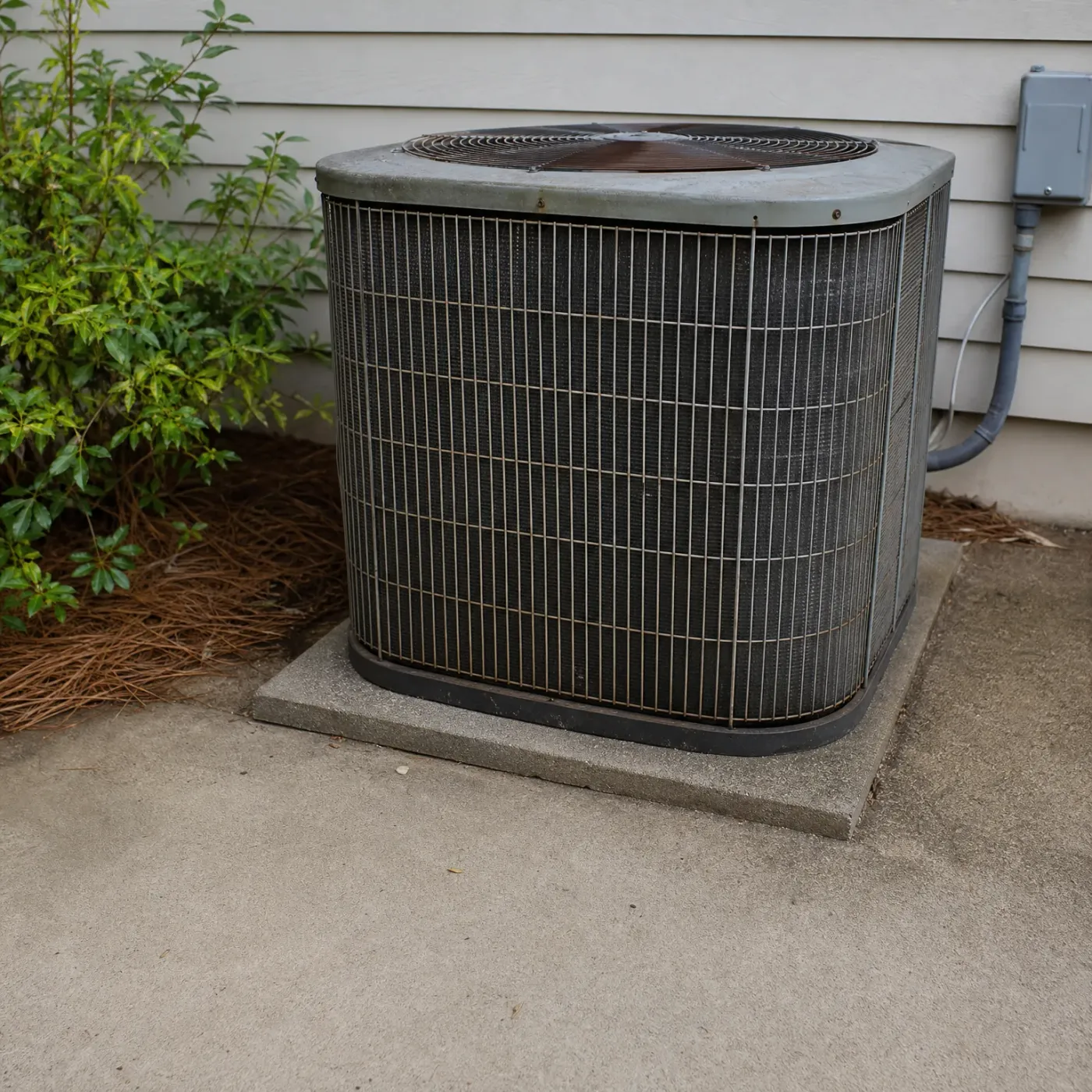
An outdoor air conditioner condenser unit on a concrete pad beside a house with horizontal lap siding, with a gray electrical disconnect box and conduit on the wall and a green shrub over pine-needle mulch at left.
A dirty, weathered grille like this makes the unit pull harder for the same cooling, all summer long.
A gray-haired man in a blue sweater over a checked collared shirt sits in an armchair with his eyes closed and head tilted back near a bright window, with a houseplant and lamp nearby.
A woman in a cream knit sweater sits with closed eyes in an armchair beside a window showing orange autumn foliage, with a framed picture, plants, and a white mug on a wooden table nearby.

The call, and who makes it

  • Age, repair cost and how far the unit falls behind on a sticky Clay County afternoon together tell you whether to fix or replace.
  • A unit under ten years old with sound coils and a compressor is usually worth one more repair.
  • A unit past twelve years that's short cycling or losing ground on humidity is signaling it's done.
  • A local contractor who services this equipment all summer knows which failures on your model mean the end of the road.
  • Sending one request puts you in touch with a single licensed Liberty contractor instead of a flood of competing calls.
  • Whatever you decide, you'll know it's the right call for your system, not a guess.

You've gone through the age, the repairs, the humidity your system can't keep up with anymore. By now you likely know which side of the line yours falls on. If it's younger than ten years and the compressor and coils are still sound, a repair gets you through the rest of this Liberty summer and probably the next one too. If it's past twelve years and it's short cycling or losing the fight against that thick Clay County air, you're not looking at a repair that holds, you're looking at a system telling you it's done. Either way, the answer isn't a guess once you've looked at what's actually failing and what it costs to keep patching it. What happens next matters too. A contractor who works on this equipment every summer in this area has seen what fails on units like yours, and what's actually worth fixing versus what's a sign to move on. Send one request and you're matched with one licensed local contractor, not a list of companies competing for your callback. That contractor looks at your system, not a generic one, and tells you straight what it needs. You'll walk away knowing the call you made was the right one for your house, not a shot in the dark before another July arrives.

A gray outdoor air conditioner condenser unit sits on a concrete pad beside a house with horizontal lap siding, with shrubs and bare soil to the left.

Stop chasing an air conditioner pro

Step 1 of 3: Equipment