Is a two-stage AC worth it in Missouri

Describe your air conditioner job, and a local pro who handles it gets in touch.

Get matched

A two-stage air conditioner is worth it in Missouri because it runs on low output most of the time and only shifts to full power on the hottest, stickiest days. Missouri summers put long stretches of muggy weather on the system, not just a few short heat waves, and a two-stage unit spends most of that time running longer at low speed instead of cycling on and off at full blast. That longer, gentler run does a better job pulling moisture out of the air, which matters when the humidity is what makes a house feel uncomfortable even at a normal temperature. Since most homes here heat with gas, the AC side is where this upgrade pays attention, and with power priced low in this state, the comfort gain from steadier humidity control is the bigger reason to consider it over any savings on the bill.

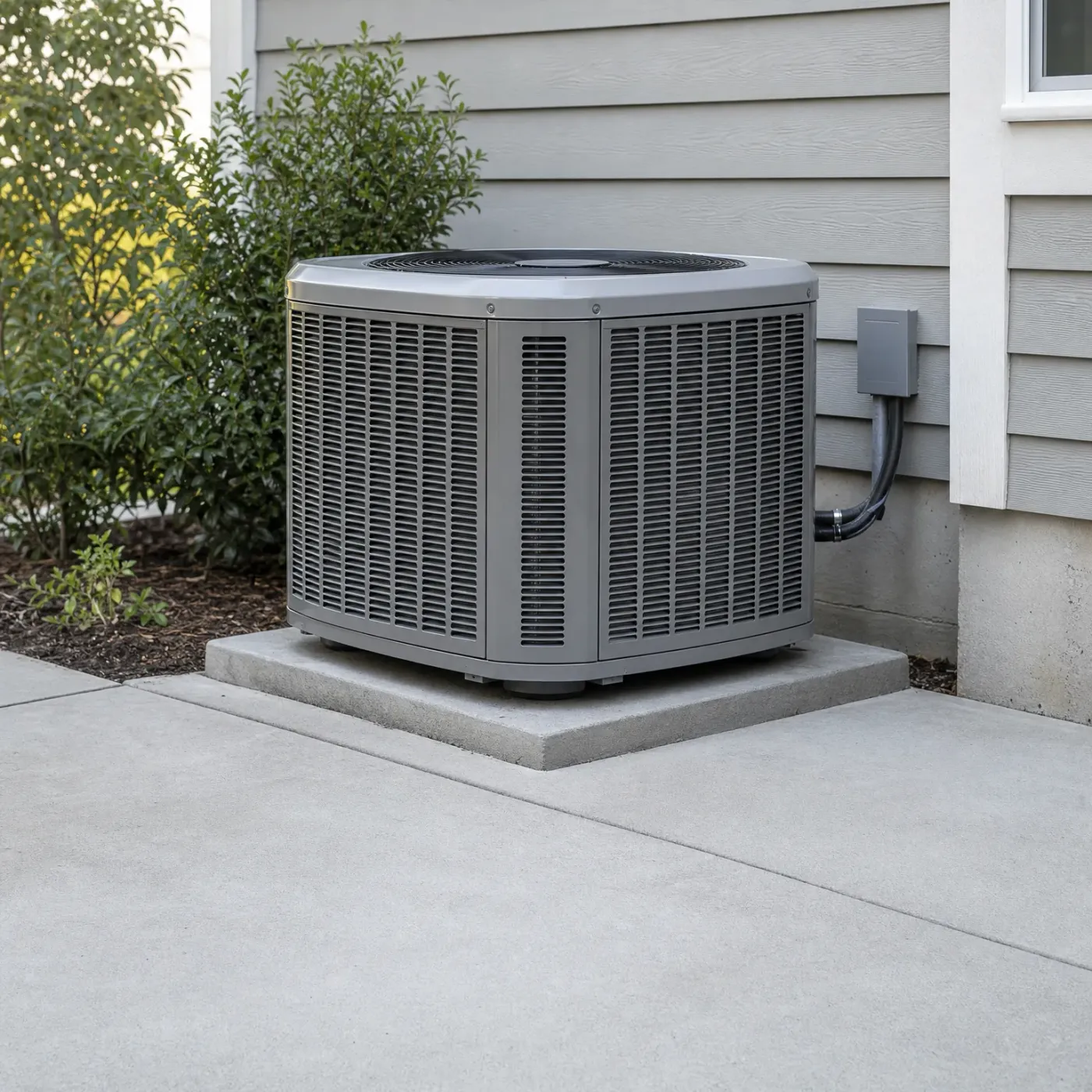
A gray outdoor air conditioner condenser unit on a concrete pad beside a house with horizontal lap siding, with a wall-mounted disconnect box and conduit to its right and shrubs to the left.

On low stage, most of the summer

On a mild or even a typical muggy Missouri day, a two-stage system runs on its lower output, long and steady. It holds the temperature even, pulls more moisture out of the air, and the condenser outside runs quieter than a single-stage unit working full blast.

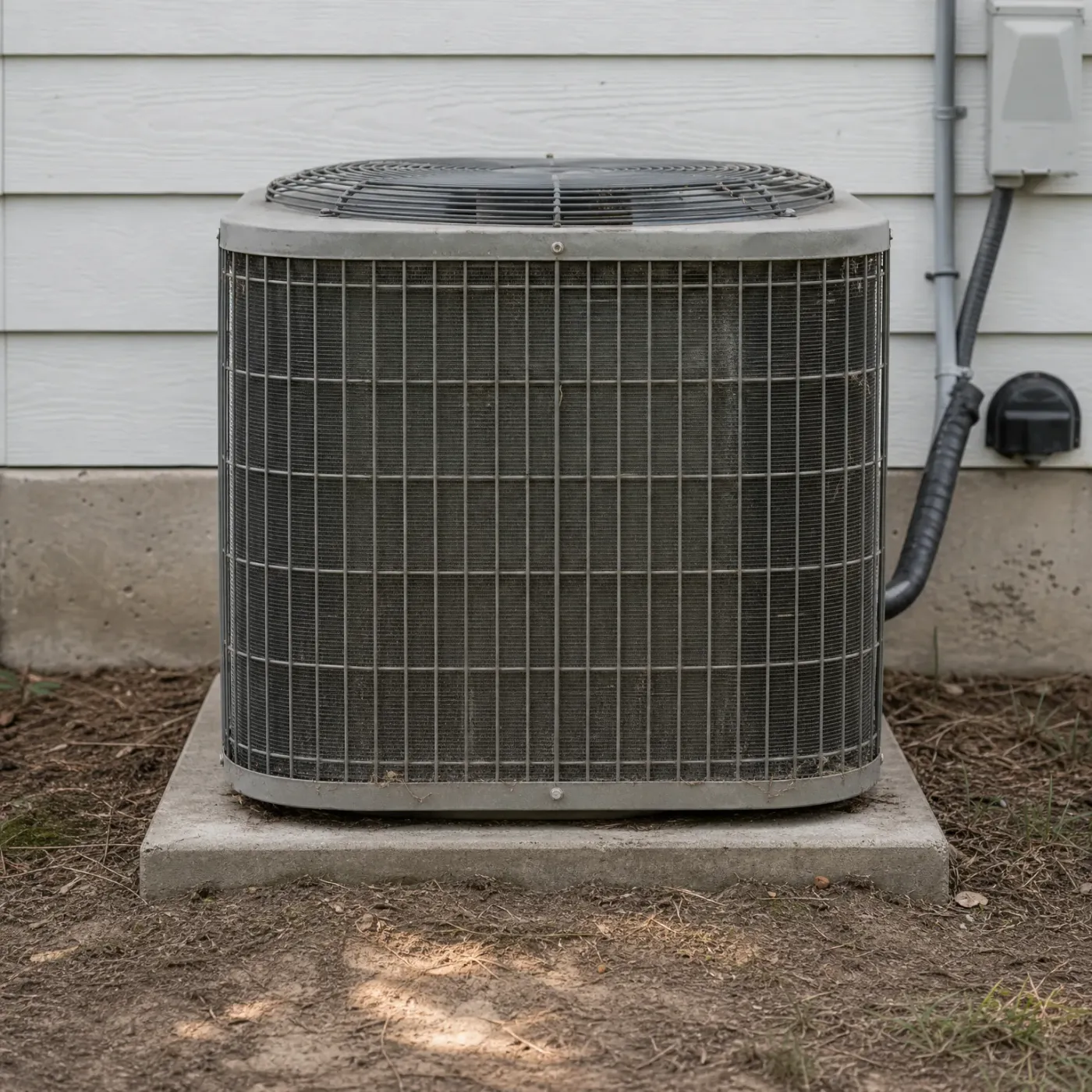
An outdoor air conditioning condenser unit on a concrete pad beside a house with horizontal lap siding, with a conduit and electrical disconnect box on the wall at right.

One speed, every day, for years

A single-stage condenser like this one has run full blast on every call for cooling, mild day or heat wave alike, for as long as it's been outside. That wears on it faster, and a coil guard this dirty makes it work harder to shed heat on the worst afternoons.

Why does my house feel damp even when the AC runs

If your single-stage AC is blasting cold air then shutting off, then kicking on again an hour later, it's cooling the house but not drying it. Those short, hard runs chill the air fast and quit before much moisture ever leaves it. You end up setting the thermostat lower just to feel comfortable, and the bill follows. You might notice a clammy feel on the furniture, windows fogging on the inside, or that sticky air that hangs around even at 72 degrees. Left alone through enough Missouri summers, that extra moisture gives mold and mildew a place to start, in a closet, behind drywall, around a bathroom vent, and once that starts it doesn't stay put.


  1. Indoor thermostat calls for cooling and signals low stage first

  2. Compressor and outdoor fan start on low, cooling at partial output

  3. Low stage runs as long as it can keep up with the heat

  4. Thermostat signals the compressor to shift into full output

How does a two-stage AC know when to switch stages?

You've probably watched your thermostat number and wondered why the system sometimes runs quiet and steady, and other times you hear the outdoor unit kick into a higher gear. It's not random, and it's not guessing. There's a specific trigger behind that shift, tied to how long the house takes to cool and how hot it actually is outside.

It switches based on how long low stage runs, not on temperature alone

The thermostat starts every cooling call on low stage. If the house cools down before a set amount of time passes, low stage shuts off and that's the whole cycle. If the house is still above the setpoint after that time, the thermostat tells the compressor to step up to high stage. On a muggy Missouri afternoon in the upper 90s, low stage often can't keep pace, so the system climbs to full output until the house catches up, then drops back down. On a milder day it may never need to shift at all.

A gray-haired bearded man in a dark coat and scarf dusted with snow stands smiling in a dimly lit entryway with a white front door, a side table with a lit lamp, an oval mirror, and a patterned rug.
An older bearded man in a dark snow-dusted coat and gray scarf stands just inside a dimly lit home entry, with a framed picture, lit table lamp, and an adjoining room with a fireplace behind him, and snow visible through the open door.
A gray-haired, bearded man in a dark snow-dusted coat stands smiling in a dimly lit entry hall with a staircase, a lit table lamp, a framed picture, and a living room visible through a doorway.
An older man with gray hair and a beard, wearing a dark jacket dusted with snow, stands smiling in a dimly lit hallway with lamps and a living room visible behind him.

A local pro for your air conditioner installation

Skip collecting and comparing quotes for the new air conditioner.

It costs nothing to send, and you don't have to hire anyone.

Inside the Outdoor Unit

  • The outdoor unit holds two compressor settings, not two compressors, so low stage uses less electricity than full output.
  • A two-stage system moves air across the indoor coil longer on low stage, which pulls more moisture out before the air reaches your vents.
  • Low stage output usually runs around 60 to 70 percent of full capacity, enough to handle most days without ever stepping up.
  • The thermostat tracks how fast the house is losing the battle against the heat, not just the temperature itself, before it calls for full stage.
  • A single-stage compressor only has on and off, so it always delivers full output the moment it starts, even on a mild day.
  • The switch between stages happens inside the outdoor unit's control board, with no separate switch or breaker for you to manage.

Open up a two-stage condenser and you won't find two compressors. You'll find one compressor built to run at two different outputs, controlled by a board that decides which one you need. That board is doing the real work. It reads how fast your house is heating back up, not just the number on the thermostat, and that's how it decides whether low stage can keep up or whether it needs to call for full output. On a muggy Missouri afternoon, low stage usually holds somewhere around 60 to 70 percent of what the unit can put out. That's enough to keep the house cool on most days without ever touching full power. Because the air moves across the indoor coil for longer stretches at that lower output, it has more time to shed moisture before it reaches your vents, which is the difference a single-stage system can't offer. A single-stage compressor doesn't have that option. It's either off or running flat out, so even on a day that doesn't need full output, that's what you get. There's no separate switch or breaker involved in any of this. The decision happens entirely inside the outdoor unit, between the thermostat's signal and the control board's response, every time your system calls for cooling.

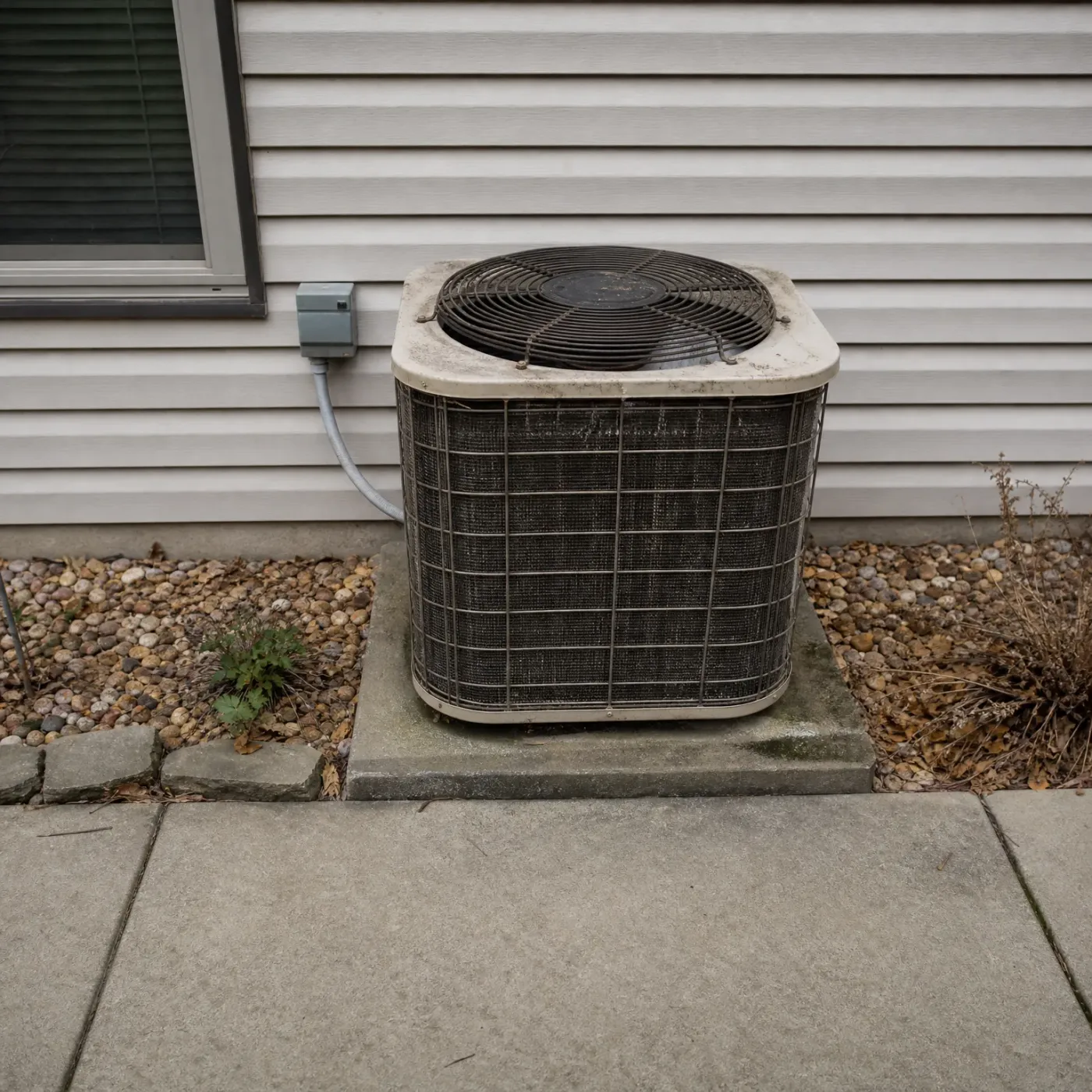
An outdoor air conditioner condenser unit on a concrete pad beside a house with light gray vinyl siding, with a gray electrical disconnect box and conduit on the wall, gravel beds and dried plants nearby, and a concrete sidewalk in the foreground.
Before you get your air conditioner installation
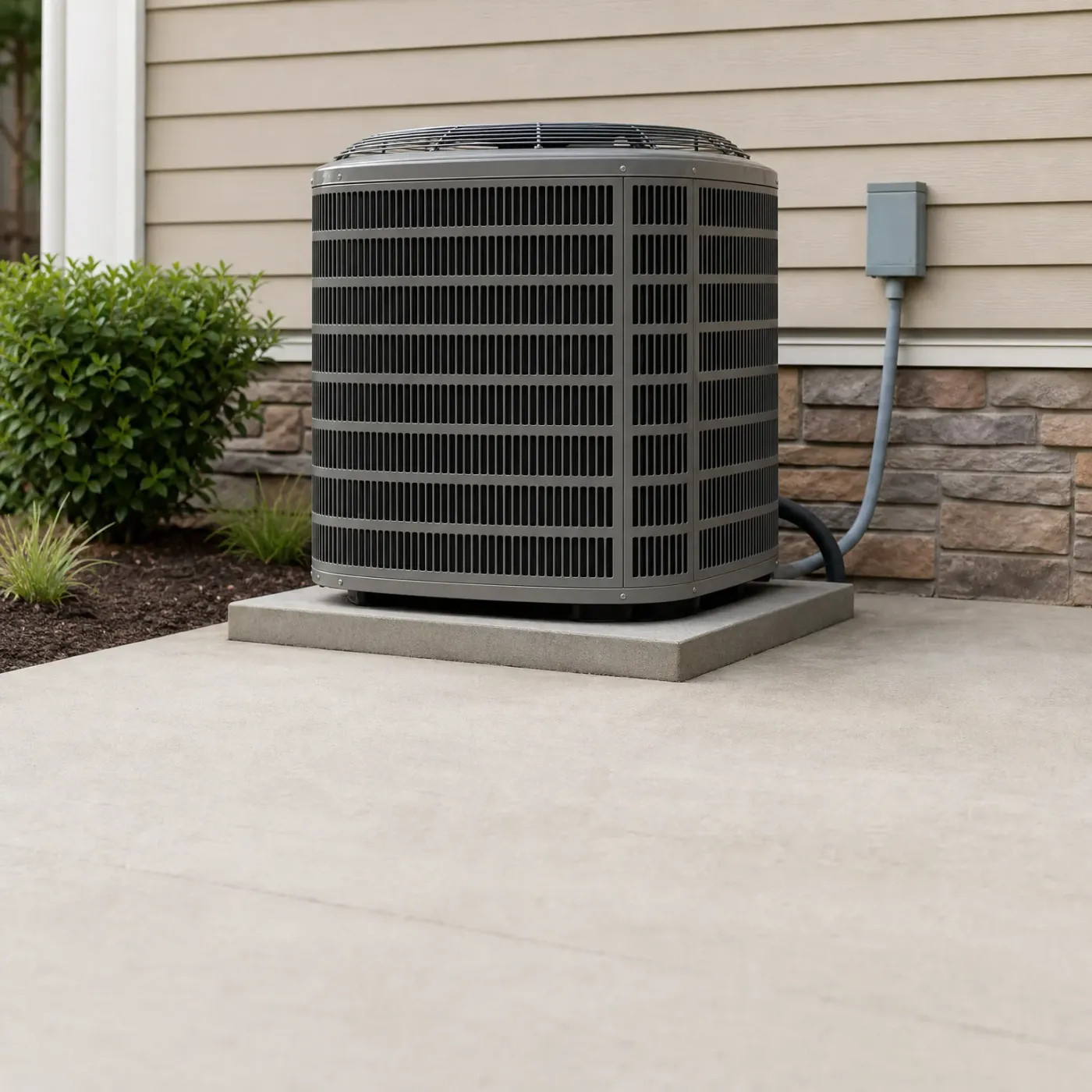
A gray outdoor air conditioning condenser unit on a concrete pad beside a house with horizontal siding and a stone veneer base, with a wall-mounted disconnect box and conduit, next to a shrub bed and a concrete patio.
After you get your air conditioner installation

A single-stage air conditioner only has one gear: full blast. It cycles on hard, cools fast, shuts off, and sits idle until the house warms up enough to call for cooling again.

A two-stage system spends most of a Missouri summer in its lower gear, running longer stretches at partial output instead of short, hard blasts, which is what pulls the humidity down.

Power costs 13.30 cents per kilowatt-hour statewide

At 13.30 cents per kilowatt-hour, every hour your compressor runs on full power costs more than an hour on low stage. A two-stage unit spends most of your Missouri summer on low, so your bill reflects that lighter draw instead of full output running all day.

EIA-861 2025 statewide residential average

A man seen from behind raises his hand to wave at a woman standing in the open front doorway of a single-story house with gray shingle siding, white columns and a gabled porch entry.

A two-stage AC earns its keep in Missouri

A two-stage air conditioner suits a Missouri summer because it spends most of its time on low, steady output and saves full power for the days that actually need it. The house stays drier and more even, and the outdoor unit isn't straining on full blast every time it runs. That's the answer, plain.

Getting there means matching your house to a contractor who installs this kind of system and sizes it to your home, not just swapping in a bigger box. Rather than calling around and explaining your setup to one company after another, you tell it once, and a contractor who handles two-stage installs in your area follows up with you directly.

A living room corner with a beige upholstered armchair holding navy and striped cushions, a small round wooden side table with a carved bowl and a potted green plant, a framed landscape picture on a pale wall, built-in shelving, and a curtained window.
At dusk, a dark board-and-batten house with a standing-seam metal roof and lit entry walkway of stone pavers, with two large outdoor heat pump units on a stone-walled pad at right and trees and hills in the background.

Air Conditioner Installation

Get the right pro for your air conditioner

Step 1 of 3: Equipment
  • A corner of a room with an upholstered wood-framed armchair holding a floral pillow, a round side table with a ceramic lamp, books and a vase of greenery, a framed landscape painting on the wall, a patterned rug, and a sunlit multi-pane window.
    • A local pro who knows air conditioners gets your details and gets in touch.
    • Get in touch with a local installer about a new air conditioner.
  • Interior corner with a wood-framed window showing green foliage outside, a framed landscape print on a beige wall, and a rounded stone vase of leafy branches on a wooden cabinet.
    • Once you send the form, finding a pro is off your list.
    • After you send the request, you're done searching.
  • A pale ceramic vase holding olive branches sits on a dark wooden countertop beside a carved wooden dough bowl, next to a wood-framed window and a light painted plank wall.
    • Skip searching for an air conditioner pro and answer a few questions instead.
    • One form replaces the calls you'd make to find an air conditioner pro.
  • A dark wood round side table holding a brass lamp with a cream shade, a blue-and-white patterned bowl, and a white textured pot of greenery, beside an upholstered chair with a gray patterned cushion and a white-framed window showing green trees and flowering shrubs.
    • One installer gets your project, so there's no bidding war over it.
    • Only one pro gets your request, so you hear from one company.