How to get your AC ready for a Missouri summer

Fill out one form instead of calling around for an air conditioner tune-up.

Skip the search

What should I do to get my AC ready for summer in Missouri?

You know Missouri summers get sticky fast, and you'd rather sort out the AC now than find out it's struggling on the first 90-degree day. You're not looking to do the repair yourself, but you want to know what actually needs attention before you hand it off to someone.

Have the unit serviced before the heat sets in, so a weak part gets caught while it's still an easy fix.

A contractor checks the refrigerant charge, cleans the outdoor coil, and tests the capacitor and electrical connections before the system has to run for months straight. Dirt on the coil makes the unit work harder to move heat outside, and a capacitor that's starting to go often fails on the hottest day, not before. Catching that now, instead of in July, means the unit runs the way it's supposed to once Missouri humidity sets in. It also means fewer surprises on your power bill during the months the AC barely shuts off. None of this takes the place of a repair if something's already broken, but it catches the small stuff before it becomes a no-cool call in the middle of a heat wave.

  1. Check the condenser outside for leaves, grass, and debris buildup.

  2. Clean or replace the air filter inside your house.

  3. Check refrigerant charge and pressure against the system's specs.

  4. Test the capacitor and contactor for wear or weak output.

A woman in a cream sweater with her hair in a bun laughs while seated at a stone counter holding a glass of red wine, in a dimly lit interior with a sofa, houseplants and a large window at night.
A woman with long dark hair in a cream knit sweater laughs while looking off to the side, seated in front of a dimly lit kitchen with an island, stools, open shelving and a potted plant, with a glass of red wine in the foreground.
A smiling woman with long dark wavy hair in a light knit sweater sits at a marble counter with a glass of red wine, with a dimly lit living room and kitchen in the background.
A smiling woman with long wavy brown hair in a beige sweater sits at a white marble counter with a glass of red wine, with a living room, dining table and kitchen cabinets behind her.

A dirty filter or a coil packed with grass clippings makes the compressor work harder to move the same amount of heat out of your house.

That extra strain is what turns into a bigger bill and, eventually, a part that gives out on the one day you need it most.

A bearded man in a dark navy sweater over a collared shirt smiles and looks off to the side while seated at a dinner table with a glass of red wine, a lit candle, and a plate of food in the foreground of a dimly lit room.
A woman in a dark gray sweater reclines on a couch with her eyes closed and a knit blanket over her lap, an open book resting face-down in front of her, with a lit table lamp and shelving blurred in the background.

Book it now or wait for trouble

You can get a contractor out this month, while the schedule still has room and the system is just sitting there not yet under load. Or you can wait until the first hot stretch hits and find out then whether it was going to hold up. Nothing forces the choice. But once Missouri heat sets in for good, every AC in your neighborhood is running flat out, and the contractors working on them are booked solid with repair calls instead of routine visits. A unit that gets checked before that point gets a technician's full attention. One that waits gets looked at whenever there's an opening, which in July might be a few days out, with the house sitting at 85 in the meantime.

One company, no repeat calls

Sorting this out yourself means calling around, explaining the same thing to three or four companies, and waiting on quotes to compare. Match with one contractor instead, someone local who services this equipment all summer and already knows what tends to fail on these units before the heat really sets in. You explain it once. No stack of callbacks to sort through, no guessing which company actually knows what they're doing. If something does turn up during the check, like a weak capacitor or a coil that's seen better days, you're already talking to someone who can deal with it on the spot instead of starting the search over for a repair.

Power costs 13.30 cents per kilowatt-hour statewide

At 13.30 cents per kilowatt-hour, your AC's draw shows up fast on the bill once it's running all day. A unit that's clean and charged right moves heat out of your house without the compressor straining, and that's what keeps the summer bill from creeping up.

EIA-861 2025 statewide residential average

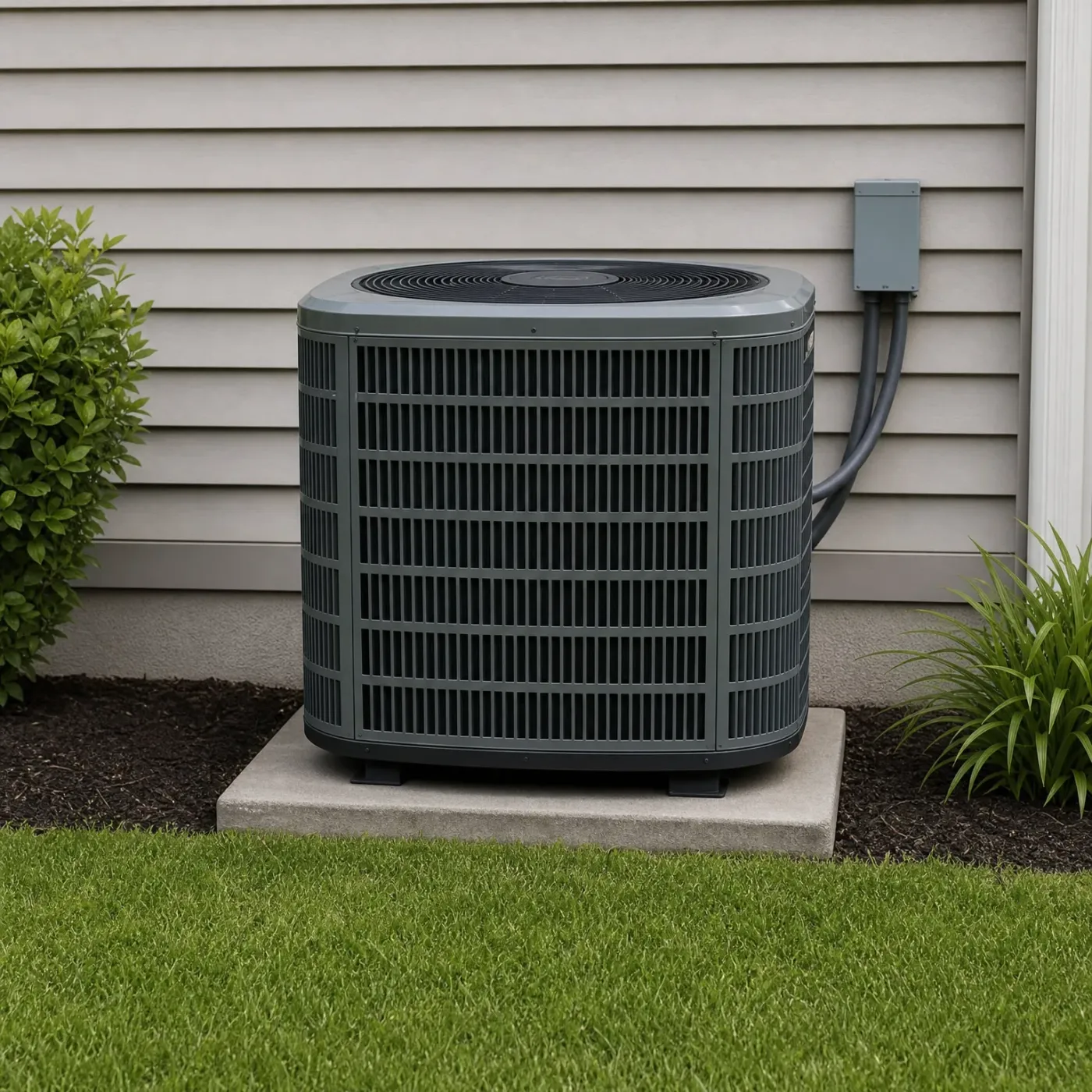
A gray outdoor air conditioning condenser unit on a concrete pad beside a house with horizontal lap siding, with a wall-mounted electrical disconnect box and refrigerant lines, shrubs, mulch and lawn around it.

Running clean

This is what a condenser should look like going into summer. The fins are clear, the ground around it is open, and air moves through the coil without resistance. A unit in this shape holds its charge and runs its normal cycle without the compressor straining to keep up.

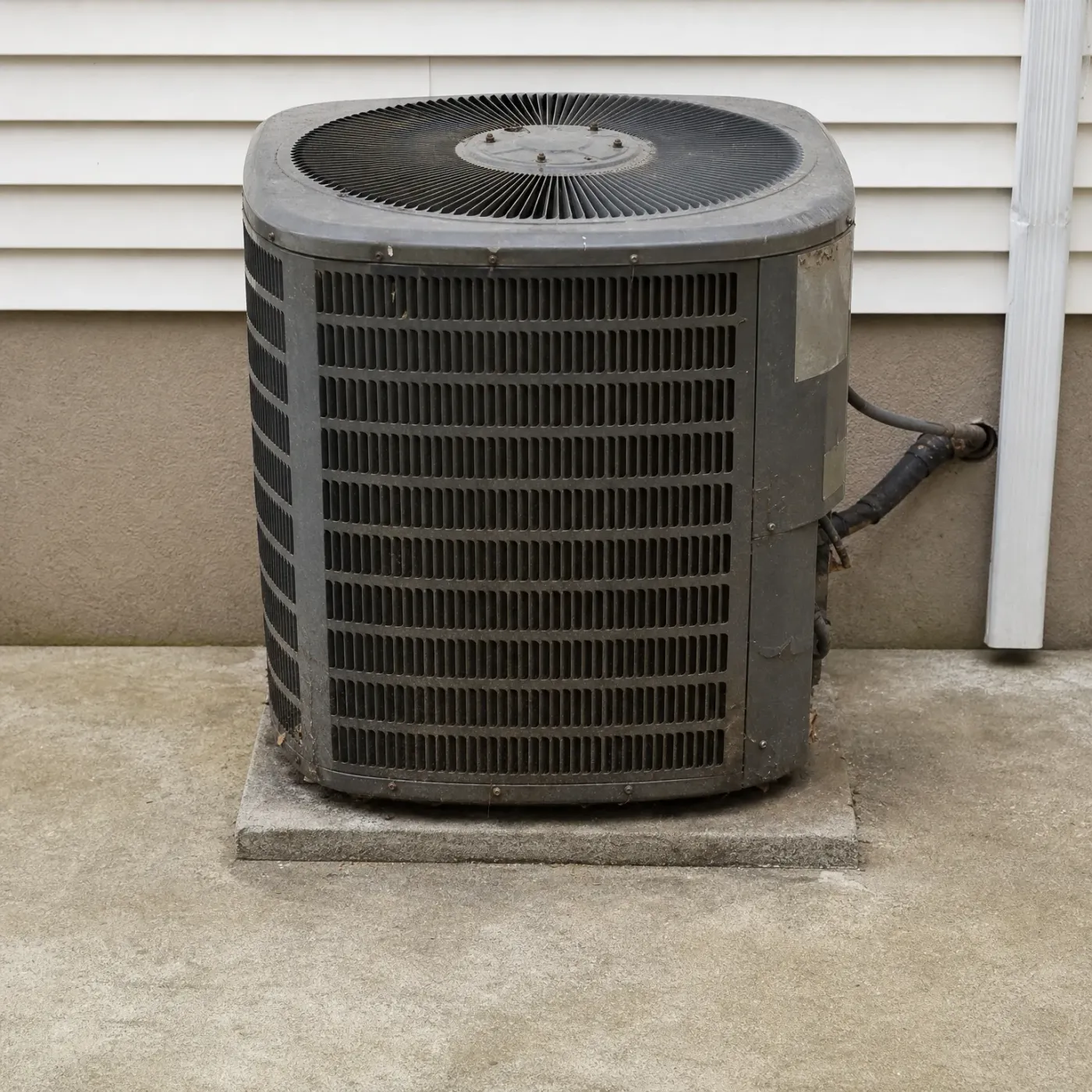
An outdoor air conditioner condenser unit on a concrete pad beside a house wall with stucco lower section, horizontal siding above, and a white downspout to the right.

Running dirty

Grime like this on the fins blocks airflow before the refrigerant lines even come into play. Heat has nowhere to go, so the compressor runs longer to do the same job. Left like this through a Missouri summer, it's the kind of unit that quits on the hottest day instead of the mildest one.

What you can check vs what gets caught

DIY checks

  • Rinsing the condenser fins with a garden hose takes care of light dust but won't touch grass clippings packed down between them.
  • Swapping the filter is simple and worth doing monthly, but it won't tell you if the refrigerant charge is low.
  • You can look at the outdoor unit and clear weeds or branches away from it, which helps airflow but doesn't catch a failing capacitor.
  • Without gauges, there's no way to check refrigerant pressure against the system's specs, so a slow leak goes unnoticed.
  • A visual check won't catch a contactor with pitted contacts until it fails outright and the unit stops starting.

Contractor visit

  • A local contractor who works on these systems every summer knows which parts tend to fail first on units that sit through a Missouri winter.
  • Refrigerant charge and pressure get checked against the manufacturer's specs, not just a general sense of whether the air feels cold.
  • The capacitor and contactor get tested under load, catching weak output before it leaves you without cooling on a hot day.
  • One contractor means one visit and one explanation of what's going on, instead of repeating the same details to several companies while you sort through quotes.
  • Coils get cleaned down to bare metal, not just rinsed on the surface, so the compressor isn't working harder than it needs to.
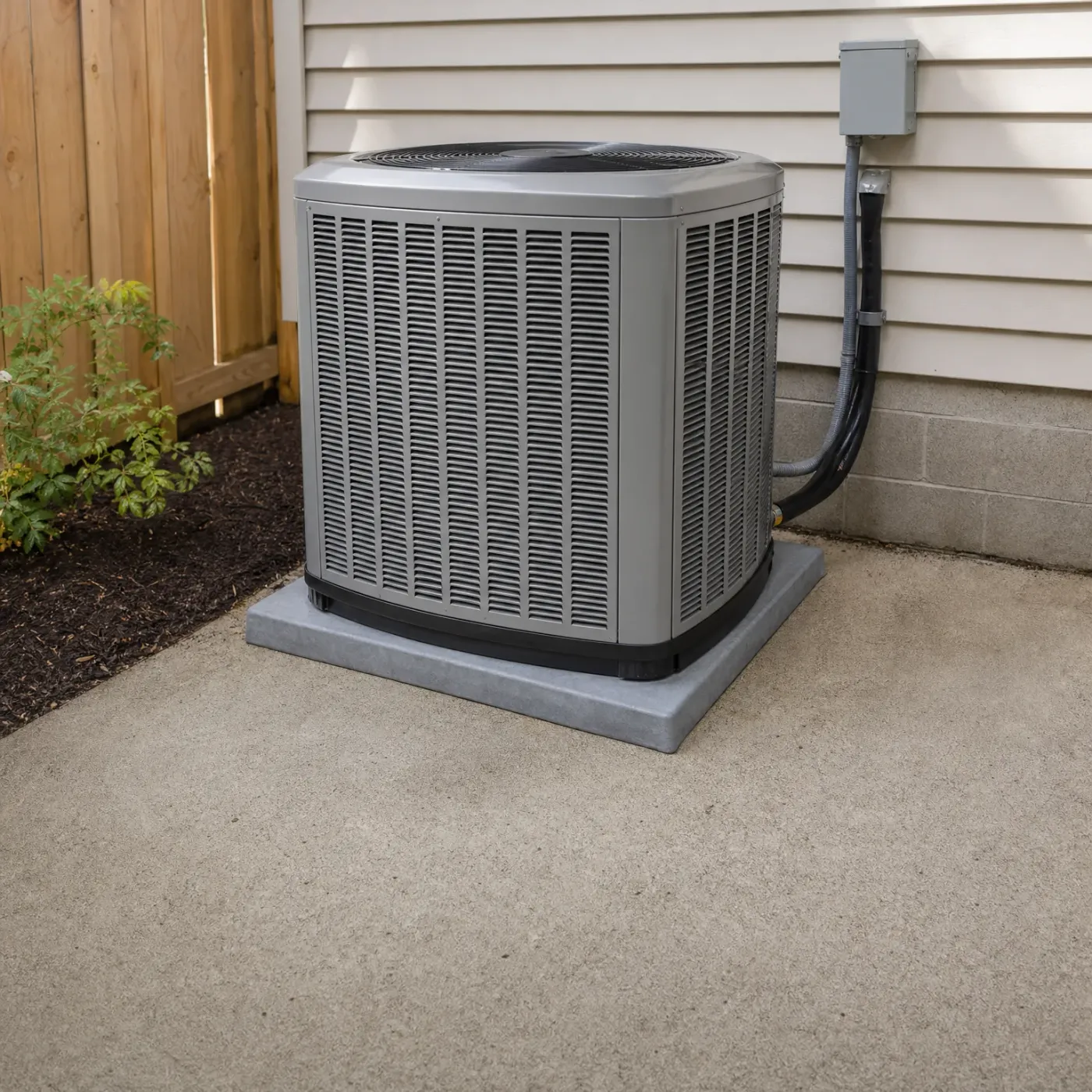
A gray outdoor air conditioning condenser unit on a composite pad beside a house with horizontal lap siding, with a wall-mounted disconnect box, refrigerant lines, and a wooden fence and shrubs to the left.
The lines up the wall are clear and the pad is clean, so the unit pulls heat out of the house without anything slowing it down.
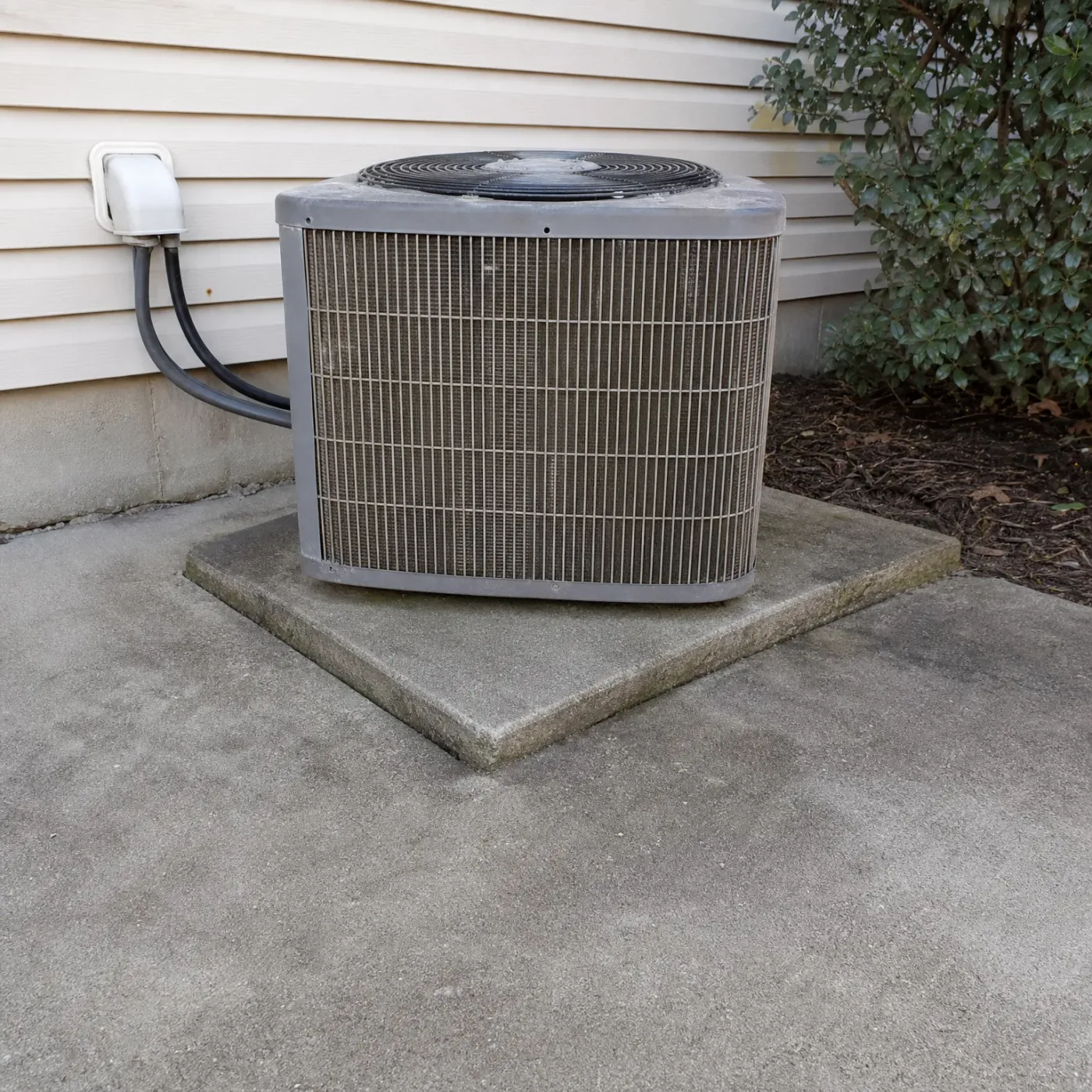
An outdoor air conditioning condenser unit on a concrete pad beside a house with light vinyl siding, with electrical conduit running to a wall-mounted disconnect box and a shrub in mulch to the right.
Wiring runs to the disconnect fine here, but a coil that's been fighting grass and buildup like this is already working harder than it should.
A two-story house with light beige horizontal siding, a gabled roof, a small covered front porch with dark door, and shrubs along the foundation, set behind a mown lawn and wet sidewalk with large leafy trees on both sides.

That muggy feel Missouri summers are known for isn't just a nuisance, it's measured. Averaged across June, July and August, the dew point here sits at 66°F, per NOAA climate data. Air that heavy holds onto heat, so your AC isn't just cooling the house, it's also wringing moisture out of the air before it feels comfortable. That's more work on the coil every cycle, all summer. A unit running low on charge or fighting a dirty coil feels it first on those thick, still afternoons when the humidity sits highest. A contractor who works on systems around here through a full Missouri summer has seen what that kind of load does to a coil by August, and checks for it before the heat sets in, not after.

NASA POWER T2MDEW county cells weighted by homes

No phone calls to make

A licensed local pro takes the request for your air conditioner tune-up.

No fee to send it, and nothing to sign.

An outdoor air conditioning condenser unit on a concrete pad at the corner of a house, next to vinyl siding and a plain light-colored wall, with grass and a mulch bed in the foreground.

What a strained system costs you

A compressor that runs long hours against a dirty coil pulls more power the whole time it runs, and in your house that shows up as a bill that climbs through July and August before you've changed anything else. Past the money, that's wear that adds up. A compressor that short cycles or runs hot all summer is more likely to be the one that quits, and it tends to quit on the hottest day, not a mild one, because that's when it's working hardest.

A gray outdoor air conditioning condenser unit sits on a concrete pad beside a white stucco wall and gray horizontal siding, surrounded by rounded landscaping gravel, with an electrical disconnect box mounted on the siding above.

What you'd notice first

Rooms that used to cool down by evening start lagging behind, especially upstairs or at the end of a long duct run. You might notice the unit running almost constantly on a 90-degree afternoon instead of cycling off for a while. Humidity hangs in the house even with the AC on, since a system working too hard to keep up on temperature often isn't pulling the moisture out either, and that's the sticky feeling Missouri summers are known for, right inside your own living room.

A closed silver laptop and a ceramic mug of dark coffee sit on a wooden table in front of two chair backs, with a kitchen counter, tiled backsplash, wooden cutting boards, a vase of greenery and a potted plant by a window behind.

What this means for your house this summer

If your AC is behind going into July, you'll notice it in the rooms farthest from the thermostat first. They'll run warmer, and you'll end up setting the whole house colder just to make those rooms livable, which costs you everywhere else. With the dew point as high as it runs here, a system that's already working harder has less room left before it starts losing the fight on a bad week.

None of that means tearing into it yourself. It means getting someone out who works on these systems all season and knows what tends to go first in a Missouri summer, before you're stuck choosing a contractor at random while the house is already hot. One contractor, licensed and local, takes a look and tells you where things stand. No sorting through several companies, no retelling the same story twice, no guessing who's worth the call.

A living room corner with a beige sofa and cushion, a round wooden coffee table holding a pale ceramic vase of eucalyptus stems and a wooden bowl, and a curtained window with a potted plant above a latticed radiator cover in the background.
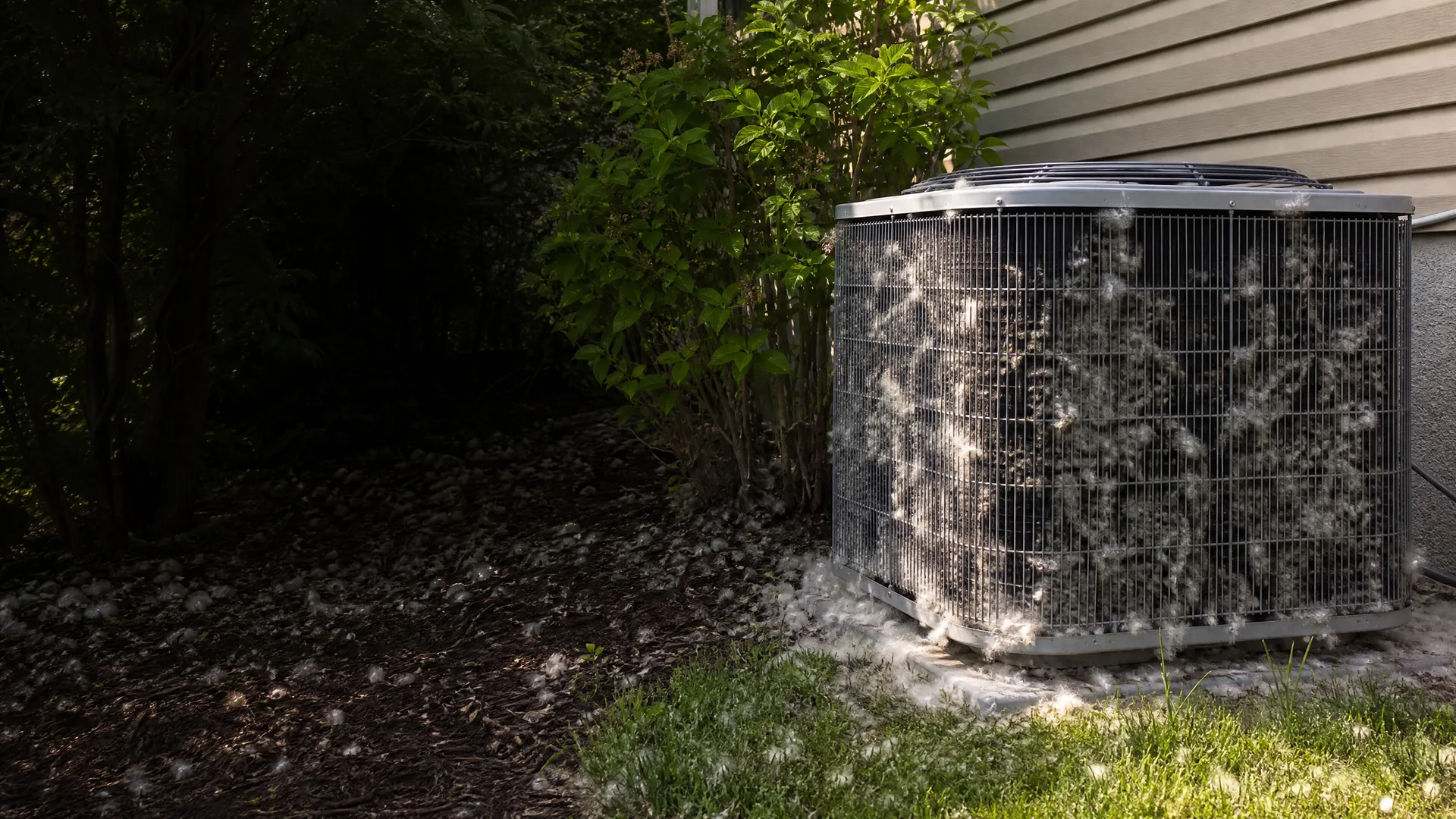
An outdoor air conditioner condenser unit beside a house with horizontal siding and stucco, its coil fins covered in white cottonwood fluff that also collects on the surrounding grass and mulch.

Late May, and the cottonwoods along the side yard have let go. You step out to grab the hose and notice the condenser's fins have gone white, packed with fluff the way snow packs into a fence line. It's caught in every gap, front and side, thick enough that you can't see the coil behind it. The unit's still running, you can hear it, but the airflow through the top feels weak when you hold your hand over it. You didn't even use the AC much yet this spring. Just a few warm afternoons. And already the thing it needs most, air moving through that coil, is half blocked before summer's even started.


A clean filter, a clear coil, and refrigerant at the right charge are what carry your AC through a Missouri summer without the compressor fighting itself. That's the whole job, checked now instead of found out the hard way in July. The contractor who comes out is local and works on these systems all season, so they've seen what a coil packed with cottonwood fluff does and what a weak capacitor looks like before it fails outright. You're matched with one contractor, not a handful calling you back at once, someone who can look at your unit and tell you where it stands. From there you know. Either the system's ready for the months ahead or something needs attention now, while there's still time to deal with it before the heat sets in and the AC is running flat out every day.

A modern two-story house with dark siding and stone base at dusk, with lit soffit lights, a path of large rectangular pavers set in dark gravel, planting beds, a lawn, and an orange and blue sunset sky above distant trees and water.

Air Conditioner Maintenance

One form, no calling around

Step 1 of 3: Equipment
  • A living room corner with a beige upholstered armchair holding a green pillow and knitted throw, a ceramic table lamp on a side table, white built-in bookshelves, a framed landscape print, a curtained window, and a round wooden table with a lit candle and bowl in the foreground.
    • A local pro who services air conditioners gets in touch about the tune-up.
    • Say what's going on with your air conditioner, and a pro who works on them reaches out.
  • A lit table lamp with a tapered beige fabric shade and a speckled rounded ceramic base sits on a wooden surface beside a potted plant, with curtains and a window in the background.
    • Send the form, and lining up the air conditioner tune-up stops being yours to chase.
    • Send the form and the air conditioner tune-up stops being something to remember.
  • A cream upholstered armchair with a gray pillow and knit throw sits beside a wooden table with a eucalyptus-filled vase, in front of a lit stone fireplace with stacked firewood.
    • Answer a few questions instead of calling shop after shop.
    • Describe your air conditioner job once, to one pro.
  • A gray outdoor air conditioner condenser unit on a concrete pad beside a wood-sided wall, with a horizontal wood slat fence, a cushioned patio chair, a wooden table, and a potted green plant nearby.
    • Your request stays with one local pro.
    • Your request goes to one pro, not a list of companies.