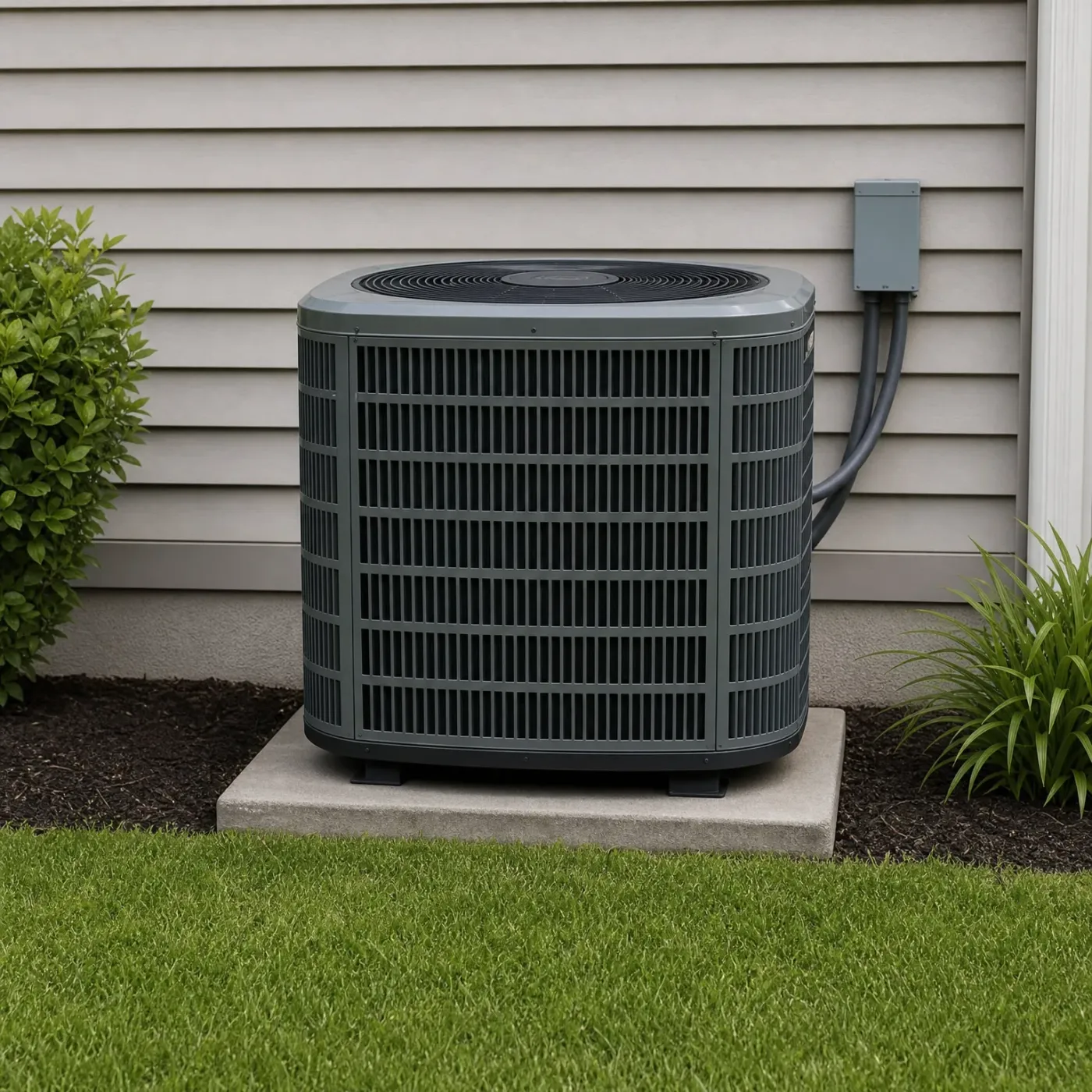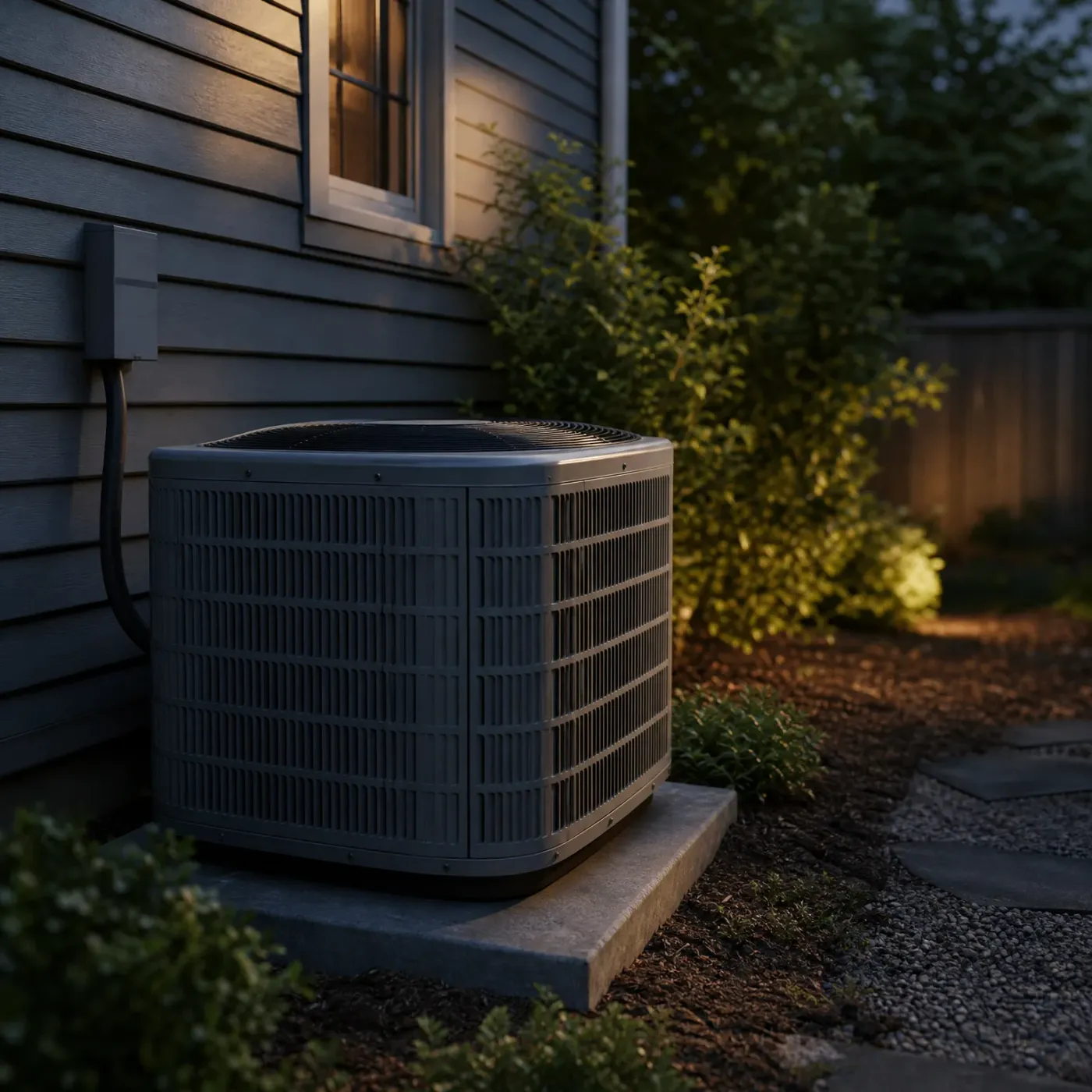





An outdoor air conditioner condenser unit on a concrete pad beside a gray horizontal-siding house at dusk, with a wall-mounted disconnect box, shrubs, and a gravel path with stepping stones nearby.

Done looking for an air conditioner pro

How long an AC unit lasts in Liberty, MO

Most air conditioners run somewhere between 12 and 15 years, but what wears one out faster in Liberty is the long muggy stretch it has to work through every summer. Below, what actually shortens a unit's life here and how to tell yours is closer to the end than the middle. If it's time to replace it, send the form and skip the part where you call around and explain your system to five different people.

Hand it off

Most air conditioners last 12 to 15 years. What decides where your unit falls in that range is how hard it runs and how well it's kept up. Here, the AC often starts in April and doesn't shut off for good until October, which is six or seven months of real work most years. A unit in a milder climate might coast through half that. That long stretch adds up: more hours on the compressor, more cycles on the fan motor, more dirt pulled through the coil if the filter gets ignored. None of that means your unit is doomed early. It means the wear happens on a shorter calendar than it would somewhere cooler, so a unit installed ten years ago here has likely done more work than the number on the calendar suggests. If yours is approaching that range, or you've noticed it running longer to hit the same temperature, that's worth paying attention to now rather than after it quits in August.

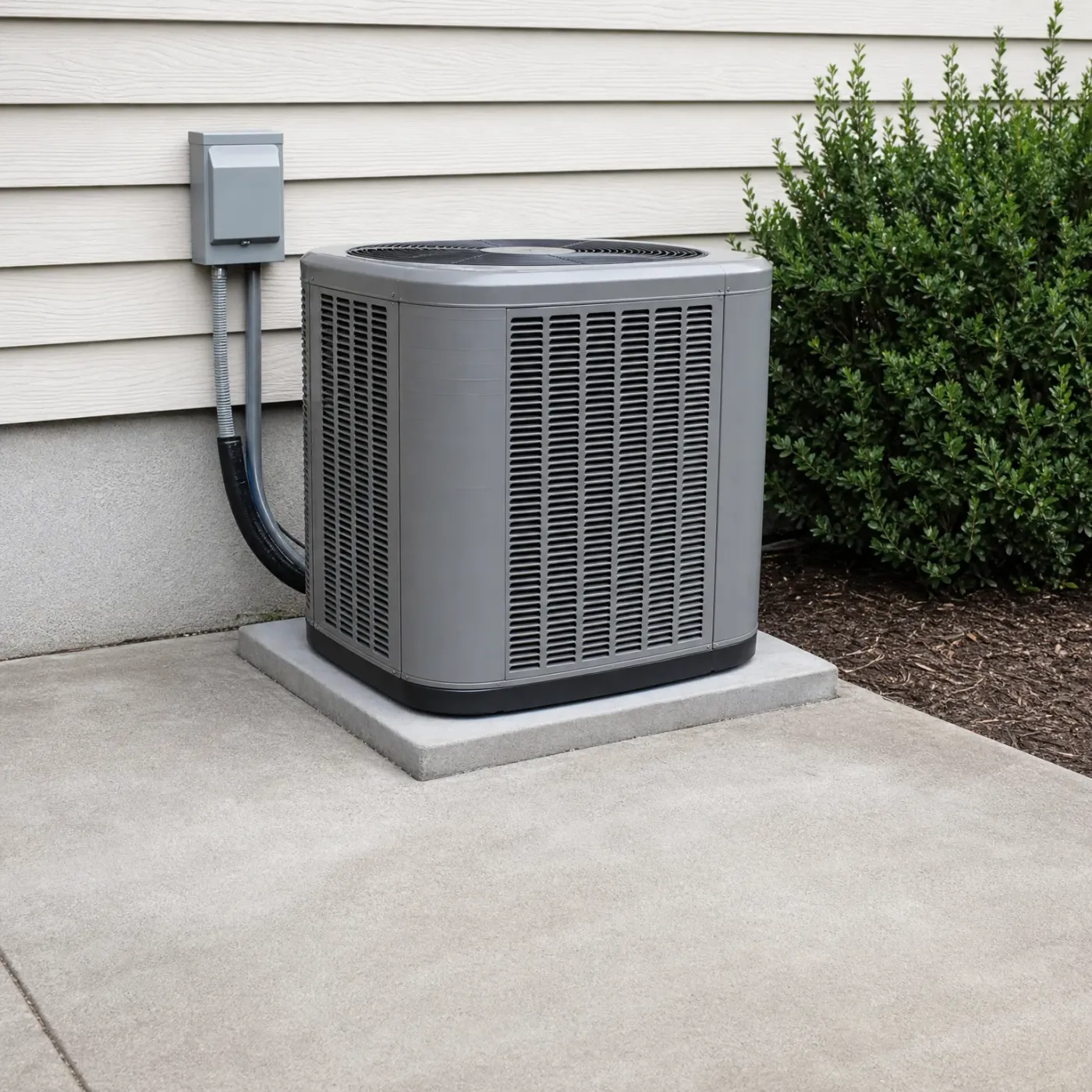
A gray outdoor air conditioning condenser unit on a concrete pad beside a house with horizontal lap siding, with a wall-mounted disconnect box and conduit to the left and a green shrub with mulch to the right.
A clean condenser like this moves heat the way it's supposed to, and with gas heat doing most of the winter work, this is the machine carrying you through those long Liberty summers.
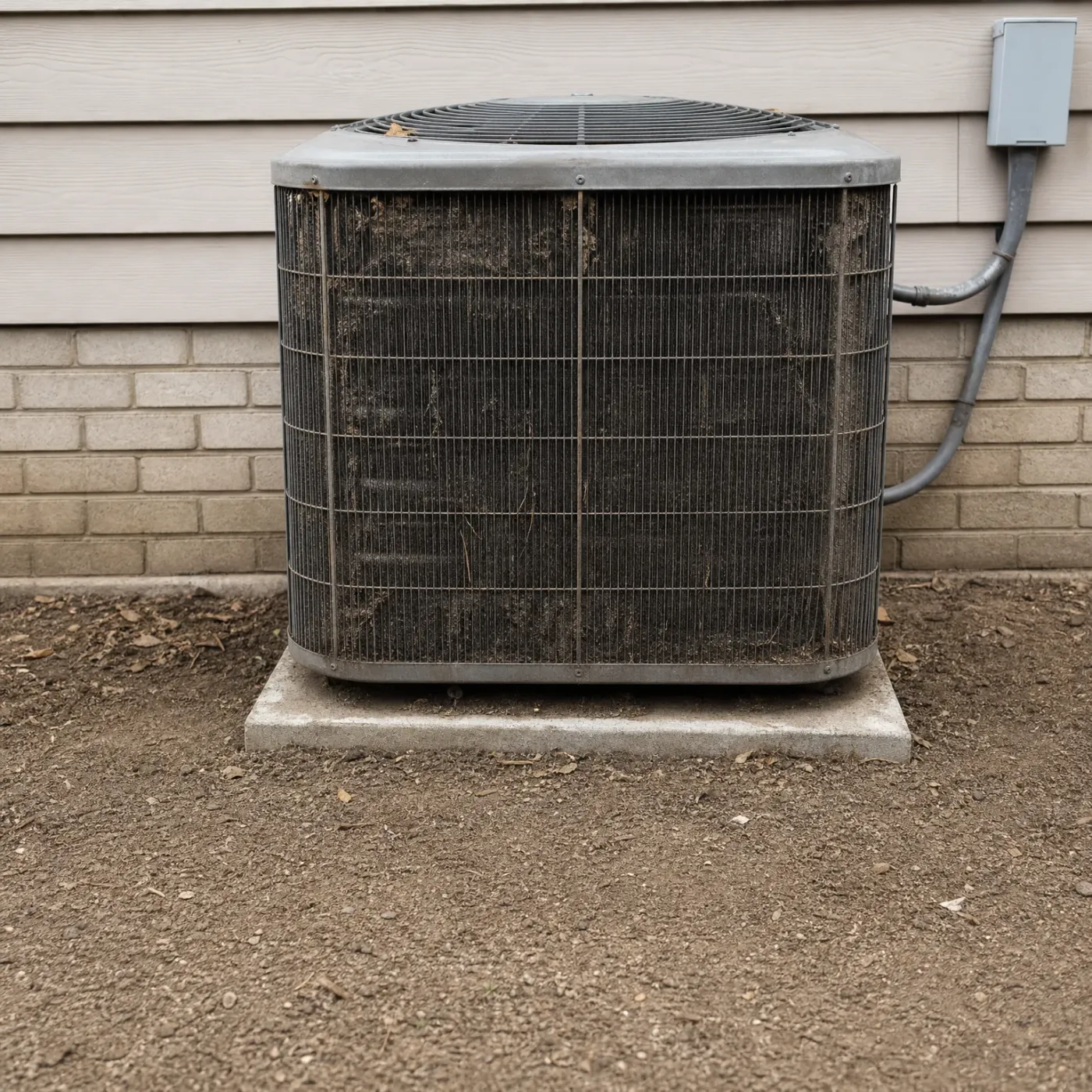
A dirty outdoor air conditioning condenser unit on a concrete pad beside a house wall with horizontal siding above a painted brick foundation, with a gray electrical disconnect box and conduit on the wall.
Coils this clogged can't shed heat well, so the unit runs longer to do the same job, and that's wear it doesn't come back from.
A man in a navy sweater reclines with closed eyes in a beige armchair in a living room, with a lamp, wooden cabinet, bookshelf, potted plant, and a side table holding a newspaper and mug nearby.
A man in a blue henley shirt reclines on a leather chair with his eyes closed, beside a window, a houseplant, a side table with a newspaper and a dark mug.
A man in a gray sweatshirt reclines with his eyes closed in a dark leather chair, with a bookshelf behind him and a side table holding folded newspapers, a mug, and a potted plant by a window.
A man in a blue sweater leans back on a brown leather chair with his eyes closed and a slight smile, in a room with bookshelves, framed pictures, a potted plant by a window, a folded newspaper and a dark mug on a table.

What actually wears out an AC unit in Liberty?

You've heard the 12 to 15 year number, but that's an average, not a guarantee. You want to know what actually eats away at that number so you can tell whether your unit is on track to make it that far or whether it's getting worn down faster than it should.

Run time and a dirty condenser coil wear it out fastest

Two things do most of the damage. One is simply how many hours the compressor runs, and in Liberty that's a lot, since the unit can be cycling on and off from April through October. The other is the condenser coil outside. When it's coated in grass clippings, cottonwood fluff or dust, the unit can't shed heat the way it needs to, so the compressor runs longer and hotter to reach the same temperature inside. That extra strain, repeated over six or seven months every year, is what pushes a unit toward the short end of its life instead of the long end. A coil kept clean does the opposite.

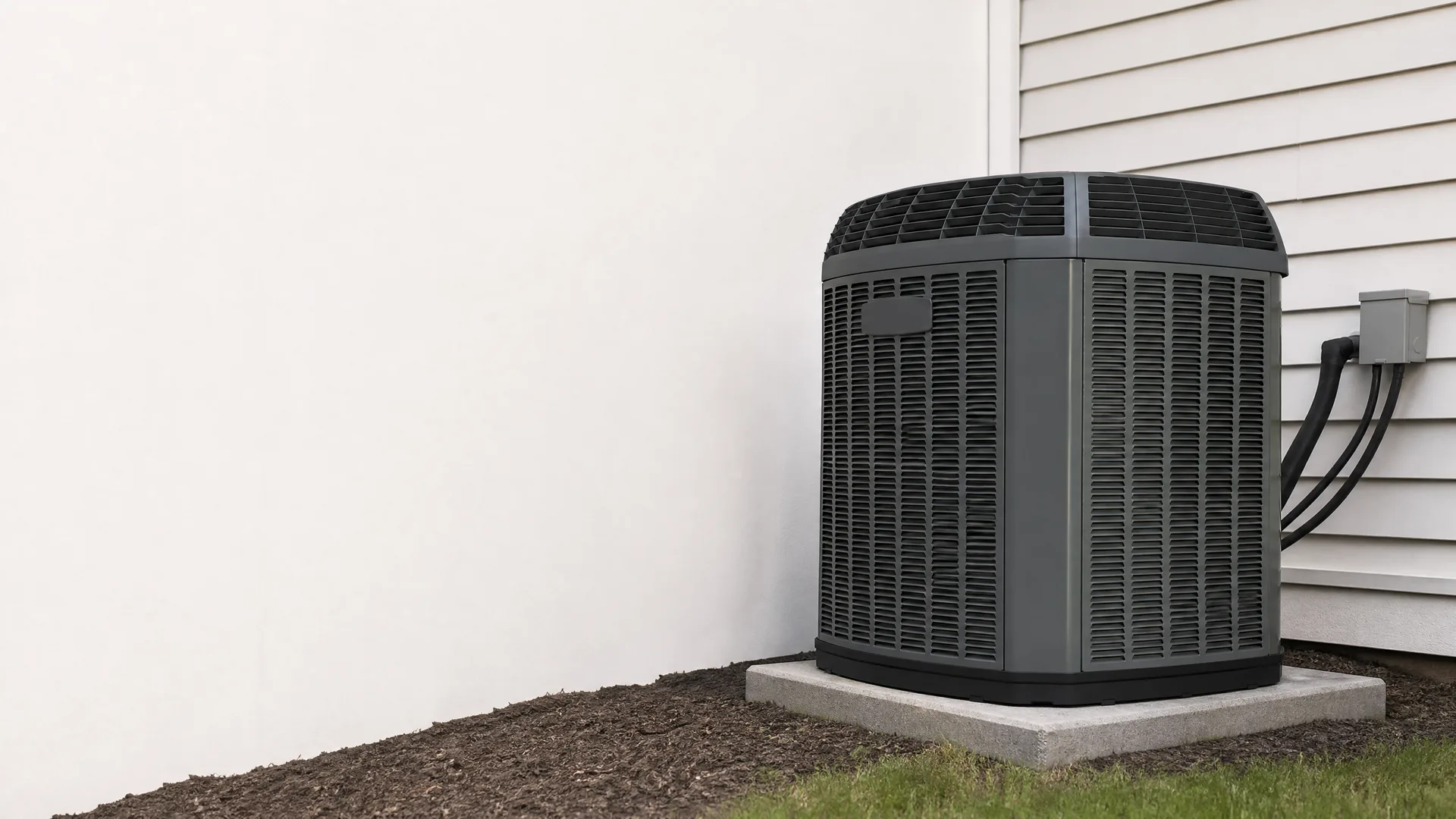
An outdoor air conditioner condenser unit on a concrete pad beside a light-colored stucco wall, with horizontal siding and a small electrical box to the left and gravel at lower left.

Why the compressor matters most

The compressor is the part that fails and ends the unit's life. Most of the other parts, the capacitor, the fan motor, can be replaced for a few hundred dollars. When the compressor goes, replacing just that part often costs close to a new system, so most homeowners replace the whole unit instead. That's why a compressor's condition, more than anything else, decides when an AC in Liberty actually gets replaced.

A dark gray outdoor air conditioning condenser unit on a concrete pad beside a house with light siding and a stucco wall, with mulch and grass in the foreground.

What a run of hot days does

On a 95 degree day, your AC might run nearly nonstop trying to hold the house at 72. That's the kind of stretch that wears on a compressor faster than a mild week does. Liberty gets a handful of those stretches most summers, back to back, with the unit cycling on for long runs instead of resting between short ones. A system already weak from age or a dirty coil feels that load first, and it's often during a stretch like that when it finally quits.

Repair the AC or Replace It

Repair

  • Makes sense if the unit is under 10 years old and the repair is a single part like a capacitor or a fan motor.
  • Keeps you running through the rest of this summer without the wait and cost of a full installation.
  • A good option if the compressor is still sound and the rest of the system has been maintained.
  • Doesn't reset the clock. If the unit is already near 12 to 15 years, another part is likely to fail soon after.
  • Worth doing if a technician has priced it out and it's clearly cheaper than replacing the whole system.

Replace

  • Makes sense once the compressor fails, since that repair alone often costs close to a new system.
  • Stops the cycle of paying for repairs on a unit that's already past 12 years and breaking down more each summer.
  • Gets you a unit sized and installed for how long Liberty summers actually run, April through October.
  • Worth considering if last summer brought more than one repair call, since that pattern tends to continue.
  • A newer unit runs more efficiently through the long muggy stretch than an aging one straining to keep up.
  • Ends the uncertainty of not knowing which hot week the old unit finally gives out.
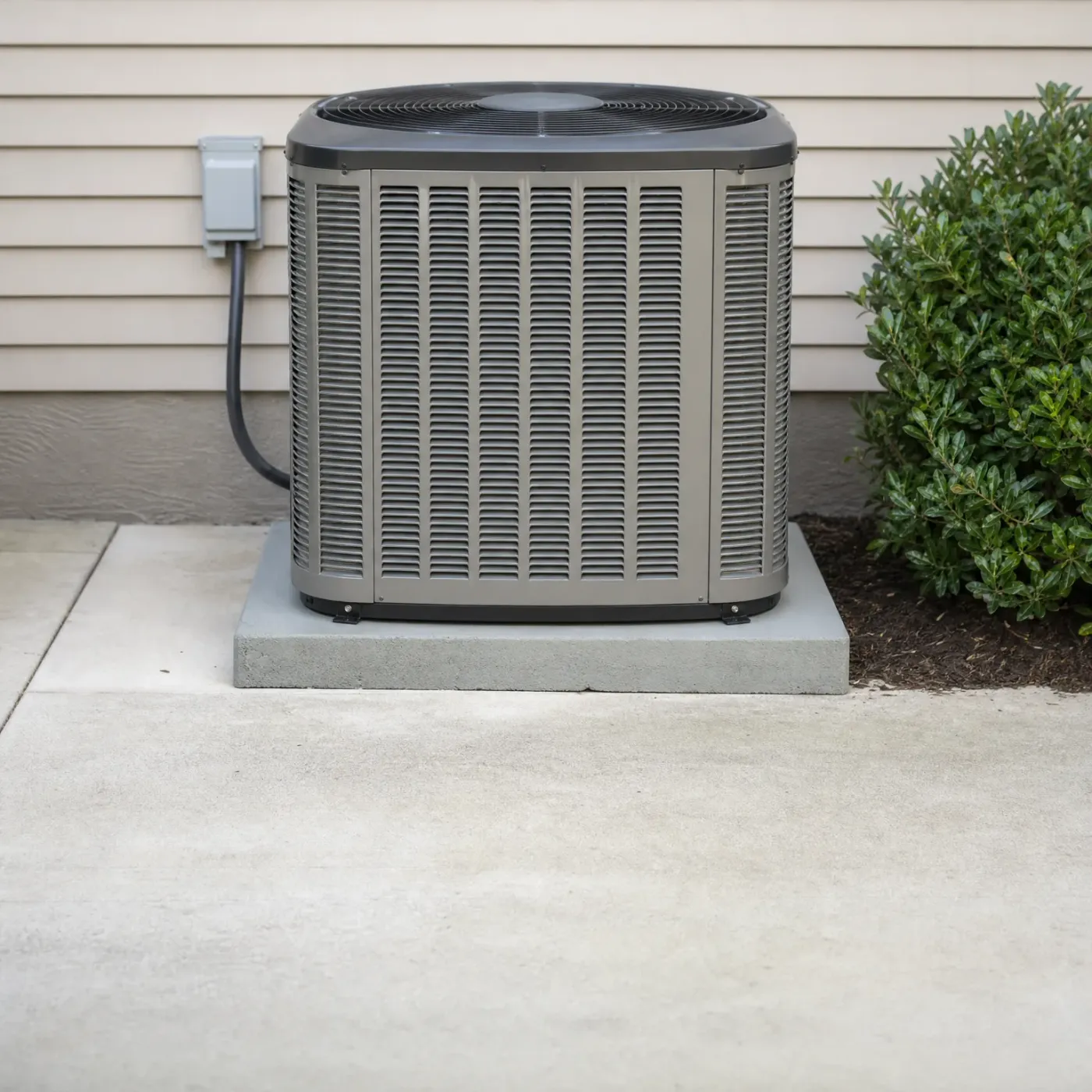
An outdoor air conditioning condenser unit on a concrete pad beside a house with horizontal lap siding, with an electrical disconnect box and conduit on the wall and a green shrub to the right.

Running clean

This is what a condenser should look like through a Liberty summer. The panels are clear, the fan spins free, and the disconnect box and lines sit undisturbed. A unit kept this way moves heat the way it was built to, with nothing extra working against it.
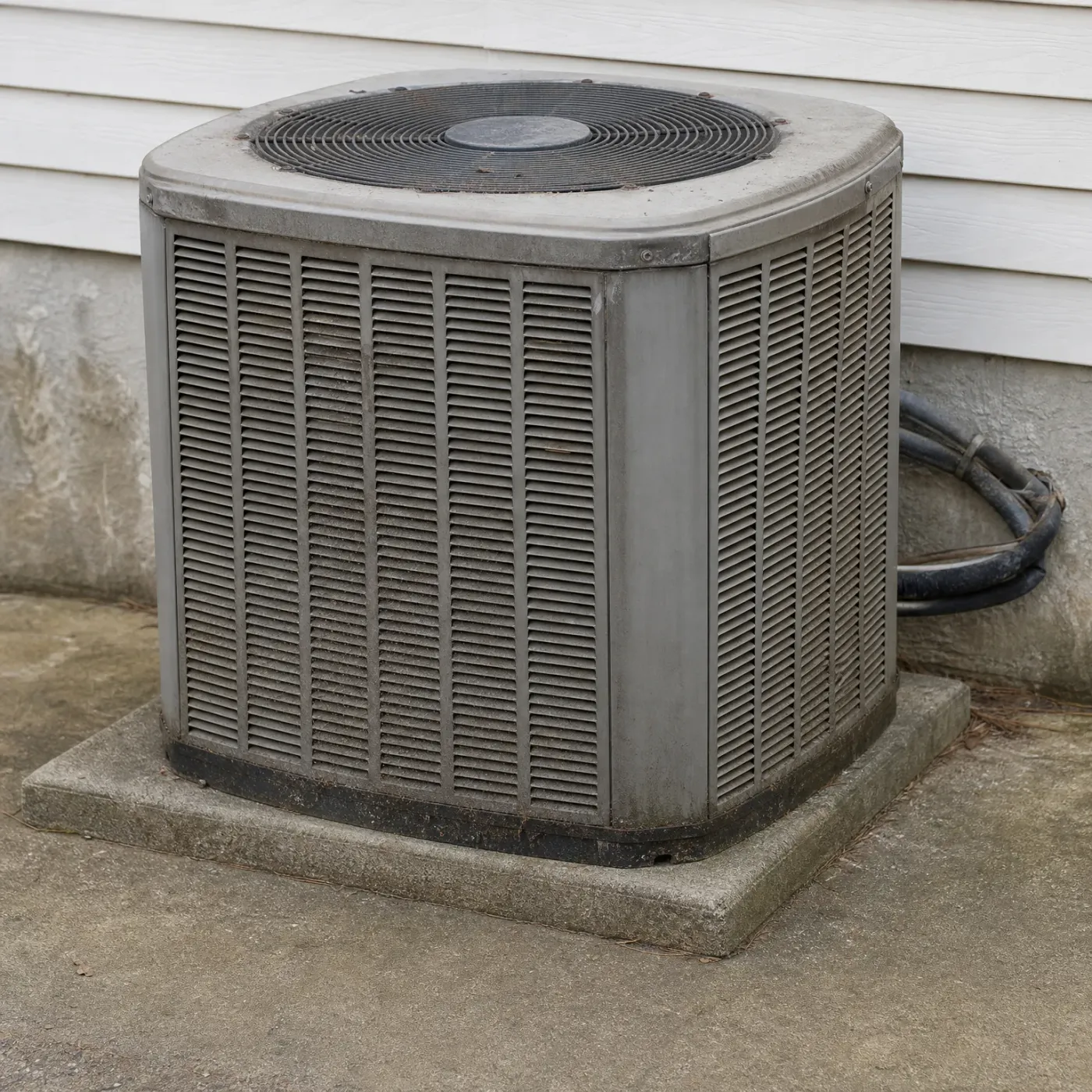
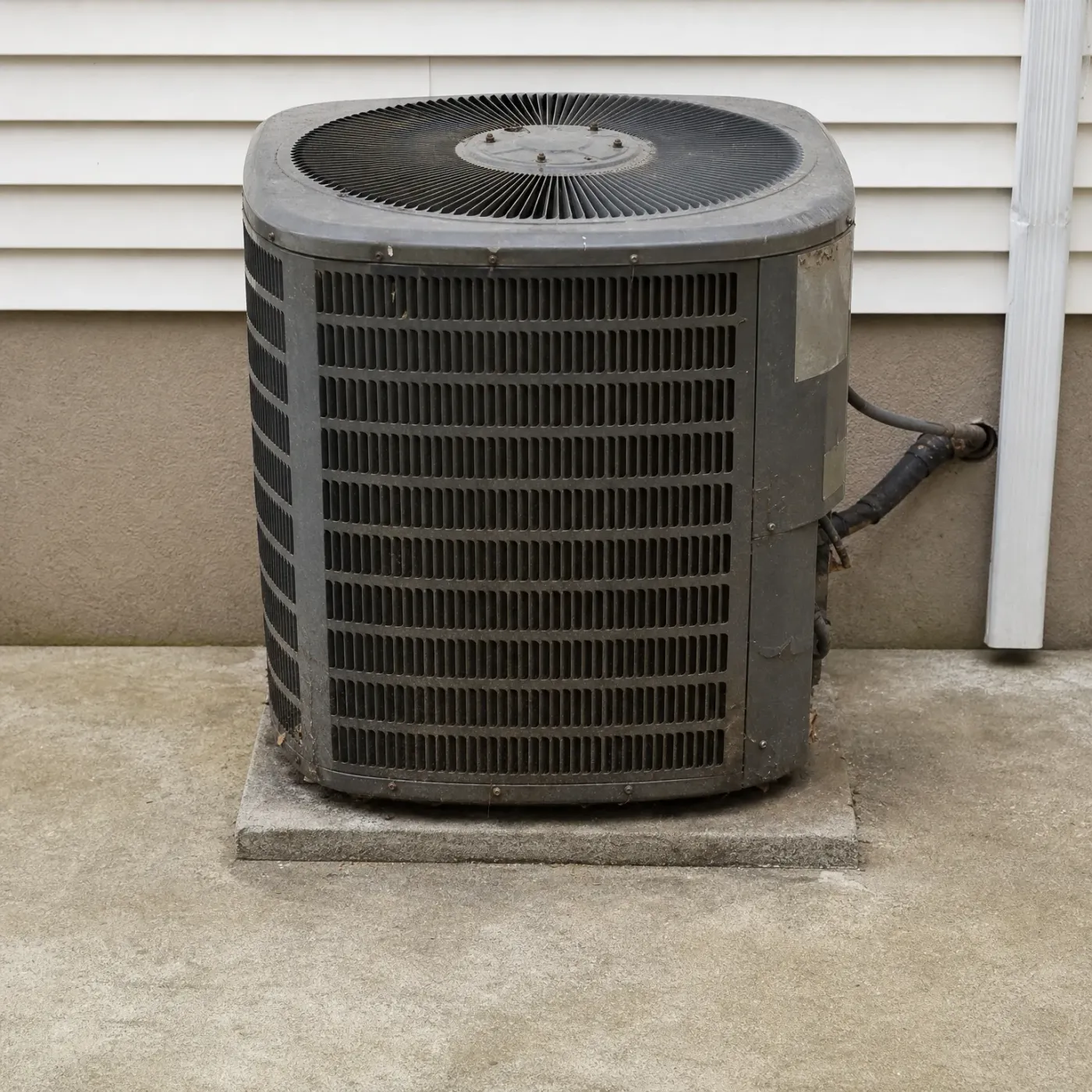
An outdoor air conditioner condenser unit on a concrete pad beside a house with horizontal siding and a lower concrete foundation wall, with coiled refrigerant lines at right.

Worn and neglected

Years of dirt packed into the louvers and fan grille force this unit to work past what it should to cool the same house. The refrigerant lines are exposed to that grime too. A condenser left like this through enough Missouri summers is closer to the end of its 12 to 15 years than its start.

An outdoor air conditioner condenser unit on a concrete pad beside a house wall with stucco lower section, horizontal siding above, and a white downspout to the right.
Before you get your air conditioner installation
A gray outdoor air conditioning condenser unit on a concrete pad beside a house with horizontal lap siding, with a wall-mounted electrical disconnect box and refrigerant lines, shrubs, mulch and lawn around it.
After you get your air conditioner installation

It's off your list after this

Skip searching for an air conditioner pro and answer a few questions instead.

You only hire the pro if you want to.

  1. Refrigerant inside the coil absorbs heat from the air in your home.

  2. The compressor squeezes that refrigerant until it turns hot and pressurized.

  3. The condenser fan pulls outside air across the coil to release that heat.

  4. Refrigerant cools, expands, and heads back inside to absorb heat again.

Is your AC telling you it's on its way out?

A unit nearing the end runs longer than it used to, sometimes most of the afternoon, and the house still doesn't feel quite cool. You might hear a rattle from the outdoor unit, or notice it cycling on and off more than it did a few summers back. Some rooms run warmer than others. The bill creeps up even though you haven't changed the thermostat. If the compressor is struggling, you may hear it straining to start, a hard click followed by a hum. None of this means it'll quit tomorrow, but ignoring it usually means it fails on the hottest day of the year, when Liberty is deep into a muggy stretch and every contractor nearby is already booked solid.

A two-story house with beige horizontal siding, stone veneer at the base, dark shingled gable roofs and a concrete walkway leading to the front door, set behind a patchy green lawn under a clear blue sky.

The dew point across Clay County averages 65°F through June, July and August, according to NOAA climate data. That's the number that makes the air feel heavy even when the temperature itself isn't that high. Humid air holds more heat, so your condenser has to move more of it to cool the same room, and the compressor spends more of each day working to do it. Over a summer that runs this long, that adds up to real hours on the parts that eventually wear out. You'll notice it as a unit that runs longer stretches at a time and a house that takes a little more effort to feel cool, even on days that aren't the hottest.

NASA POWER T2MDEW

An older man with gray hair and a navy knit sweater sits in an armchair with his eyes closed, near a bright window with potted green plants.
A woman in a cream knit sweater sits in an armchair indoors, eyes closed and smiling, beside a window showing yellow and orange autumn foliage, with a mug on a wooden side table and shelves holding vases behind her.

Repair it and watch for the next one

If this is the first real repair and the unit's still inside that 12 to 15 year range, fixing it and moving on makes sense. You get through this summer without replacing anything that still works.

Send my request

Replace it before next summer

If it's already had a couple of repairs or the compressor's the problem, putting money into a new install instead stops you from paying twice for the same summer.

Send my request

Cooling runs May through September

Five months of cooling is a lot of hours on a compressor, and in Liberty that stretch tends to run hot and sticky the whole way through. Your unit earns its 12 to 15 years working that stretch every year, not just on the worst days of July.

NOAA nClimDiv 1991-2020

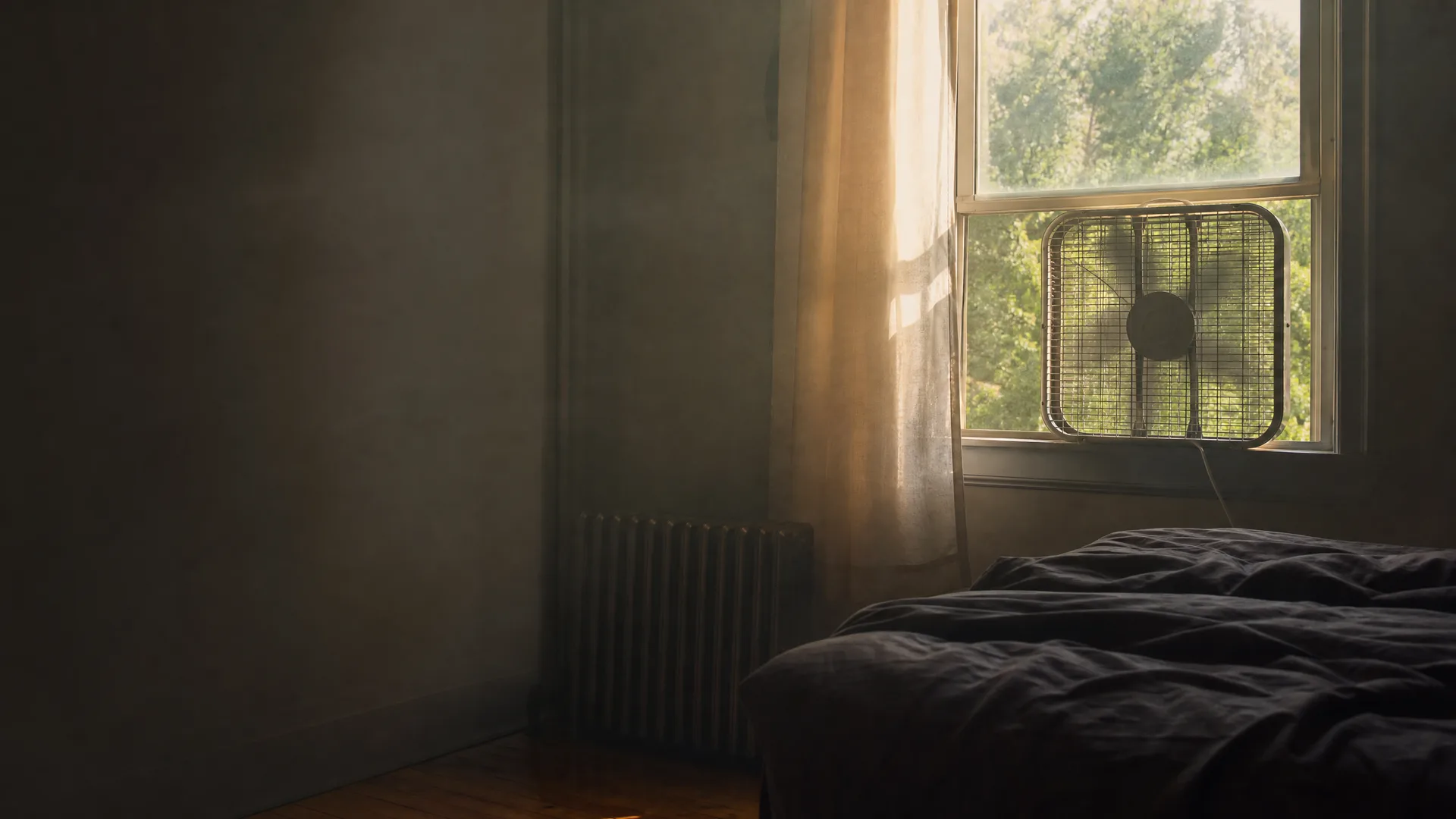
A dim bedroom with a bed covered in gray bedding, a cast-iron radiator against the wall, and sunlight entering through a window fitted with a box fan and a sheer curtain, with green trees outside.

By nine the sun's long down and the room still hasn't let go of the heat. The box fan sits in the window, pulling in air that isn't much cooler than what's already inside. You're on top of the sheets, not under them. Downstairs the thermostat says 74, but up here it's nothing like that, the air sits thick against your skin and the fan just pushes it around instead of clearing it out. You can hear the condenser outside, running the way it has most evenings since May, and you find yourself listening for it to cycle off, just to know it still can.

A closed silver laptop and a glazed ceramic mug on a wooden table, with a blurred kitchen counter, potted plant, cutting board and window in the background.

So where does that leave your unit

Twelve to fifteen years is the range. Where your unit falls in it comes down to how long it's been running, whether it's had a compressor problem, and how clean that condenser has stayed through each Liberty summer. If yours is already past ten years and showing any of the signs above, it's worth finding out now rather than in August when it quits for good.

That's the part that takes time: finding a contractor, calling around, explaining the same problem three or four times, then sitting with quotes trying to compare them against each other. Send the form and that work is off your plate. Someone qualified gets in touch, looks at what you've actually got, and tells you straight whether it's a repair or a replacement worth planning for.

A large weathered ceramic vase and a shallow wooden bowl sit on a rustic wooden table beside a window with linen curtains, with a blurred sofa with cushions and a hanging fabric panel in the background.
A single-story stone-clad house with low-voltage path lights along a gravel bed and lawn at dusk, with a tree line and orange sky on the horizon.

Air Conditioner Installation

Send one request and you're done looking

Step 1 of 3: Equipment
  • A brown leather and wood armchair with a cream knit throw sits in a corner beside a woven basket holding a dark cushion, under a framed mountain photograph, with a wood-trimmed window showing yellow and green foliage.
    • Your new air conditioner project goes to an installer who works in Clay County.
    • Get matched with a pro who works on air conditioners in Clay County.
  • A dark wood dresser against a pale wall holds a ceramic vase of eucalyptus branches, a stack of books with a wooden bowl, and a woven basket, with a framed landscape painting above and a woven basket holding a knit blanket on the floor beside a window.
    • Once you send the form, finding a pro is off your list.
    • After you send the request, you're done searching.
  • A window seat with beige linen and brown textured cushions, a chunky knit blanket, and an open book, beside a window showing blurred yellow autumn foliage.
    • Describe the project once instead of to every installer.
    • Answer a few questions instead of calling shop after shop.
  • A cream upholstered armchair with a rust-colored pillow and knit fringed throw sits beside a window with a ceramic vase of orange-leafed branches on the sill, overlooking autumn trees and leaf-covered ground.
    • A licensed installer who works in Clay County gets your project.
    • A licensed pro who works in Clay County gets your request.