How long an AC should run on a hot Missouri day

Step 1 of 3: Equipment

How long should my AC run on a hot day in Missouri?

On a hot, sticky Missouri afternoon, it feels like your AC never shuts off. You start to wonder if that's normal or if something's working harder than it should. Whether it's running nonstop because of the heat outside or because something's wrong inside the unit is the real question, and it matters before you decide whether to worry or just let it ride out the heat.

It can run most of the afternoon, and that's normal

On a 90 degree day with Missouri humidity, your AC may run two or three hours at a stretch, cycling off only when the house catches up to the thermostat. That's how central air is built to work. It's sized to keep pace with the heat and moisture outside, not to run a few minutes and shut off like it might in spring or fall. Long run times on the hottest days aren't a sign of trouble by themselves. What's worth paying attention to is whether the house actually cools down during those stretches, or whether the unit runs and runs without the indoor temperature moving. That difference is what tells you whether it's working hard or working against something.

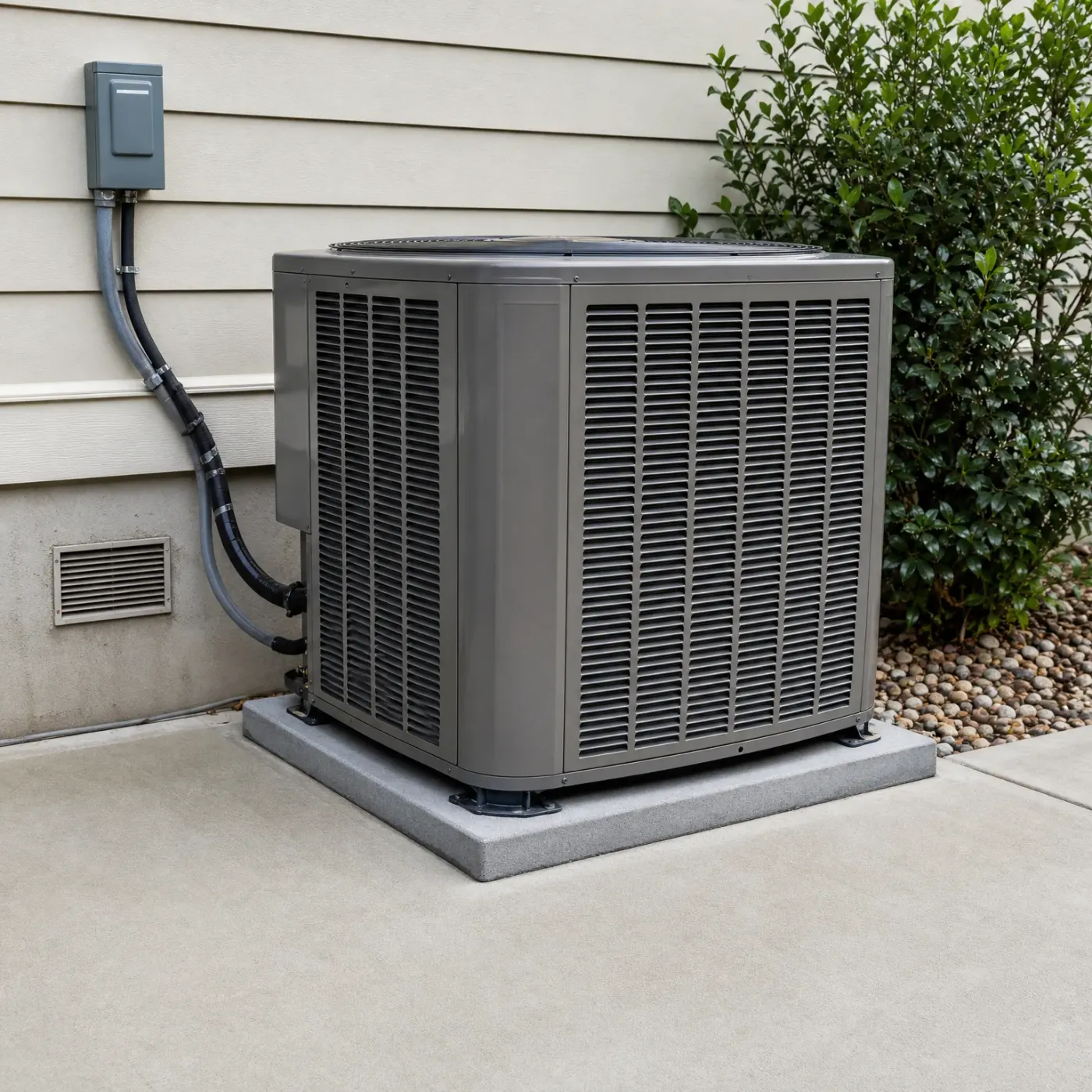
A gray outdoor air conditioning condenser unit sits on a concrete pad beside a house with horizontal siding, connected by insulated lines to a wall-mounted disconnect box, with a shrub and gravel bed to the right.

Running long but fine

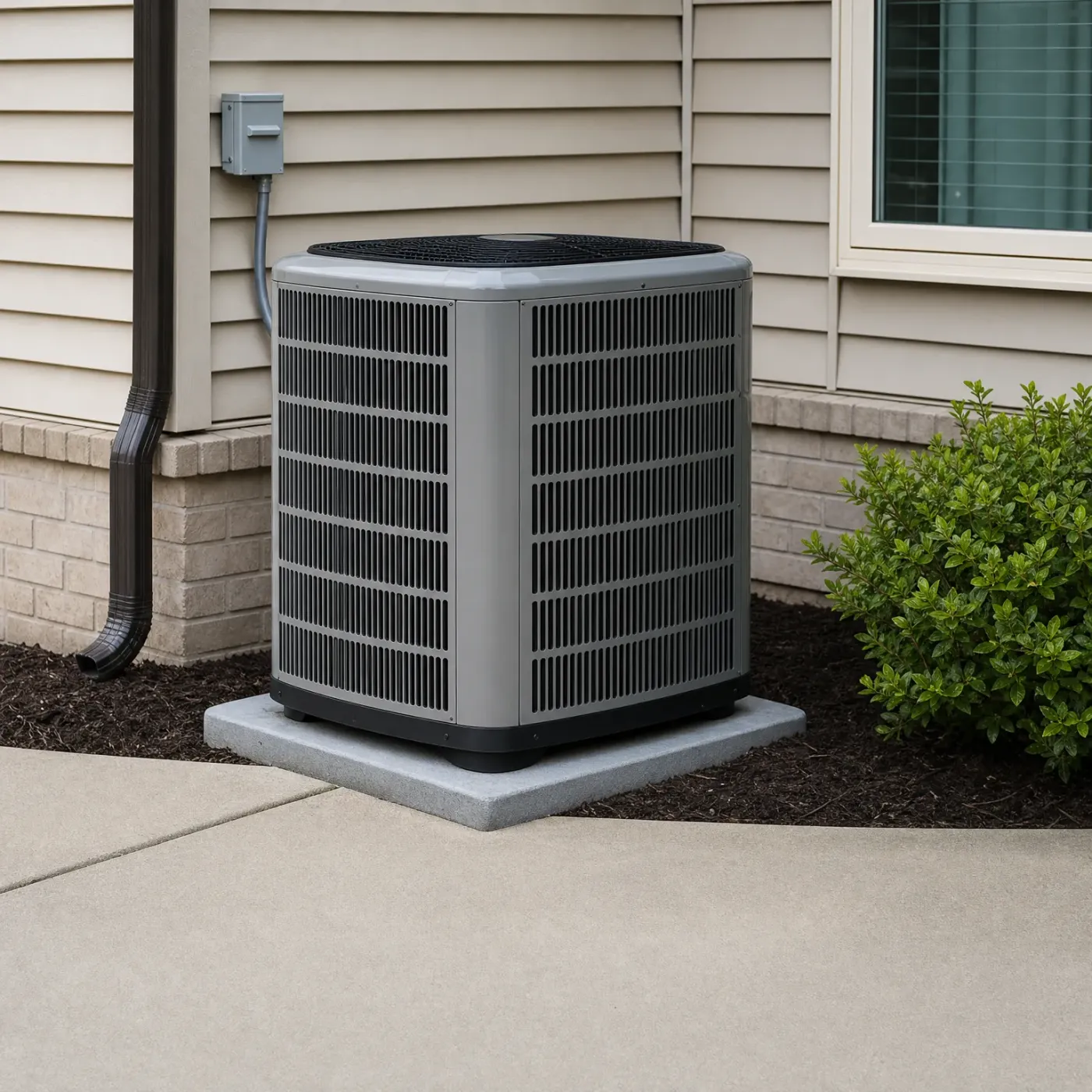
On a 95 degree day, your AC can run almost nonstop and still be working the way it should. The coil outside stays clean, the air from the vents feels cold, and the house holds its temperature even if the unit rarely cycles off. Long run time alone isn't a problem.
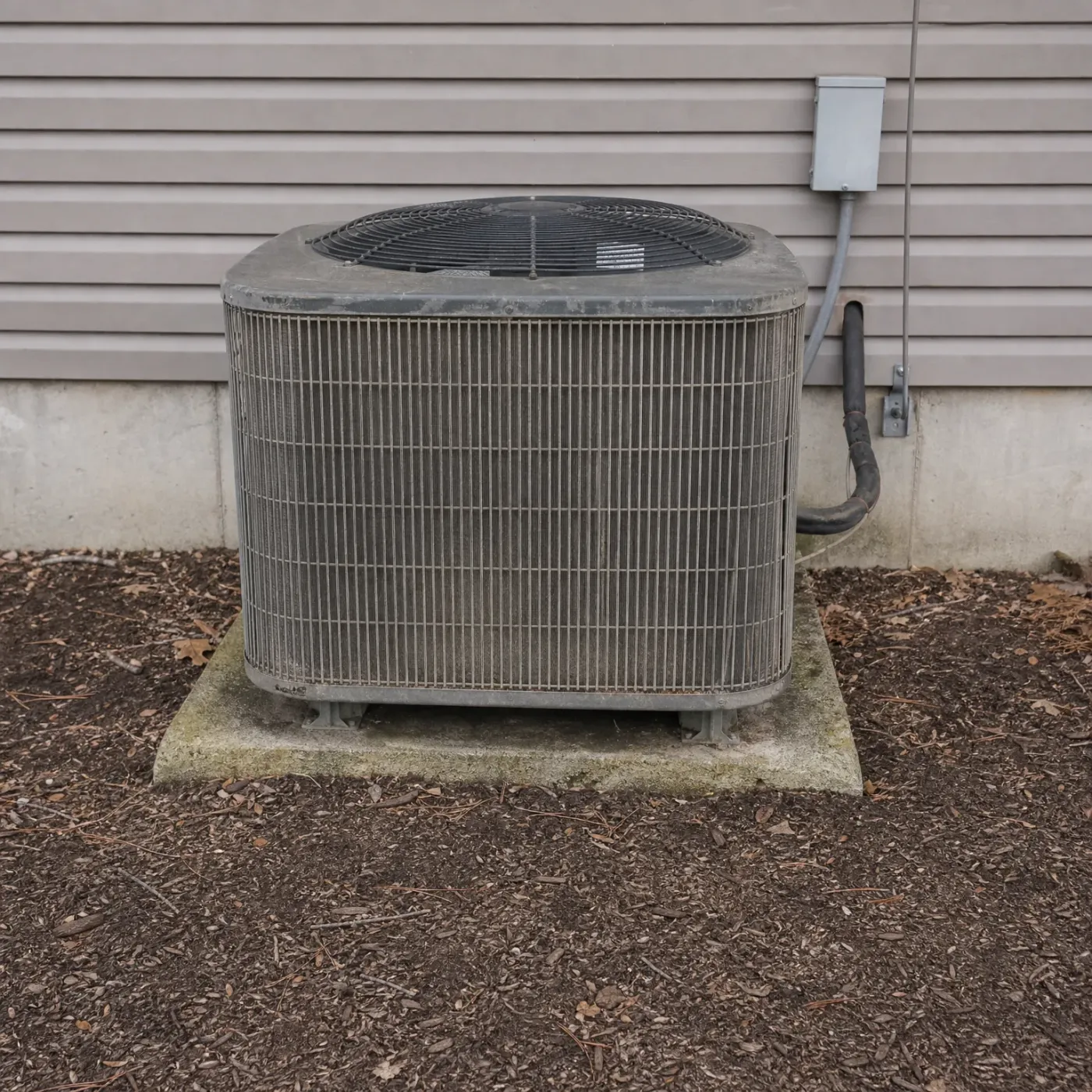

An outdoor air conditioning condenser unit sits on a concrete pad beside a house with horizontal vinyl siding, with a gray electrical disconnect box and insulated refrigerant line on the wall above, surrounded by bare mulched ground.

Running long and struggling

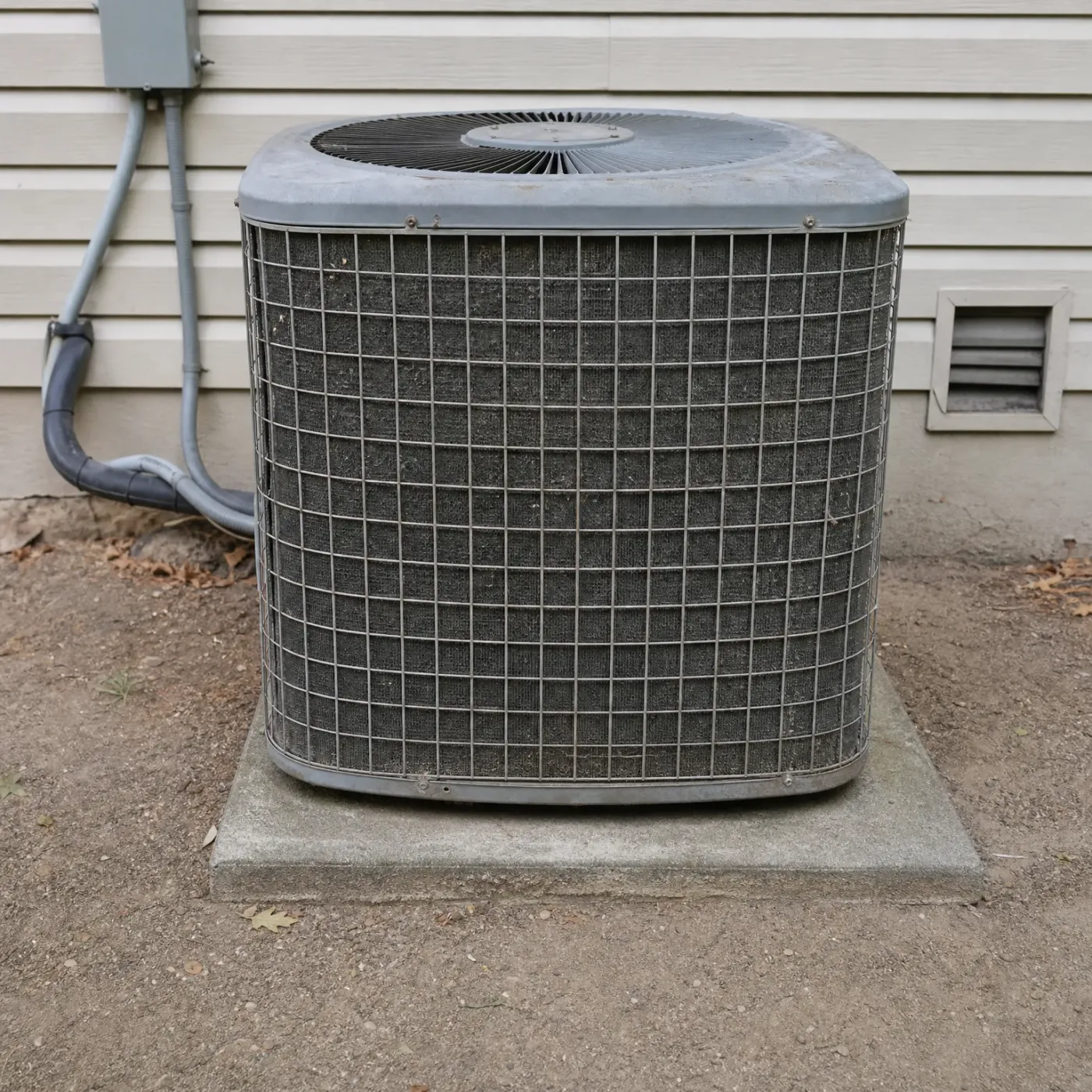
This unit is caked in dirt and grime on the coil fins, and that buildup keeps it from shedding heat the way it needs to. It runs just as long, maybe longer, but the house stays warmer than the thermostat says and the system works harder to get nowhere.

Why does my house still feel sticky with the AC running?

You might notice the air from the vents feels cool but not cold, or the thermostat says 72 while the house still feels damp. Maybe the unit cycles on and off every few minutes instead of running a long, steady stretch. You could hear it click on, run for a bit, then shut off again before the house ever catches up. Some of this is just what a muggy Missouri day does to a system. But short cycling wastes power without cooling the house, and a system that struggles all summer tends to fail when you need it most, usually leaving you without relief on the hottest, most humid days of the year.

A man in a blue sweatshirt reclines with closed eyes in a brown leather armchair in a living room with a bookshelf, houseplant, sofa, window, and a side table holding newspapers and a dark mug.
A bearded man in a gray pullover reclines with closed eyes on a brown leather sofa in a sunlit room with a window, framed picture, potted plant, and a wooden cabinet holding papers and a dark mug.
A man in a gray sweater leans back with closed eyes in a brown leather armchair beside a wooden side table holding a dark mug and a folded newspaper, with bookshelves and a window seat behind him.
A man in a green sweater reclines in an armchair with his eyes closed and a slight smile, beside a window with plants, a small table holding a mug and folded newspaper, and bookshelves behind him.

Long Runtime: Normal Strain or Warning Sign

Skip maintenance

  • A dirty condenser coil makes the compressor run longer to move the same heat outside, and on a 95 degree day that difference shows up fast.
  • A low refrigerant charge means the system runs long and still never quite catches up to the thermostat setting.
  • A clogged filter cuts airflow across the indoor coil, so the air coming out feels weaker even while the unit keeps running.
  • Without a yearly check, a failing capacitor or a weak contactor can go unnoticed until the day you need the AC most.
  • A tech who sees your system every year knows what tends to wear out on it before it leaves you without cooling in July.

Keep up with it

  • A clean coil lets the compressor shed heat the way it was built to, so long runtimes on a hot day come from the weather, not a dirty system.
  • Correct refrigerant charge means the system can actually reach the temperature on the thermostat instead of running long and falling short.
  • A tech who checks the capacitor and contactor each spring catches the parts that fail first, before the Missouri heat puts them to the test.
  • A clean filter and clear airflow mean the air from the vents stays cold even as the unit runs most of the afternoon.
  • Since gas heats most homes here, the furnace sits unused all summer, so the yearly visit that matters most for comfort is the one on the AC.
A gray-haired man with a beard in a blue button-placket shirt reclines on a couch with his eyes closed, beside a sunlit window with a green plant.
A woman in a cream knit sweater sits in an armchair with her eyes closed near a window showing yellow autumn foliage, with a mug on a round wooden side table beside her.

Stop chasing an air conditioner pro

A system that runs nonstop on a 95 degree day isn't necessarily telling you something's wrong. But if it's running long and the house still feels damp, or it's been cycling oddly all summer, that's worth having someone look at before the next heat wave pushes it further. A dirty coil or a low charge doesn't usually show up as a sudden breakdown. It shows up as your AC working harder for the same result, month after month, until the day it can't keep up at all. A local contractor who services this equipment every summer can tell in a visit whether your system is just doing its job on a hot day or straining to do it. Send the request once and it goes to that one contractor, not a handful of strangers calling your phone. You've got enough to deal with when it's this hot out. Let someone who knows Missouri summers take it from here.

What long runtime actually moves

A central air conditioner moves heat out of your house, it doesn't make cold air out of nothing. On a 95 degree day, the gap between inside and outside is bigger, so the system has more heat to move and it takes longer to do it. That's the compressor and the outdoor fan running steady, not straining. A unit sized right for your house will run long on the hottest days of July and August and still hold 72 indoors. That's the system working as designed, not working too hard.

Why the coil outside matters

The outdoor coil gives up the heat your AC pulls from inside the house. When it's covered in dust, grass clippings, or cottonwood fluff, it can't shed that heat as fast, so the compressor runs longer to move the same amount of heat outside. Over a summer that adds hours of runtime that have nothing to do with how hot it is outside. A coil kept clean through spring and summer is one less reason your AC runs longer than the weather alone would explain.

Power costs 13.30 cents per kilowatt-hour statewide

At 13.30 cents a kilowatt-hour, letting your AC run long on a brutal day doesn't hit your bill the way it would in a lot of other states. The bigger cost is a system straining to keep up because a coil or a capacitor is going. That's what maintenance catches.

EIA-861 2025 statewide residential average

A system that's kept up with maintenance can run long on a 95 degree day and shut off right on schedule once the sun drops and the house catches up. That's a coil that's clean and a charge that's correct doing their job.

A system that's missed a year or two of maintenance runs just as long, or longer, and still hands you a house that feels 74 and damp. The runtime looks the same from the thermostat. What it's actually moving is not.

An outdoor air conditioning condenser unit with a dirty mesh coil guard sits on a concrete pad beside a house with horizontal lap siding, a wall vent, and conduit running to an electrical disconnect box.
Before you get your air conditioner maintenance
A gray outdoor air conditioning condenser unit on a concrete pad beside a house with horizontal vinyl siding, a brick foundation, downspout, electrical disconnect box, mulch bed and a green shrub.
After you get your air conditioner maintenance
  1. Thermostat calls for cooling and the compressor starts up outside

  2. Refrigerant absorbs heat from air pulled across the indoor coil

  3. The blower pushes that cooled air through your ducts and vents

  4. Heat the system collects indoors gets released outside at the condenser coil

A long runtime on a 95 degree day isn't the problem by itself. What tells you something is whether the house catches up once the sun goes down and whether the air coming out of the vents stays cold the whole time the unit runs. A clean coil and a correct charge will run long and still get there. A system that's falling behind won't, no matter how long it runs. If you're not sure which one you've got, a maintenance visit settles it, and a coil that's checked every summer rarely turns into a compressor that fails on the one week you need it most. When you request service through this page, it goes to one licensed contractor working in your area, someone who sees this exact system in Missouri homes all season and knows what usually gives out first. You're not fielding calls from a handful of companies trying to win the job. You're waiting on the one who already knows what to check.

A curving paver walkway runs alongside a house with beige lap siding and a white-trimmed window, bordered by low shrubs, grassy plants, and trees in sunlight.
A dark-framed casement window with divided upper panes set in a stucco wall beside a stone-clad section, with hydrangeas, hostas and trimmed shrubs in a mulched bed above a lawn.
White horizontal lap siding wall with a single six-pane double-hung window, above a mulched bed of hydrangea shrubs with browning blooms, bordered by mown grass in low sunlight.
Interior corner with tan plaster walls, a potted olive tree in a large terracotta urn beside a floor-to-ceiling window, and a wooden bench with a beige cushion on a herringbone brick floor partly covered by a woven jute rug.
A wooden bench beneath a window holds a green linen cushion and a fringed cream throw, with a woven basket stored underneath on a wood plank floor.

Send one request and you're done looking

The pro who reaches out is licensed in Missouri.

Send my request

It costs nothing to send, and you don't have to hire anyone.