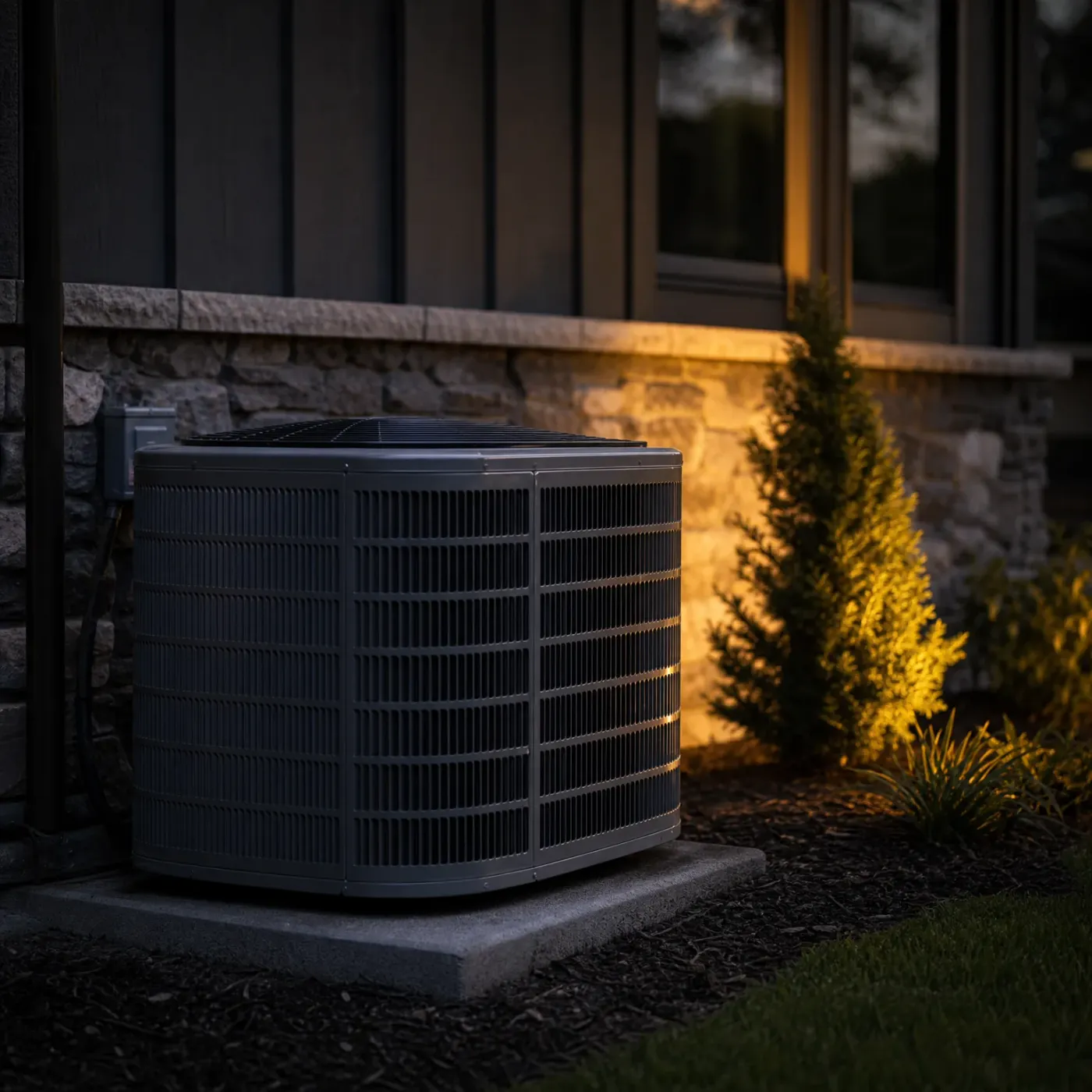




An outdoor air conditioning condenser unit on a concrete pad beside a house with stone veneer and vertical board siding, with a small shrub and mulch bed lit by a ground light at dusk.

A pro who works on air conditioners

Central AC or mini split for a Missouri home

Central air cools the whole house through the ducts you already have. A mini split skips the ducts and runs on its own, room by room. With gas heat already in place and muggy summers to deal with, the right call depends on your house, not a general rule. Answer a few questions and a contractor who installs both can look at your setup and tell you which one fits.

Get matched

If your house already has ducts and a gas furnace, central air usually makes more sense than a mini split. The same ducts that carry warm air in winter already reach every room, so adding central AC means connecting to a system that's already there instead of building something new. A mini split earns its keep in different situations: a room addition with no ductwork, a finished attic or garage that never got vents, or a house that genuinely has no duct system to tie into. Missouri summers get muggy enough that whichever system you choose needs to keep up for months at a time, and central air sized right for your house will pull that humidity down along with the temperature. Mini splits do this too, but room by room, which matters if some rooms run hotter than others. The right choice comes down to what's already built into your house, not which system is newer or trendier.

A smiling woman with dark shoulder-length hair in a cream V-neck sweater sits at a marble counter with a glass of red wine, with a kitchen and softly lit living room behind her.
A woman in a dark green sweater laughs while seated at a marble kitchen island with a glass of red wine, with open shelving, cabinets and a living room visible behind her.
A woman with long dark hair in a cream knit sweater laughs while looking off to the side, seated at a counter with a glass of red wine, in a dimly lit living room with a sofa, lamp, framed pictures and houseplant behind her.
A smiling woman with long dark hair in a beige sweater sits at a marble kitchen counter with a glass of red wine, with a dimly lit living room behind her.

When your ducts already reach every room

Central air uses the same ductwork your furnace runs on. If your gas furnace heats the whole house evenly now, that's a good sign the ducts are sized and placed to cool it too. A contractor ties the new coil and condenser into what's already behind your walls and in your attic or crawlspace. No new lines to run, no holes to cut room by room. The furnace blower does the work of pushing the cold air around, the same way it pushes warm air all winter. Where the ducts already do the job for heat, they'll do it for cooling too.


When a room or two needs its own answer

A mini split makes sense for the spots your ducts don't reach well, or don't reach at all. A finished attic, a garage turned into a bedroom, an addition built after the ductwork went in. Each unit cools and heats just the room it's mounted in, with its own thermostat, so you're not running the whole house's system to fix one hot room upstairs. It runs on electricity alone, separate from the gas furnace. For a single problem room, that's often simpler than extending ductwork to a space the original system was never built to serve.

A smiling bearded man in a navy sweater sits at a candlelit dinner table with a glass of red wine, a bowl of salad, and plates of food in the foreground.
A woman with dark hair in a bun reclines on a sofa with her eyes closed, wrapped in a cream fleece blanket, a closed blue hardcover book resting in front of her, with a lit lamp and a vase of dried flowers in the background.

Ducts already in place

If your furnace heats every room now, central air can run through the same ductwork. One system, one thermostat, cooling the whole house at once.

Start one form

No ducts, or rooms ducts don't reach

A mini split handles a bonus room, a garage, or an addition without tearing into walls for new ductwork. You pick which rooms get cooled.

Start one form
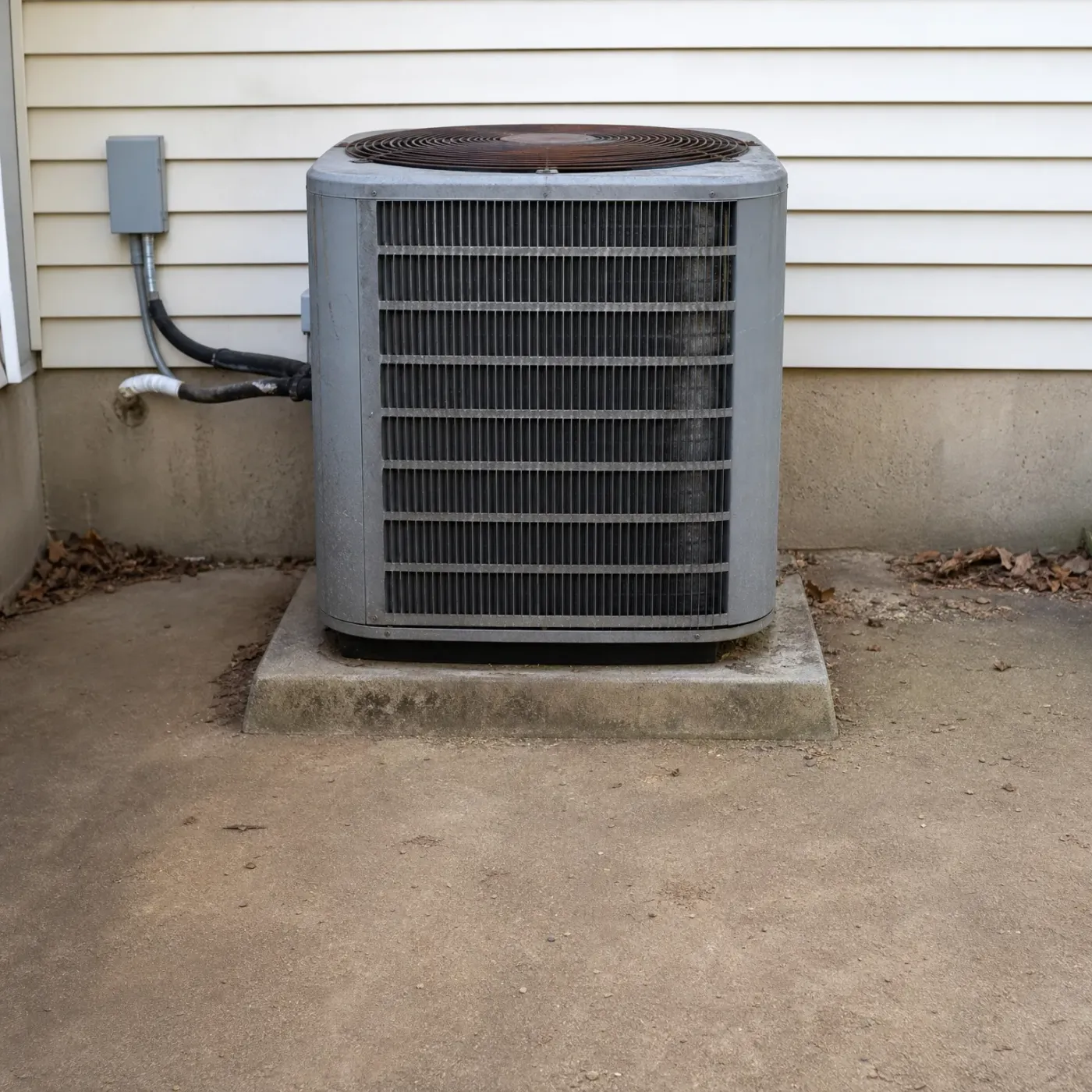
A gray outdoor air conditioner condenser unit on a concrete pad beside a house with beige horizontal siding, with an electrical disconnect box and insulated refrigerant lines on the wall and dry leaves on the ground.
Before you get your air conditioner installation
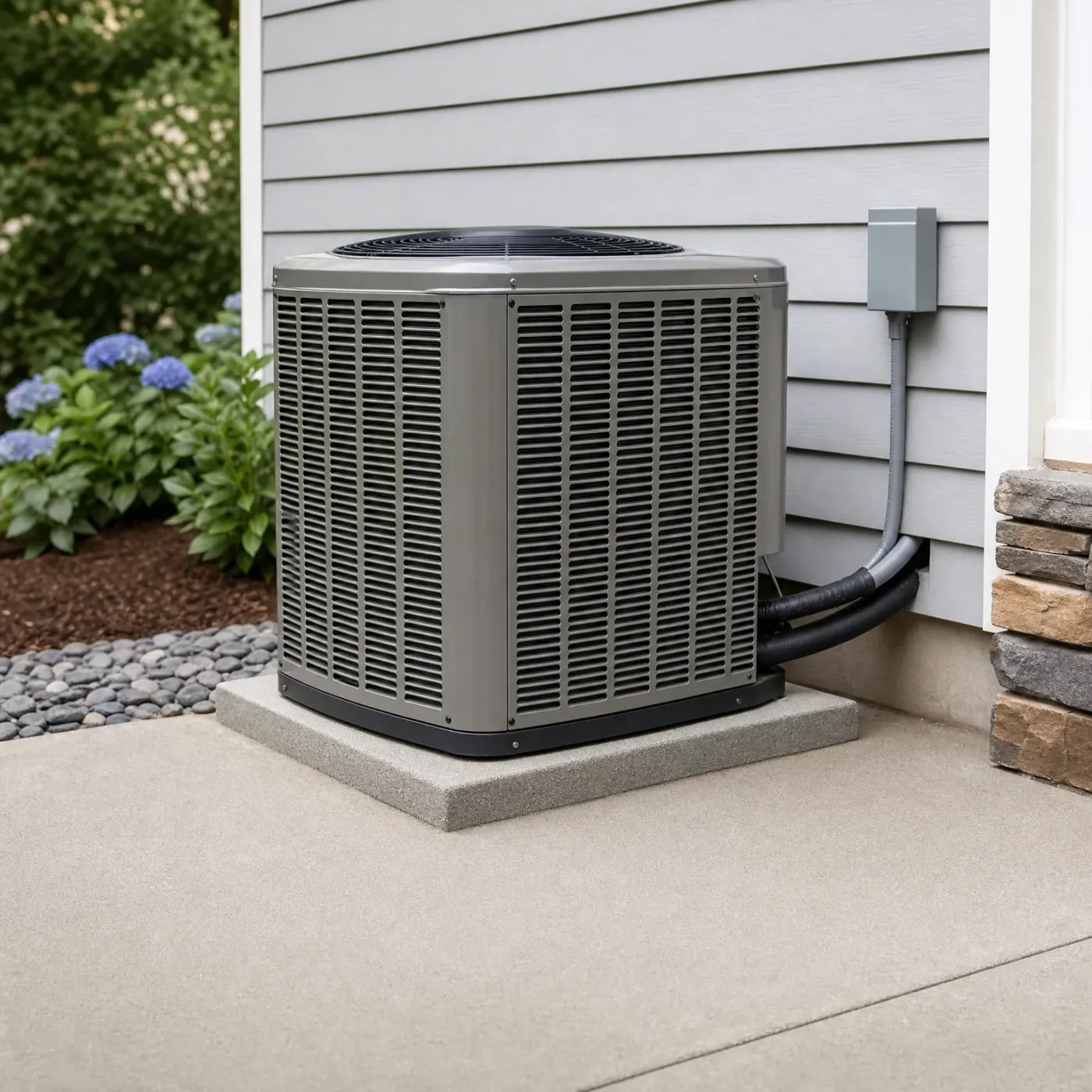
A gray outdoor air conditioning condenser unit on a concrete pad beside a house with horizontal gray siding, with a wall-mounted electrical disconnect box and insulated refrigerant lines, and blue hydrangeas in a mulched bed to the left.
After you get your air conditioner installation

Power costs 13.30 cents per kilowatt-hour statewide

At 13.30 cents a kilowatt-hour, Missouri power is cheap next to most of the country, and that changes the math on a mini split. Running one or two for the rooms your ducts miss costs less here than it would elsewhere, while whole-house central air still costs less to run than a houseful of mini splits.

EIA-861 2025 statewide residential average

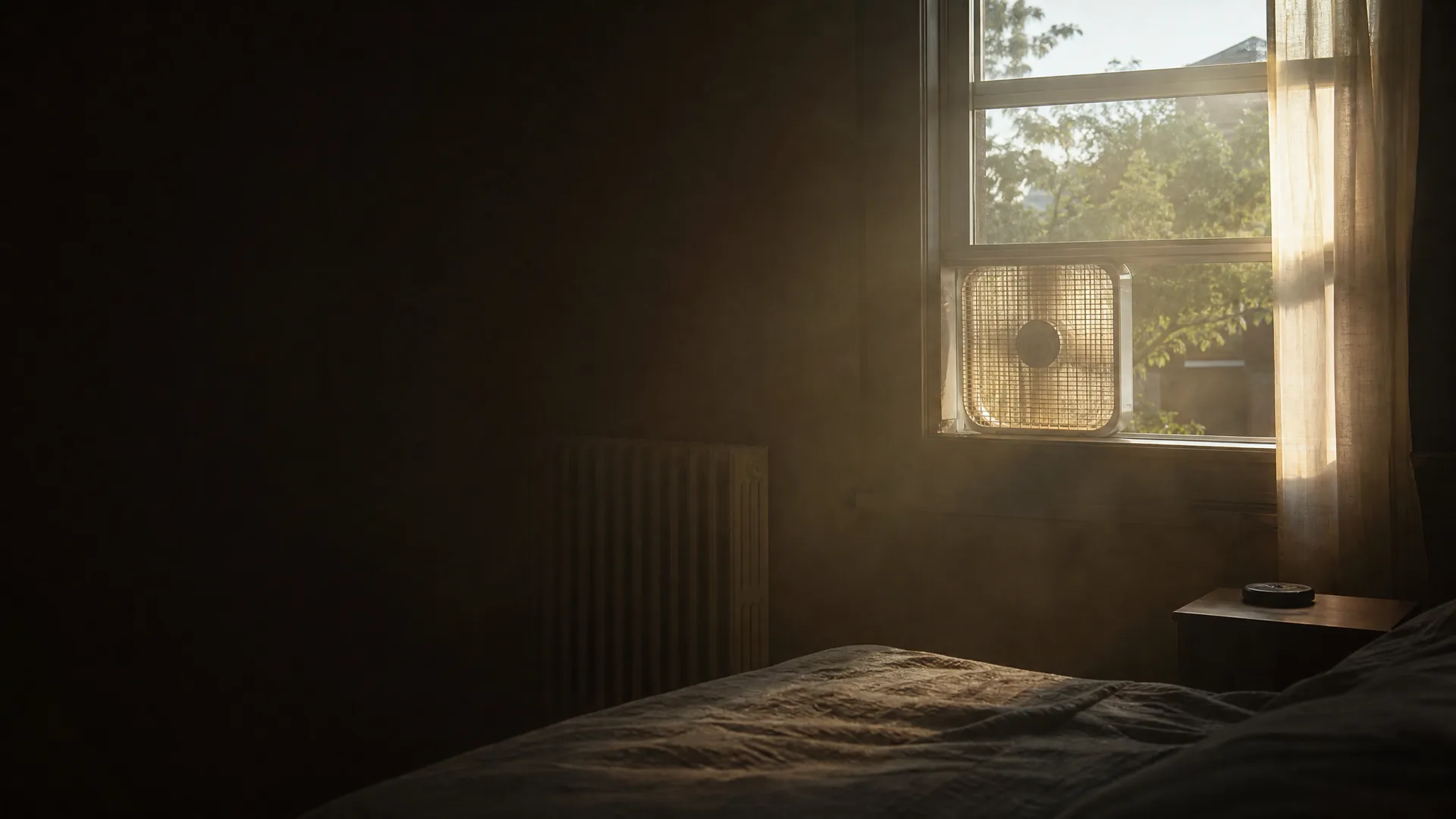
A dim bedroom with a bed in the foreground, a radiator against the wall, and a box fan set in a sunlit window with sheer curtains and green trees outside.

The box fan in the window is just pushing hot air around. It's past nine and the upstairs is still holding the heat from the afternoon, the kind of thick June heat that doesn't let up once the sun's down. You're on top of the sheet, not under it, phone propped on your chest, waiting to feel the first bit of a breeze that isn't there yet. Downstairs the window unit in the living room is doing its job fine. Up here it's just you and the fan and the hum of it, and the air still sits heavy enough that you can feel it on your arms. Tomorrow's supposed to be worse.

The right pro for this job

Describe the project once instead of to every installer.

Sending the form costs nothing.

Which One Fits Your House

  • If your gas furnace already heats every room evenly, central air through the same ducts is the straightforward choice.
  • A mini split earns its place for a bonus room, garage, or addition your ducts never reached.
  • Missouri's 13.30 cents a kilowatt-hour makes running a mini split or two for those gaps cheaper here than in most states.
  • Whole-house central air still costs less to run across the whole home than covering it room by room with mini splits.
  • A contractor can look at your actual ductwork and tell you in one visit which setup fits your house.
  • Instead of calling around and explaining your layout to every contractor you find, you answer once and the right one reaches out.

Most Missouri homes already have the answer sitting in the basement or the attic. If your gas furnace keeps every room the same temperature in January, the ducts behind that are already sized and placed to carry cool air too. Central air connects to what's there. A mini split earns its spot somewhere else, a sunroom the ducts never reached, a garage you turned into a workspace, an addition built on after the duct run was finished. Most houses end up needing one system for the main house and maybe a mini split for the room that's always been the exception.

Power here runs 13.30 cents a kilowatt-hour, cheap next to most of the country, so a mini split for that one room costs less to run than it would in a state where electricity costs more. That doesn't flip the math for the whole house. Central air through ducts that already reach every room still costs less than trying to cover that same square footage with mini splits room by room.

None of this replaces someone standing in your house looking at your actual ducts. A contractor can tell in one visit whether your ductwork reaches where it needs to and where it doesn't, and size the right setup instead of leaving you to guess. Rather than calling several contractors and walking each one through your layout from scratch, you describe your house once and the one who fits your situation follows up.

A single-story stucco house at dusk with a lit paver walkway lined by low path lights, desert plants and boulders in front, and distant mountains under an orange and blue sky.

Air Conditioner Installation

Matched to your air conditioner job

Step 1 of 3: Equipment
  • A dimly lit living room corner with a beige upholstered sofa holding a dark green cushion and a chunky knit throw, beside a wooden sideboard with a lit ceramic table lamp, a small potted plant, and a wooden bowl, with a framed artwork on the wall and a mug on a book in the foreground.
    • Describe your air conditioner job, and a local pro who handles it gets in touch.
    • Say what's going on with your air conditioner, and a pro who works on them reaches out.
  • A round wooden coffee table holding a round stone vase of green foliage, a lit candle in a glass container, and a small dark bowl, with a beige sofa, cushions and knit throw behind and a window at left.
    • After you send the request, you're done searching.
    • Send the form and the search for an installer is over.
  • Sunlit living room with a wooden coffee table holding a ceramic vase of leafy branches and a carved wooden tray with two stacked books, in front of a beige sofa with tan and green cushions and a potted plant near a window.
    • Skip collecting and comparing quotes for the new air conditioner.
    • Fill out one short form instead of calling around.
  • Interior corner with a lit ceramic table lamp and wooden bowl on a wood sideboard, a framed picture and branch-filled vase behind, a knit throw over an upholstered chair, and a lit candle in a glass holder, stoneware mug and round planter of green foliage on a wooden table in the foreground.
    • One installer gets your project, so there's no bidding war over it.
    • The pro who reaches out is licensed in Missouri.