



Side profile of a bearded man wearing a faded dark blue baseball cap and a matching dark T-shirt against a plain light gray background.

AC unit frozen up in Raymore, MO

Step 1 of 3: Equipment

A frozen AC unit means warm, moist air is hitting a coil that's too cold, and ice builds up instead of cooling your house. The usual cause is restricted airflow: a dirty filter, closed vents, or a blower that isn't pushing enough air across the coil. Low refrigerant does it too, because a system running low gets cold enough to freeze the moisture right out of the air passing over it. With Cass County summers running long and sticky, the air hitting that coil carries a lot of moisture, which makes ice build fast once something's off. Turn the system off and let it thaw completely before anyone looks at it, running it while frozen can damage the compressor. Once it's thawed, a technician can check the airflow and refrigerant charge to find out which one caused it.

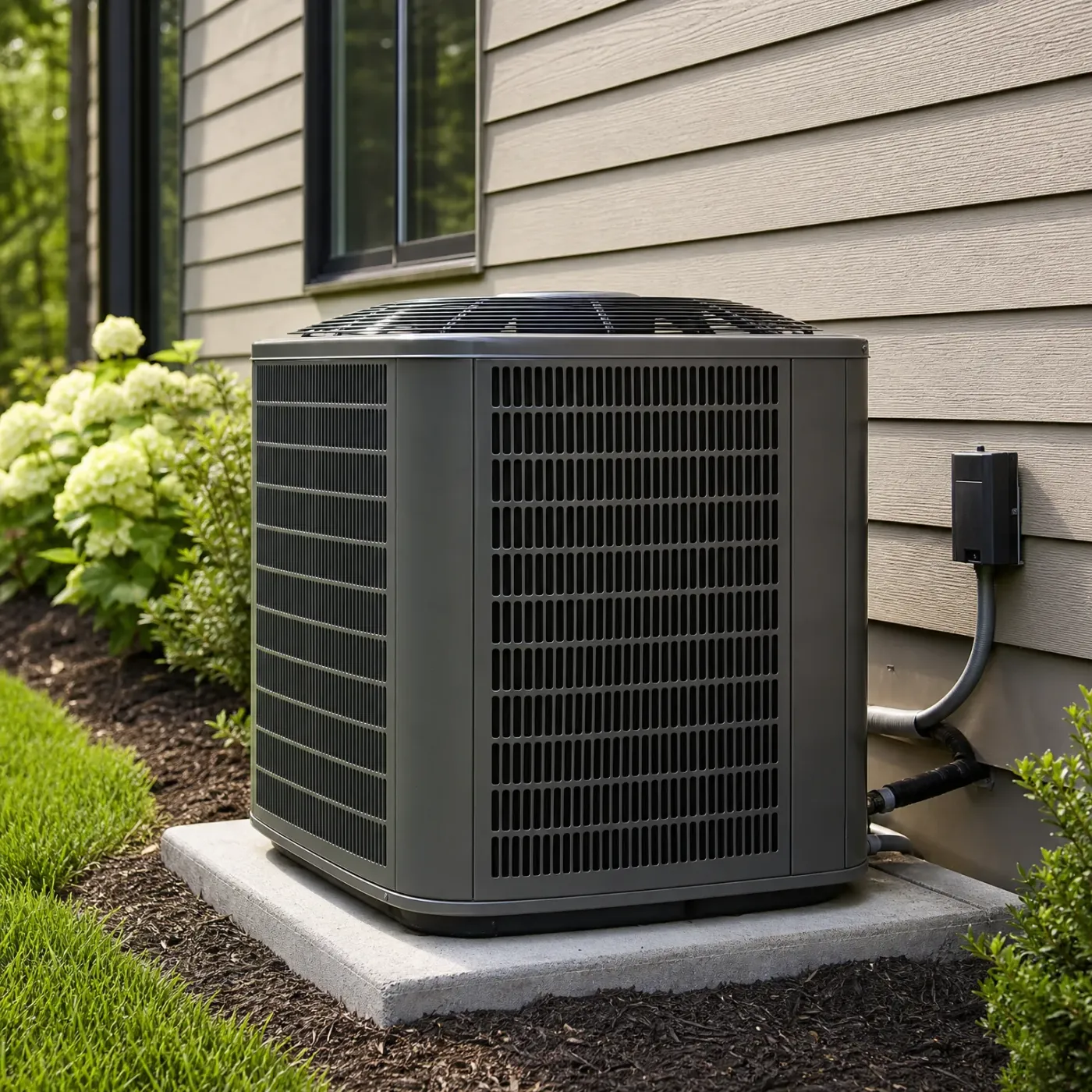
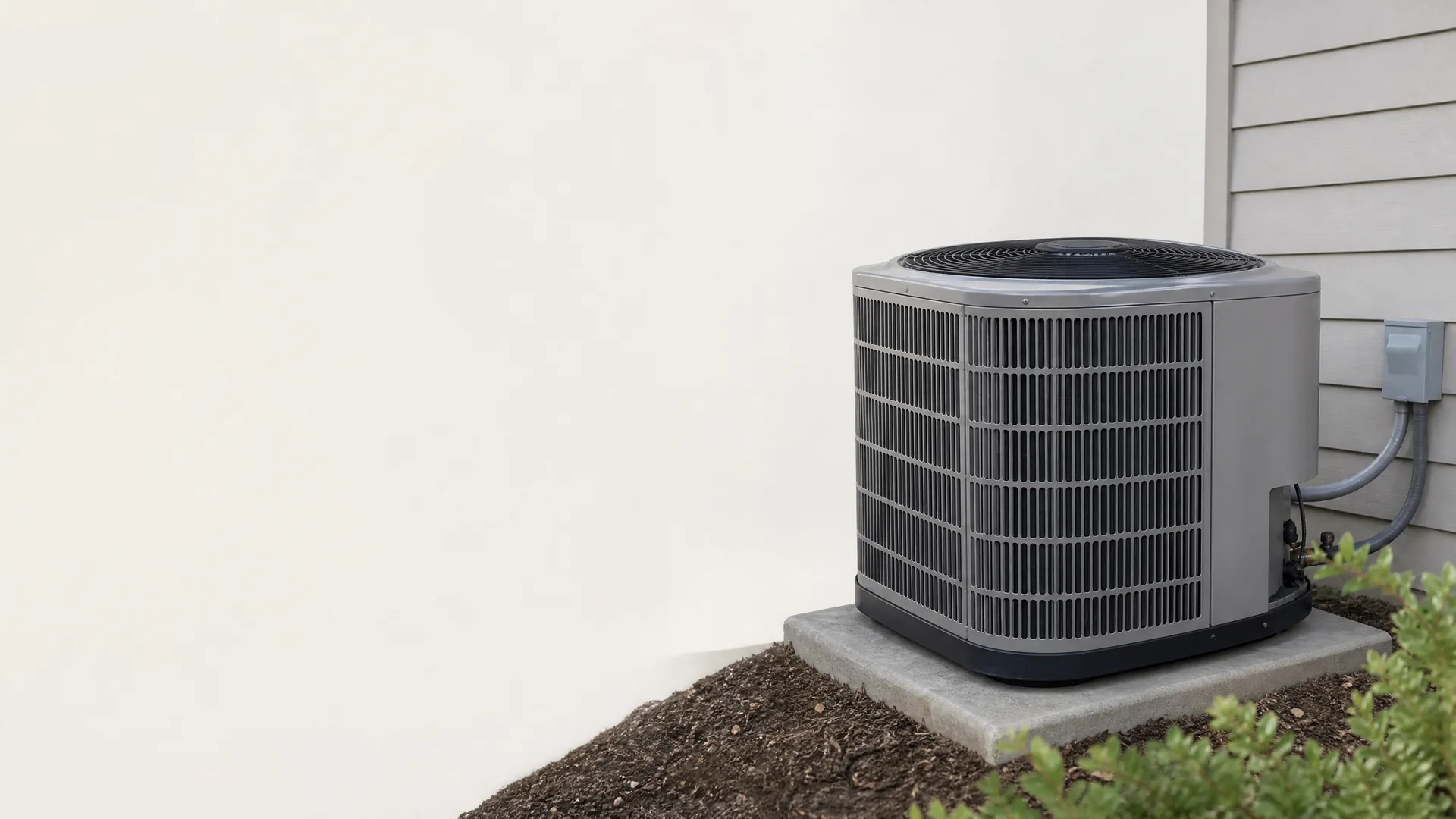
A gray outdoor air conditioning condenser unit on a concrete pad beside a house with horizontal siding and a stone veneer base, with refrigerant line and electrical disconnect box on the wall and flowering shrubs to the left.
Air moves freely across a clean coil, and the unit keeps a steady, even cooling load.
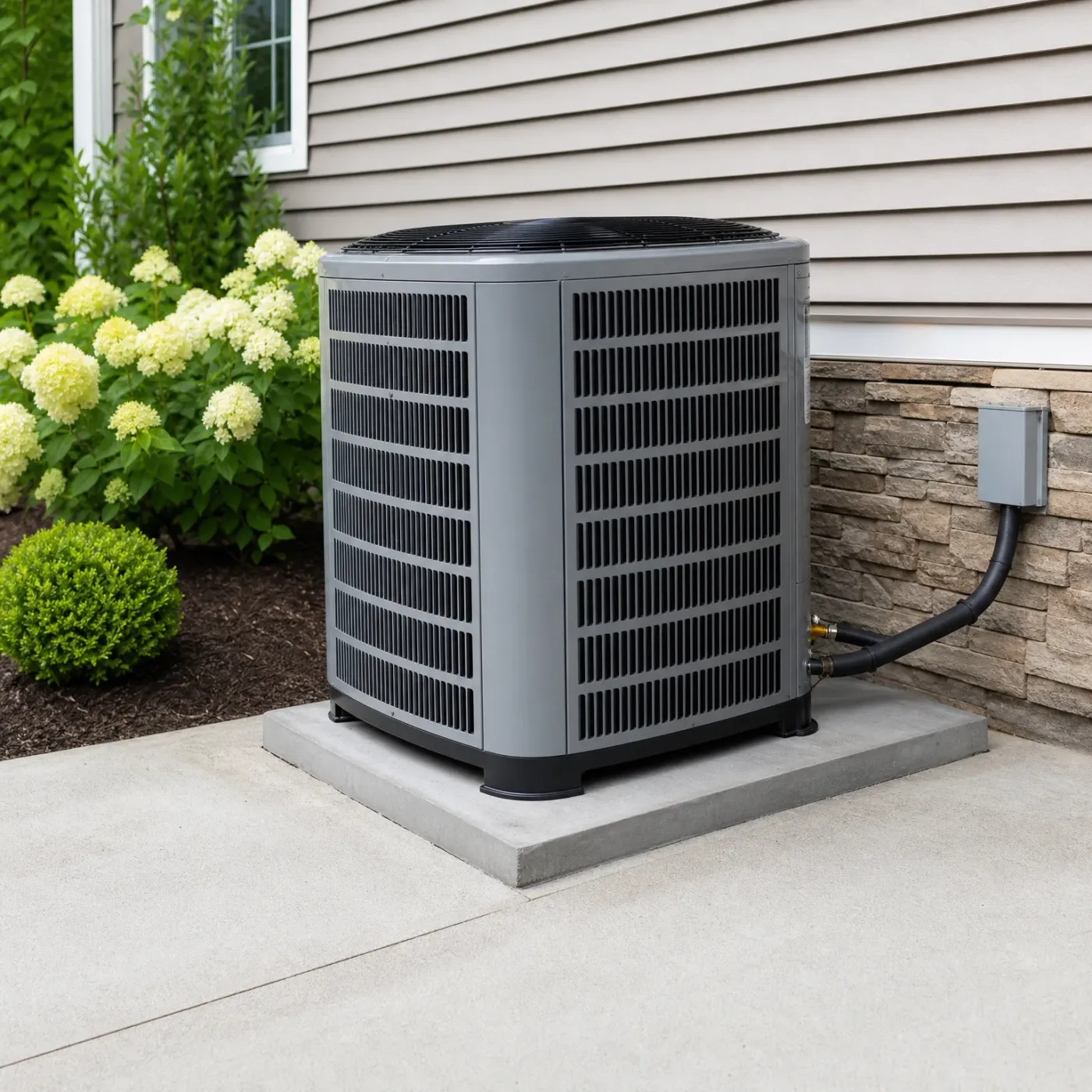
An outdoor air conditioner condenser unit on a concrete pad beside a house with light gray horizontal siding, with mulch and green shrubs on either side and a concrete walkway in the foreground.
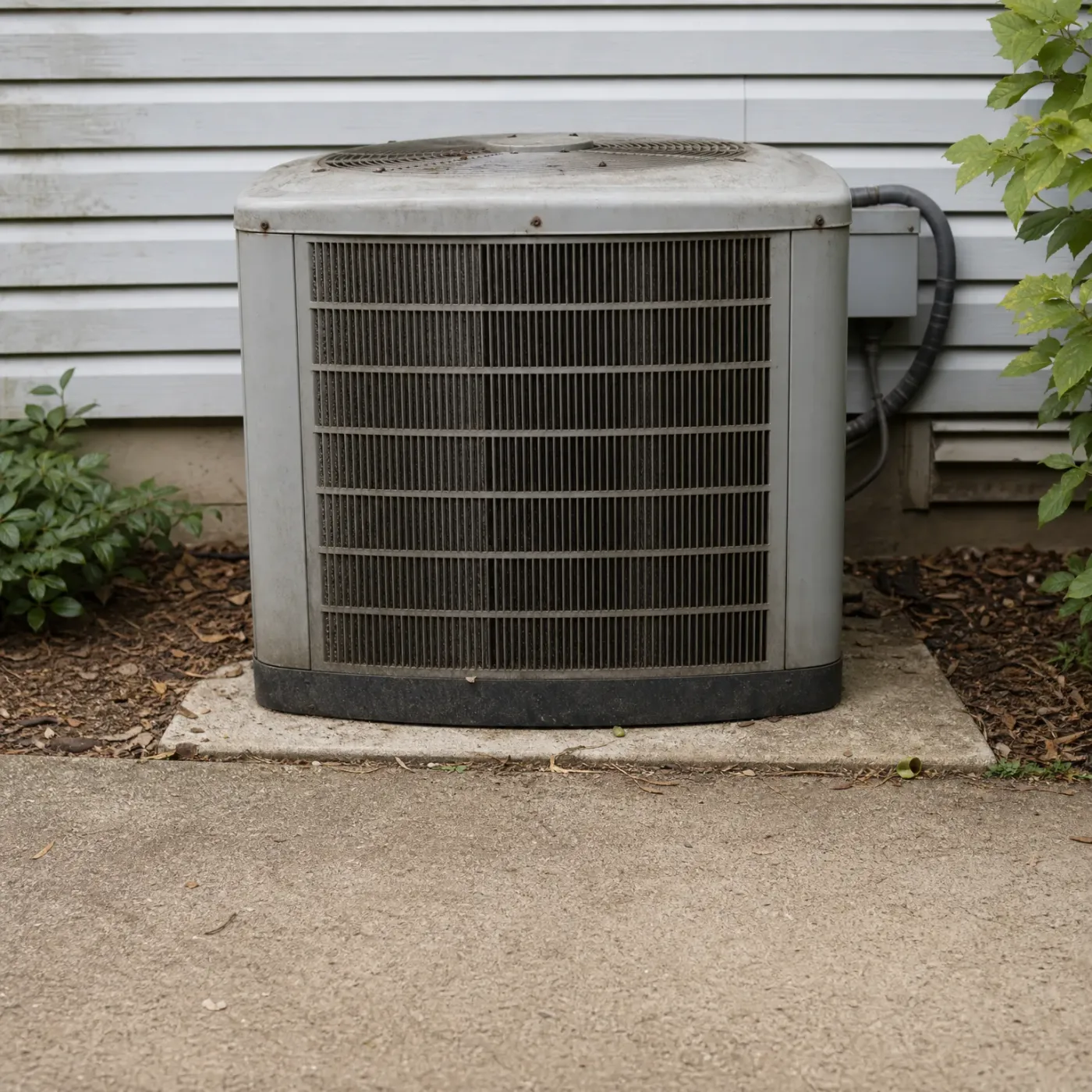
Dirt and grime coat the fins here, and airflow this blocked is what starts the ice forming.

The freeze starts small. Warm, humid air hits the coil, and the moisture right at the surface turns to frost before anything else happens. Once that frost is there, it works like a blanket, so the coil pulls even less heat out of the air passing by. Less heat pulled means more moisture freezing, and the layer thickens on its own from that point. None of this stops the compressor. It keeps pumping refrigerant through a coil that's doing less work by the hour, and if the thermostat is still set to cool, the system keeps calling for something the coil can no longer provide. A thin frost can turn into a solid block of ice in a few hours once airflow is cut off. The real risk at that point isn't just a warm house. Liquid refrigerant can get pushed back toward the compressor instead of turning to gas in the coil like it should, and a compressor isn't built to handle liquid.

Why the ice keeps spreading

  • Warm air hitting the cold coil raises the humidity right at the coil surface, and that moisture freezes first, before the rest of the coil ices over.
  • Once a layer of ice forms, it acts as insulation, so the coil pulls even less heat from the air and the ice builds faster from there.
  • The compressor keeps running the whole time, pumping refrigerant through a coil that's doing less and less of its job.
  • A coil can go from a thin frost to a solid block of ice in a few hours if the airflow problem isn't fixed.
  • If the thermostat is set to cool while the coil is frozen, the system keeps calling for cooling it can't deliver.
  • Running the system with the ice already formed can push liquid refrigerant back toward the compressor, which isn't built to handle it.
A smiling bearded man in a dark blue henley shirt sits leaning back on a light grey sofa in a living room, with a bowl of popcorn on a wooden coffee table and a large window behind him.
A bearded man in a dark quarter-zip sweater sits smiling on a brown sofa in a dimly lit living room, with a bowl of popcorn and a mug on a table in the foreground and a potted plant near a window behind him.
A smiling man with graying dark hair and a beard, wearing an olive sweater, sits on a sofa in a living room beside a bowl of popcorn on a wooden table.
A smiling man in a dark green henley shirt sits on a gray sofa in a living room with a lit table lamp, wooden shelving unit, and a bowl of popcorn in the foreground.

Turn it off first

Running a frozen AC unit keeps pulling warm air across ice instead of a cold coil, and that strains the compressor. Shutting the system off and switching the thermostat fan to on lets warm air melt the ice without the compressor working against it. This usually takes a few hours. Pushing through a cooling cycle while the coil is iced over doesn't get your house any cooler. It just keeps the compressor running against a coil that can't absorb heat, and that's the part most likely to fail if this keeps happening.
Why the water matters

As the ice melts, that water has to go somewhere, and a working AC sends it down the condensate line to a drain. Set towels or a shallow pan under the indoor unit before you shut it down, especially if it's in a closet or above living space. If the drain line is also clogged, the melting ice adds to standing water already backed up in the pan. A unit that iced up once and drained fine is a different repair than one where the drain is part of the problem.

Cooling runs May through September

Your AC in Raymore works from May through September, about five months straight. That's five months where a frozen coil means more than a warm afternoon. It means figuring out the fix fast, because the unit isn't coming back on its own until the ice is gone and the problem behind it is found.

NOAA nClimDiv 1991-2020

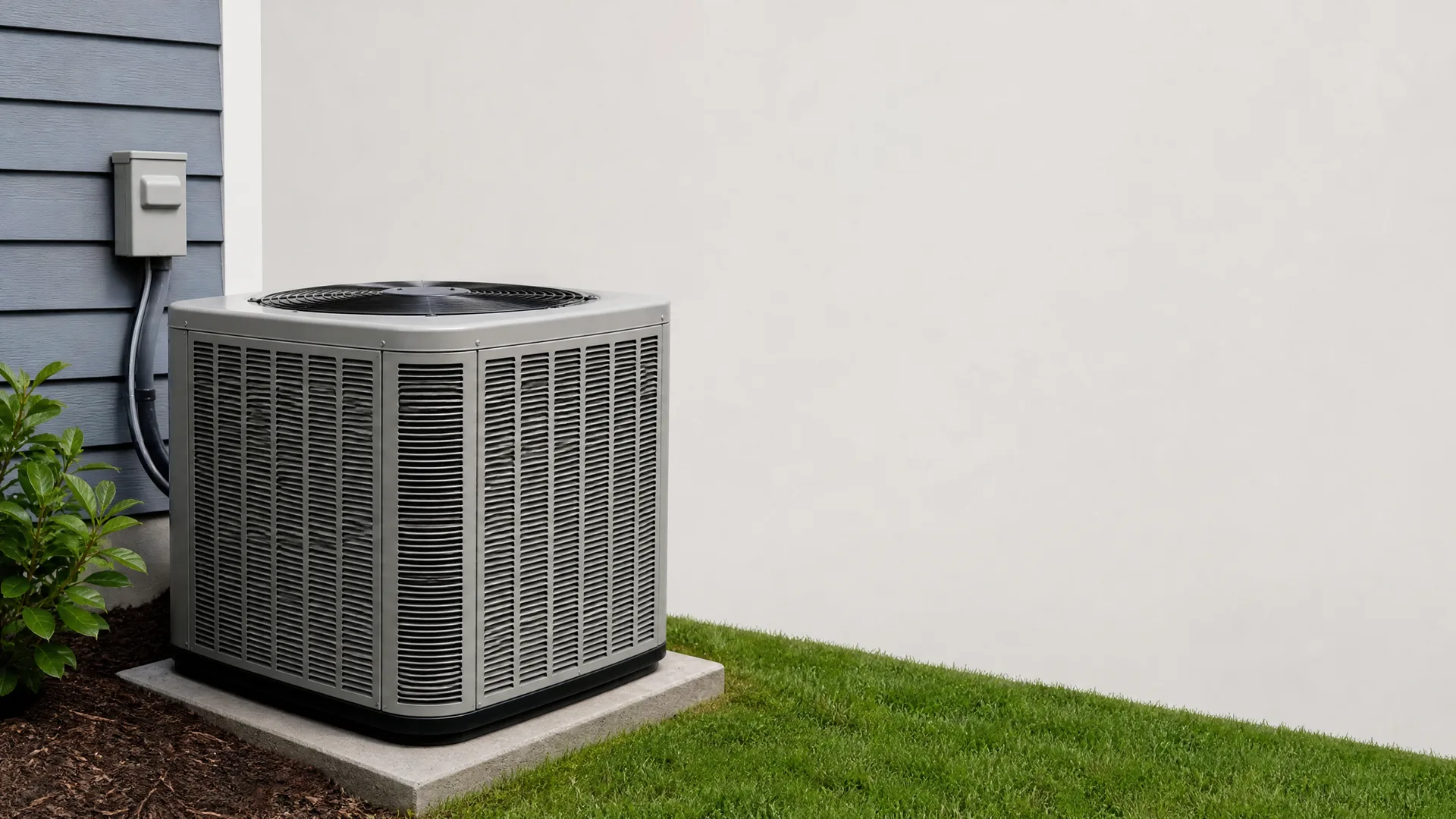
An outdoor air conditioning condenser unit sits on a concrete pad beside a house, next to blue siding with an electrical disconnect box, with a shrub, mulch bed, and lawn nearby.

What you'll notice in the house

The vents blow weak, warm air instead of cold. You might hear the system running without any real cooling to show for it. Water starts showing up where you don't expect it, around the base of the indoor unit or dripping from the ductwork above a closet. Rooms farthest from the air handler warm up first, and by the time the living room feels it, the coil's likely been iced over for a while already.

A gray outdoor air conditioner condenser unit sits on a concrete pad beside a light-colored wall and lap siding, with a wall-mounted electrical box, conduit, soil and green shrubs in the foreground.

What a stuck freeze costs you

A compressor is the most expensive part of your AC, and it's not built to run against a block of ice hour after hour. Every hour it keeps cycling against a frozen coil is an hour closer to a repair that costs a lot more than the one you've got now. Left alone, this turns from a clogged filter or a low vent into a compressor that needs replacing, and that's a different repair bill entirely.

Melt It Yourself or Call a Contractor

Melt it yourself

  • Switching the system off and setting the fan to on can clear the ice in a few hours, depending on how thick it's built up.
  • A clean filter afterward may be all the unit needed if restricted airflow was the whole problem.
  • You still won't know if the coil froze from a filter or from something else, like a low charge, until it runs again.
  • If the same freeze comes back within days, the cause is still there and the unit will ice up again.
  • Towels and a wet-vac around the indoor unit handle the meltwater, but they don't tell you why it formed.

Call a contractor

  • A contractor checks refrigerant charge and airflow together, so the real cause gets found instead of guessed at.
  • If the freeze is from a slow leak, only a contractor can find it and repair it, since refrigerant work isn't something a homeowner can do.
  • Sending the form once means you're done hunting for someone, done calling around, done explaining the problem a second time.
  • A contractor can confirm the coil and blower are clear before the system runs again, so you're not waiting to see if it refreezes.
  • With five months of summer ahead in Raymore, getting the actual cause fixed matters more than getting the ice gone for one afternoon.
A woman in a cream knit sweater reclines on a beige couch with eyes closed and a slight smile, a gray hardcover book resting open on a textured blanket over her lap, with a lit table lamp and a leafy plant in the dim background.
A smiling middle-aged man in a dark green sweater sits at a candlelit table with a glass of red wine and a bowl of salad in the foreground.
A gray outdoor air conditioner condenser unit sits on a concrete pad beside a house with horizontal lap siding, with a disconnect box and refrigerant lines on the wall and shrubs, hydrangeas, mulch and lawn nearby.

Finding a pro stops being your job

Answer a few questions instead of calling shop after shop.

Send the request today and stop worrying about who to call.

Hand it over

No fee to send it, and nothing to sign.

Why does my house feel warmer than it should

By the time the air feels wrong, the ice has usually been building for a while. You'll notice the thermostat says it's running but the house isn't catching up, especially in a back bedroom or wherever your ductwork runs longest. Check the indoor unit and you may find frost or a solid sheet of ice across the coil, sometimes creeping onto the copper line running outside. Left alone, that ice keeps the system working without actually cooling anything, and the water from the melt has to go somewhere. If the condensate line can't keep up, it backs up into the pan or onto the floor around the unit, which is its own problem on top of the heat.

A two-story gray house with white-trimmed windows and a dark front door, fronted by a mowed lawn, a straight concrete walkway to the sidewalk, and large leafy trees on both sides under a clear sky.

Cass County summers hold a dew point around 66°F across June, July and August, so the air coming across your coil is already carrying a lot of moisture. That coil has to pull more water out of the air just to get the house cooling, on top of the heat it's removing. When airflow is already tight from a dirty filter or a closed vent, that extra moisture is what tips the coil into freezing instead of just cooling. It's part of why frozen units show up more in the thick of summer than in a dry spring stretch.

NASA POWER T2MDEW

Can I just wait for it to thaw on its own?

It's tempting to just shut the system off, close the door, and let nature take its course instead of digging into the problem. Waiting feels like the easier option, especially if you're not sure what's wrong or whether you can fix it yourself. But leaving the unit alone for hours or overnight raises its own questions, like whether that's actually safe for the equipment and whether it'll really clear on its own.

Yes, but turn the system off first

Ice thaws on its own once warm air stops getting pulled across the coil, but that only happens if the system is off. Leave the thermostat set to cool and the compressor keeps trying to run against a coil that's already iced over, which strains it for no benefit since no cooling is happening anyway. Switch the system off and set the fan to on, and the ice will melt over a few hours as room-temperature air moves across it. Waiting longer than that usually means the airflow problem causing the ice hasn't been found yet, since a clear coil with good airflow across it won't refreeze once it's thawed.

  1. Warm, humid air crosses an evaporator coil running too cold

  2. Moisture in that air freezes onto the coil surface first

  3. Ice spreads and blocks airflow through the fins

  4. Less airflow drops the coil temperature even further

A closed silver laptop and a white cup of coffee on a saucer sit on a wooden table in front of a wooden chair, a plain beige wall, a potted leafy plant and a window with greenery outside.

A frozen coil has one real fix

Melting the ice gets your air moving again, but it doesn't tell you why the coil got that cold in the first place. That takes someone looking at the filter, the airflow, and the refrigerant charge to find what actually caused it. Until that part's done, the same ice comes back the next hot afternoon.

You don't have to spend the evening calling around Cass County to find someone who can look at it, explaining the same problem on the phone four or five times, then sitting with a stack of quotes trying to guess who's worth the call. Send the form once and that search is off your plate. Someone licensed to do the work takes it from there, and your house gets back to cooling the way it's supposed to.

Interior corner of a living room with a beige upholstered armchair holding a textured pillow and throw, a eucalyptus arrangement in a ceramic vase on a wooden table in the foreground, a blurred glass-front cabinet behind, and a potted plant on a sunlit window sill.
A lit ceramic table lamp with a linen shade sits on a round wooden side table with a small vase of greenery and a dark shallow bowl, beside a beige upholstered sofa with a cushion and knit throw, below a framed artwork on a pale wall.
Corner of a beige linen sofa with a large woven cushion and a fringed knit throw, beside a potted leafy tree in a woven basket against a neutral wall.
Sunlit interior corner with a wood-framed armchair with beige cushions and a striped pillow, a leafy plant in a tall ceramic pot, a window with wood sill showing green foliage outside, and dark wood flooring.
A lit black path light beside a stone walkway leading to a dark front door of a white clapboard house, with shrubs and flowering plants in the bed at dusk.
A covered porch at dusk with a wooden front door, a lit lantern wall sconce on gray horizontal siding, a black rocking chair with a cream throw, a potted white flowering plant, a coir doormat, and a window showing a lit interior lamp.

Let someone else find the pro

Describe your air conditioner job once, to one pro.

Hand off my repair

Sending the form costs nothing.