



Smell gone, unit off
The smell stops because the AC is off. Nothing has been fixed yet, and whatever caused it is still waiting there the next time the system runs.
A burning smell from the air conditioner is one of those things you don't let ride. You cut the unit off and started checking what it might be. It could be dust burning off a coil that sat idle, or it could be something electrical that needs a tech before you run the system again. You want to know which one you're dealing with and whether it's safe to wait on.
A faint dusty smell for the first few minutes after you turn the AC on for the first time in a while is normal and fades fast. A smell that lingers, or smells sharp and electrical, usually means a motor is overheating or a wire connection has burned. That can be the blower motor, the fan motor outside, or a connection inside the electrical panel on the unit. Running the system with a burning smell risks damage to the motor or a fire in the wiring, so the safer move is to shut the AC off at the thermostat and leave it off until a technician who works on this equipment looks at it.
Dust on the coil or blower burns off when the AC first kicks on.
A failing capacitor overheats and gives off a sharp electrical smell.
Worn blower motor bearings run hot and burn the motor windings.
A slipping or frayed belt grinds and heats up as it drags.




Ten minutes tells you a lot. If the smell fades on its own after the AC has run a bit, that's dust burning off a coil or blower wheel that sat still too long, and it's not something to shut your system down over. If it keeps going, or it gets stronger the longer the unit runs, something inside is heating up past where it should be, right now, while you're smelling it. A capacitor that's failing will run hot and give off a sharp, electrical kind of smell. A blower motor with worn bearings does the same, and if it keeps running that way, the motor windings themselves can scorch. Once that happens, you may notice the breaker tripping over and over, because the motor is drawing more current than it should. Flip the thermostat to off, or cut power at the breaker, and whatever's overheating stops getting worse. Leave a slipping belt or bad bearing running long enough and the friction can warp or crack the blower housing around it, turning a part replacement into something bigger. If the smell is coming from outside, near the condenser, and it has that electrical edge to it, check the disconnect box. Wiring that's overheated inside there is a different problem than a dusty coil, and it's not one to wait out.

Greene County summers run humid, with the dew point averaging 66°F across June, July and August according to NOAA climate data. Air that heavy forces the AC to pull more moisture out before it can cool the house, so the system runs longer and the motor and capacitor sit under load the whole time. That's when a burning smell is most likely to show up, right in the stretch where the unit barely gets a break. If you're catching that smell now, cutting the power and getting a local contractor to look at it means the problem gets found before the summer runs you hotter. Send the request and the search for someone is off your plate.
NASA POWER T2MDEW
A licensed pro who repairs air conditioners in Greene County gets your request.
It costs nothing to send, and you don't have to hire anyone.
Every central air conditioner runs on electricity, not gas, so a burning smell almost always points to a motor, a capacitor, or a wire, never a flame.
That's why cutting power at the thermostat or the breaker is the right first move. It stops the part that's overheating before it does worse damage or trips something else.
The smell stops because the AC is off. Nothing has been fixed yet, and whatever caused it is still waiting there the next time the system runs.
A contractor finds the capacitor, motor or wire that overheated, replaces it, and the AC runs without that smell coming back.
You probably caught it standing near the vent or walking past the outdoor unit. A hot, sharp smell, almost like something electrical. Maybe the air coming out feels less cold than it should, or you heard a faint grinding or squeal before you noticed the smell. Some houses get a haze of dust smell for a few minutes, nothing more. Others keep smelling it the whole time the AC runs, sometimes stronger near one room than another. If the smell keeps coming back every time the unit cycles on, whatever is overheating in there is wearing down a little more each run. Left alone, a motor that keeps overheating can seize, and an overheated wire is a fire risk inside your air handler or outdoor unit.
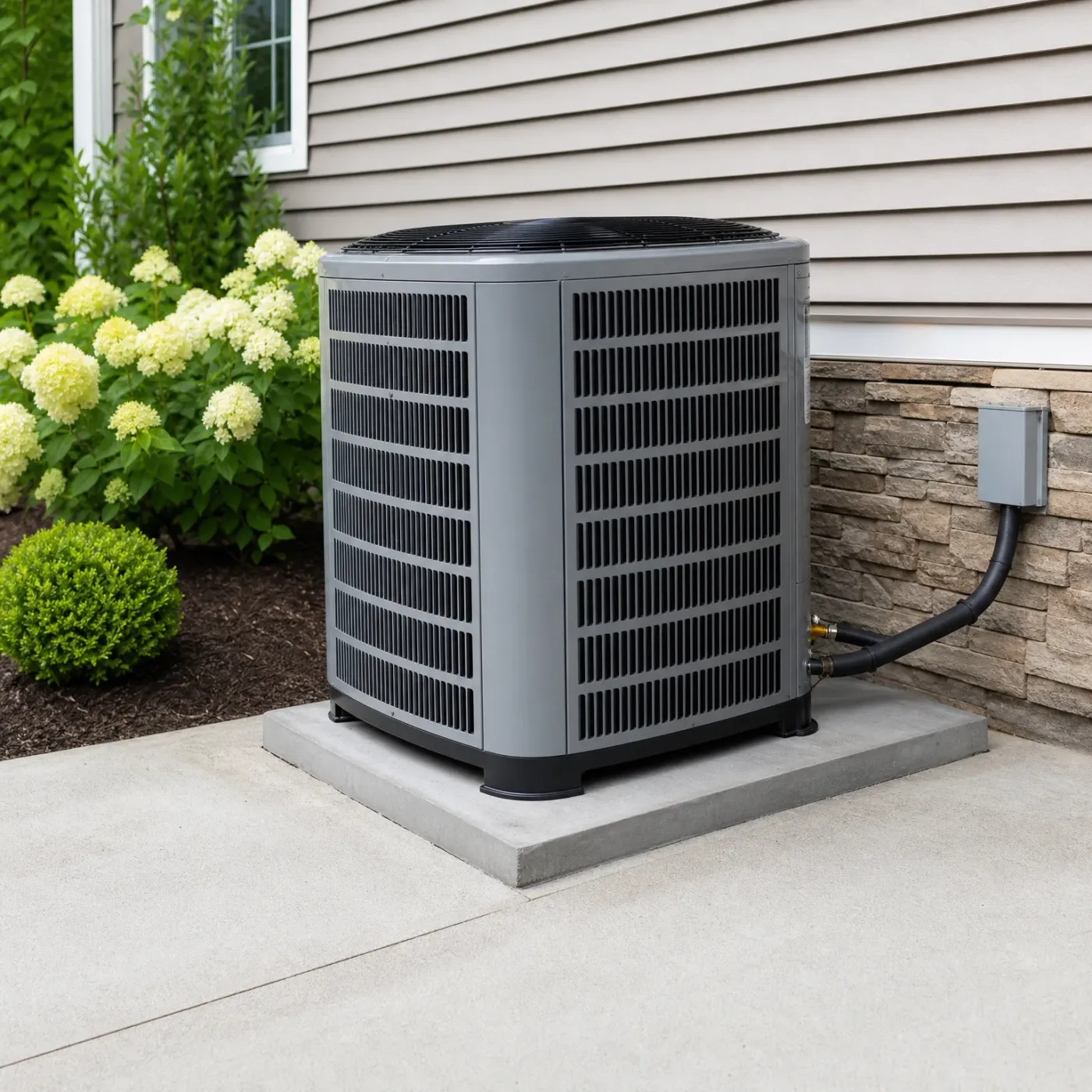
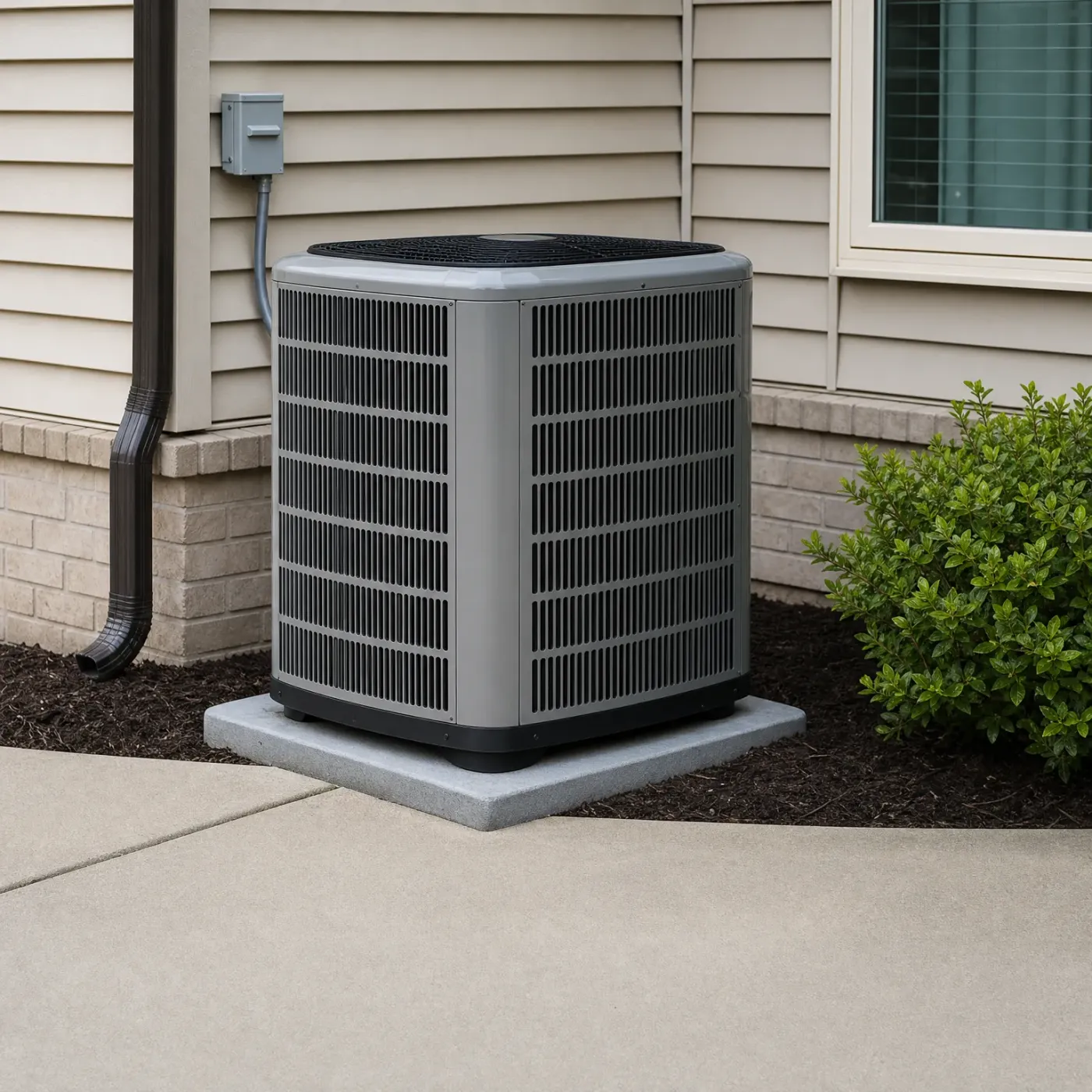
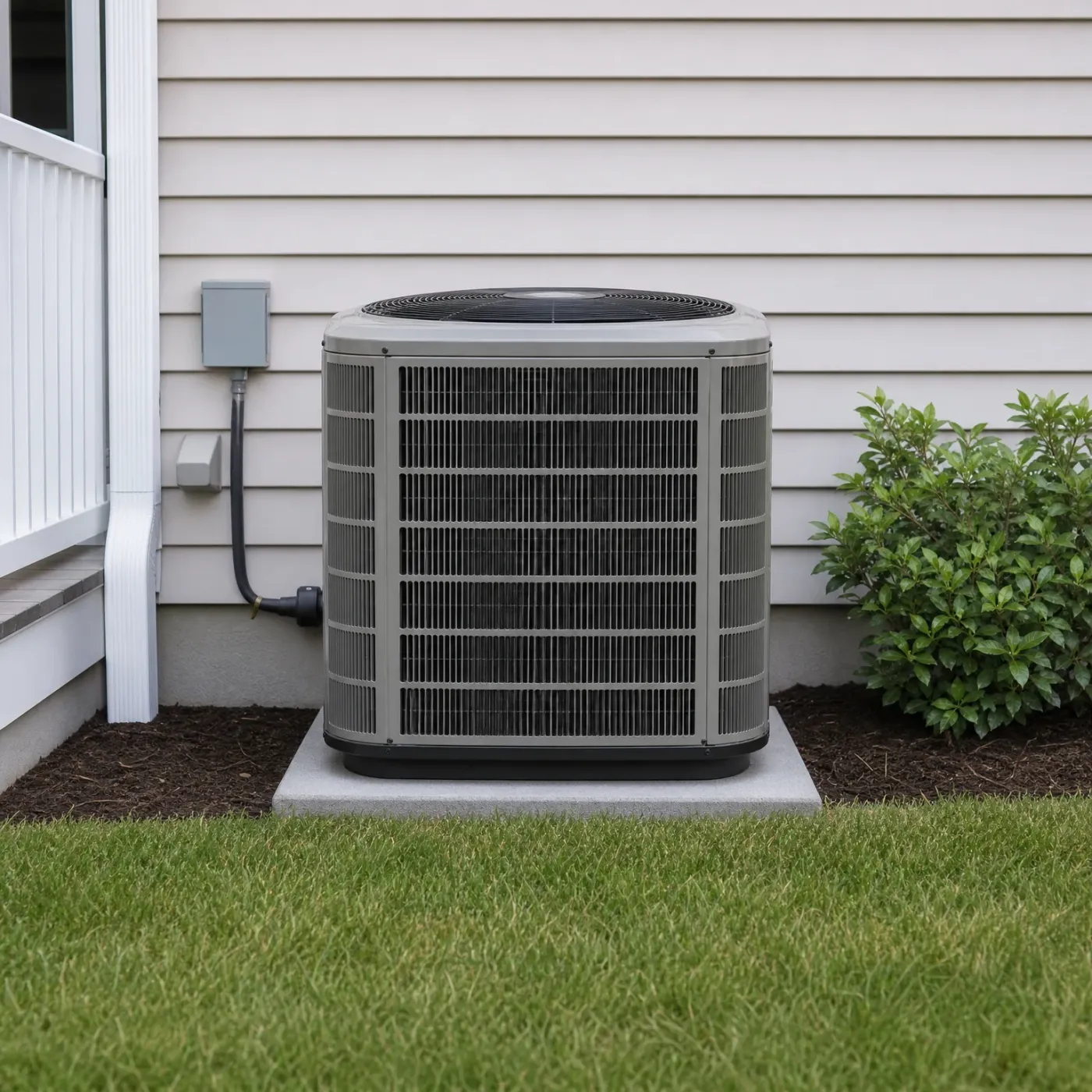
This condenser sits on its pad with the fins clear and the lines running straight into the wall. Air moves through it without resistance, so the motor and capacitor inside stay at the load they were built for.
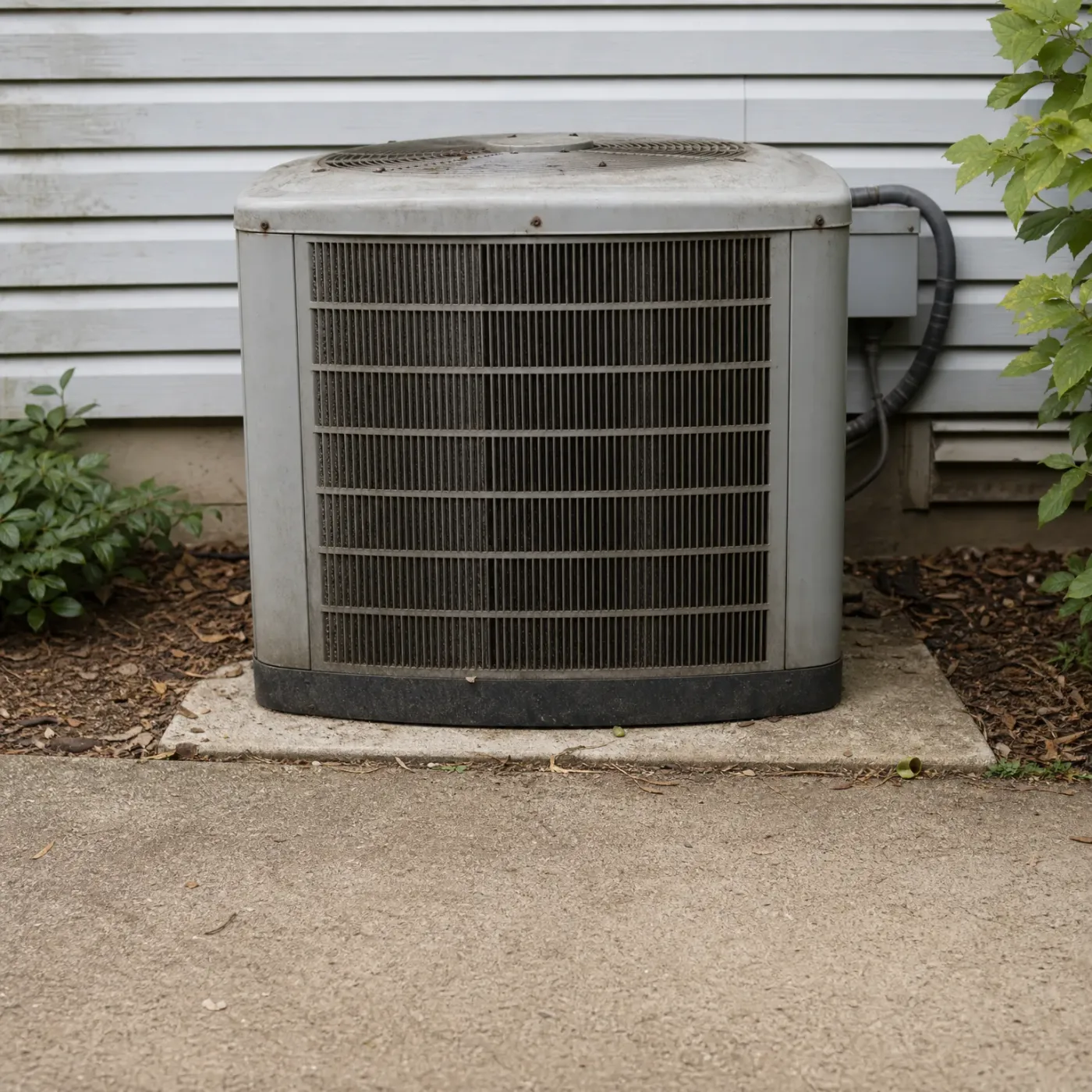
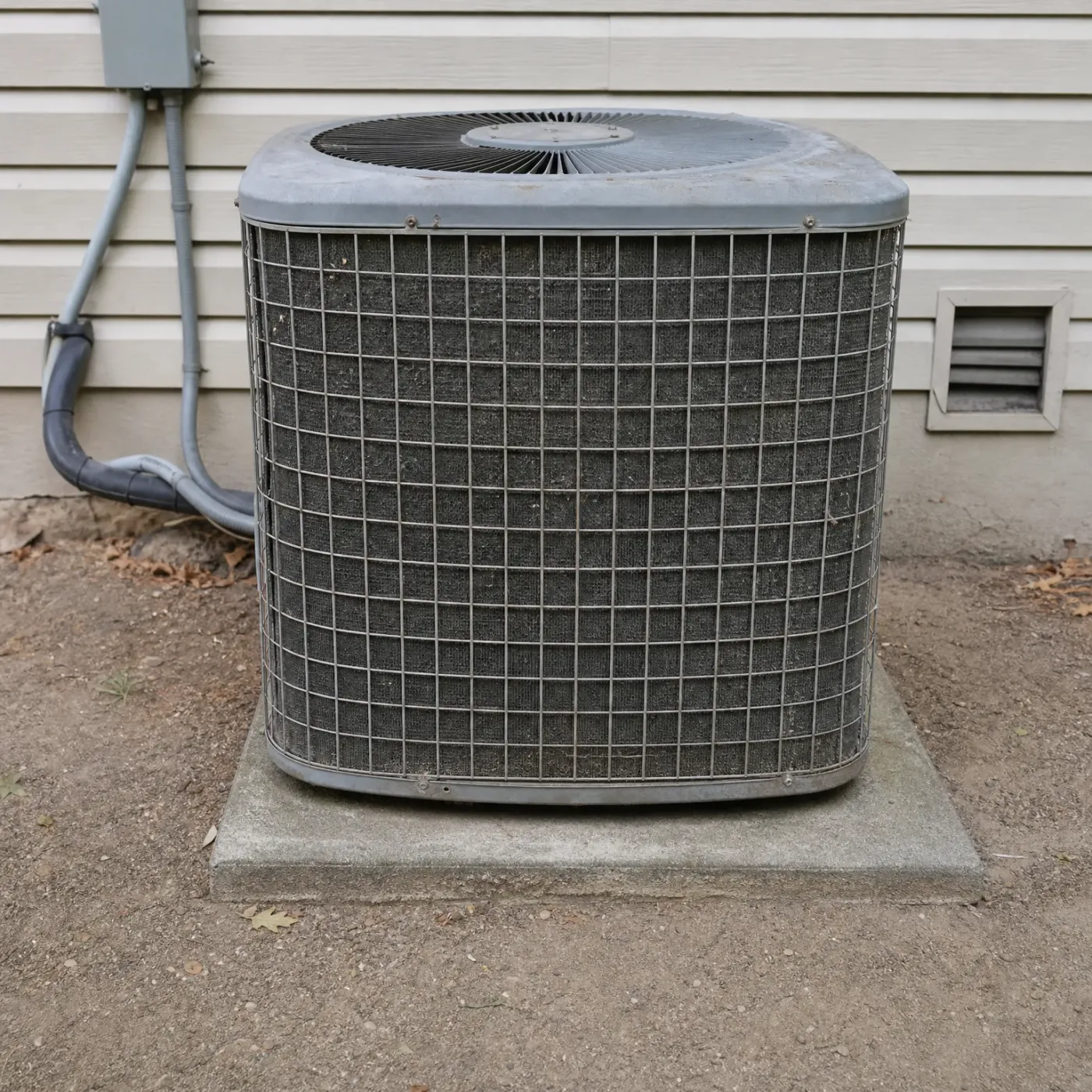
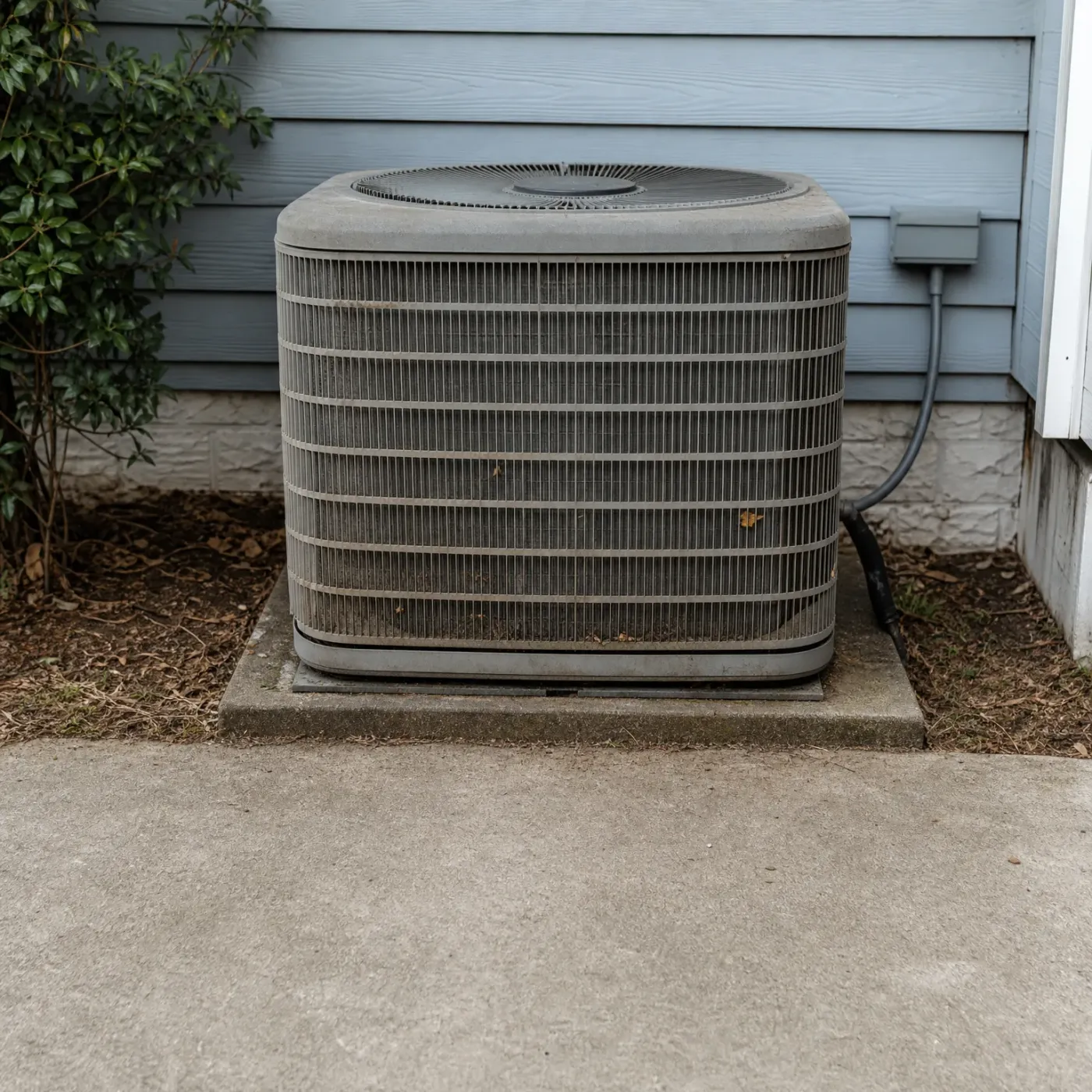
This older unit has years of grime packed into the fins. The casing shows it. Airflow through a coil like this is choked down, and whatever is pulling double duty behind it, the motor, the capacitor, is what you're smelling when it finally gives off heat.


A contractor opens the unit, finds the part that's overheating, and shuts off power while it's still just a smell and not a dead compressor. Most of the time it's a capacitor, a motor, or a wire, and those get swapped out before they take anything else down with them. You're not guessing anymore about what's wrong or whether it's safe to run. The unit goes back on knowing the part that was cooking is gone, not just that the smell faded for now.
The smell goes away once the unit shuts off, so it's easy to tell yourself it was nothing. But the part that caused it is still in there, still wired the same way, still going to heat up the next time the AC runs. A capacitor that's starting to fail doesn't fix itself sitting idle. Neither does a motor with worn bearings. Whatever it was waits for the next cycle, and in Greene County summers the unit runs long enough that the next cycle comes soon.
Four months of real heat means your AC gets maybe four months off, too. Long stretches of shutdown let dust settle on the coil and blower, and that's usually what you smell when the unit fires back up after sitting idle.
NOAA nClimDiv 1991-2020
A burning smell means a part is working harder than it should, and it won't fix itself by running another cycle. Cutting the power was the right call. What happens next is a contractor opening the unit, finding whether it's the capacitor, the motor or a wire, and replacing it before it takes anything else out with it. This isn't a job that needs several companies bidding on it. It needs one licensed contractor working near Springfield who's seen this same smell come from this same handful of parts plenty of times and knows which one it is before the panel's even off. You'll get matched with that one contractor, not a list of them calling you back at once. From there, it's off your plate. You'll know the AC is actually fixed, not just quiet.





The pro who gets in touch is licensed in Missouri and works in Greene County.
There's no charge for the request.