Tell us about the job
Takes about a minute. No obligation.
A contractor diagnosing a failed central AC in Crawford County has to ask when the system last ran, because a short idle period carries its own failure modes. Homes in Crawford County, MO run cooling about three months a year, from June through August. After months sitting off, contactors corrode, capacitors drift, and refrigerant leaks that were small in September show up as hard failures in June. The compressor itself sees relatively few start cycles compared to systems in longer cooling climates, so when it fails here, age and neglect are more likely culprits than worn rings or a fatigued motor winding.
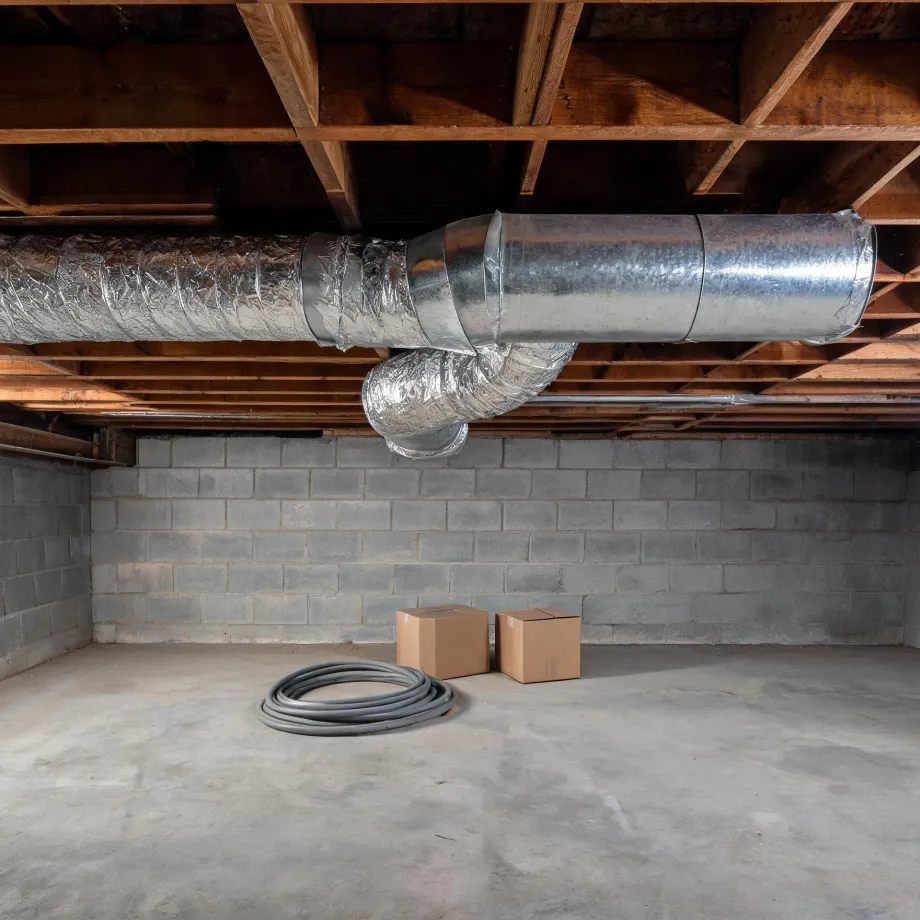
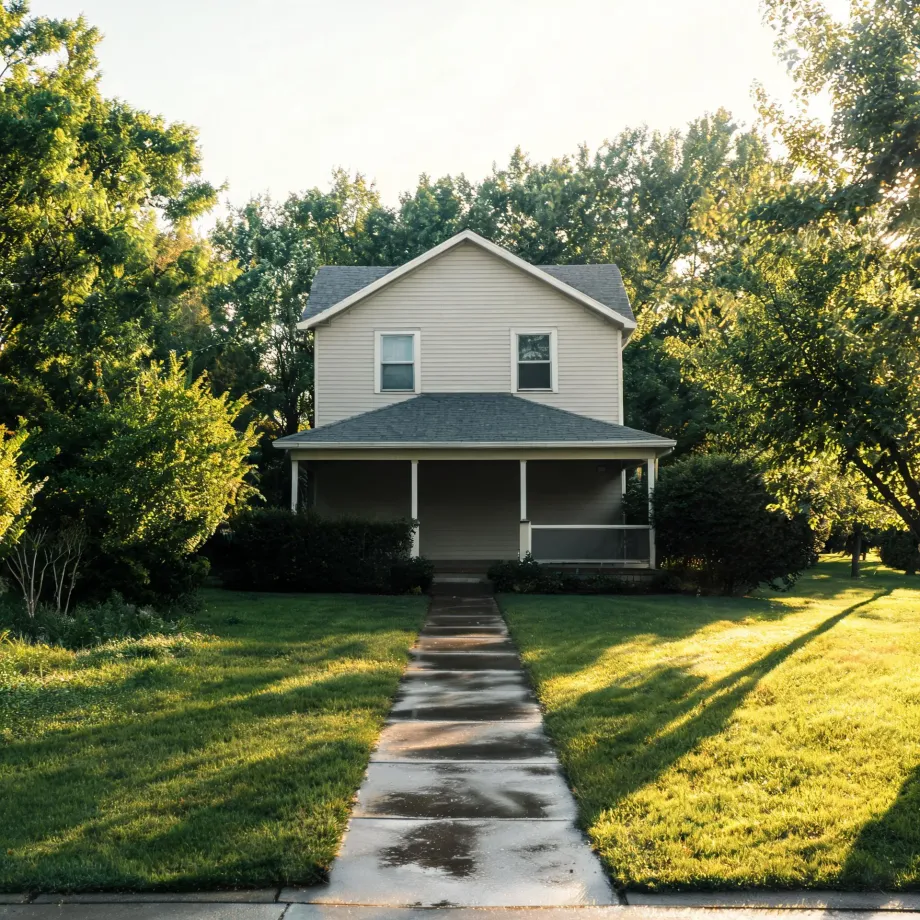
Ductwork sized for an earlier generation of equipment and service panels that were never expanded are what a contractor opens up to on a significant share of jobs here. Half the homes in Crawford County, Missouri were built in 1981 or earlier (2020-2024 ACS 5-year). When a system fails and a technician pulls the unit apart, what they find often reflects how many times the equipment in that house has turned over while the surrounding infrastructure stayed put. Parts that fit the current unit may have a narrower supply chain than parts for newer installs, and that gap shows up in how a repair gets scoped and priced.
The Parts of a Central AC a Contractor Checks During a Repair
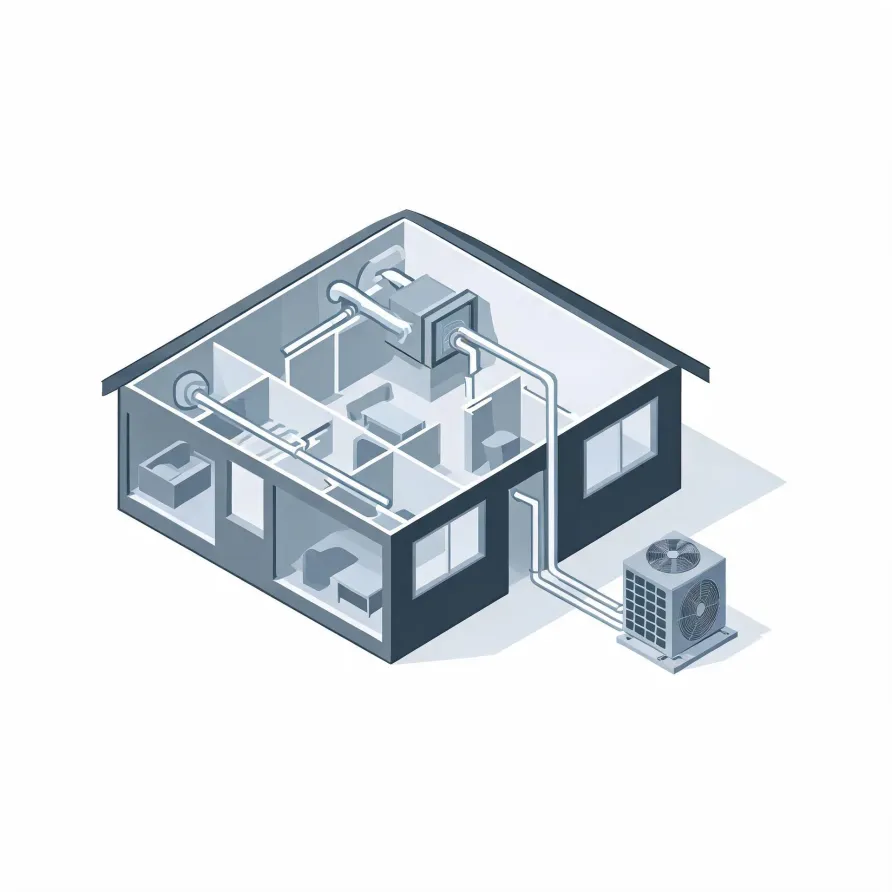
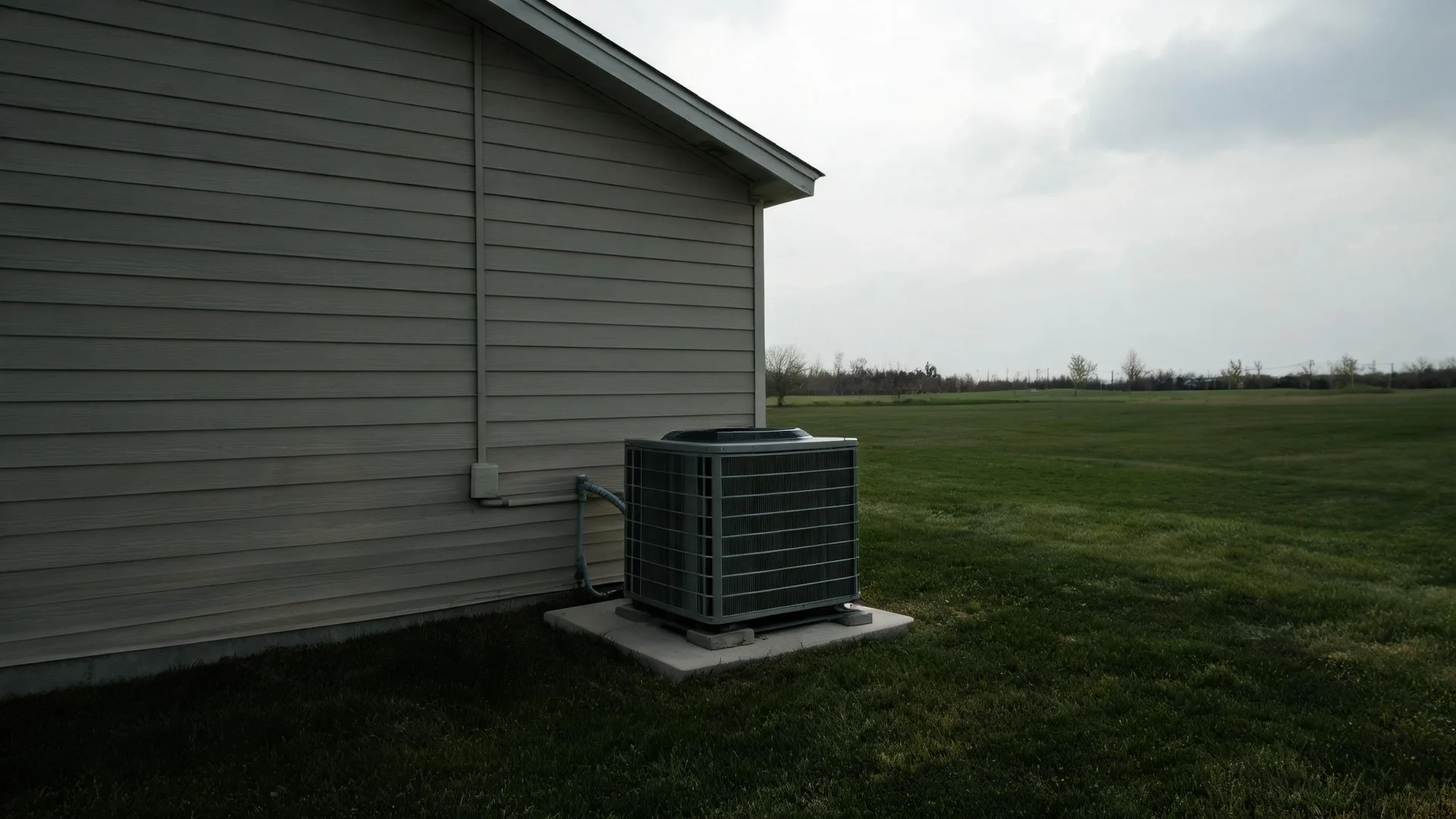
The outdoor unit, the condenser, sits on a pad beside the house and holds the compressor and condenser coil. These are where a contractor starts when the system is not cooling. A failed compressor, a clogged or damaged coil, or a refrigerant leak at the outdoor unit account for a large share of repair calls.
Inside the house, the air handler or furnace cabinet holds the evaporator coil and the blower. The evaporator coil is a common fault point, whether from ice buildup or leaks, and the blower motor is checked when airflow feels weak. The two units connect through a pair of refrigerant lines and a condensate drain, both of which a contractor inspects for blockages or damage.
The drawing shows the general layout of a central AC system, and a licensed contractor determines which components are relevant in your particular home.
Get matched in Crawford CountyCrawford County, Missouri, by the numbers
63 severe weather events were recorded in Crawford County, Missouri between 2015 and 2024.
NOAA National Centers for Environmental Information, Storm Events Database, bulk CSV export, events 2015-01-01 through 2024-12-31.Half the homes in Crawford County, Missouri were built in 1981 or earlier (2020-2024 ACS 5-year).
U.S. Census Bureau, 2020-2024 American Community Survey 5-Year EstimatesCrawford County, Missouri holds 11,416 housing units (2020-2024 ACS 5-year).
U.S. Census Bureau, 2020-2024 American Community Survey 5-Year EstimatesOwners occupy 69.2% of the occupied homes in Crawford County, Missouri (2020-2024 ACS 5-year).
U.S. Census Bureau, 2020-2024 American Community Survey 5-Year EstimatesCodes & Standards Governing Central AC Repair in Crawford County, Missouri8 sourced rules and standards
What HVAC Repair Looks Like in Crawford County
Split-system central air conditioners rated below 45,000 Btu/h manufactured on or after January 1, 2023 must meet a federal minimum of 13.4 SEER2.
Split-system central air conditioners rated at or above 45,000 Btu/h manufactured on or after January 1, 2023 must meet a federal minimum of 13.4 SEER2.
Split-system central air conditioners manufactured between January 1, 2015 and December 31, 2022 had to meet 13 SEER, the metric that preceded SEER2.
Single-package central air conditioners manufactured on or after January 1, 2023 must meet a federal minimum of 13.4 SEER2.
Space-constrained central air conditioners manufactured on or after January 1, 2023 must meet a federal minimum of 11.7 SEER2.
Federal efficiency standards for split-system central air conditioners and heat pumps are set on each certified combination of outdoor unit and indoor coil rather than on the outdoor unit alone.
Residential and light commercial air conditioning and heat pump systems assembled in the field, including mini-splits and unitary systems, may not be installed on or after January 1, 2025 using a refrigerant with a global warming potential above 700.
A field-assembled system whose specified components were all manufactured or imported before January 1, 2025 carries no installation compliance date under the refrigerant restrictions and may still be installed.
Severe Weather Events in Crawford County
Weather puts real hours on central AC equipment. Hard conditions drive the kind of wear that shows up later as a repair call, and what Crawford County gets from its climate is the starting point for understanding what the equipment here has to handle.
63 severe weather events, 2015–2024. Source: NOAA National Centers for Environmental Information, Storm Events Database.