Tell us about the job
Takes about a minute. No obligation.
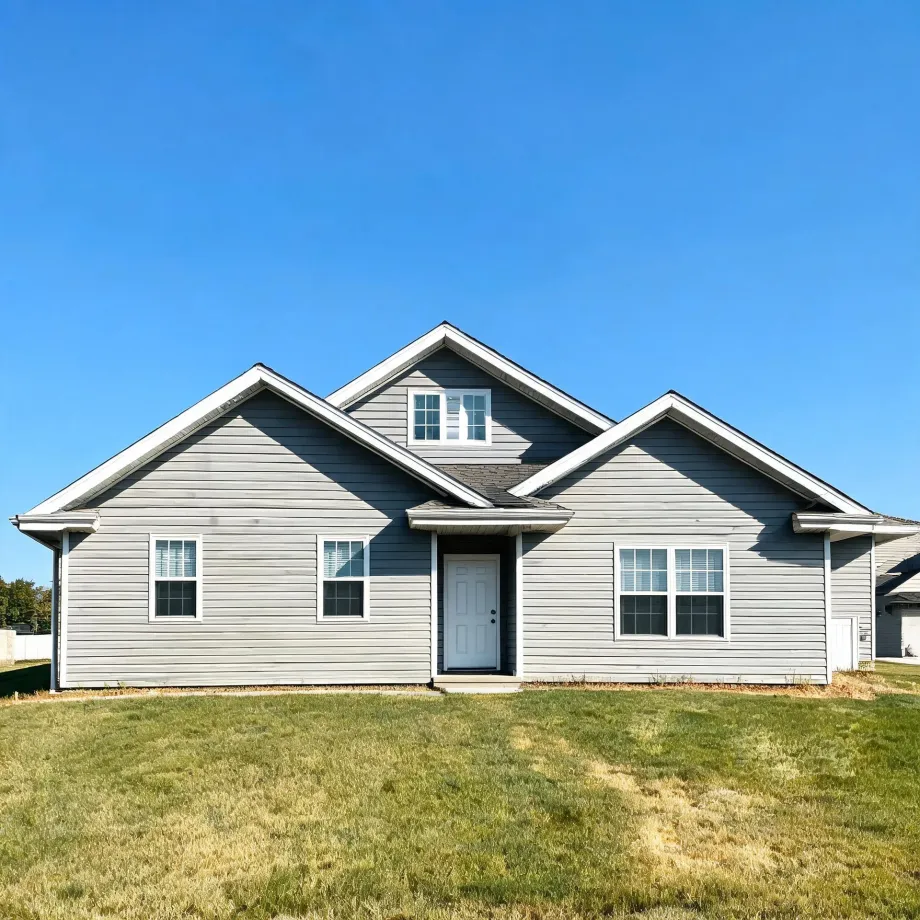
The compressor in a central AC unit starts and stops every time the house calls for cooling, and in Bates County it does that through a solid run of summer heat. Homes in Bates County, MO run cooling about four months a year, from June through September. By the time a system has been through several of those seasons, the contactor shows pitting, the capacitor weakens, and the compressor itself is working harder at startup than it was new. A contractor diagnosing a failed or underperforming unit here checks those components first, because they carry the bulk of the accumulated load.
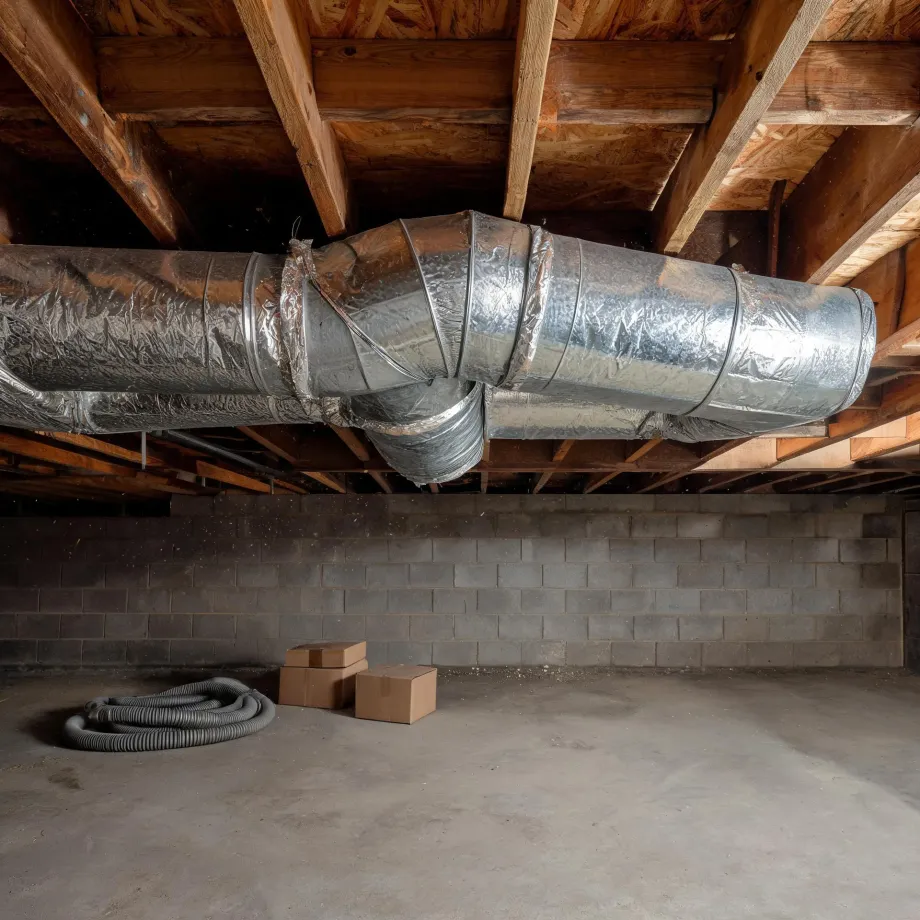
Ductwork laid down for an earlier generation of equipment carries its own history: seams, joints, and return paths sized for what was standard then. Half the homes in Bates County, Missouri were built in 1976 or earlier (2020-2024 ACS 5-year). A contractor opening a failed compressor or a seized contactor in stock like this checks availability before quoting the repair, because a system old enough to match the house often runs on components that have moved out of the regular supply chain. What they find inside the unit sets the scope, and parts availability sets the price.
The Parts of a Central AC a Contractor Checks First
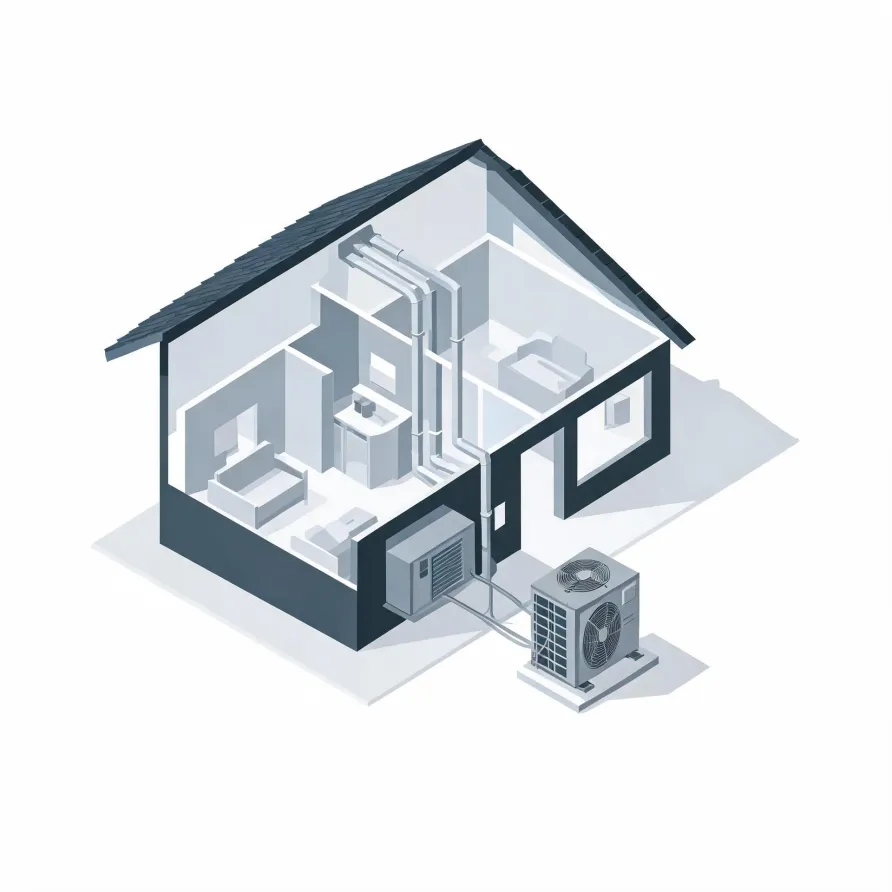
The outdoor condenser unit sits outside the house, usually on a concrete pad alongside the foundation, and it carries the compressor and condenser coil. These are the parts a contractor reaches first when a system stops cooling, runs constantly, or trips a breaker. The compressor in particular draws attention early because it drives the whole cooling cycle.
Inside the house, the air handler holds the evaporator coil and the blower. The evaporator coil sits directly in the airstream and is where refrigerant does its work, so a coil that is frozen or leaking will stop cool air from reaching the rooms. The blower pushes conditioned air through the ducts, and the contractor checks it alongside the coil and the refrigerant lines that connect both units.
The drawing shows the general layout of a central AC system, and a licensed contractor determines which components apply to your specific house and situation.
Get matched in Bates CountyBates County, by the numbers
90 severe weather events were recorded in Bates County, Missouri between 2015 and 2024.
NOAA National Centers for Environmental Information, Storm Events Database, bulk CSV export, events 2015-01-01 through 2024-12-31.Half the homes in Bates County, Missouri were built in 1976 or earlier (2020-2024 ACS 5-year).
U.S. Census Bureau, 2020-2024 American Community Survey 5-Year EstimatesBates County, Missouri holds 7,192 housing units (2020-2024 ACS 5-year).
U.S. Census Bureau, 2020-2024 American Community Survey 5-Year EstimatesOwners occupy 74.9% of the occupied homes in Bates County, Missouri (2020-2024 ACS 5-year).
U.S. Census Bureau, 2020-2024 American Community Survey 5-Year EstimatesCodes & Standards Governing Central AC Repair in Bates County, Missouri8 sourced rules and standards
What HVAC Repair Looks Like in Bates County
Split-system central air conditioners rated below 45,000 Btu/h manufactured on or after January 1, 2023 must meet a federal minimum of 13.4 SEER2.
Split-system central air conditioners rated at or above 45,000 Btu/h manufactured on or after January 1, 2023 must meet a federal minimum of 13.4 SEER2.
Split-system central air conditioners manufactured between January 1, 2015 and December 31, 2022 had to meet 13 SEER, the metric that preceded SEER2.
Single-package central air conditioners manufactured on or after January 1, 2023 must meet a federal minimum of 13.4 SEER2.
Space-constrained central air conditioners manufactured on or after January 1, 2023 must meet a federal minimum of 11.7 SEER2.
Federal efficiency standards for split-system central air conditioners and heat pumps are set on each certified combination of outdoor unit and indoor coil rather than on the outdoor unit alone.
Residential and light commercial air conditioning and heat pump systems assembled in the field, including mini-splits and unitary systems, may not be installed on or after January 1, 2025 using a refrigerant with a global warming potential above 700.
A field-assembled system whose specified components were all manufactured or imported before January 1, 2025 carries no installation compliance date under the refrigerant restrictions and may still be installed.
Severe Weather Events in Bates County
Weather puts hours on HVAC equipment. Every weather event that hits Bates County is a potential load spike, a power surge, or a sustained run that shortens the life of a central AC system and raises the odds that something eventually breaks.
90 severe weather events, 2015–2024. Source: NOAA National Centers for Environmental Information, Storm Events Database.