



AC not cooling in Columbia, MO

Step 1 of 3: Equipment

If your AC is running but the air coming out isn't cold, the most common cause is low refrigerant from a leak or a dirty outdoor coil that can't shed heat. Both stop the system from pulling heat out of the air the way it should. If the unit isn't running at all, check the thermostat batteries and the breaker first, since those stop plenty of systems before anything mechanical fails. A frozen indoor coil is another common cause here, usually from restricted airflow, a clogged filter, or low refrigerant, and running the blower with the compressor off for a few hours can thaw it so a contractor can find the real cause. With Boone County summers running long and sticky, a system that's already low on refrigerant or short on airflow gets pushed hard enough to fail on the days you need it most. None of these fixes require guessing. A contractor who works on this equipment all summer can narrow it down fast once they're on site.

A smiling bearded man in a dark green hooded jacket and blue t-shirt sits on a couch in a living room with shelves, a potted plant, and a bowl of popcorn on a wooden table.
A smiling man in a green long-sleeved shirt sits on a beige sofa in a living room, with a bowl of popcorn in the foreground, a large potted plant and shelving behind him.
A smiling man in a dark blue T-shirt sits on a couch in a dimly lit living room with a bowl of popcorn and a remote on a wooden table, a lit floor lamp and bookshelves behind him, and windows showing greenery.
A smiling bearded man in a dark green long-sleeved shirt sits on a leather couch in a living room, with a bowl of popcorn and a remote control on a wooden table in the foreground.
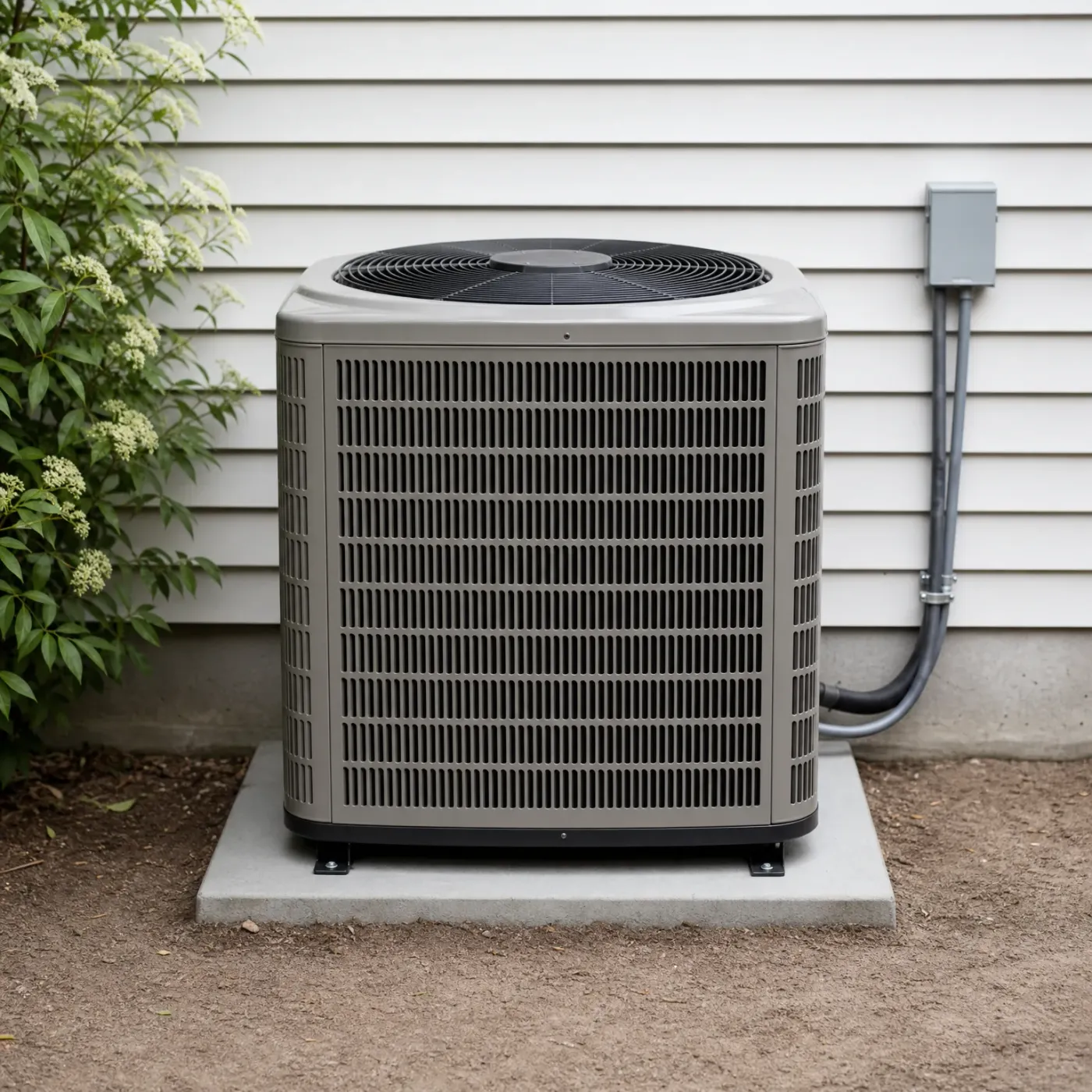
A gray outdoor air conditioner condenser unit on a concrete pad beside a house with horizontal lap siding, with a flowering shrub at left and a disconnect box with conduit on the wall at right.
A clean outdoor unit with good airflow around it keeps pulling heat out of your house the way it's supposed to, even on a 95 degree Columbia afternoon.
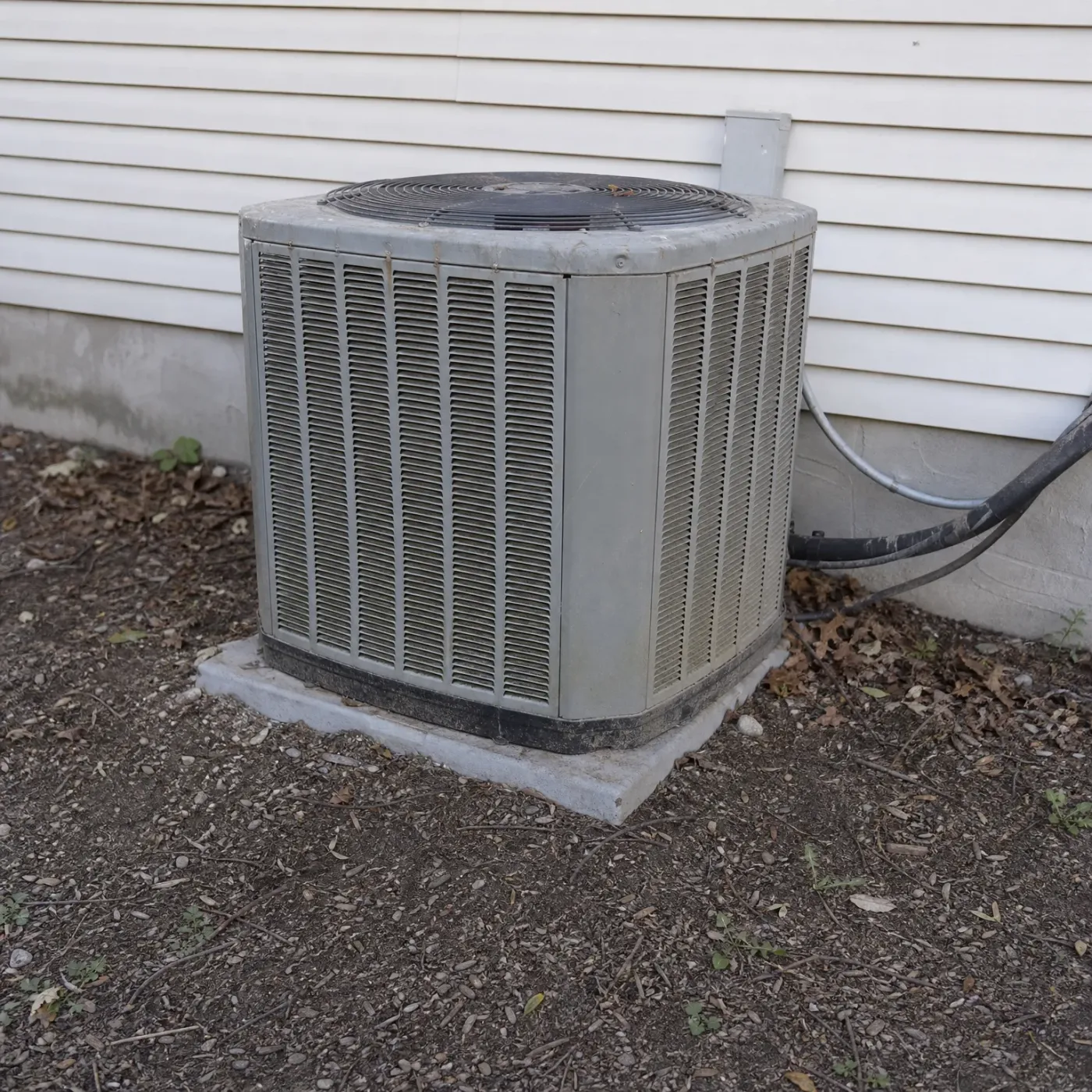
An outdoor air conditioner condenser unit on a concrete pad beside a house with light horizontal vinyl siding, surrounded by bare dirt, gravel and dry leaves, with refrigerant lines and conduit running along the wall.
Leaves and dirt packed around the base block airflow across the coil, and the system can run for hours without actually cooling the house down.

Cooling your house comes down to two coils and whatever moves air and refrigerant between them. Outside, the condenser coil has to shed the heat pulled from your rooms, and it can only do that if air moves freely through the fins. Inside, the evaporator coil is where that heat actually leaves the air headed to your vents, and it needs steady airflow to stay above freezing. Cut that airflow with a dirty filter, and the coil ices over, which cuts airflow further. Low refrigerant does something similar from a different angle: the fan still spins, the air still blows, but there isn't enough refrigerant moving through the system to carry heat out of your house. None of this needs the compressor to fail outright. A weak start capacitor can leave it silent while the outdoor fan keeps turning, so the unit looks like it's working from the driveway. A thermostat set wrong or wired for equipment it isn't talking to can call for fan only, no cooling at all.

Why the air turns warm

  • The outdoor fan pulls air across the condenser coil, and if that coil is caked with cottonwood fluff or cut grass, heat has nowhere to go.
  • A system low on refrigerant from a slow leak will still blow air, but that air won't pull much heat out of your house.
  • Ice can form on the indoor coil when airflow is restricted, and that ice blocks the very airflow the system needs to cool.
  • A dirty filter cuts airflow across the indoor coil first, so a closet or hallway filter a season overdue often shows up as weak cooling at the vents.
  • The compressor is what moves refrigerant through the system, and a failing start capacitor can keep it from kicking on at all even though the fan outside spins fine.
  • Thermostats wired for a heat pump or set to the wrong mode can call for the fan without ever calling for actual cooling.
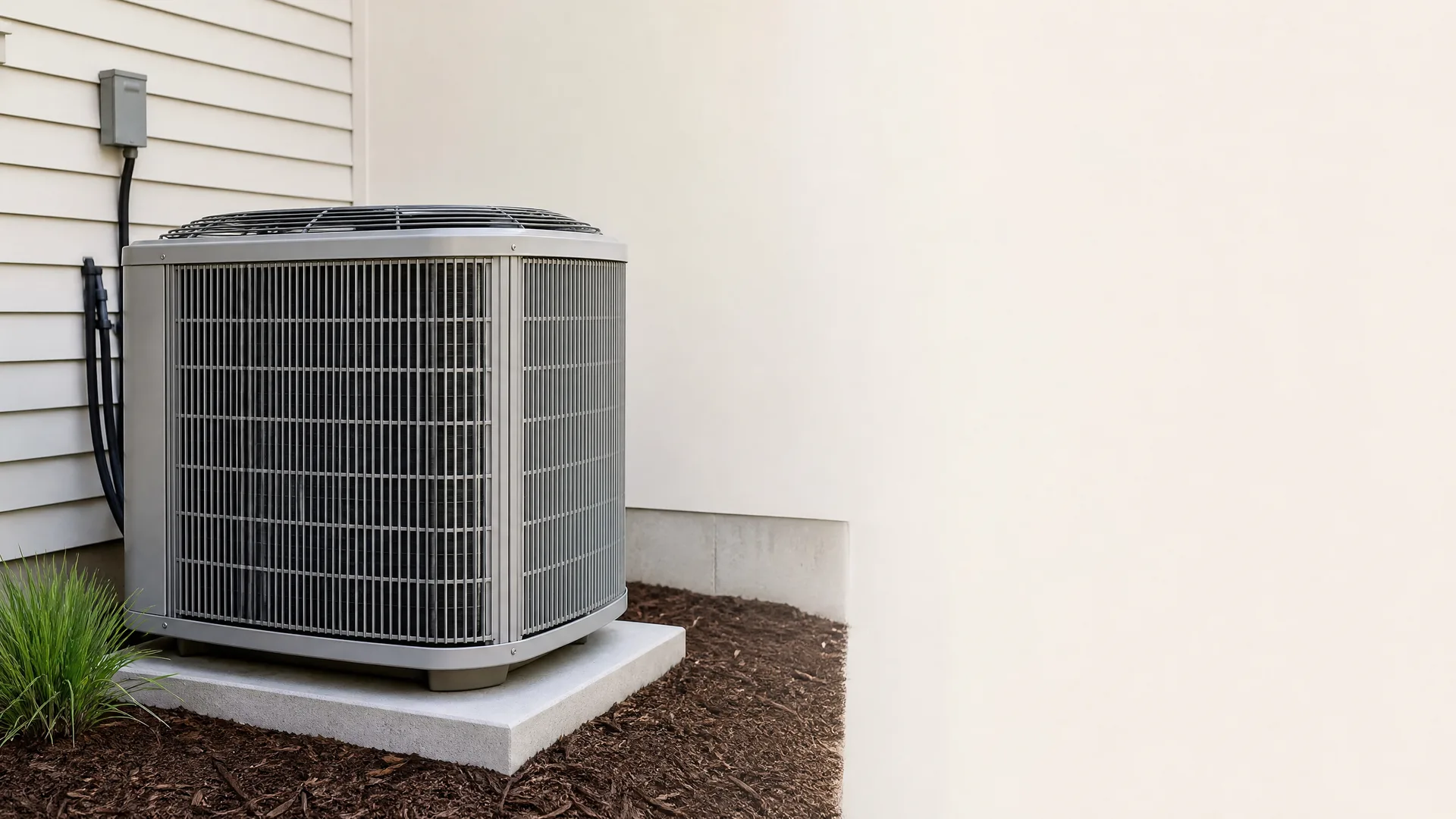
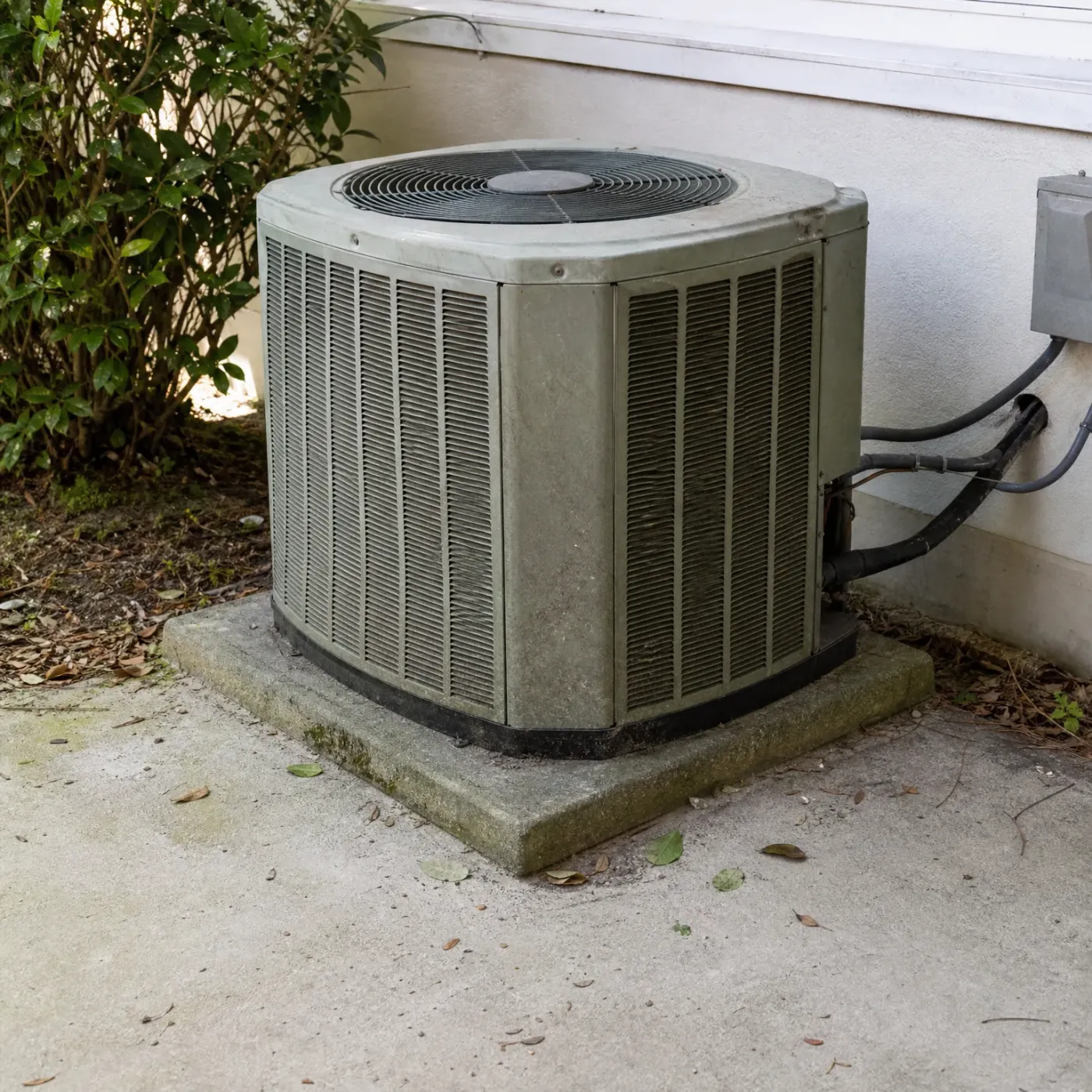
An outdoor air conditioner condenser unit sits on a concrete pad beside a stucco wall, with refrigerant lines and conduit running to the wall and a shrub to the left.
Before you get your air conditioner repair
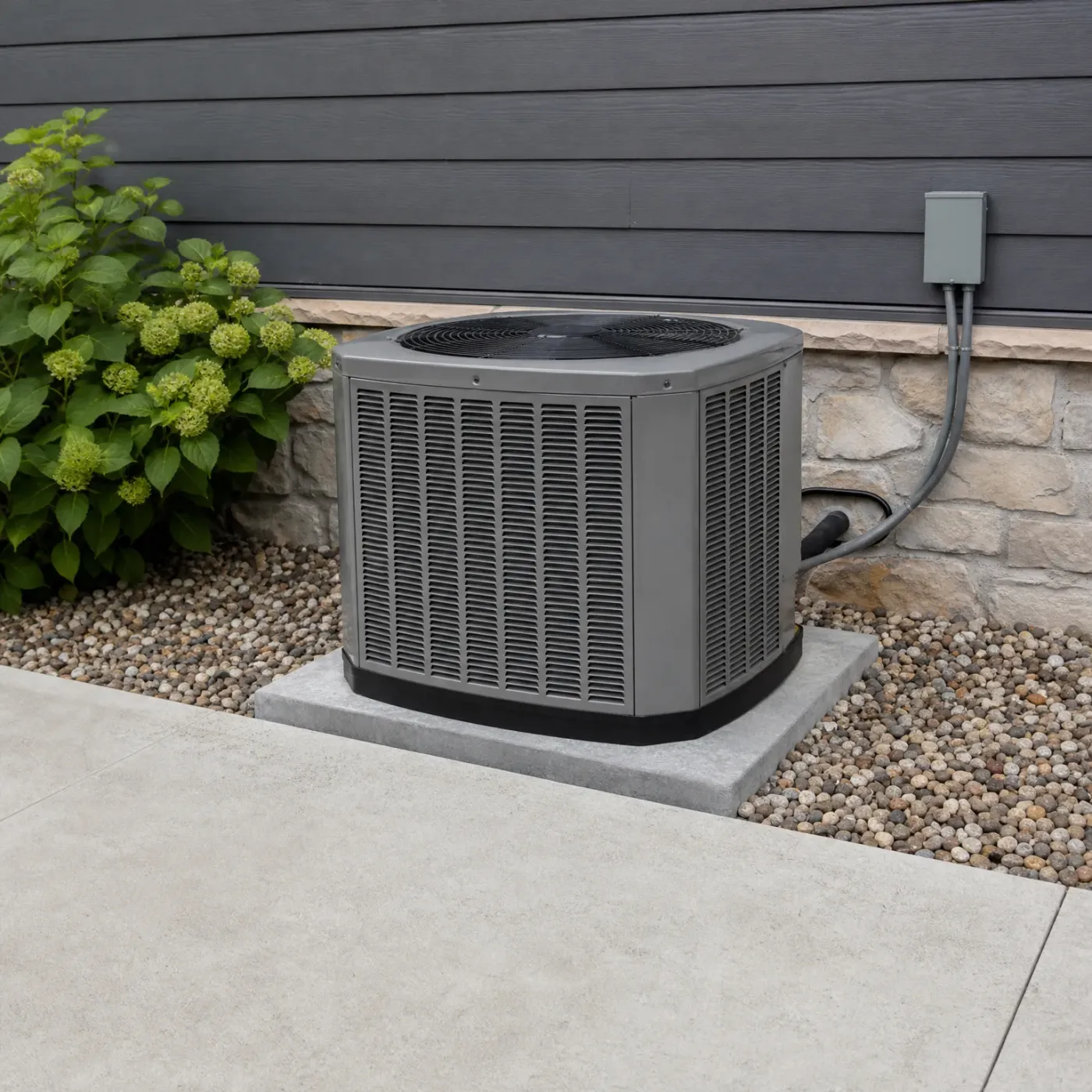
A gray outdoor air conditioner condenser unit on a concrete pad beside a house with dark horizontal siding and a stone base, surrounded by gravel, with a flowering shrub at left and a concrete walkway in front.
After you get your air conditioner repair
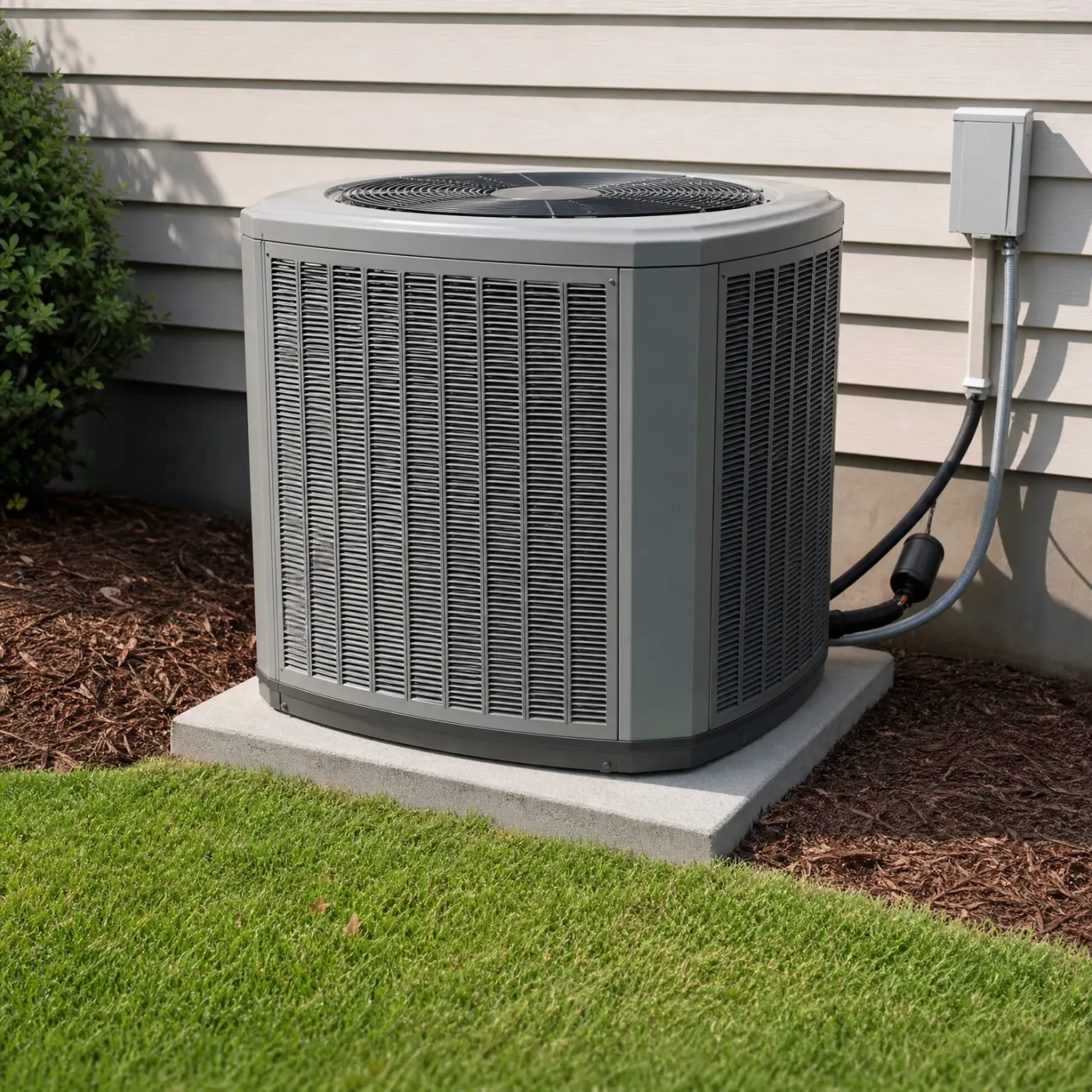
A gray outdoor air conditioner condenser unit on a concrete pad beside a house with horizontal lap siding, with a wall-mounted disconnect box and conduit, mulch bed, shrub, and lawn nearby.

Running clean

A unit with clear space around it and a clean coil pulls heat out of the house the way it's built to. The pad stays clear, the lines running up to the disconnect box stay intact, and on a hot Columbia afternoon the air coming out of your vents stays cold.
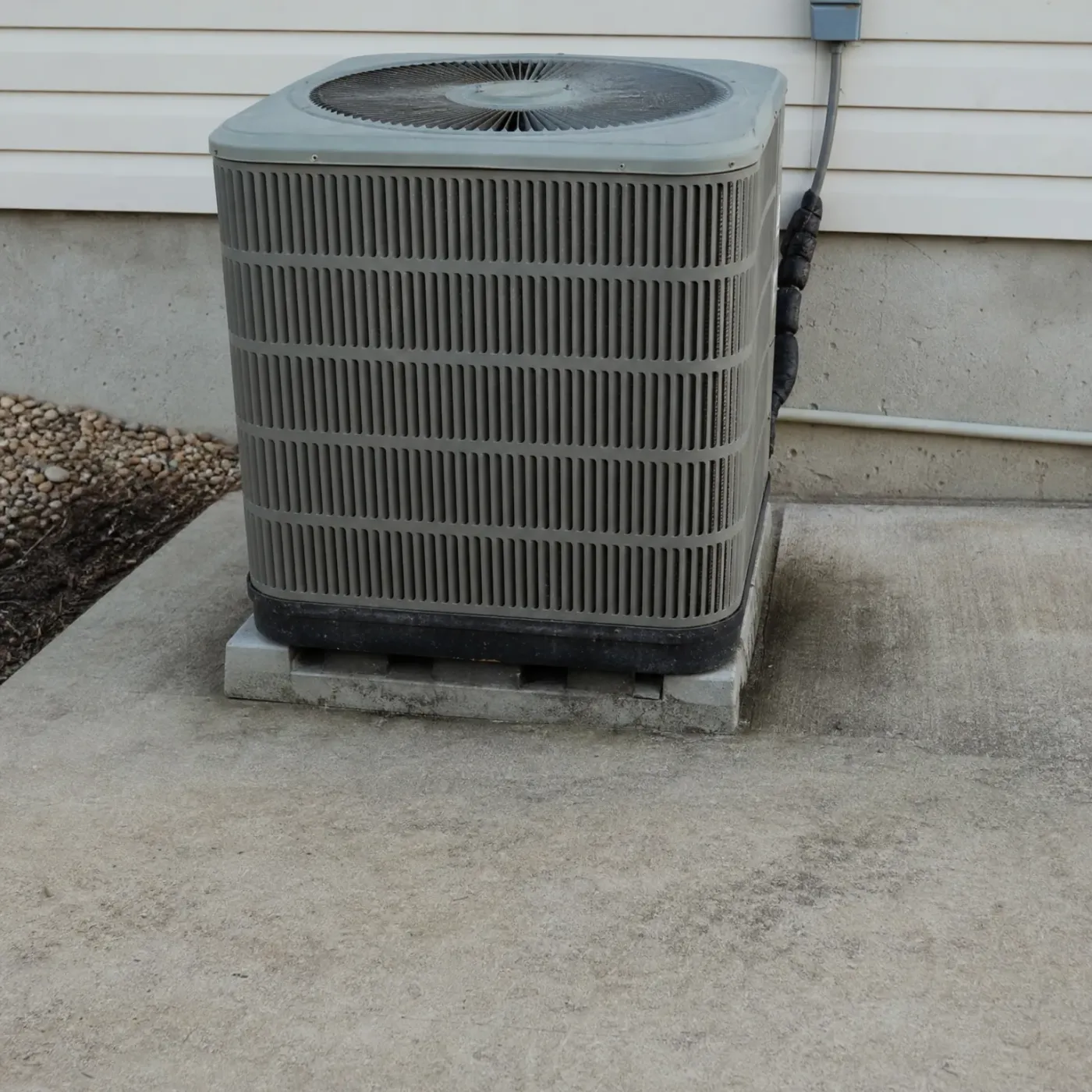

An outdoor air conditioner condenser unit sits on a gray pad beside a light vinyl-sided wall, on a concrete slab next to a gravel bed.

Struggling to keep up

Mulch, clippings and gravel too close to the coil choke off airflow, and a system that can't breathe runs longer for less cold air. The conduit and lines up the wall may look fine while the coil behind them is caked and starving for air.

Why is my AC blowing warm air all of a sudden?

Why is my AC blowing warm air all of a sudden?

Usually a frozen coil or a tripped breaker, not a failed part

Most of the time it's one of two things. The indoor coil has iced over from low airflow or low refrigerant, and once ice builds up, the air coming off it turns warm even though the blower still runs. Or the outdoor unit has lost power, from a tripped breaker or a safety switch that cut the compressor off, while the indoor blower keeps running on its own circuit and pushes room-temperature air through the vents. A system that was cooling fine and then suddenly isn't is rarely a part wearing out. It's something that happened that day. Shutting the system off for a few hours lets a frozen coil thaw and tells you which one you're dealing with.

A single-story house with light gray horizontal siding, dark gray shingled gables, black shutters and a dark front door, fronted by a mulched bed of small shrubs and a large lawn under a clear blue sky.

A dew point averaging 65°F across June, July and August in Boone County, per NOAA, is the sticky kind of air that makes your AC work for every degree it drops. Your system isn't just lowering temperature, it's pulling moisture out of the air too, and that second job is the harder one. When the outdoor coil is dirty or the refrigerant's low, that moisture load is what gives out first. You'll feel it as air that's cool but clammy, or a house that never quite feels dry even with the thermostat holding steady. A contractor working Columbia systems all summer sees this pattern often enough to know where to look first.

NASA POWER T2MDEW

Hand off the air conditioner problem

A warm house in a Columbia summer isn't a wait-and-see problem. Once the coil ices over or the refrigerant drops low enough, the system can keep running without actually cooling anything, and that strain tends to end badly for the compressor. Figuring out which of those it is, and whether the fix is a recharge, a coil cleaning, or something electrical, isn't something to guess at over the phone. It takes someone who works on these systems around Boone County all summer and knows which parts give out first in this heat and this humidity. Send the request and that part is handled. One local, licensed contractor gets your information, not five companies competing for it, so you aren't fielding calls all afternoon while your house sits at 82 degrees. You get back to your day, and the next call you get is from someone who already knows what you're dealing with.

An outdoor air conditioner condenser unit on a concrete pad beside a house with horizontal lap siding and a light stucco wall, surrounded by dark mulch and an ornamental grass.

What a frozen coil does next

Once the indoor coil ices over, the ice itself blocks airflow, so the problem gets worse the longer the system runs. Shutting it off and letting the coil thaw, usually a few hours, stops the damage. Running it anyway pushes liquid refrigerant back toward the compressor, a part that's built to handle gas, not liquid. That's the failure that turns a coil problem into a compressor replacement.

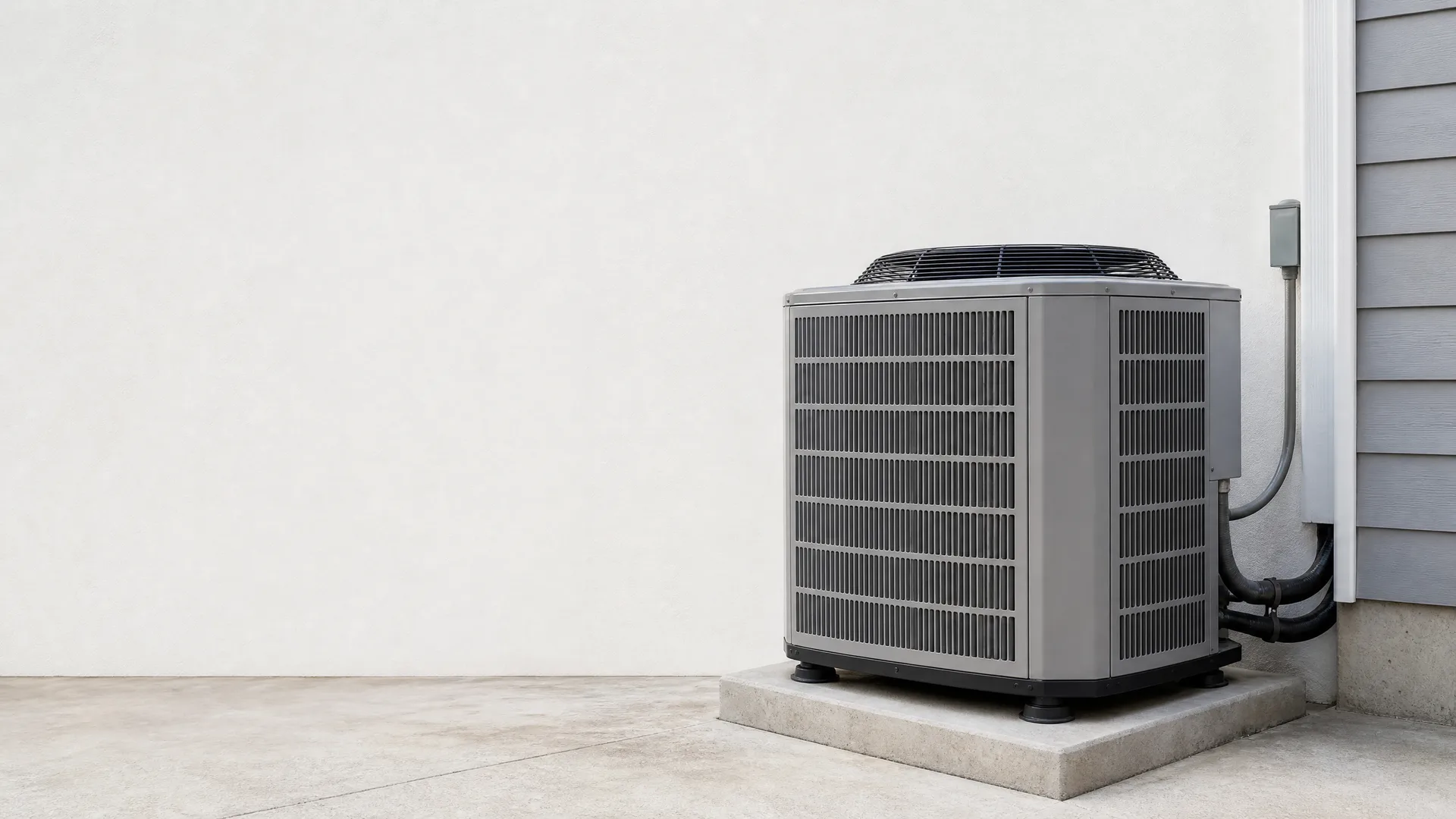
An outdoor air conditioning condenser unit on a concrete pad beside a light stucco wall, with a disconnect box and refrigerant lines running to adjacent lap siding.

What the capacitor actually does

The outdoor fan and the compressor both need a jolt to start turning, and the capacitor stores that charge. A weak one still runs the system most of the time, but under a hot Columbia afternoon's load it can't deliver enough, and the unit hums or the fan sits still while the compressor tries to start alone. That strain shortens the compressor's life even on the days the system does start.

Cooling runs May through September

Five months a year is a long stretch for one piece of equipment to carry the whole load. Your AC in Boone County gets worked from May clear through September, and every one of those months puts hours on the compressor and the coil. When something's going to wear out or leak, this is the stretch where it shows up.

NOAA nClimDiv 1991-2020

What a warm house costs you

A Columbia summer afternoon with no working AC turns a house into something you can't sit still in. You end up running window units or box fans to get through the evening, and the rooms farthest from those still sit warm. Food in the fridge is fine, but anyone in the house who's older or has breathing trouble feels a hot house fast. You also lose the moisture control your AC was doing quietly in the background, so even the rooms that feel bearable start to feel damp and heavy. The longer the system sits broken during July or August, the more the house itself holds onto that heat in the walls and furniture, so it takes longer to cool back down once the unit is running again.

What keeps running makes it worse

If your system is still running but not cooling, turning it off is usually the better move until someone looks at it. A coil that's iced over or a compressor straining against low refrigerant doesn't fix itself by staying on longer. It keeps drawing power, keeps running the compressor hot, and the repair bill tends to grow with every hour it's left going. A system that's short-cycling or blowing warm air for a day or two in Boone County's summer heat isn't an emergency in the sense of flooding or fire, but it is the kind of thing that turns a small part replacement into a compressor replacement if it sits too long.

A woman in a dark knit turtleneck sweater reclines on a couch under a cream knit blanket, looking down at an open book, with a lit table lamp and framed pictures behind her.
A smiling middle-aged man in a dark green sweater sits at a candlelit table with wine glasses and a plate of greens in a dimly lit interior.

Where this leaves you

  • Warm air from the vents usually traces back to low refrigerant or a dirty outdoor coil that can't release heat.
  • A frozen indoor coil or a tripped breaker explains most sudden stops, not a major component failure.
  • Letting the system run while the coil is iced or the charge is low puts the compressor at risk.
  • A contractor who works on Columbia systems all summer knows which of these to check first and why.
  • One licensed local contractor takes the call, so you're not fielding quotes from several companies at once.
  • Shutting the unit off and getting a diagnosis settles the question faster than waiting it out.

Warm air out of the vents almost always comes down to one of two things: refrigerant that's leaked out, or a coil outside that's too dirty to shed heat. A system that won't start at all is usually simpler, a frozen coil or a tripped breaker, not a compressor that's failed. Neither one gets better by running the unit longer. Ice on the coil spreads as the system keeps working, and a low charge makes the compressor labor to do a job it can't finish. Shutting it off and having someone look at it beats waiting through another evening to see if it sorts itself out.

Boone County summers put five months of steady work on these systems, and the contractors who handle service calls here see the same handful of failures over and over. Someone who works on Columbia units all season knows a scorched coil from cottonwood fluff on sight, and knows what a slow refrigerant leak sounds like before the gauges confirm it. That kind of familiarity is what gets a system back to cooling without a string of guesses first.

The request goes to one licensed local contractor, not a batch of companies competing for the job. You explain what the system is doing once, to someone who can actually act on it, instead of fielding calls from several outfits trying to win the work. For a house that's sitting warm in July, that's the difference between a quick answer and a long afternoon on the phone.

Aerial view over the shingled roof and stone chimney of a house with a dormer window, overlooking dense green trees, farm fields, and a river under a partly cloudy sky.

One request and it's handed off

Send it today

No fee to send it, and nothing to sign.

A system that's iced over or running low on refrigerant won't fix itself by waiting another day. Getting a local contractor out to look at it now, before the compressor takes the strain, is what keeps a bad afternoon from turning into a bigger repair.