
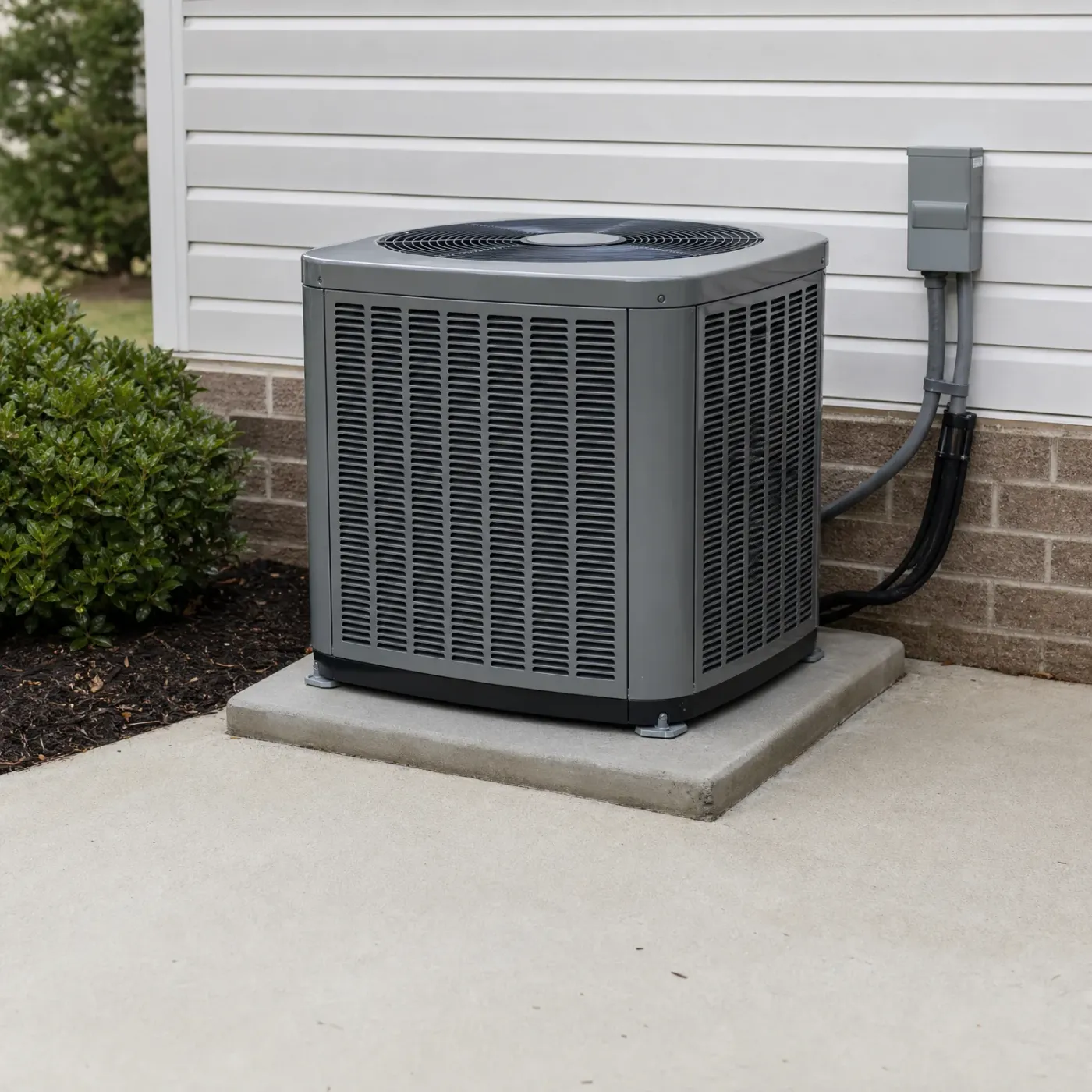
Running quiet
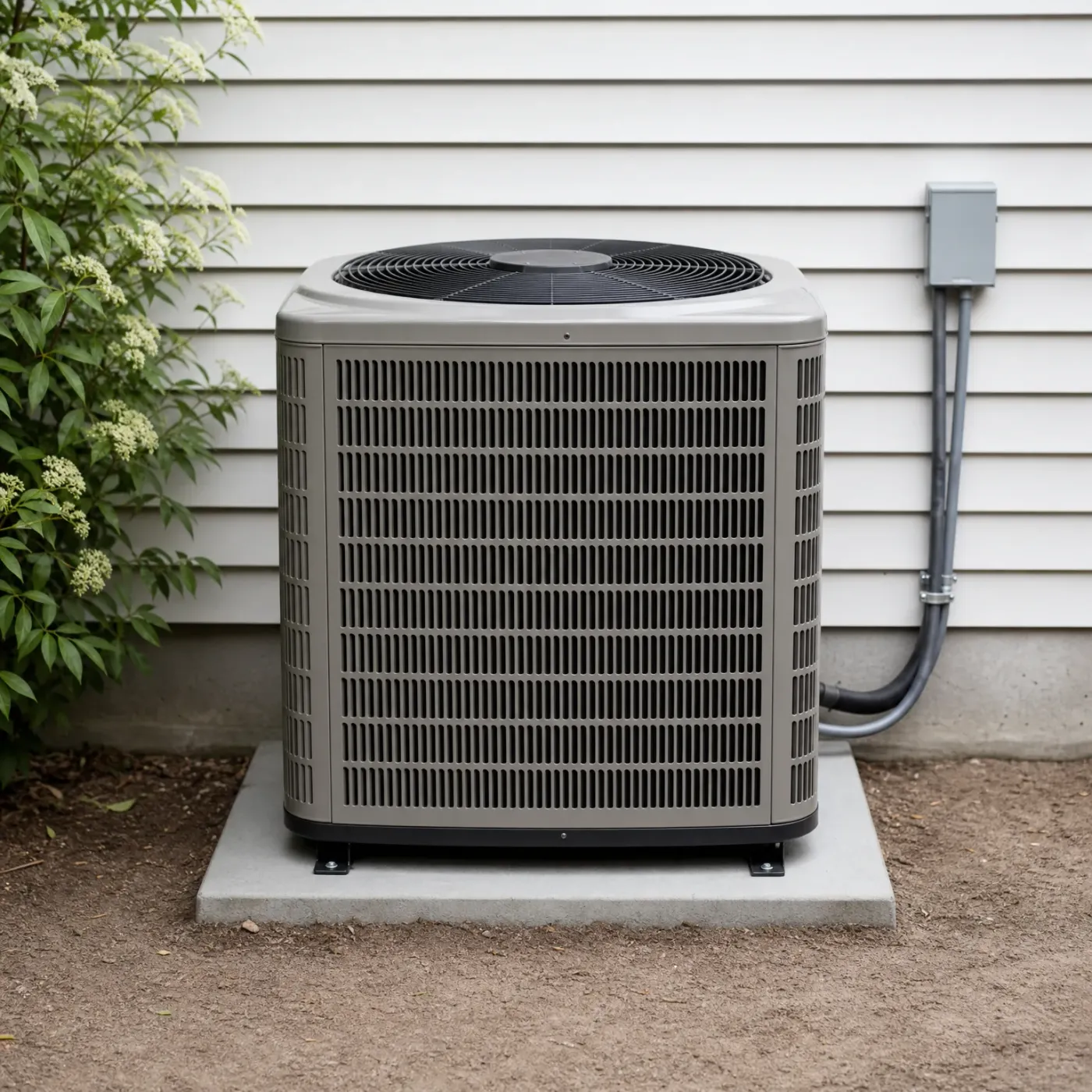
A healthy outdoor unit hums at a steady, even pitch and nothing rattles when you walk past it. The fan spins free, the cover sits flush, and the sound stays the same whether it just kicked on or has been running an hour.
A loud noise from the outdoor unit or inside at the vents is easy to hear and hard to place. With a Franklin County summer running long and hot, you need the system working, and a new rattle, bang, or squeal usually means something is off, not something to wait out.
A bang or rattle outside often means a loose panel, a bent fan blade, or debris caught in the outdoor unit. A high-pitched squeal usually points to a failing blower motor bearing or a belt on older equipment, though most systems now run direct-drive with no belt at all. A hissing sound can mean refrigerant escaping from the lines. A loud hum that wasn't there before can mean a failing capacitor or a motor working harder than it should. Buzzing at the outdoor unit sometimes means electrical contacts wearing out. None of these get quieter on their own, and running the system while the noise continues can turn a cheap fix into a bigger repair.
A healthy outdoor unit hums at a steady, even pitch and nothing rattles when you walk past it. The fan spins free, the cover sits flush, and the sound stays the same whether it just kicked on or has been running an hour.
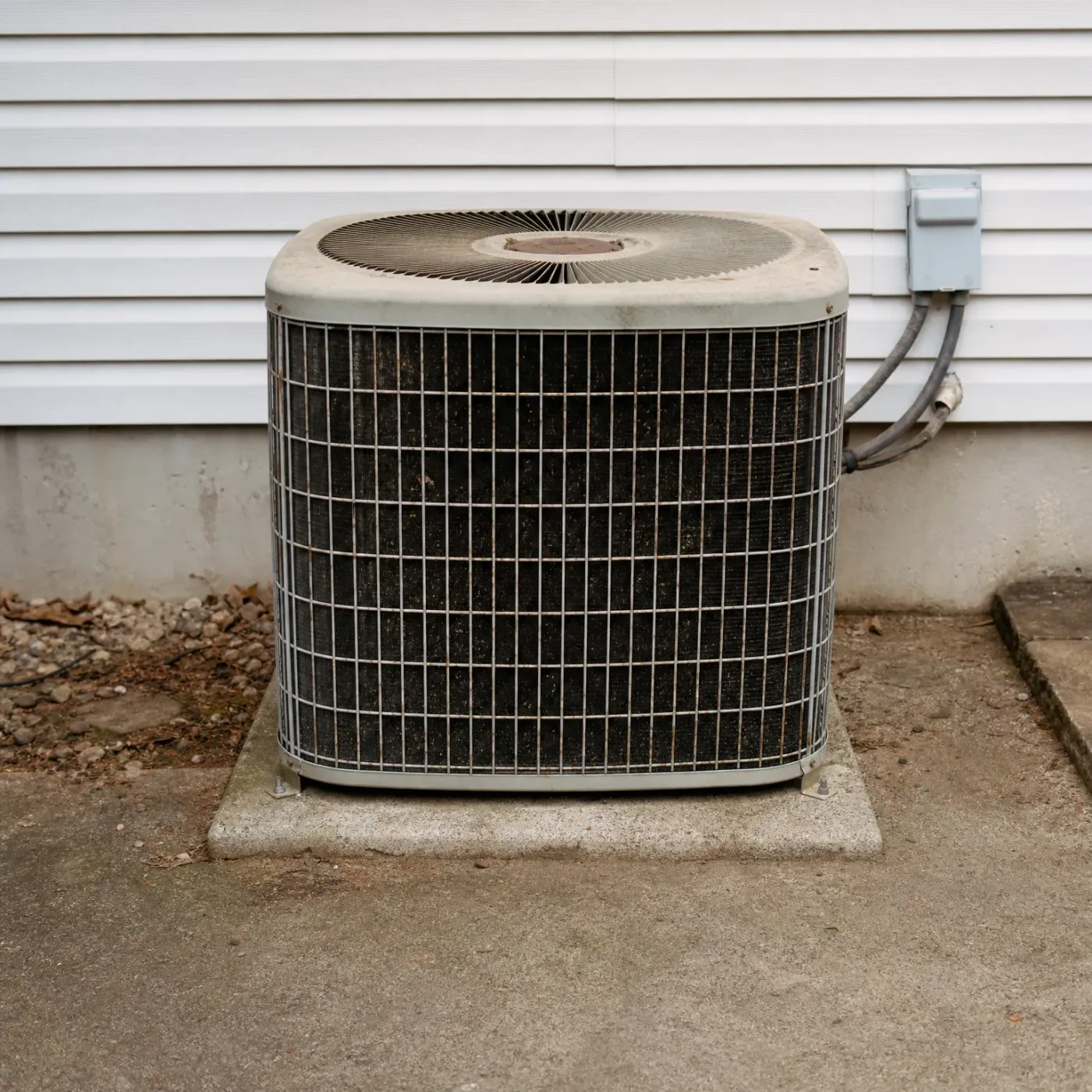
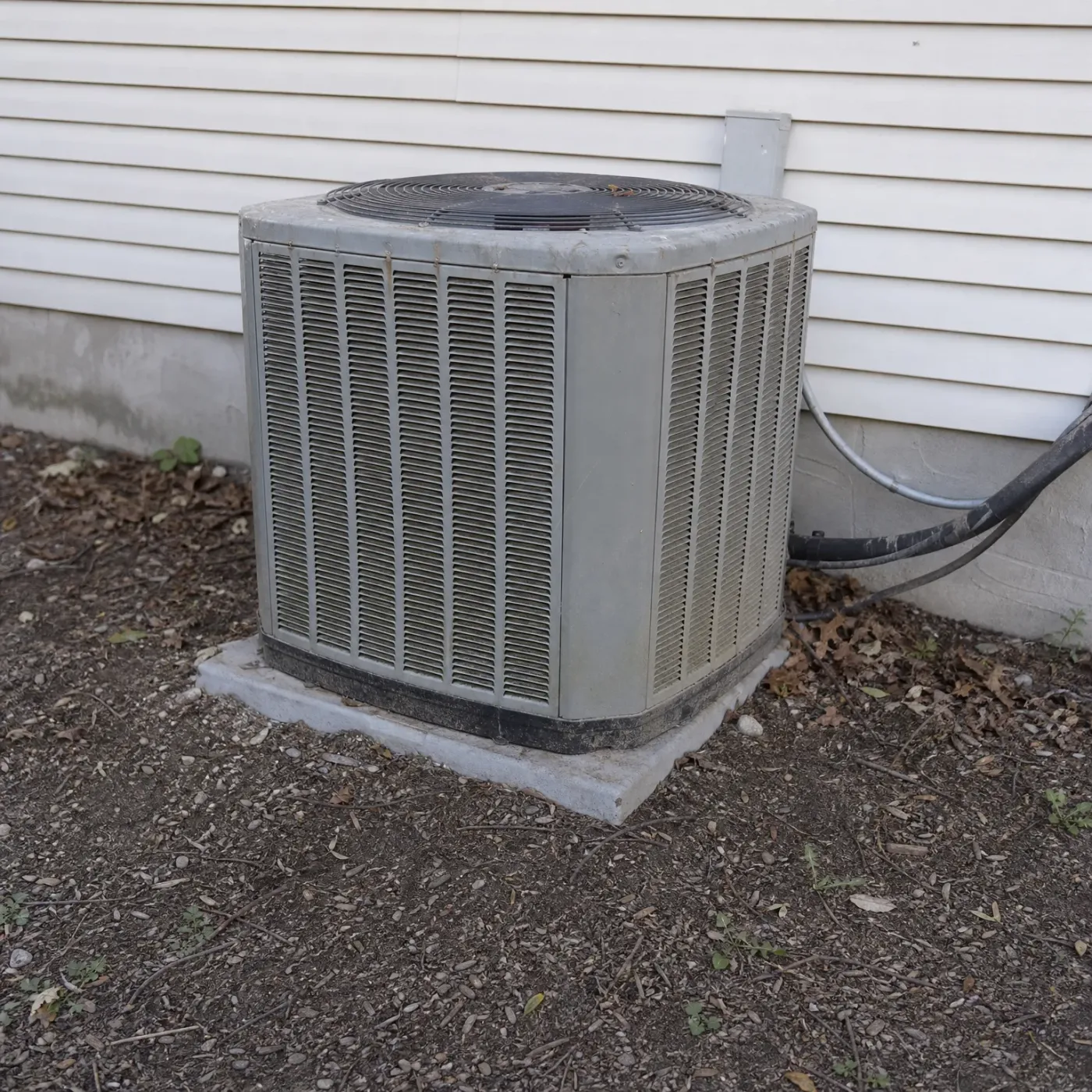
Grime built up on the grille and top cover often comes with a motor or fan working harder than it should, and that shows up as noise. A bang, squeal, or rattle that wasn't there before means a part has worked loose or is wearing out.




Every sound your AC makes has a cause you can usually narrow down before anyone opens the cabinet. A rattle that comes and goes with the fan is often nothing more than a loose screw working free on the shroud. Banging is different. That sound usually means something has broken loose inside the compressor itself, the heaviest moving part the system has, and it does not fix itself. A squeal points to the fan motor bearings drying out, the same complaint as a hinge that needs oil. Some clicking is just the system starting and stopping like it should. Clicking that keeps repeating on its own is more likely a relay or a thermostat signal that is starting to fail. Buzzing at the outdoor unit can come from a loose fan blade, a failing contactor, or wiring that has shaken loose over time. Hissing near the indoor coil or at a duct joint is worth paying attention to, since that can mean refrigerant or air escaping before it ever reaches your vents.
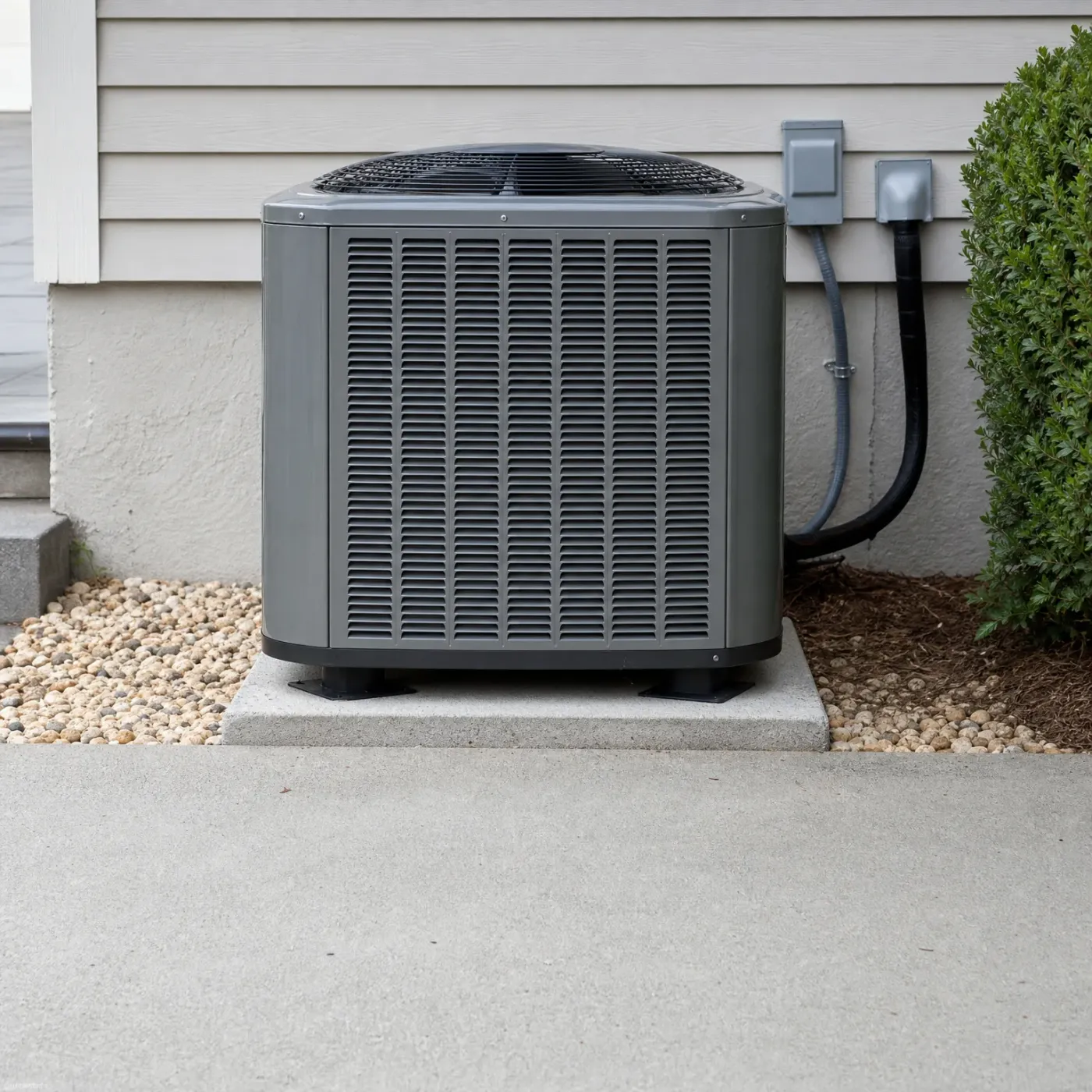
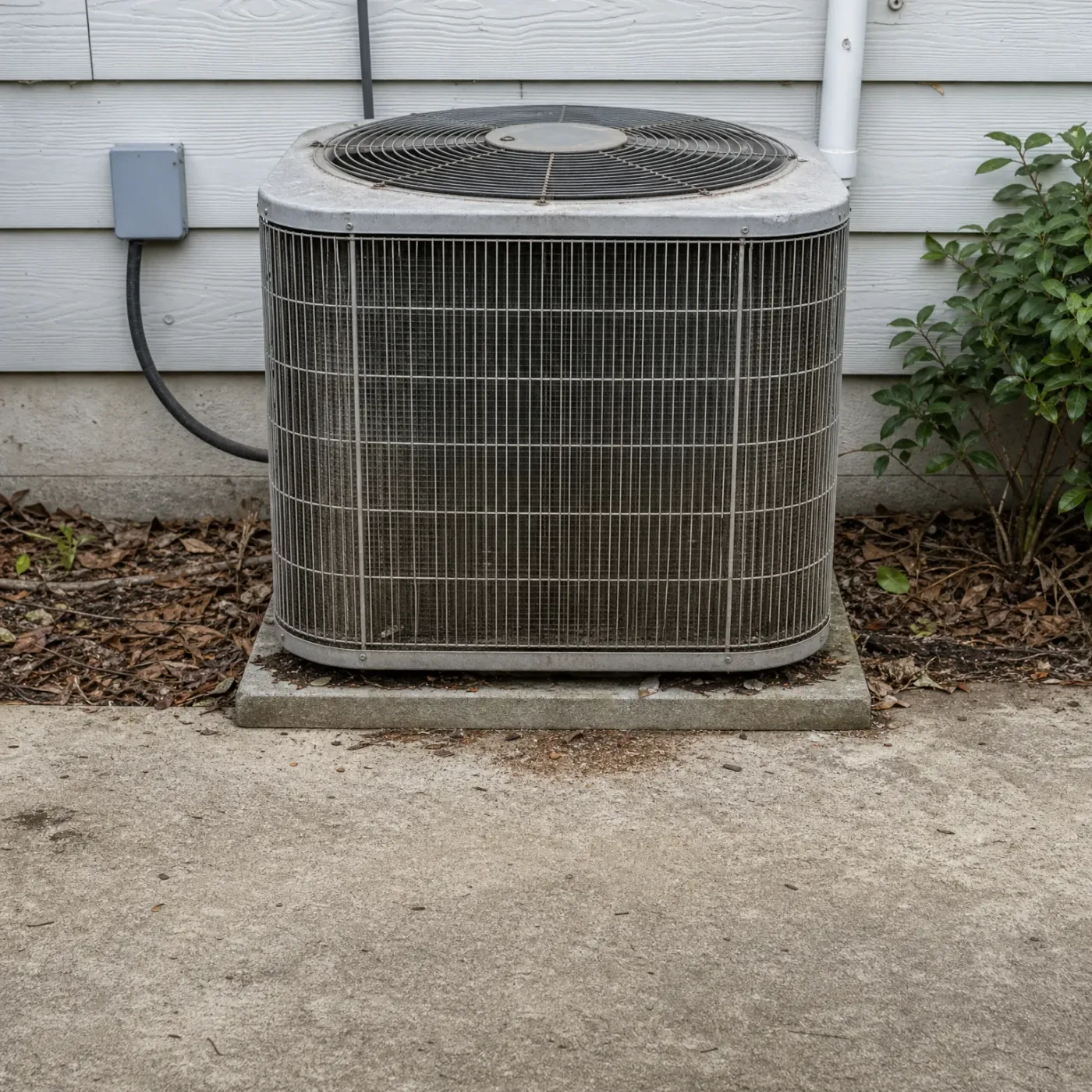
A noise that keeps going is doing something to the unit every hour it runs, and Franklin County summers give it plenty of hours to do it in. A loose part left alone tends to wear at whatever it's hitting against, and a compressor running with something broken inside it can fail outright. If the noise shows up alongside the air feeling less cold, or the unit cycling on and off more than it used to, that's the system straining to keep up while it's already hurt. You might notice the outdoor unit working longer to hold the same temperature, or a smell when it runs, or the sound changing pitch depending on the time of day. None of that means stop using it. It means the part causing the noise is getting worse on its own schedule, not yours, and the house stays hot and sticky a lot longer than anyone wants if the system goes down in July rather than getting looked at now.
Five months of cooling here gives a noise five months to get worse, not better. A unit that rattles in May is often grinding by August if nobody looks at it. The sooner it's checked, the less summer it has to do damage in.
NOAA nClimDiv 1991-2020
A part works loose and starts to vibrate against the cabinet.
The vibration turns into a rattle or a knock you can hear.
The loose part rubs or strikes something else as it moves.
Left running, the rubbing wears a groove or cracks the part.
A loud AC is easy to put off when everything still blows cold, but by the time you're reading this you already know the noise isn't going away on its own. Tracking down a contractor on top of that, calling a few, describing the bang or the squeal over and over, waiting to see who calls back, is its own kind of work, and it eats into the time the noise has to get worse. Franklin County summers run long, which means a lot of hours left for a loose part to keep hitting whatever it's hitting. Handing the search off now means you stop chasing quotes and start getting someone out to actually listen to the unit. The sooner that happens, the less chance this turns into a repair that costs more than the one you'd be facing today.

A thick summer here, with the dew point averaging 65°F through June, July and August, keeps the air conditioner running long stretches instead of cycling on and off. That steady runtime gives a loose part more hours to vibrate against the cabinet and more hours to wear wherever it's rubbing. At the vents, a muggy house also means the blower is moving air almost constantly, so a rattle in the ductwork or at a loose vent cover shows up sooner and more often than it would on a dry, mild day. You're likely to hear it most in the evening, when the unit has been running for hours straight.
NASA POWER T2MDEW
You probably noticed it from the kitchen or the yard before you thought to check the unit itself. A bang or clank when the compressor kicks on, a rattle that comes and goes with the fan, a squeal that rises as the unit runs longer. Inside, it might show up as a knock at the vents or a hum that changes pitch instead of staying level. None of that was there when the system was new. A noise like this left alone tends to get louder over weeks, not days, and by the time it's constant, whatever's loose or rubbing has usually been doing it a while. The house still cools. That's why it's easy to let it ride.
You hear a new rattle or squeal within the first few days, because you're home and listening for the system to run right. A contractor can often tighten a screw, true up a bent fan blade, or clear a stuck piece of debris before anything else is touched. The fix stays small because the cause never had time to spread to another part.
The same rattle, ignored through a Franklin County summer, keeps hitting the same spot hour after hour. A loose part wears a groove into whatever it's striking, and a compressor running with something broken inside it can fail outright instead of just sounding rough. What would have been a quick fix in June can turn into a bigger repair, or a replaced compressor, by August.

A noise from your outdoor unit has a cause, whether it's a loose screw, a bent fan blade, or something worse in the compressor. Catching it now, instead of in August, usually means a smaller job and less chance the unit quits on a hot day with the house full of people counting on it.
You don't have to figure out which part it is before you do anything about it. Instead of searching for a contractor near Washington, calling around, and explaining the rattle or bang to each one, you can get matched with a contractor who takes it from here. They'll reach out to look at your system and tell you what's actually loose or broken.


No fee to send it, and nothing to sign.
A system that's grinding or banging through another hot stretch isn't getting better on its own, and a contractor can tell you in one visit whether it's a loose screw or something worse. Sending the request means someone who works on these units looks at yours before the noise turns into a bigger repair.