AC making a loud noise in O'Fallon, MO

Step 1 of 3: Equipment

A loud noise from your AC usually means something inside the unit has come loose, worn out, or is rubbing where it shouldn't. A rattle points to a panel screw or debris in the outdoor unit. A squeal often means the blower motor bearing is going. A bang when the system starts or shuts off can mean a loose part on the compressor, or a duct flexing as air pressure changes. Buzzing is commonly electrical, a relay or a failing capacitor. After a long run of summer days with the system working hard, parts that were already worn get pushed past where they were holding on. The sound by itself tells you where to look, but not whether it is safe to keep running. Some of these noises mean the unit can limp along a while longer. Others mean it should be shut off until someone looks at it, because running it could turn a repair into a replacement.

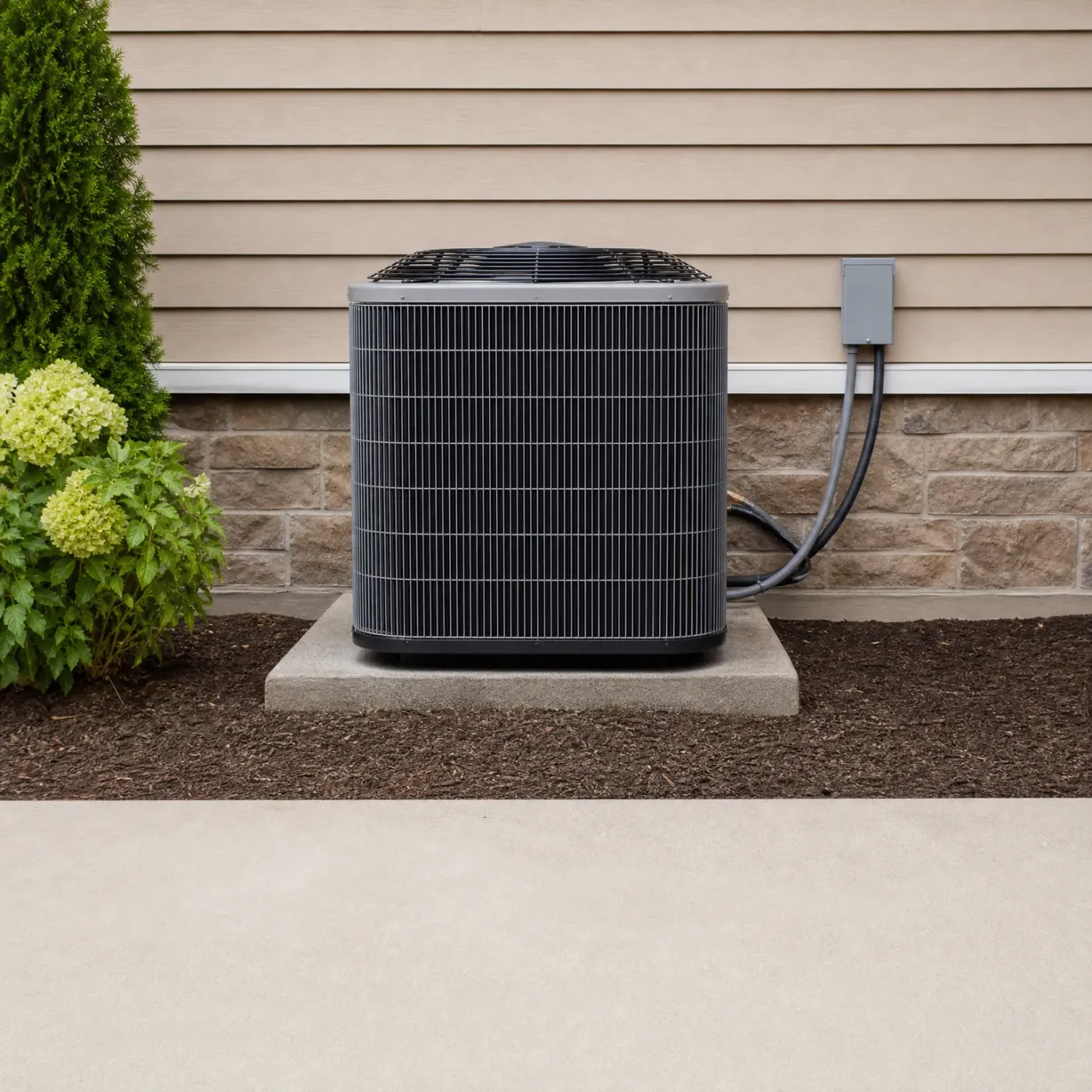
An outdoor air conditioner condenser unit on a concrete pad beside a house with beige horizontal siding and a stone-veneer base, with refrigerant lines running to a gray wall-mounted electrical box, surrounded by dark mulch, a flowering shrub and an evergreen on the left.

Running quiet

A healthy AC settles into a steady hum once it kicks on. Air moves through the vents, the outdoor fan turns, and nothing clangs or grinds. If yours sounds like this, the noise you heard may have been a one-time thing, like a branch or a bit of mulch hitting the unit.

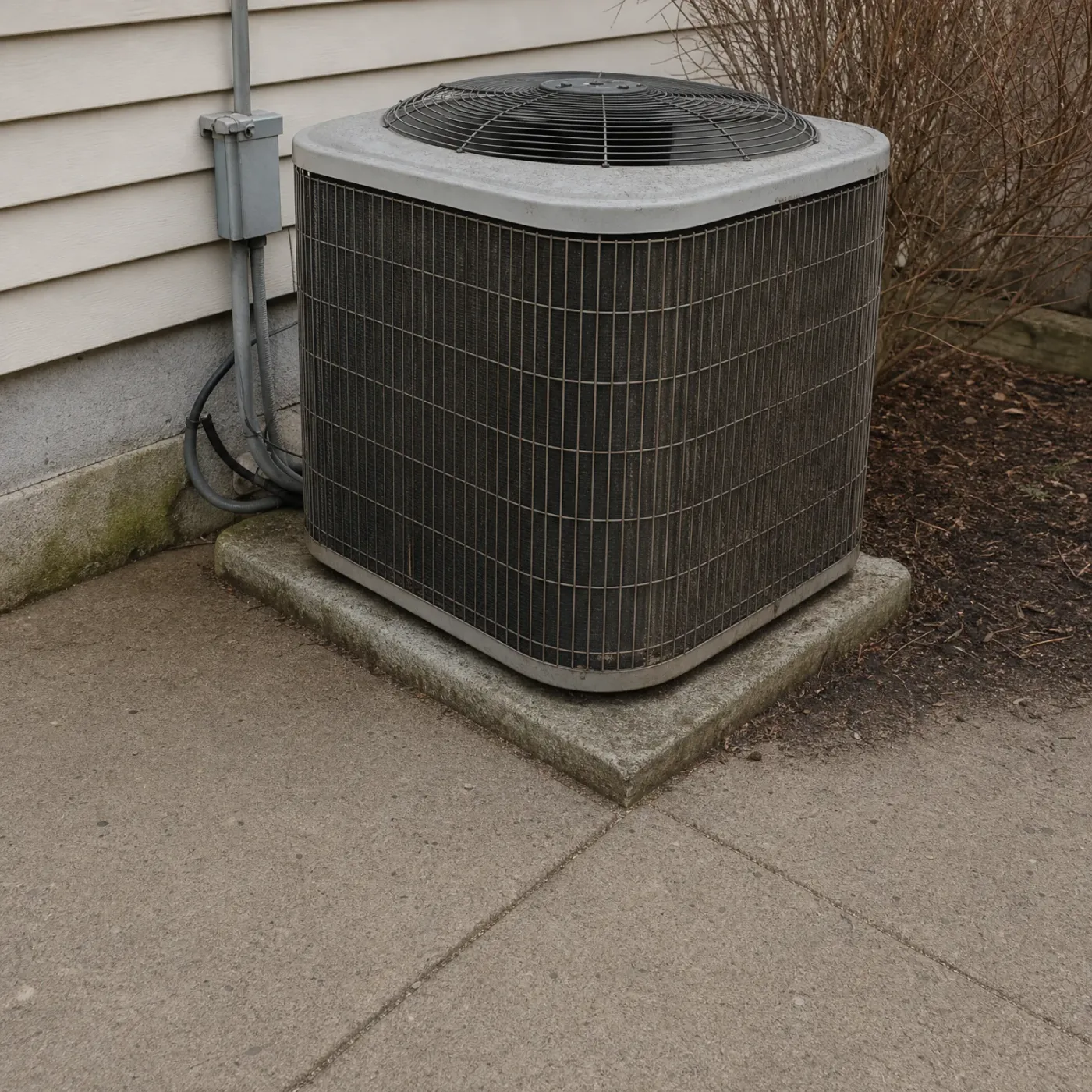
An outdoor air conditioning condenser unit on a concrete pad beside a house with light vinyl siding, an electrical disconnect box and conduit on the wall, bare shrubs and mulch to the right, and a concrete walkway in the foreground.

Noise getting worse

A noise that's louder today than yesterday, or that starts up every time the unit runs, is a part failing in real time. A loose panel can be tightened. A bad motor bearing or a compressor on its way out will only get louder and more expensive to ignore.

A woman with long blonde hair in a light blue shirt leans back on a beige sofa with her eyes closed, in a softly lit living room with cushions and a blurred plant and shelf in the background.
A woman with long dark hair in a gray knit sweater sits on a gray sofa with a cushion, looking toward a window in a living room with framed pictures and a lamp in the background.
A woman with long dark hair in a light grey knit sweater sits on a sofa indoors, looking to her right, with a framed landscape picture, a potted plant and a curtained window behind her.
A woman with long dark hair leans back against a gray sofa with her eyes closed, in a living room with a curtained window, a potted plant, and a dark screen in the background.

Every noise your AC makes is pointing at a specific part, and knowing which one narrows down what a contractor needs to check first. The outdoor fan motor runs on bearings, and like any bearing, they wear down over years of spinning. Once they start going, the sound gets worse, not better, until the motor locks up. Inside the compressor, there are moving parts that can crack or break loose, and a loud clank when the unit kicks on or shuts off is usually one of them failing. Refrigerant lines are sealed, so any hiss you hear along them means pressure is escaping somewhere it shouldn't. The blower wheel inside your air handler spins inside a metal housing, and if its bearing or mount gives out, it starts scraping metal on metal. A capacitor gives the compressor and fan motor the jolt they need to start turning, and when it's failing, you get a buzz right at startup instead of a clean spin-up. Even something as simple as a twig caught in the fan blade shows up as a knock that matches the blade's speed.

What each noise is telling you

  • A grinding or squealing outdoor fan motor is wearing out its bearings and will keep getting louder until it seizes.
  • A loud clank at startup or shutdown often means the compressor itself has a bad internal part, which is one of the costlier repairs on the unit.
  • A high-pitched hiss along the line set or indoor coil can mean refrigerant escaping from a leak, not just airflow.
  • A metal-on-metal screech from the indoor unit points to the blower wheel rubbing against its housing after a bearing or mount fails.
  • A buzzing sound right when the compressor or fan tries to start usually traces back to a failing capacitor or a loose electrical connection.
  • A rhythmic knock that speeds up with the fan blade means something, often a stick or ice chunk, is hitting it on every rotation.
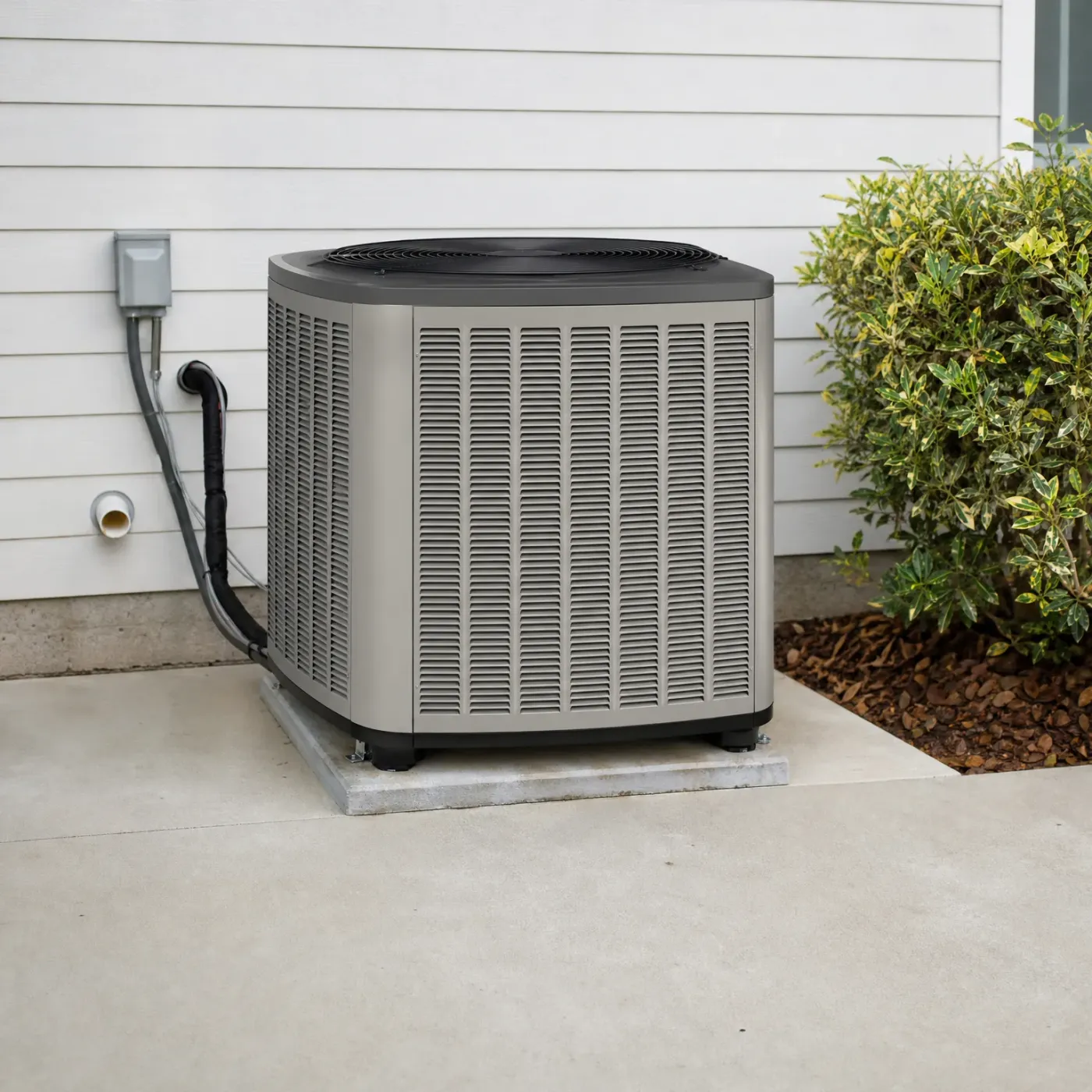
An outdoor air conditioning condenser unit on a concrete pad beside a house with white horizontal lap siding, with an electrical disconnect box and insulated refrigerant line on the wall and a shrub over mulch to the right.
Air moves through the lines without a sound out of place, and the fan outside turns in a steady, even rhythm.
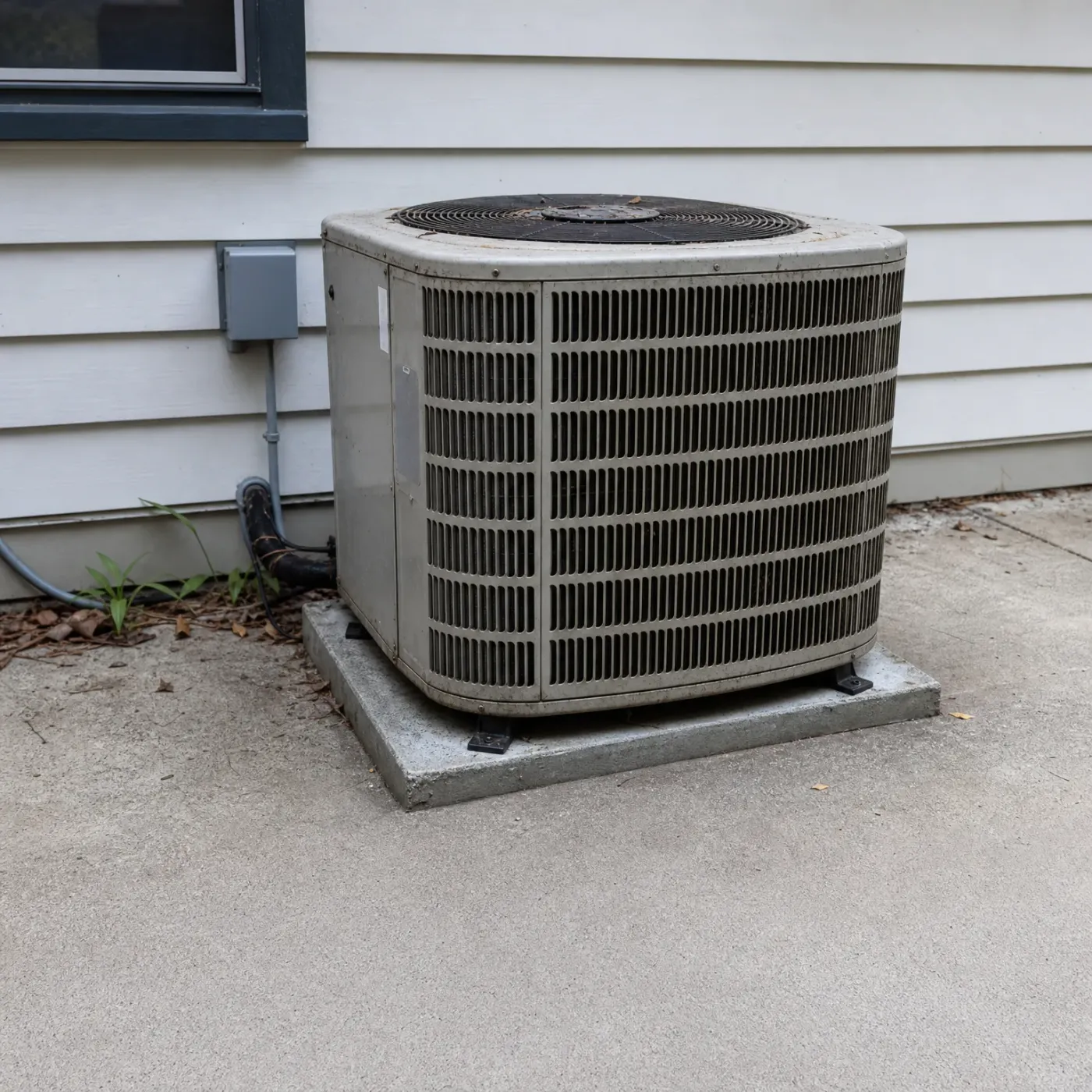
An outdoor air conditioner condenser unit on a concrete pad beside a house with light horizontal lap siding, with an electrical disconnect box and conduit on the wall behind it.
Loose panels and corroded lines like this let a unit rattle and buzz, and the noise gets worse with age.
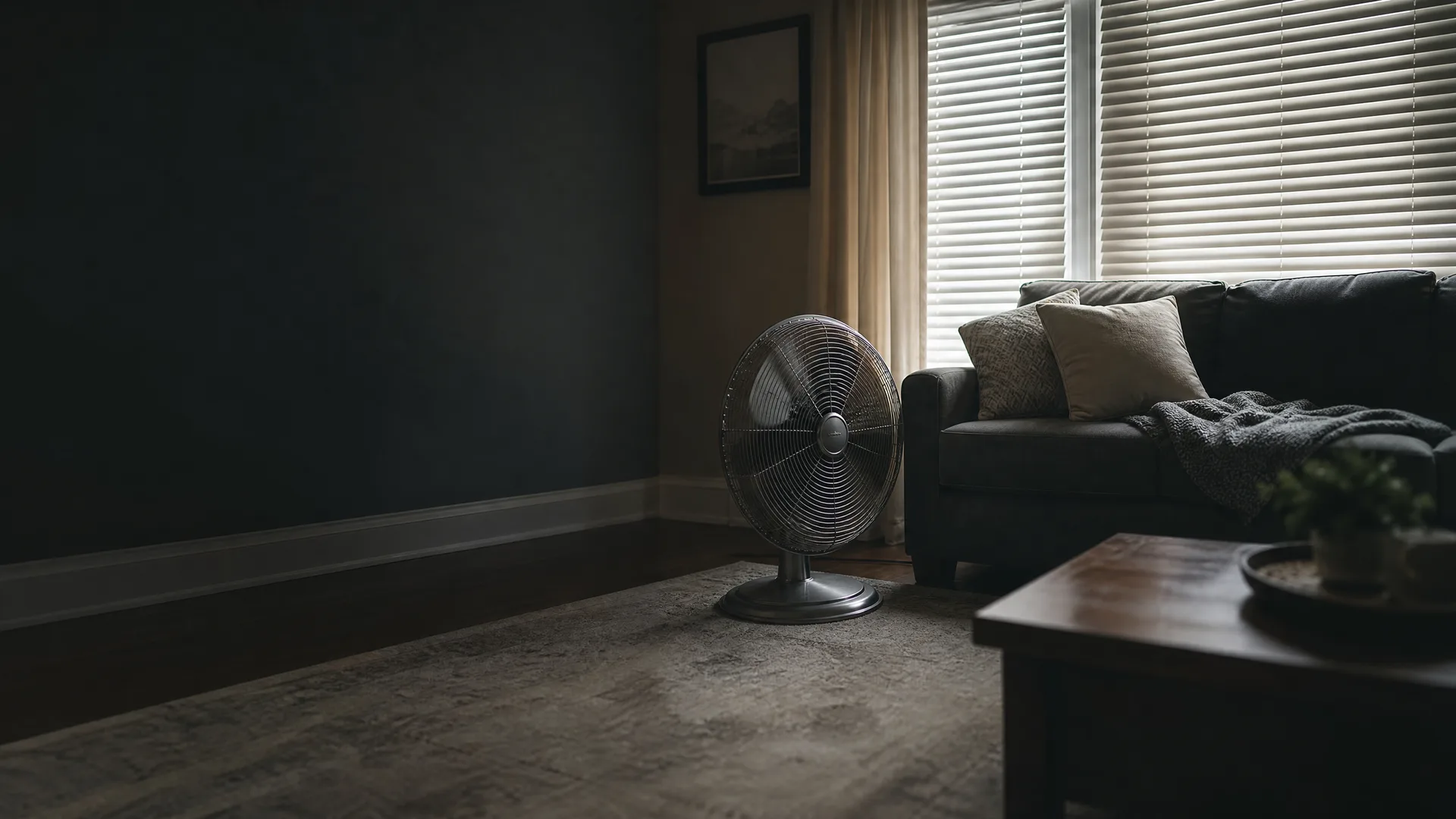
A dimly lit living room with a table fan on a patterned rug, a dark sofa with cushions and a blanket beside blinded windows, a framed picture on the wall, and a wooden coffee table with a potted plant in the foreground.

By mid-afternoon the blinds are down against the sun and you've got the floor fan going next to the couch, pointed right at where everyone sits. The AC cycles on and that's when you hear it again, a grinding sound from outside that wasn't there last week. You mute the TV to listen. It keeps going the whole time the unit runs, not just at startup. Outside, St. Charles County is deep into another sticky July, and the fan blowing on the couch is doing work the AC should be doing alone. You picture the outdoor unit in the side yard, baking, making that sound every time it kicks on, and you stop telling yourself it'll quiet down on its own.

Get matched with an air conditioner pro in St. Charles County

A noise like that doesn't fix itself, and a compressor or blower motor running damaged for another week of St. Charles County heat only wears faster. Summers here stretch long and muggy, which means this unit runs for hours most afternoons between April and October, and every one of those cycles puts more strain on whatever's already loose or grinding. Letting it ride until fall isn't free either. A worn bearing or a failing motor mount tends to take other parts down with it the longer it runs. You don't need to figure out which part it is before you do anything about it. Someone who works on these units every day can listen to it, open the cabinet, and tell you in minutes what a guess from the couch can't. Handing this off now means you stop being the one who has to figure out whether it's safe to keep running or something to shut off and wait on.

Why the noise gets worse fast

An AC runs for hours most afternoons once the heat sets in, and a loose or worn part doesn't get a break to settle down. The outdoor fan turns at the same speed every cycle, so a bearing that's starting to wear rubs the same way thousands of times a day. A rattle from a loose screw can shake itself looser. A squeal from a dry bearing gets drier. None of this depends on how hot it gets outside. It depends on how many hours the unit runs, and a St. Charles County summer gives it plenty of those, cycling on and off most of the day from April into October.

What a working unit sounds like

The outdoor fan should spin freely by hand when the power is off, with no catch or wobble. Refrigerant lines run without touching the cabinet or each other, since metal on metal is where a lot of buzzing starts. Panel screws hold tight enough that the cabinet doesn't flex when the compressor kicks on. None of this is hidden. A flashlight and a look at the outdoor unit shows loose panels, a fan blade that's not turning true, or lines resting against sheet metal. If something looks off, that's usually where the sound is coming from.

An outdoor air conditioning condenser unit on a concrete pad beside a house with white horizontal vinyl siding, with a gray electrical disconnect box and refrigerant lines on the wall behind it.
Before you get your air conditioner repair
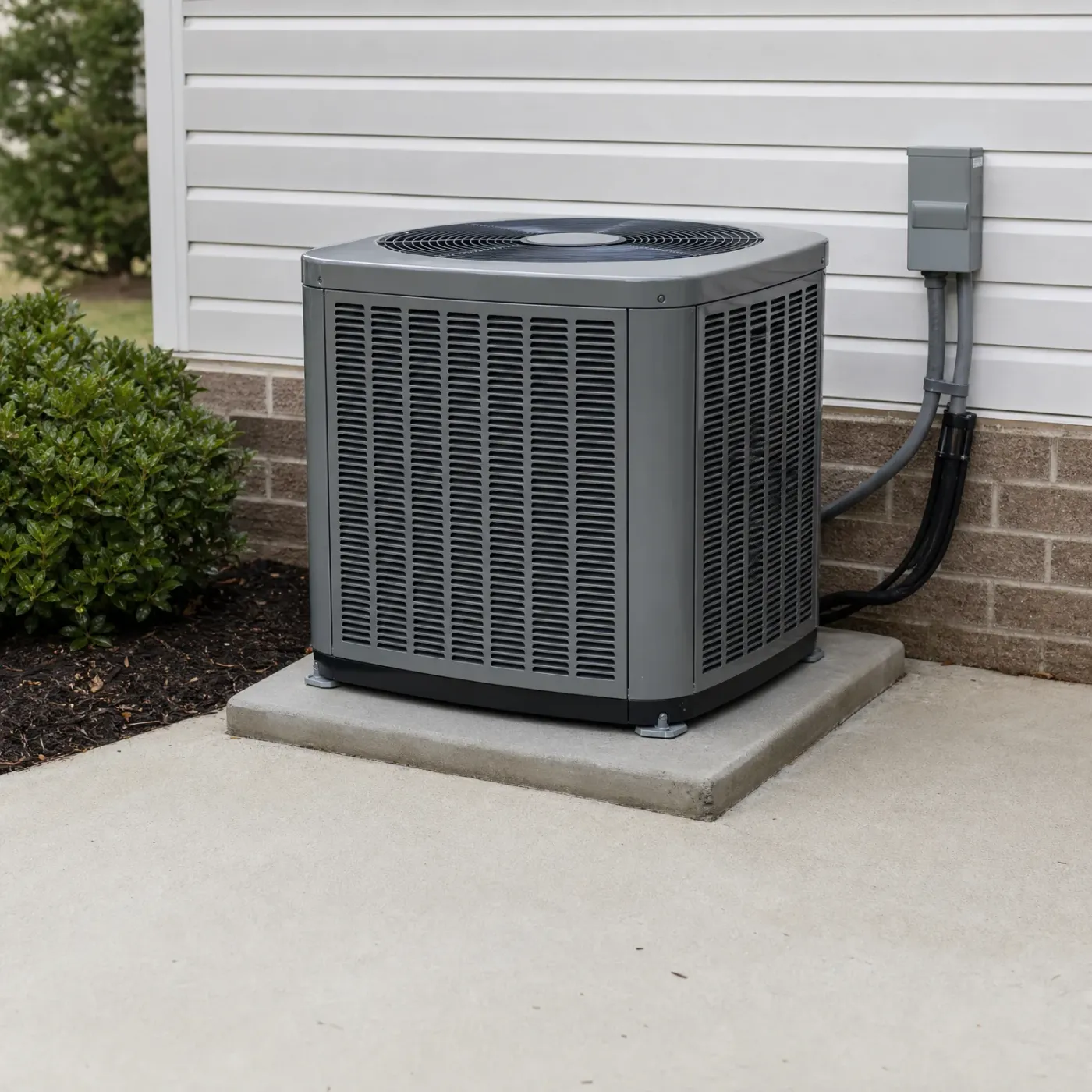
A gray outdoor air conditioner condenser unit on a concrete pad beside a house with white horizontal siding and a brick foundation, with a wall-mounted disconnect box and conduit, and a green shrub with mulch at left.
After you get your air conditioner repair
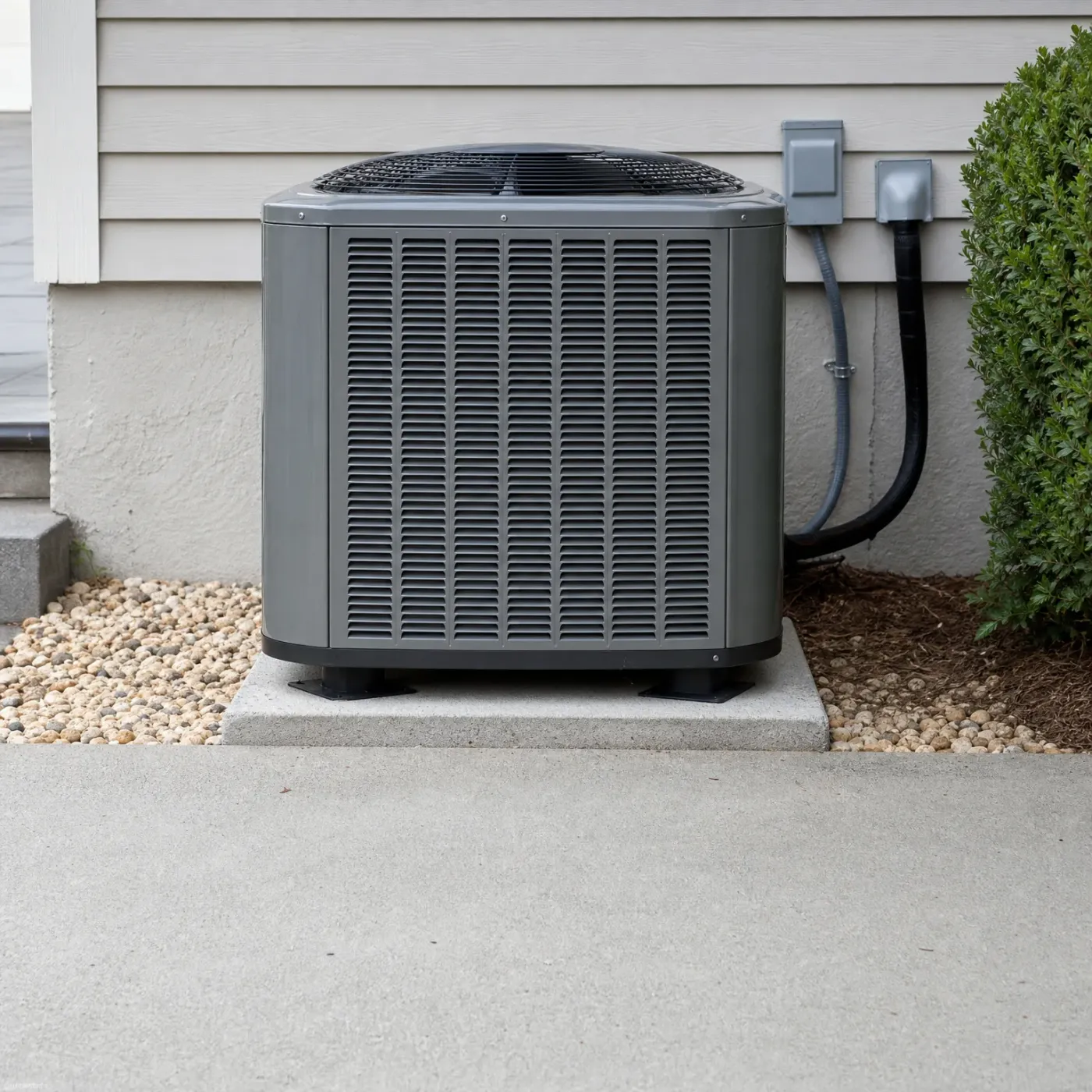
A gray outdoor air conditioner condenser unit on a concrete pad beside a house with horizontal siding and a stucco foundation, with a disconnect box and conduit on the wall, decorative gravel, mulch, and a shrub nearby.

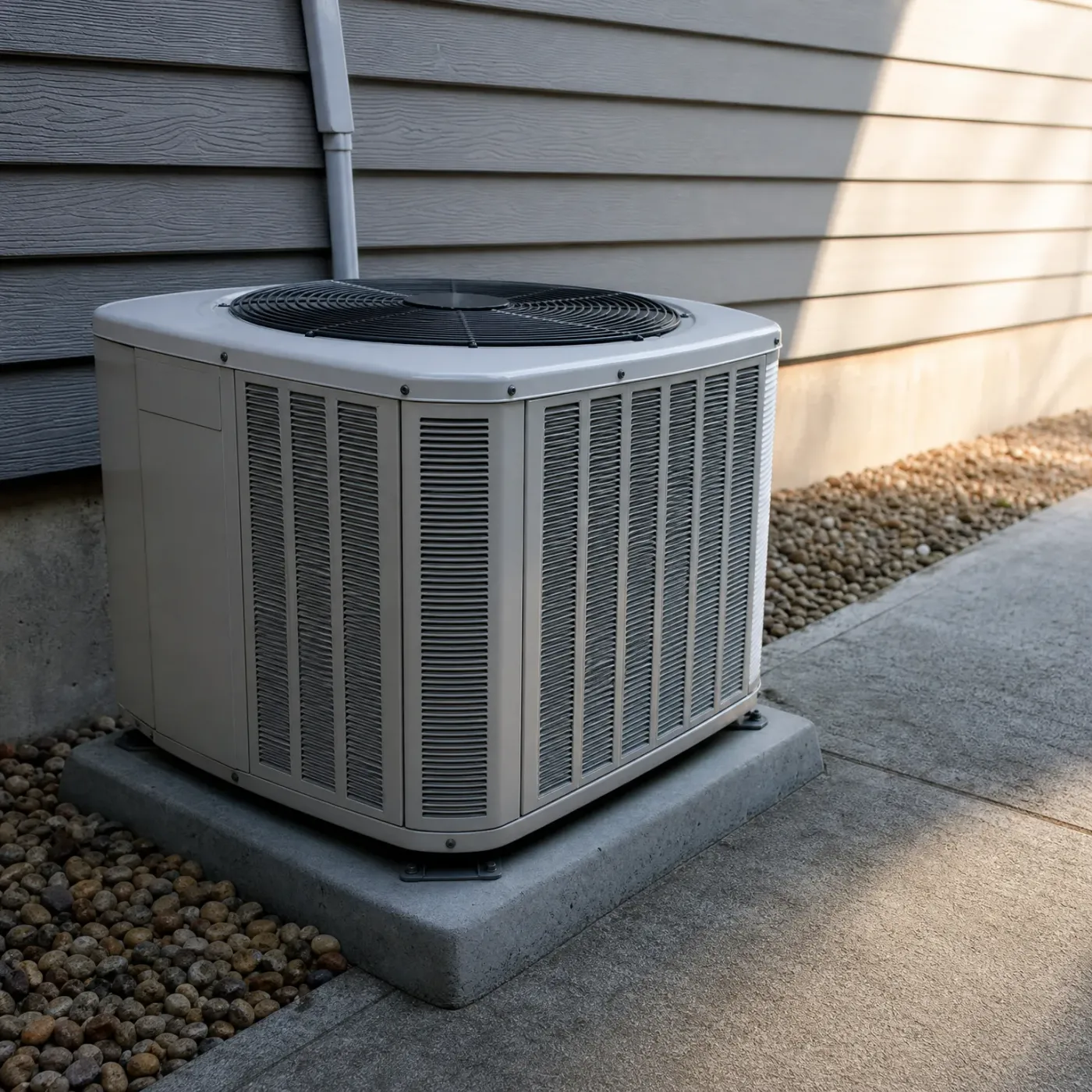
Clear coil, clean pad

The gravel bed is clear and the coil grilles are open, so air pulls through evenly. The disconnect box sits mounted and untouched on the wall. A unit kept like this runs on a steady hum, nothing more.

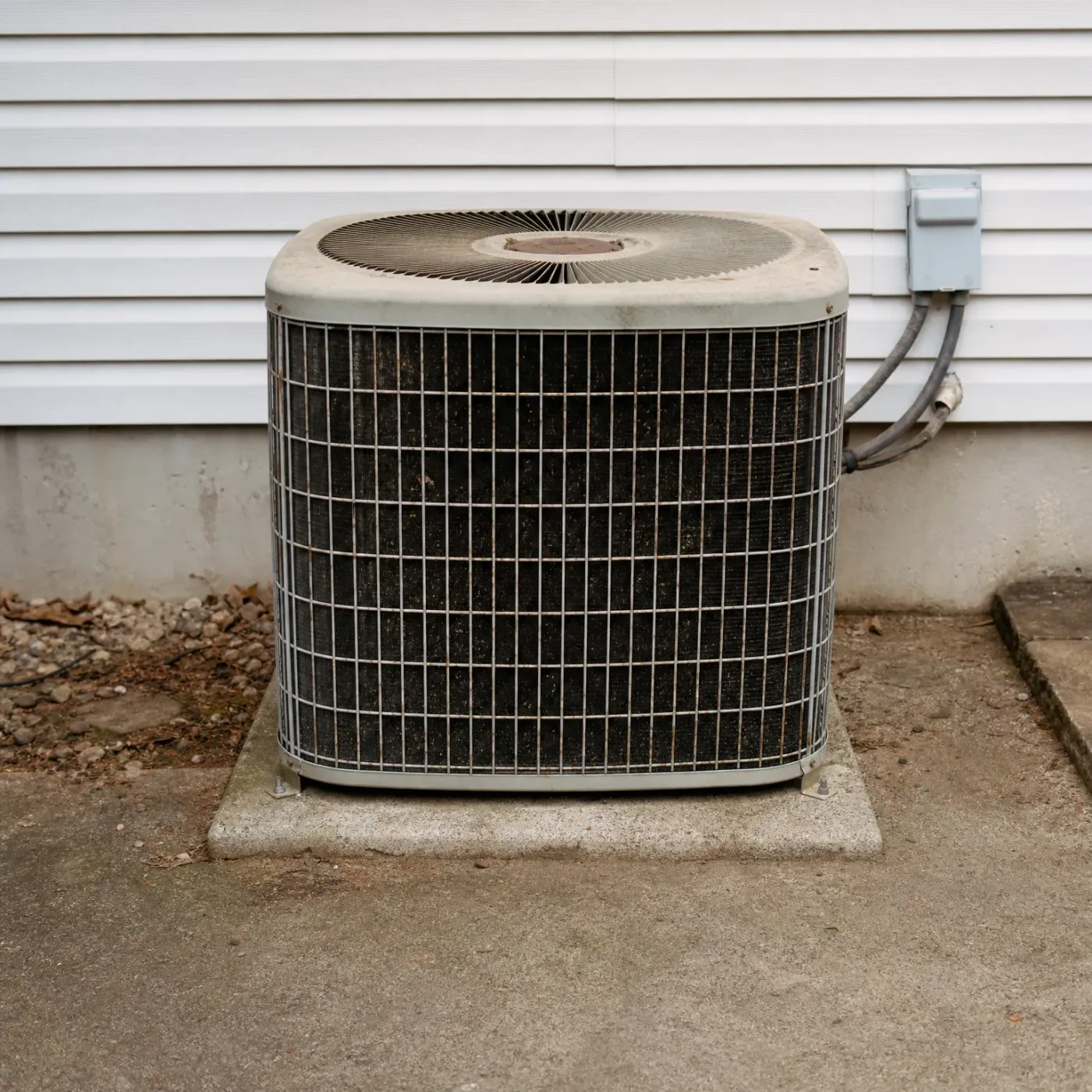
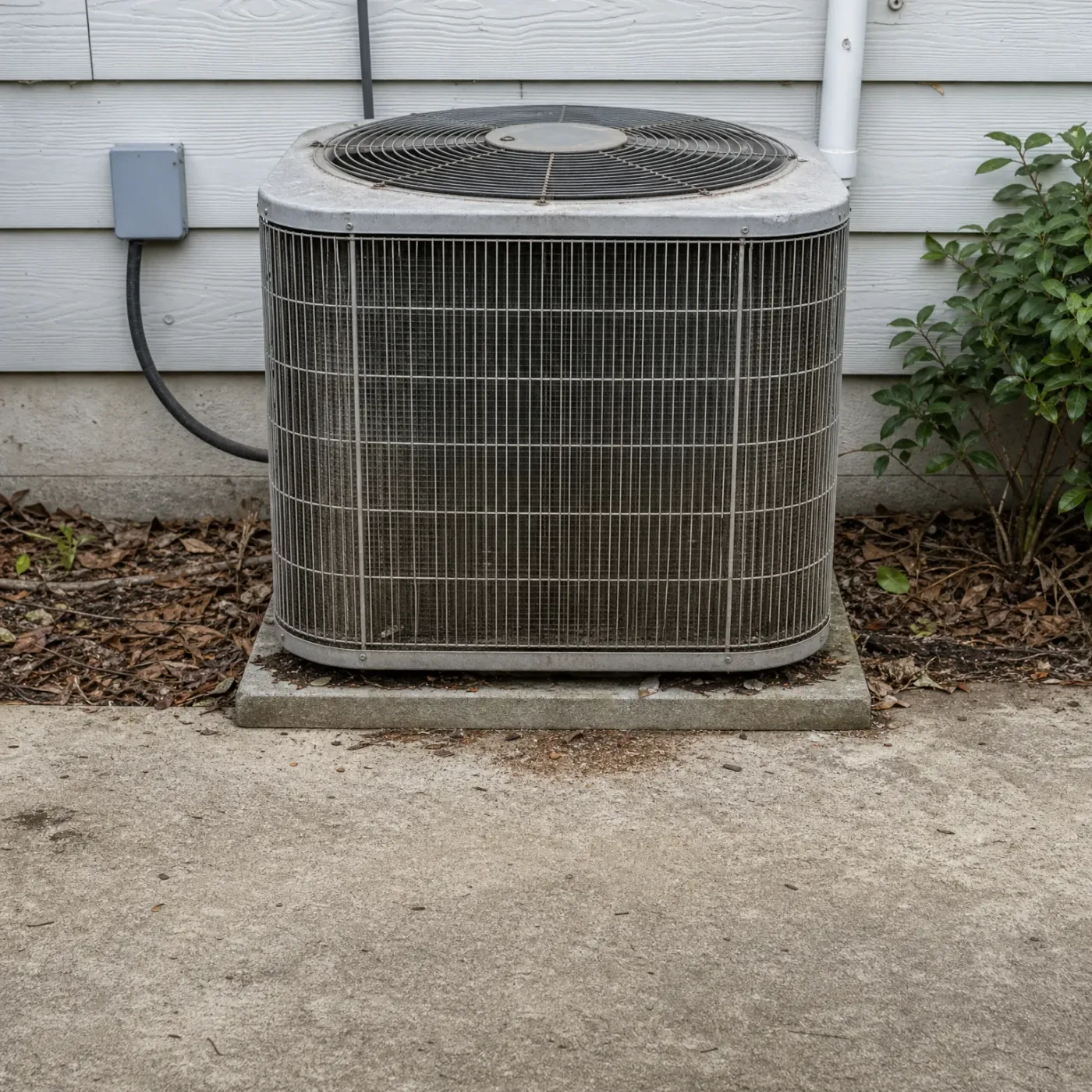
An outdoor air conditioning condenser unit on a concrete pad beside a house with horizontal lap siding, with an electrical disconnect box and conduit on the wall, mulch and a green shrub to the right, and a concrete walkway in the foreground.

Coil caked with debris

Dirt and debris have built up across the coil grilles, and the conduit running to the disconnect box is exposed to the weather. A coil this blocked makes the fan work harder, and that strain is often where the noise starts.

Cooling runs May through September

Five months a year your AC is what keeps the house livable, so a noise that shows up in June doesn't get a break before October. Whatever's loose or wearing on the first hot day is still running on the last one.

NOAA nClimDiv 1991-2020

An older woman with short gray hair in a cream cable-knit turtleneck sweater smiles while looking to the side in a wooden kitchen, with a round loaf of bread on a board in the foreground and a lit candle by a dark window.
A woman with dark hair in a bun sits wrapped in a chunky knit blanket on a couch with a child resting his head on her shoulder, eyes closed, beside a lit lamp and bookshelf indoors.
A woman stands in the open front doorway of a single-story house with stone and wood siding while a man in a dark polo shirt and cap walks toward it along a concrete path.

A loud AC is telling you something specific

A rattle, a squeal, a grinding sound, a bang. Each one points to a different part, and the longer it runs the more that part wears. None of them get quieter on their own, and with St. Charles County heat lasting into October, the unit doesn't get a stretch of mild weather to cover for a part that's failing.

You don't have to figure out which part it is before you do anything. Send the details through and a contractor who knows these units will take it from there, matched to what you're hearing and what your system needs. Once that's sent, the noise stops being something you have to diagnose yourself.

A wooden table holding a stone vase with a bare branch, two stacked books and a small dark bowl, beside a window with green foliage outside and a sofa in the dim background.
A beige outdoor air conditioner condenser unit with a top fan grille sits on a concrete pad beside a house with horizontal lap siding, bordered by gravel and a concrete walkway.

Find an air conditioner repair pro in St. Charles County

I'm done searching

Send the request today and stop worrying about who to call.

You only hire the pro if you want to.