
AC leaking water inside in Raymore, MO
Why is my AC leaking water inside my house?
You walked in and found water pooling near the vents or dripping from the ceiling below your attic unit, and your first thought is whether this is serious or something you can wait out. With how long the AC runs here, from April through October some years, a water leak inside the house isn't a small thing to ignore.
Your condensate drain line is clogged or your drain pan has rusted through
Your AC pulls moisture out of the air all day long, and that water has to go somewhere. It drips into a pan and runs out through a drain line to the outside. When that line clogs with algae or dirt, the water backs up and overflows the pan, and if the pan itself has rusted out, water goes straight through it. Raymore summers run long and humid, which means your unit is pulling moisture for months at a stretch, giving algae and sediment plenty of time to build up in that line. A clogged line is a straightforward fix. A rusted pan means it needs replacing before it leaks again.
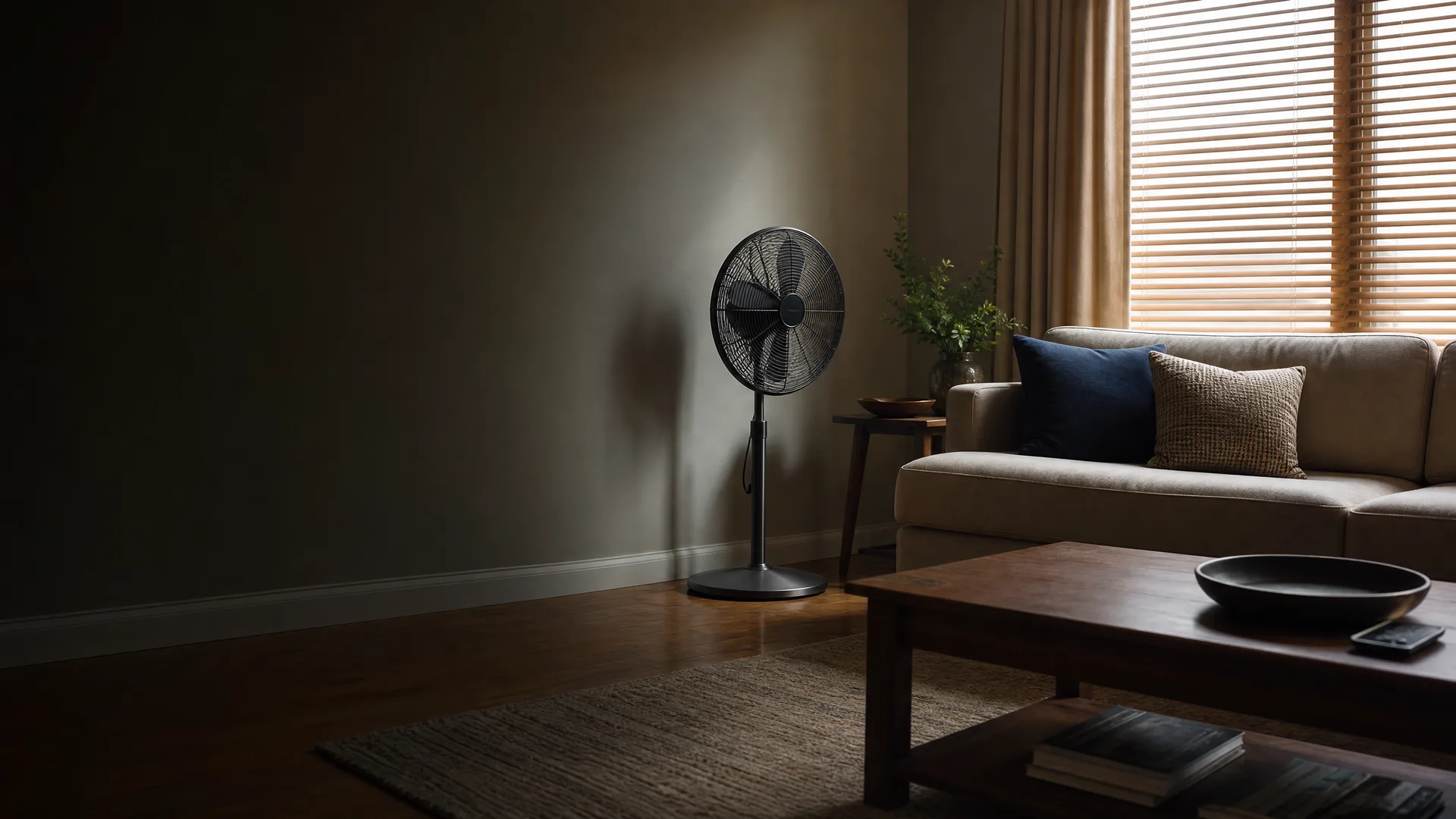
You pull the blinds shut against the afternoon sun and switch on the floor fan beside the couch, the way you have most July afternoons this summer. The AC has been running since late morning, same as always, and you don't think much of it until you notice the carpet near the vent feels damp under your foot. You press down and water rises up around your toes. The fan hum and the AC cycling are the only sounds in the room. You look up at the ceiling, half expecting a stain, and then back down at the wet patch spreading slowly across the carpet.
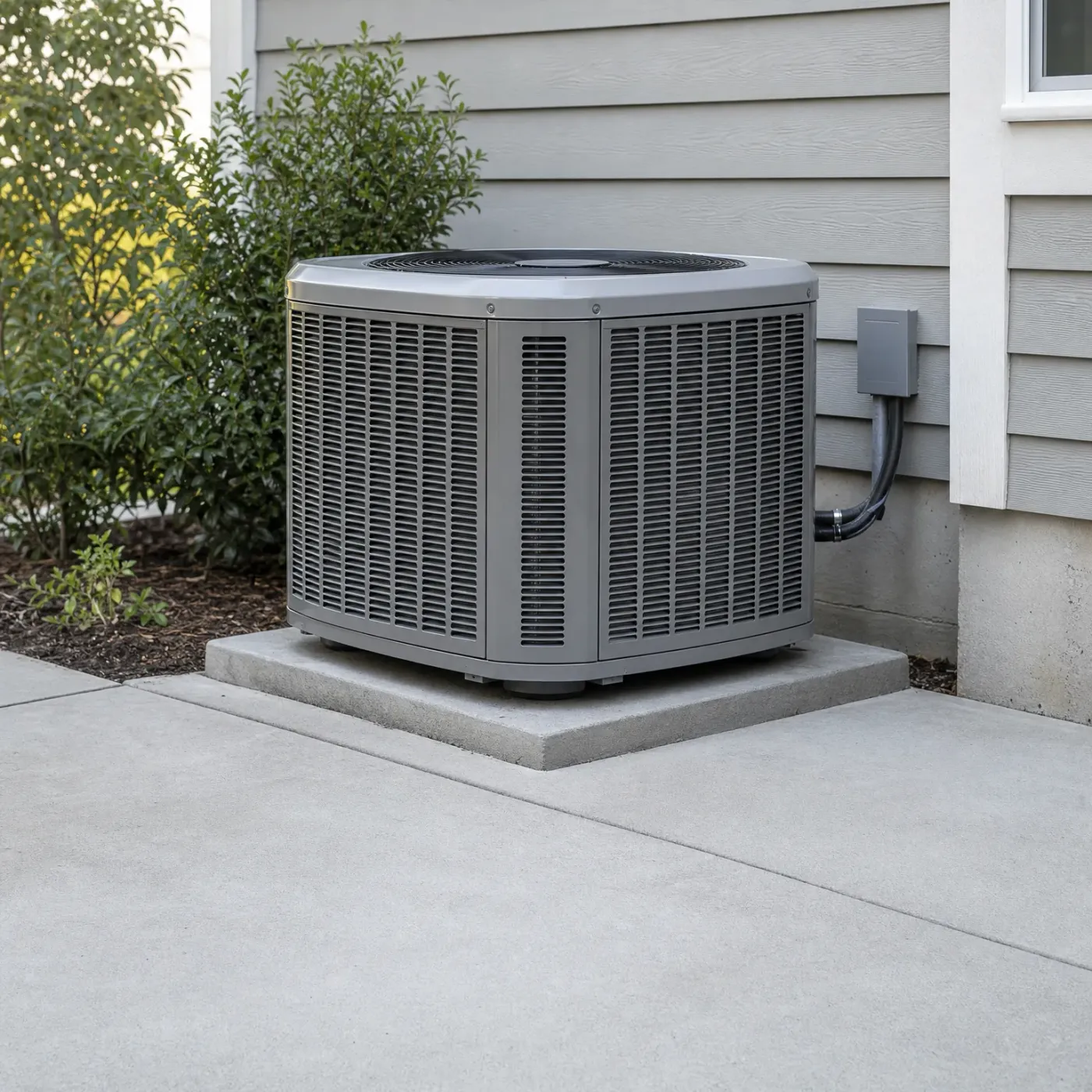
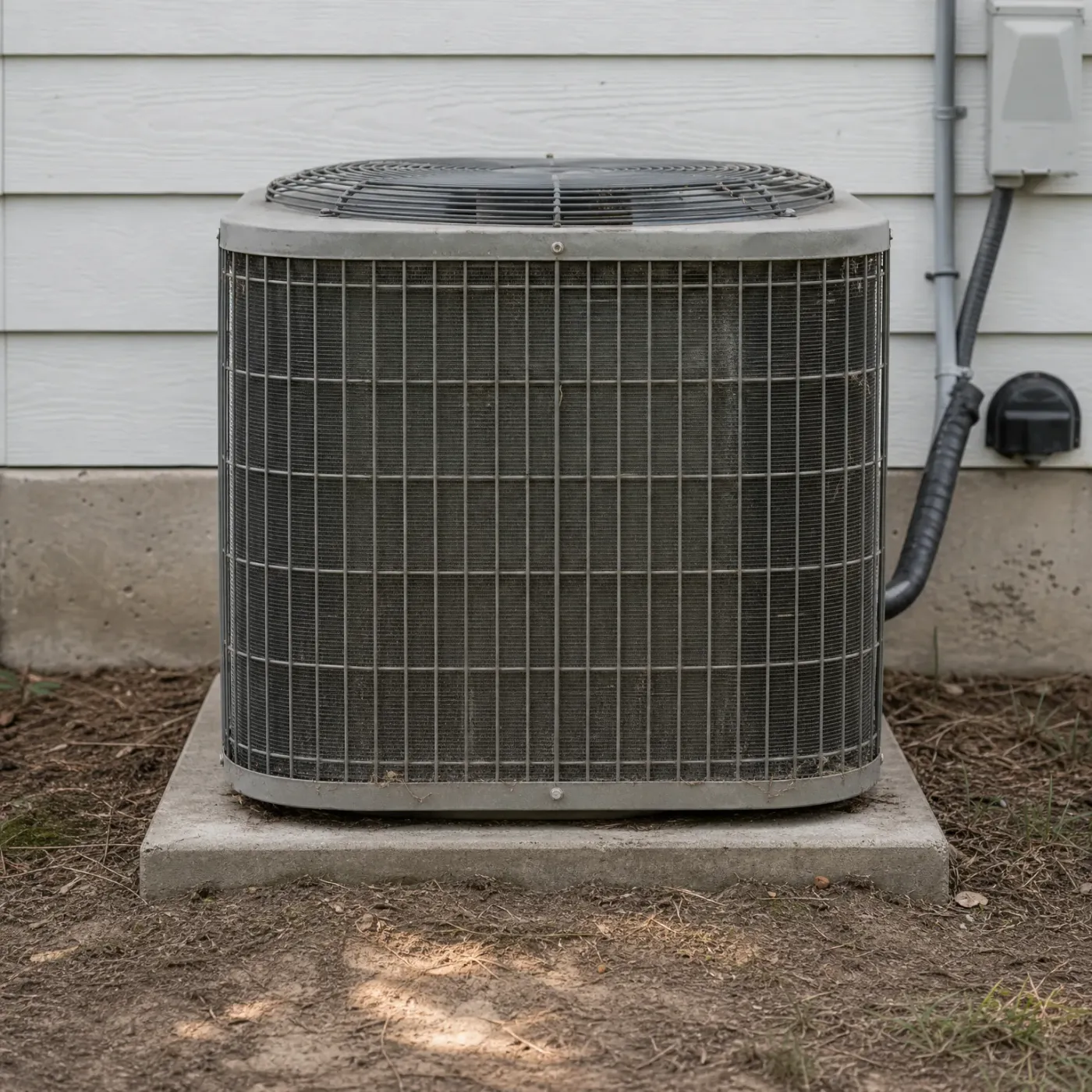

Warm house air crosses the cold evaporator coil and sheds moisture.
Condensation drips off the coil into the drain pan below it.
The pan funnels water into a PVC drain line and outside.
A clogged line or cracked pan sends that water indoors instead.
Shut It Off or Call Someone
Wait and watch
- If the water is just a damp spot you caught early, shutting the system off stops the dripping while you figure out the cause.
- A pan that's barely overflowing can sometimes be cleared with a wet vac on the drain line, if you can reach it.
- You risk ceiling or wall damage every hour the unit keeps running with water backing up above it.
- Humidity climbs fast once the AC is off, and in a Cass County summer that can mean a muggy house within a day or two.
- Without knowing whether the clog is in the drain line or the pan itself has cracked, you could be fixing the wrong thing.
- A pan that keeps filling usually means the real problem is still there, so the leak comes back.
Get it looked at
- A contractor who works on this equipment all summer can tell within minutes whether it's the drain line, the pan, or the coil itself.
- Finding it means one call instead of searching around, phoning several companies, and repeating the same description of the leak to each one.
- A licensed local contractor can clear a clogged line or replace a cracked pan the same visit, instead of you guessing at a fix.
- Catching a cracked pan or failing coil early can keep a small leak from turning into ceiling or drywall damage.
- You get one contractor assigned to your situation rather than a handful of companies calling you back at once.
- Someone who sees this problem every season in homes around Raymore knows which part usually fails first.




Skip calling around
A leak like this does not wait for a convenient week. Water sitting near your vents or staining the ceiling under an attic unit can spread to drywall and insulation the longer it sits, and with your AC running most days through a Raymore summer, the drain line or pan causing it is not going to clear itself. Finding someone to look at it usually means searching around, calling a few places, explaining the same problem three times, then sitting on quotes trying to guess who actually knows what they're doing. This page skips that. One request goes to a licensed contractor working in Raymore and Cass County, someone who deals with clogged drain lines and cracked pans on this kind of equipment all summer and knows what to check first. No list of companies calling you back at once, just the one who can actually get to your attic unit and stop the water before it does more damage to your ceiling.
How the Drain System Actually Fails
- The drain line runs from the pan to a termination point outside, usually a PVC pipe near the condenser or foundation.
- Algae and dirt build a film inside that line over a season of steady use, narrowing it until water backs up.
- A float switch on the pan is built to shut the system off the moment water rises past a safe level.
- Attic units sit higher than the living space below, so even a small overflow finds its way through the ceiling.
- The pan itself is plastic or metal, and years of standing water and rust can crack or pit it from the inside.
- A secondary drain pan under an attic unit is meant to catch an overflow before it reaches the drywall at all.
The condensate drain is a simple setup until something blocks it. Water sheds off the coil, lands in the pan, and should leave through the PVC line without you ever seeing it. Over a season of steady running, algae and fine dirt from the coil build up along the inside of that pipe. It doesn't happen all at once. The film thickens week by week until the opening left for water gets too narrow to keep up, and the pan starts filling faster than it drains. Some systems have a float switch sitting right in the pan for this reason. It senses the rising water and cuts power to the unit before the pan tops out, which is why your AC shutting off on its own during a humid stretch is often the system protecting itself rather than failing outright. Where the unit sits in your house matters too. An attic unit has nowhere for overflow to go but down, through the ceiling, so a leak that would be a minor puddle on a basement unit becomes a stain on your drywall instead. The pan underneath it, whether plastic or metal, isn't immune to time either. Standing water and the rust that comes with it can wear a crack or a pit into the pan from the inside, long before anyone notices a drip. Some attic installations include a second pan underneath the first specifically to catch water before it reaches the ceiling, but that only works if the drain beneath it is clear too.
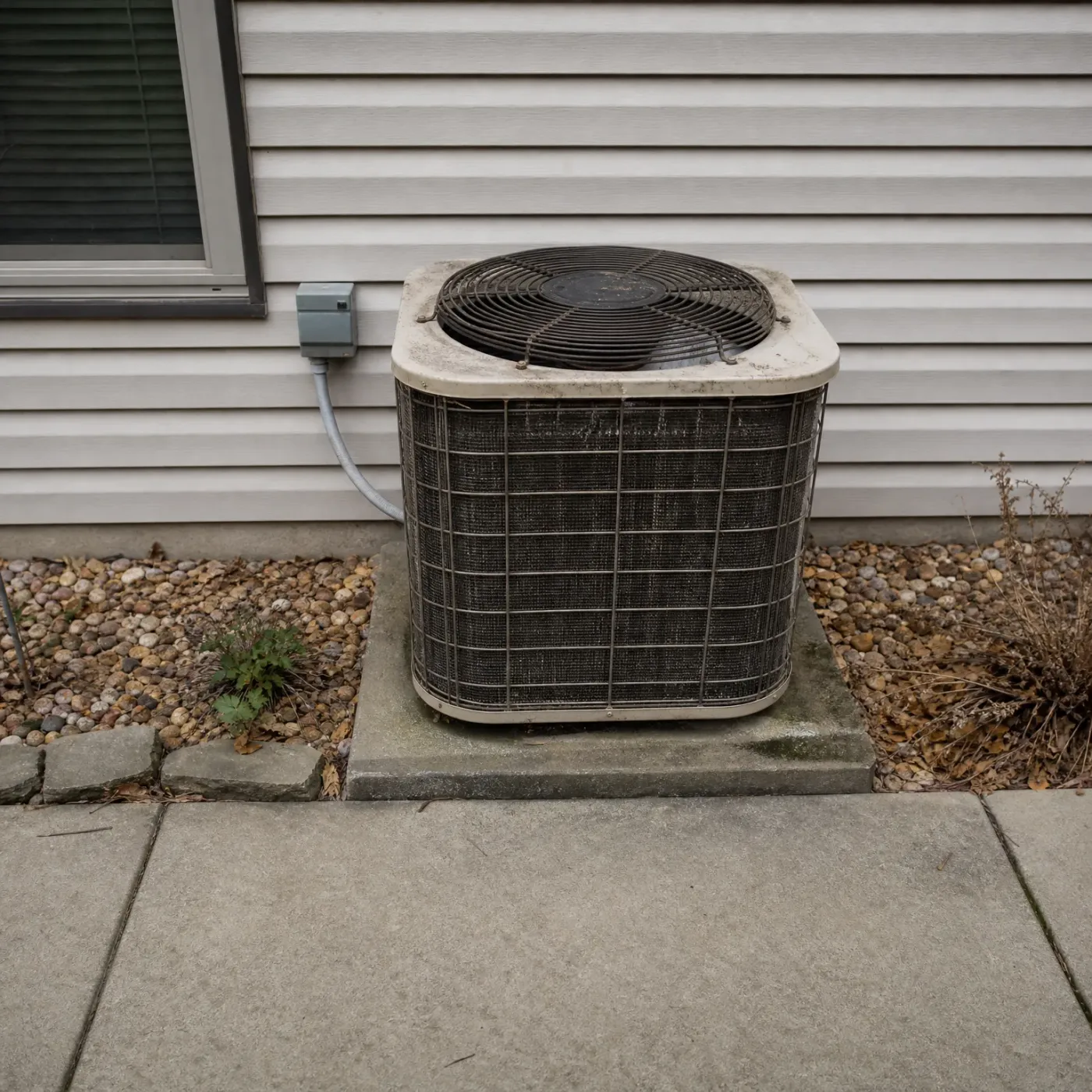
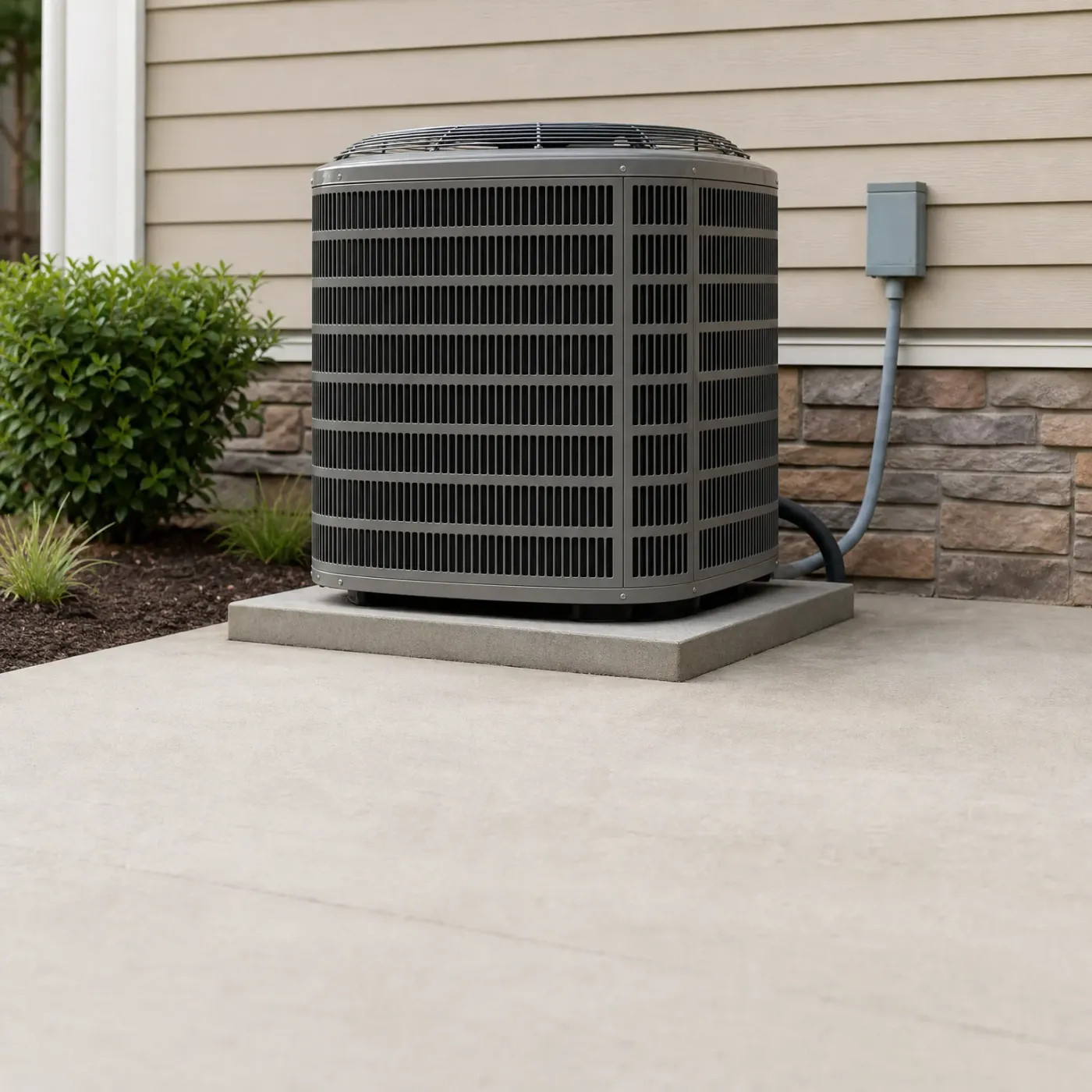
Cooling runs May through September
Run your AC from May through September and that drain line is working close to five months straight without a break. Whatever's narrowing it, algae, dirt, a cracked pan, has all that time to turn a slow drip into standing water.
NOAA nClimDiv 1991-2020
Water showing up near your vents or on the ceiling under your attic unit almost always traces back to the same drain line, and once it's clear and the pan is sound, the leaking stops. That's a job for someone who sees this exact setup, attic units, long Raymore summers, clogged lines, every season, not a general handyman guessing at it. A local contractor who works on these systems all year knows which models in this area clog early and where the float switch tends to fail, so the diagnosis goes faster and the fix holds. You're matched with one licensed contractor for your area, so you're not fielding calls from three different companies or explaining the same ceiling stain twice. You already know what you walked in on. Now you know why it happened and what it takes to stop it from happening again.
Describe it once
The pro who reaches out is licensed in Missouri.
You're not committing to anything by asking.