Get matched with a pro who fixes air conditioners in Jackson County.
Water showing up around your air conditioner isn't something to leave alone. It usually means the drain line is clogged, the drain pan has rusted through, or the coil is icing up and melting onto the floor when it shuts off. With summers in Kansas City running long and muggy, that system works hard for months at a time, and a stopped-up drain line can back up fast.
Left alone, that water doesn't stay in one place. It can soak into a subfloor, stain a ceiling if the unit is in an attic, or sit against drywall long enough to warp it. None of that gets better by waiting it out.
This isn't something to fix by guesswork. A clogged line, a cracked pan and a frozen coil all show up as water on the floor, but they don't get fixed the same way, and the wrong fix means the water comes back. What this calls for is someone who can look at your system, in your house, and tell you which one it is.
That's what happens when you send in the form on this page. You're matched with a contractor who works on systems like yours around Jackson County, and they'll reach out to you directly. You won't be the one calling around to find somebody who's free, checking licenses, or hoping whoever shows up actually knows what they're looking at. That part is handled once you send the request.
From there it's a conversation about your system and what's going on with it, not a sales pitch. Send the form, and let someone who does this for a living take it from here.
Why is my AC leaking water inside my house?
You walked by your AC and found water on the floor or ceiling stains below a vent, and you want to know if this is serious or something you can watch for a while. The unit might still be running fine otherwise, which makes the water feel confusing. You just want to know what's actually causing it before you decide what to do next.
The drain line is clogged, the pan has rusted, or the coil is icing up
Your air conditioner pulls moisture out of the air all day, and that water has to go somewhere. It normally drips into a pan and runs out through a drain line to the outside. When that line clogs with algae or dirt, the water backs up and spills over the pan instead. If the pan itself has rusted through, water drips straight down even with a clear line. And if the coil has frozen over from low refrigerant or weak airflow, it melts into a puddle once the system shuts off. Each of these gets worse the longer it runs, and summers in Jackson County keep the system working for months at a stretch, so a slow clog or a small rust spot has plenty of time to turn into a real leak.
What's that water actually doing to your house
Look at where the water is landing. A damp spot on the carpet near the indoor unit, a stain spreading across the ceiling below a vent, or water pooling in the closet or attic where the air handler sits. You might notice a musty smell before you see anything, since standing water under a unit doesn't dry out on its own. If it's been dripping a while, check the drywall or ceiling tile above it for soft spots or yellowing. A little water on the floor is an easy wipe-up today. Left running for days, it can soak into subflooring, stain ceilings, and warp wood, and that damage costs more to fix than the leak itself.
Draining the way it should
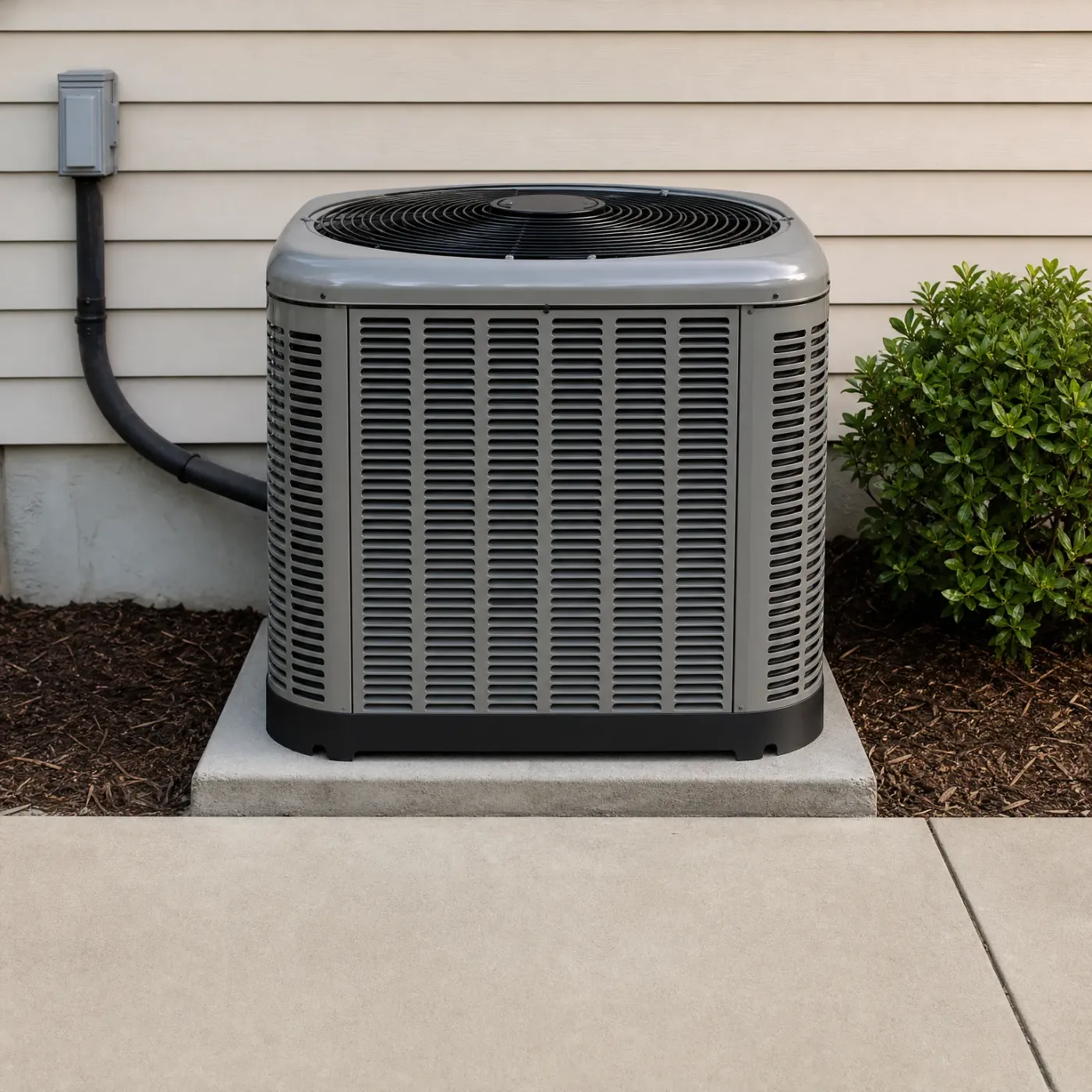
This is a unit with a clear path for condensate: line open, pan sound, coil draining into the pan instead of overflowing it. You won't see water on the pad or staining on the siding below the line set. It cools the house and the water goes where it's supposed to go.
Leaking inside
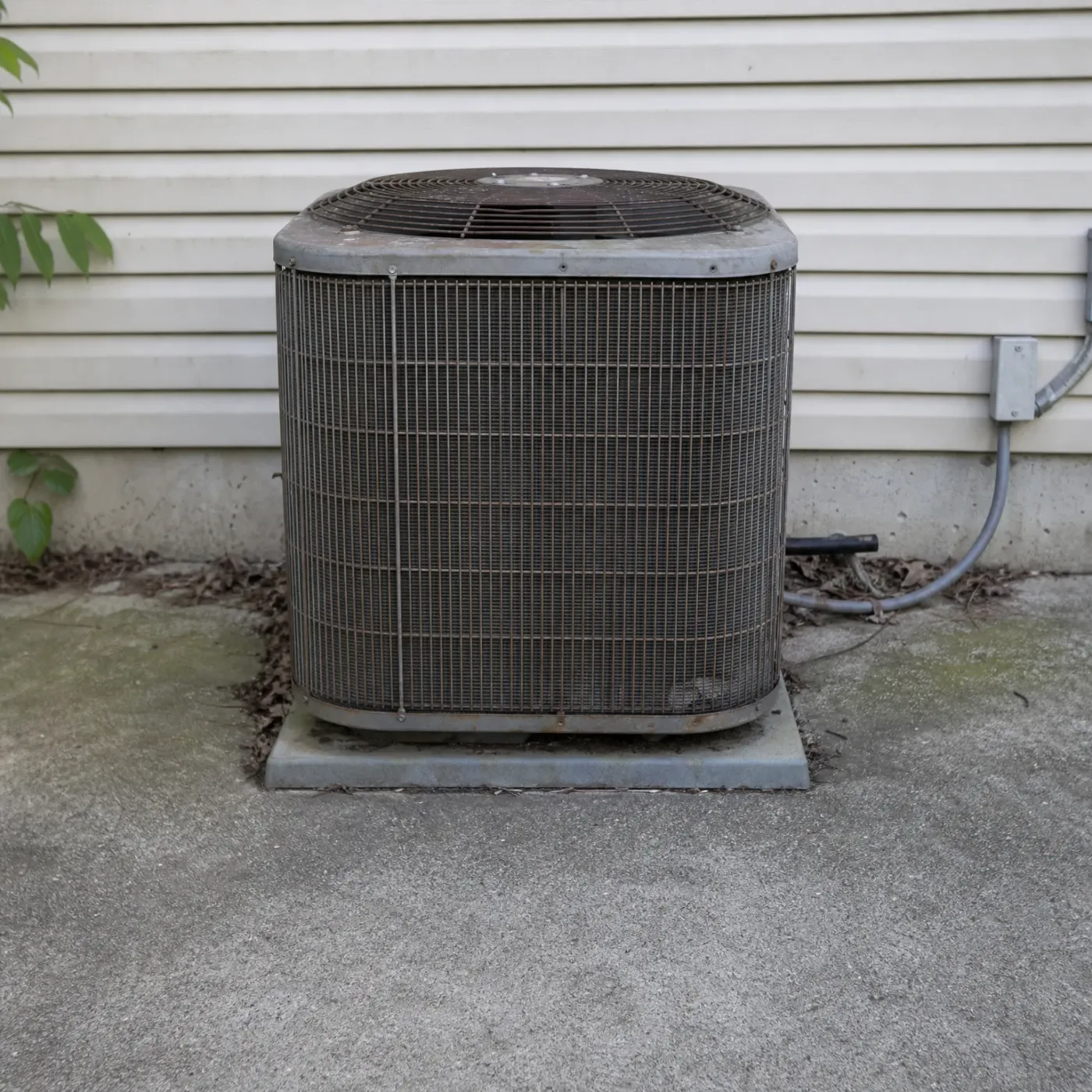
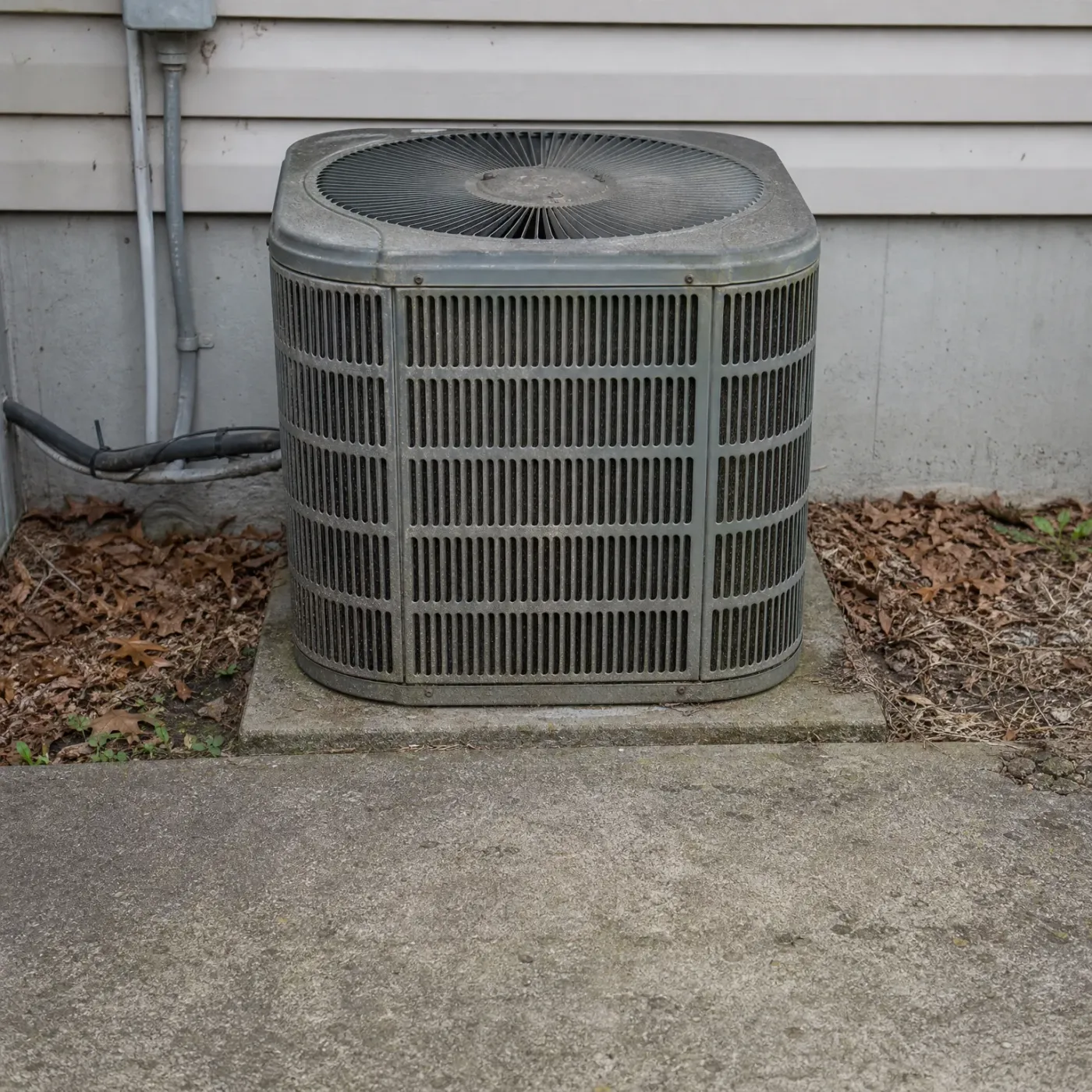
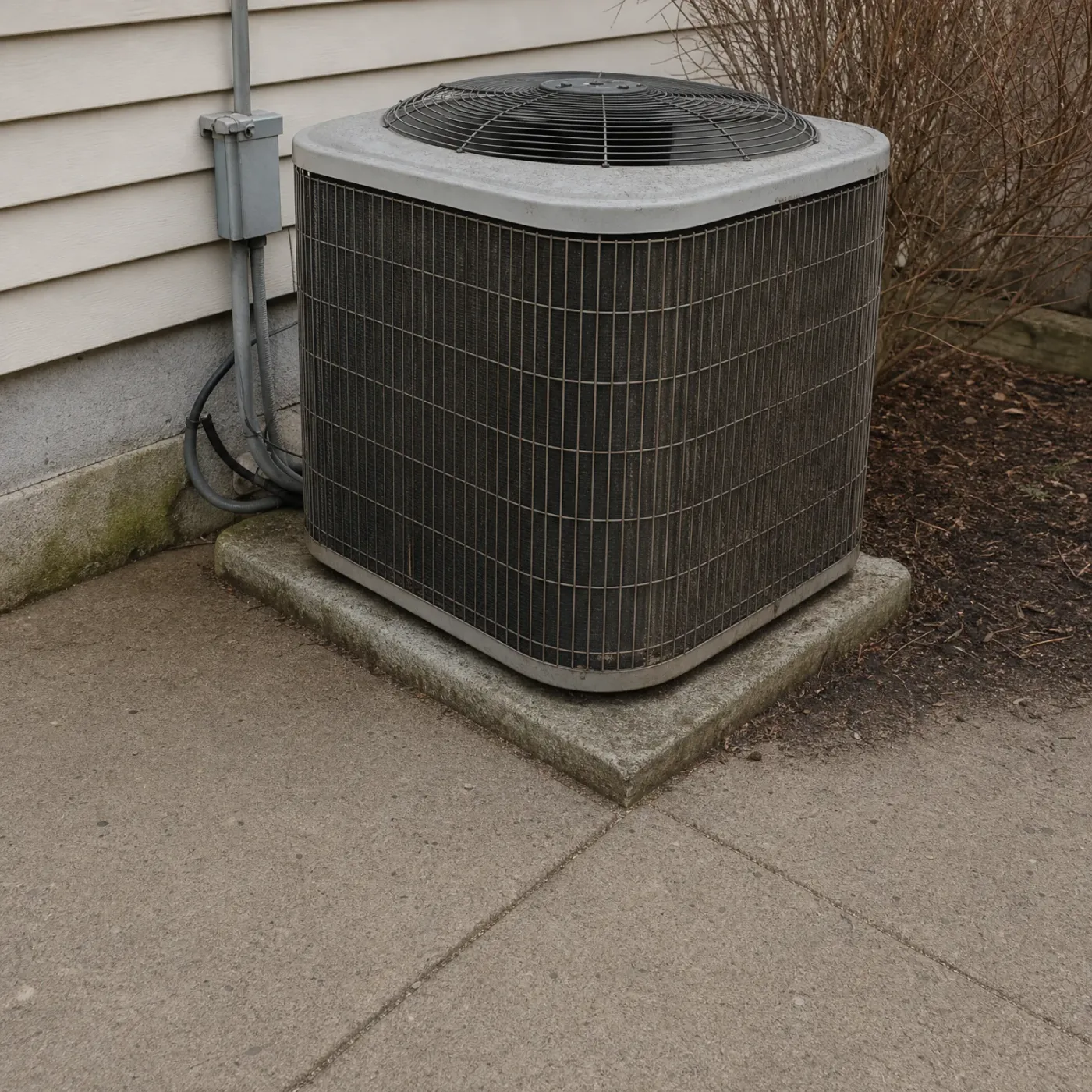
Dirt and old leaves built up around the base, and a grille this weathered often means the drain line behind it hasn't been clear in a while. Debris packed against the unit can back water up into the pan until it has nowhere to go but your ceiling or your floor.
Watch It or Call Someone
Watch it
A few drops on the pan after a long run on a hot day can be normal condensation, not a leak.
If the water stays inside the pan and never reaches the floor or the ceiling below, the drain is doing its job for now.
Check the pan and the line once a week through July and August, since that's when the unit runs longest and a slow clog shows up fastest.
If the float switch hasn't tripped and the unit still shuts off and restarts normally, the system isn't in immediate danger.
A unit that's cooling the house evenly, with no musty smell near the vents, isn't showing signs of a bigger problem yet.
Call someone
Water on the floor, a stained ceiling tile, or a puddle in the closet where the air handler sits means the drain line or pan has already failed, not just started to.
A coil caked in ice when you shut the system off points to a refrigerant or airflow problem that a cleared drain line won't fix.
Standing water near the unit for more than a day or two invites mold in the pan, the ducts, or the drywall around it.
If the float switch has already shut the system down, the backup drain is doing the job the main line should be doing.
Ceiling stains below a vent mean water has been sitting in the attic or between floors, where you can't see what it's doing to the wood and insulation.
A musty smell near the vents along with the leak usually means moisture has been sitting somewhere in the system longer than today.
Outside, nothing to see
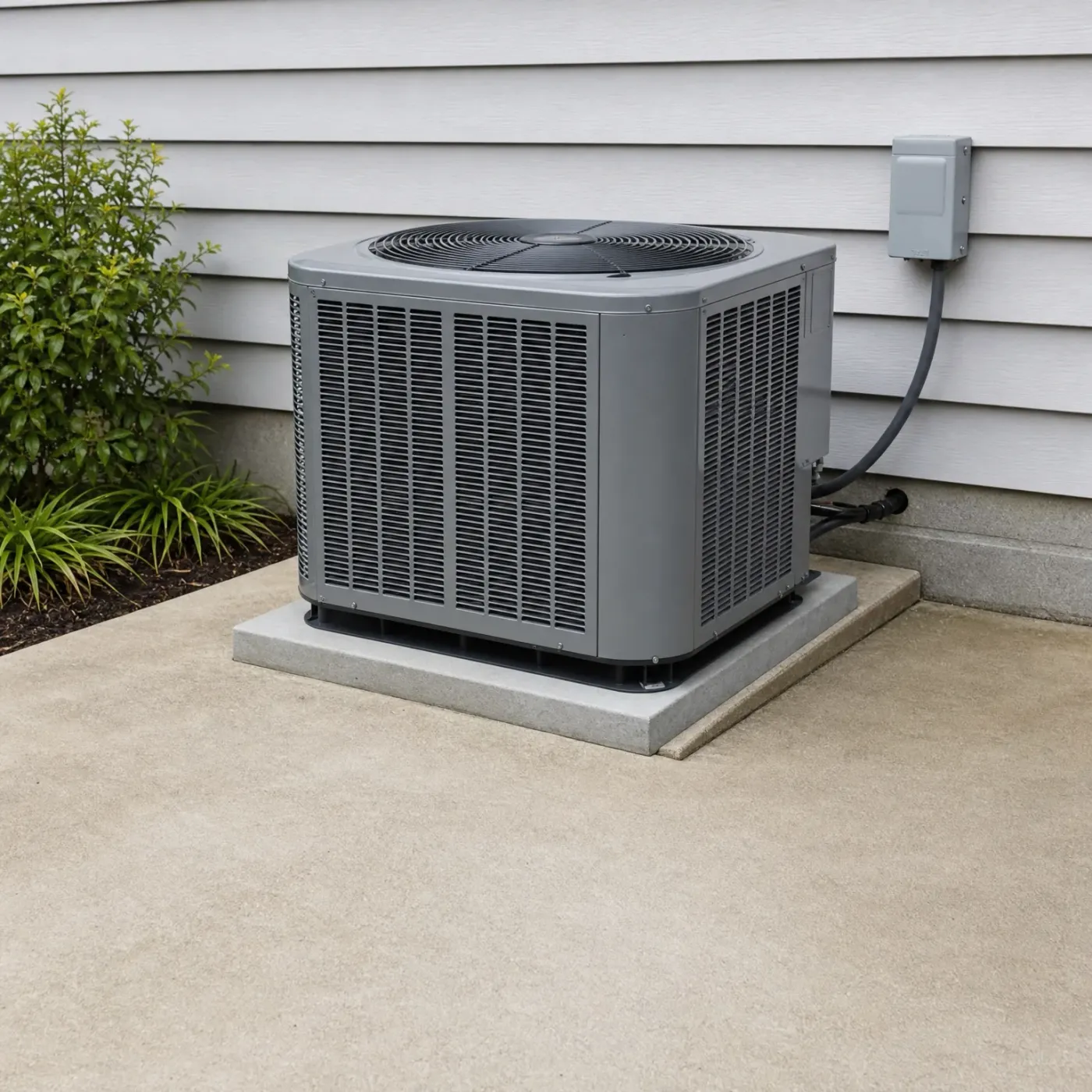
The condenser sits on its pad next to the house, conduit running down from the disconnect box to the unit. No staining on the siding below it, no water pooling around the pad. Whatever is happening with the drain line or the coil inside, it isn't showing up out here.
Outside, the same unit
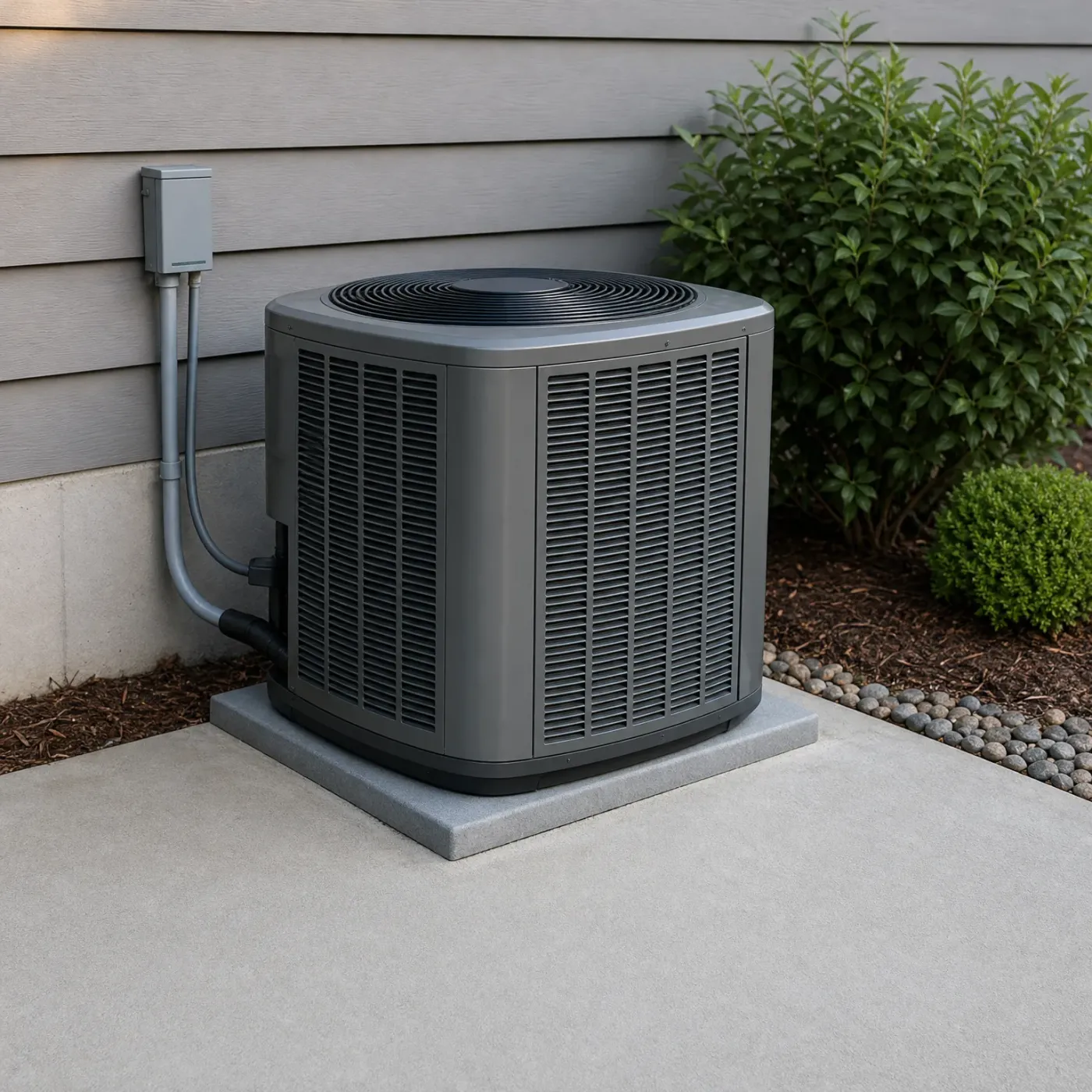
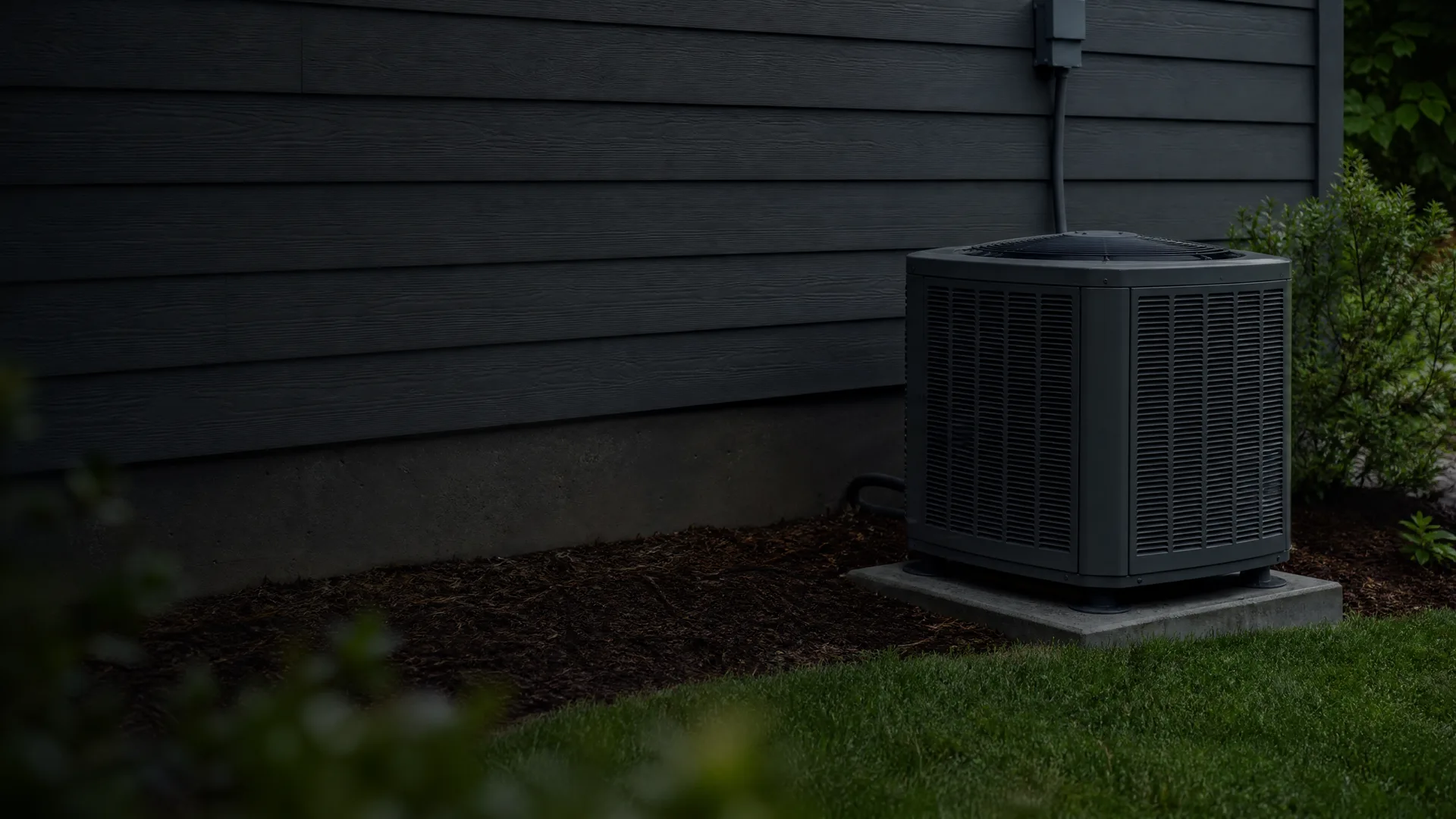
Same condenser, same pad against the siding, same conduit to the disconnect. Nothing about the outdoor unit explains water inside the house. The leak traces back to the coil or drain line indoors, not to anything a look at this unit will tell you.
Before you get your air conditioner repairAfter you get your air conditioner repair
A pro who works on air conditioners
Once you send the form, finding a pro is off your list.
Get matched with a pro who works on air conditioners in Jackson County.
It costs nothing to send, and you don't have to hire anyone.
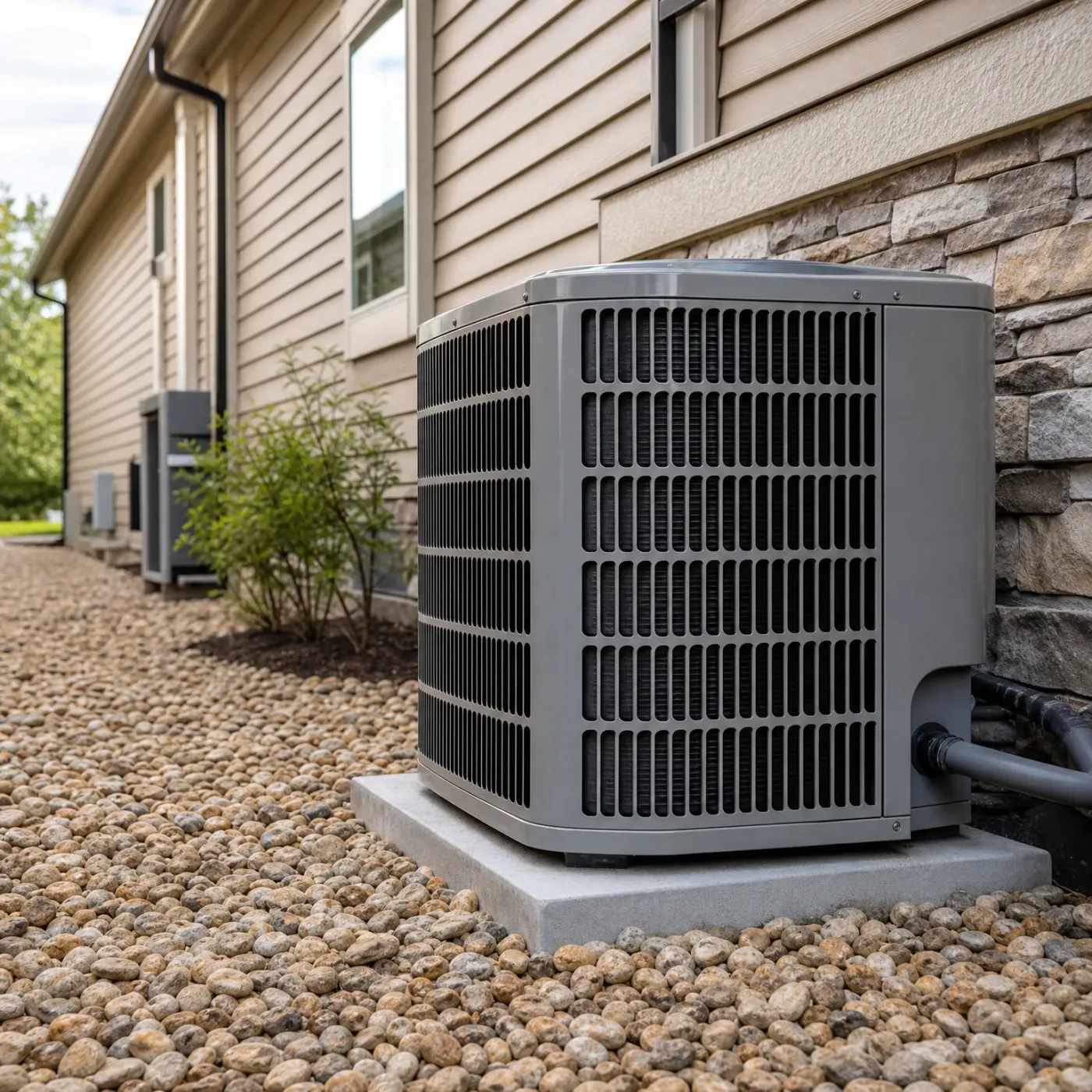
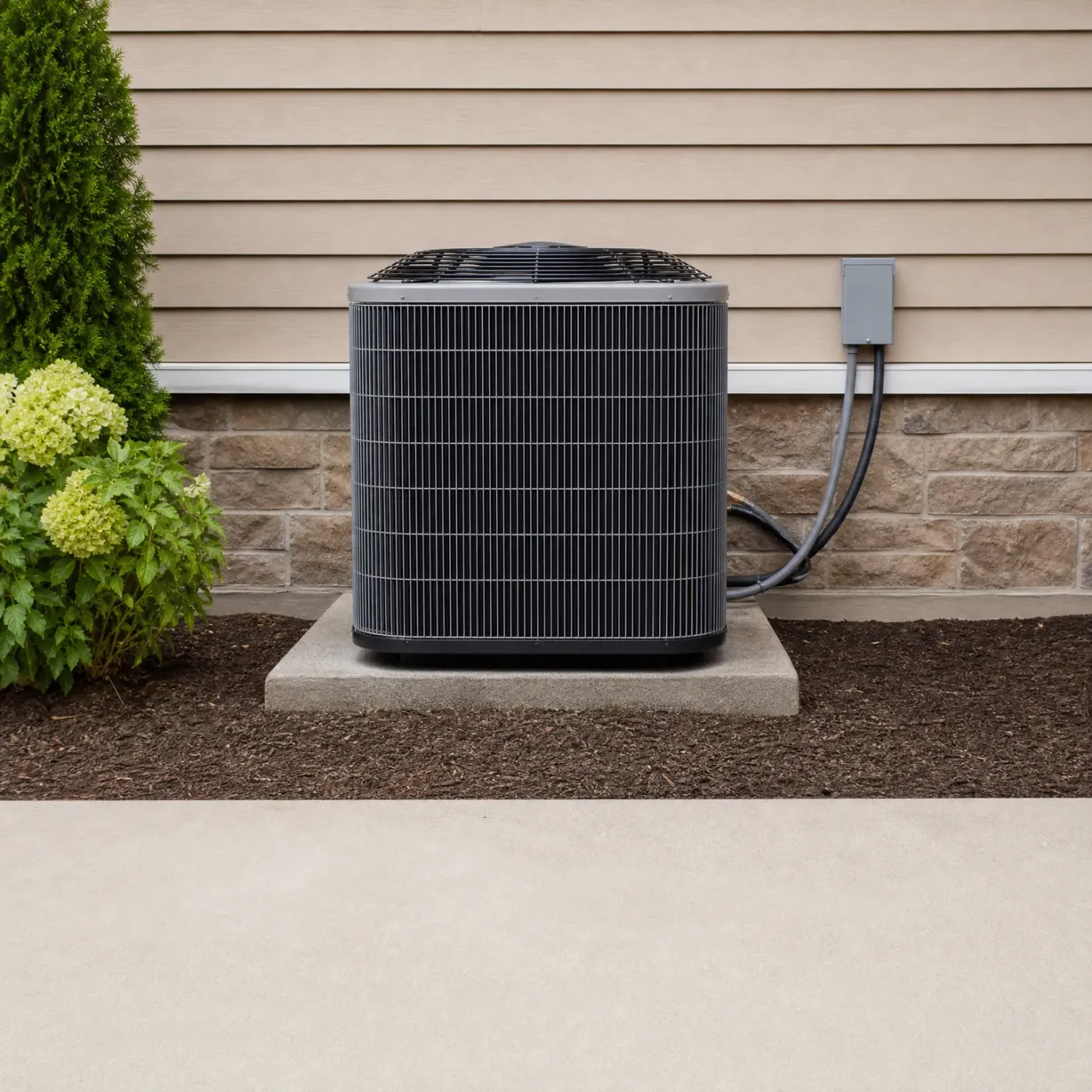
The pad is dry and the shrubs around it are doing fine, nothing draining out where it shouldn't.
Here the ground around the pad stays wet and the mulch nearby never quite dries out between runs.
How the drain system is built
Your indoor coil sits in a cabinet above a drain pan, and that pan feeds a PVC line that runs outside or to a floor drain.
The line has a low point or trap where algae and dust build into a clog, and that clog is the most common reason water backs up into the pan and overflows.
A second pan sits under the unit in most attic installs, and when water shows up there instead, the primary pan or line is the problem, not the coil.
If the coil ices over, it melts all at once when the system shuts off, and that meltwater can outrun a drain line that was handling normal condensation fine.
Some systems have a float switch on the pan that should cut power to the unit once water rises past a set point, and a leak means that switch either isn't there or didn't trip.
The condensate pump, if the system uses one, pushes water uphill to a drain, and a pump that's seized or unplugged lets water just sit in the pan until it spills.
Your air conditioner makes water constantly while it runs, because the coil pulls moisture out of the air along with the heat. That water has to go somewhere. It drips off the coil into a drain pan underneath, and from there into a PVC line that carries it outside or to a floor drain. The line usually isn't straight. It dips or traps somewhere along the run, and that low spot is where algae and dust settle in and build up until the water can't get past. When that happens, it backs up into the pan instead of draining, and once the pan fills, it spills over the side.
If your unit sits in the attic, there's often a second pan underneath the whole cabinet, built as a backup in case the main one overflows. Water showing up there means the first pan or line already failed, not that the coil itself is leaking. Some setups also have a float switch sitting in the pan, wired to shut the unit off if water rises too high. When that switch is missing or doesn't trip, the system keeps running right through the overflow.
A frozen coil adds another way for this to happen. Ice that built up over a run melts all at once when the unit shuts off, and a line built for steady condensation can't always keep up with that sudden rush. A condensate pump, where one's installed, has its own failure point too. If it seizes or loses power, water just sits in the pan with nowhere to go.
Cooling runs May through September
Five months of cooling means five months where that drain line has to keep up. May through September, the condensate keeps coming, and a small clog that would sit quiet in a milder climate has all summer to back up and find its way onto your floor or ceiling.
NOAA nClimDiv 1991-2020
A central air conditioner can pull several gallons of water out of the air on a humid day here, and all of it is supposed to leave through one plastic line.
A clog the size of a pencil in that line is enough to send the whole day's water back into the pan and over the side instead of outside.
The dew point in Jackson County averages 66°F through June, July and August, based on NOAA climate records. That's the number that tells you how heavy the air sits, not just how hot it gets. Air that thick means your coil is pulling more moisture out of the house every time it runs, so more water is moving through that drain line all summer long. You'll notice the unit running longer stretches, and the pan working harder each cycle. When the line is clear, all that water leaves quietly. When it's not, this is the kind of air that turns a small clog into a wet spot on the floor fast.
NASA POWER T2MDEW
Water on the floor or a stain on the ceiling is the drain line, the pan, or the coil, and it's not something that clears up on its own. The clog gets worse, the rust spreads, the ice keeps melting onto the same spot until the floor or the ceiling underneath has had enough. None of that means the whole system is failing, and a lot of the time it's one part doing its job badly rather than the unit giving out. What it does mean is someone needs to open the cabinet, check the pan, clear the line, and look at the coil before this runs through another humid month here. Send the form and that part stops being yours to figure out. A contractor who works on these systems in Jackson County gets matched to your situation and reaches out to you, so you're not the one tracking down who's free or who knows what they're looking at. You already know where the water is landing. Getting someone out to find out why is the part that's left.
Get your air conditioner to the right pro
After you send the request, you're done searching.