Tell us about the job
Takes about a minute. No obligation.
Sizing a central AC system in McDonald County demands more from the load calculation than it would somewhere the compressor barely works. Homes in McDonald County, MO run cooling about four months a year, from June through September. A compressor starting and stopping through every one of those months accumulates wear on the contactor and condenser fan in a way that punishes an undersized unit fast. An install that clears the minimum on paper but leaves no headroom gets found out before the first season is done. The contractor has to get the sizing right at the start, because the equipment will not hide a mistake.
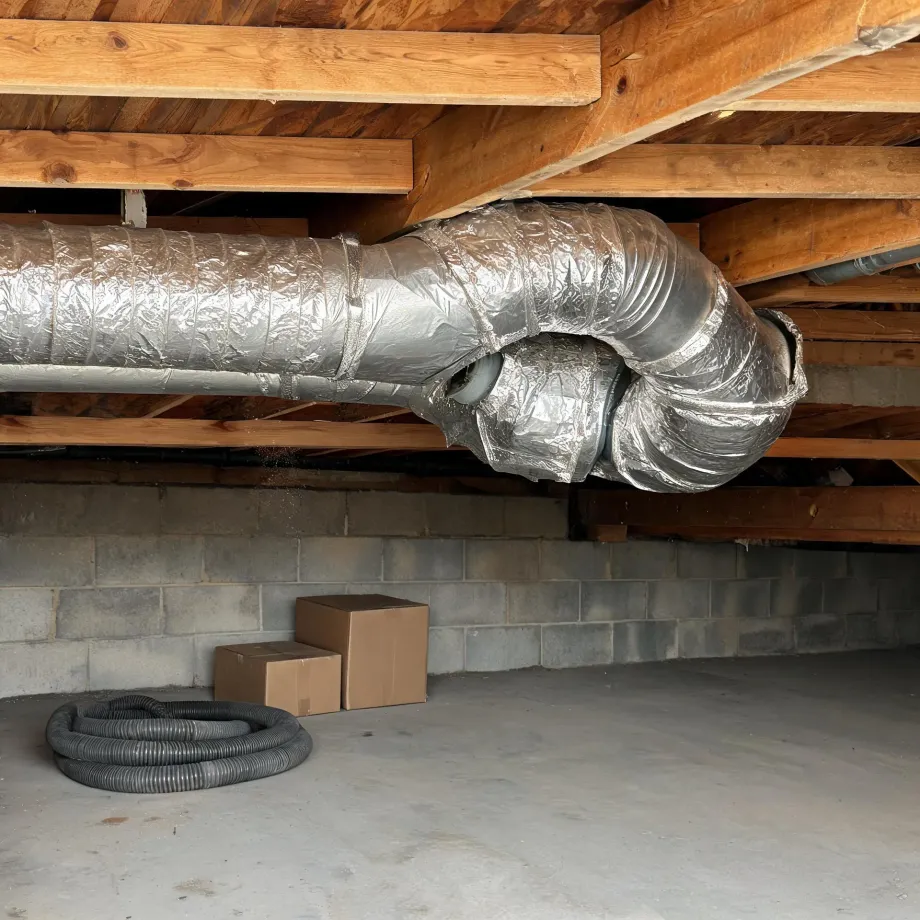
Ductwork laid in for one generation of equipment does not always carry the next. Half the homes in McDonald County, Missouri were built in 1988 or earlier (2020-2024 ACS 5-year). A contractor sizing a new central AC unit in this county has to open the system and measure what is actually there before the quote means anything, because ducts built around an older load may be undersized, leaking at the joints, or routed in ways that choke airflow to a modern unit. The electrical service gets the same look. What that inspection turns up is what drives the job's scope.
The Parts of a Central AC System You Are Buying
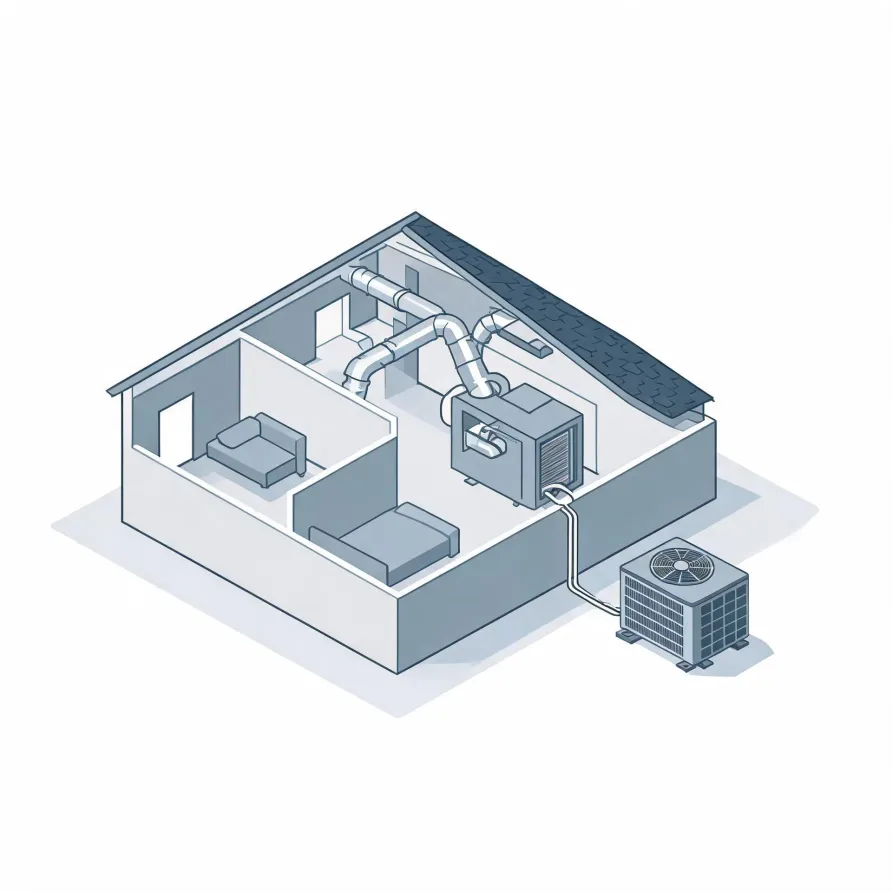
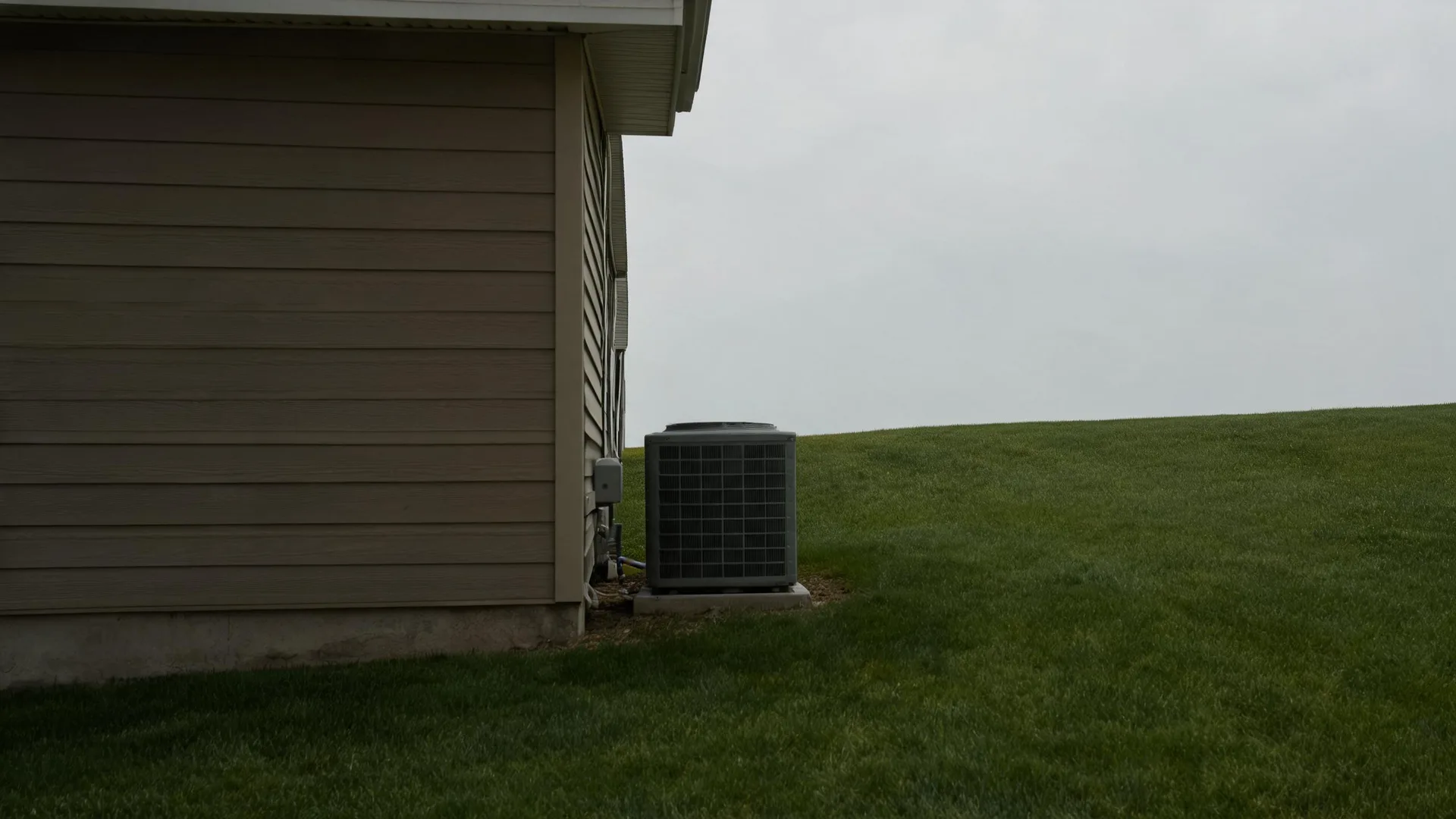
The outdoor condenser unit sits on a pad beside the house and holds the compressor and condenser coil, which together do the heavy work of shedding heat to the outside air. Inside the house, the air handler or furnace cabinet holds the evaporator coil and the blower, which pulls air across the coil and pushes it through the home.
The thermostat mounts on an interior wall and is the control point for the whole system, telling the equipment when to run and when to stop. A refrigerant line set runs between the indoor and outdoor units, and a condensate drain line carries moisture pulled from the air out of the house.
The drawing shows a typical layout, and a licensed contractor determines what applies to your specific house.
Get matched in McDonald CountyMcDonald County, by the numbers
125 severe weather events were recorded in McDonald County, Missouri between 2015 and 2024.
NOAA National Centers for Environmental Information, Storm Events Database, bulk CSV export, events 2015-01-01 through 2024-12-31.Half the homes in McDonald County, Missouri were built in 1988 or earlier (2020-2024 ACS 5-year).
U.S. Census Bureau, 2020-2024 American Community Survey 5-Year EstimatesMcDonald County, Missouri holds 9,828 housing units (2020-2024 ACS 5-year).
U.S. Census Bureau, 2020-2024 American Community Survey 5-Year EstimatesOwners occupy 67.3% of the occupied homes in McDonald County, Missouri (2020-2024 ACS 5-year).
U.S. Census Bureau, 2020-2024 American Community Survey 5-Year EstimatesCodes & Standards Governing Central AC Installation in McDonald County, Missouri8 sourced rules and standards
What HVAC Installation Looks Like in McDonald County
Split-system central air conditioners rated below 45,000 Btu/h manufactured on or after January 1, 2023 must meet a federal minimum of 13.4 SEER2.
Split-system central air conditioners rated at or above 45,000 Btu/h manufactured on or after January 1, 2023 must meet a federal minimum of 13.4 SEER2.
Split-system central air conditioners manufactured between January 1, 2015 and December 31, 2022 had to meet 13 SEER, the metric that preceded SEER2.
Single-package central air conditioners manufactured on or after January 1, 2023 must meet a federal minimum of 13.4 SEER2.
Space-constrained central air conditioners manufactured on or after January 1, 2023 must meet a federal minimum of 11.7 SEER2.
Federal efficiency standards for split-system central air conditioners and heat pumps are set on each certified combination of outdoor unit and indoor coil rather than on the outdoor unit alone.
Residential and light commercial air conditioning and heat pump systems assembled in the field, including mini-splits and unitary systems, may not be installed on or after January 1, 2025 using a refrigerant with a global warming potential above 700.
A field-assembled system whose specified components were all manufactured or imported before January 1, 2025 carries no installation compliance date under the refrigerant restrictions and may still be installed.
Severe Weather History in McDonald County
Weather in this part of Missouri puts real demands on cooling equipment, from the air it has to move to the conditions the hardware sits in year after year. How hard a system works is a local question, and the record below is part of that picture.
125 severe weather events, 2015–2024. Source: NOAA National Centers for Environmental Information, Storm Events Database.